From Digital Shelves to Physical Realities: The Expansion of inKONBINI: One Store. Many Stories.
The independent gaming landscape has long been a sanctuary for experimental narratives and niche simulations that major AAA studios often overlook. Among these "indie gems," few have captured the quiet, meditative essence of daily life as effectively as inKONBINI: One Store. Many Stories. Developed with a focus on the "slow life" philosophy, the game invites players to step behind the counter of a small Japanese convenience store, or "konbini," in a narrative-driven experience that prioritizes human connection over high-octane action.
In a significant milestone for the title, it has been announced that inKONBINI is transitioning from the digital realm into the hands of collectors through a comprehensive physical release. This move, encompassing both standard and highly detailed limited editions, marks a pivotal moment for the developer and the growing community of "cozy game" enthusiasts.
Main Facts: A Global Rollout for a Local Story
The physical release of inKONBINI: One Store. Many Stories. is not merely a distribution shift but a curated celebration of the game’s aesthetic and thematic depth. The physical editions have officially launched in the Japanese and Asian markets, catering to the region where the game’s cultural roots are most firmly planted. For fans in the United States and Europe, the wait will extend slightly longer, with a scheduled launch window set for September.
The release is confirmed for the PlayStation 5 and, notably, the "Nintendo Switch 2"—a platform mention that has sparked significant interest among hardware enthusiasts and industry analysts alike. To incentivize early adoption, the Beep Store is offering an exclusive promotional Yojoki Masters Trading Card Set for those who purchase the game during its inaugural week on the market.
The physical offering is divided into two distinct tiers:
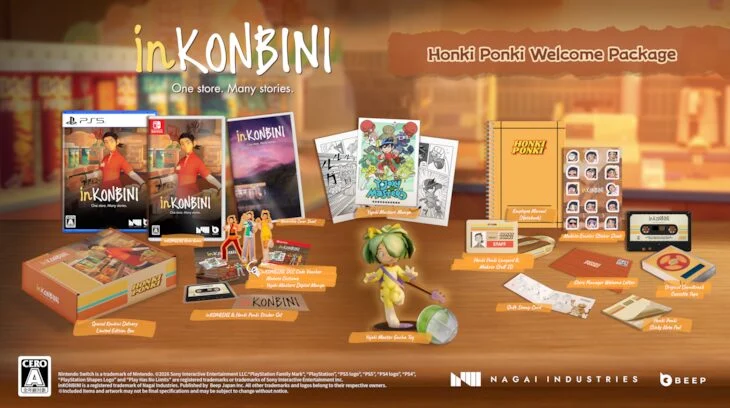
- The Standard Edition: Includes the base game, a Honki Ponki sticker set, and two digital expansion codes (the Makoto costume and the Yojoki Master Digital Manga).
- The Limited Edition: A comprehensive "Manager’s Box" featuring a wealth of physical feelies, including a cassette tape soundtrack, a physical manga, a store manager lanyard, and a shift schedule stamp card, among other items.
Chronology: From Preview to Physical Launch
The journey of inKONBINI has been one of steady, deliberate growth, mirroring the gameplay itself. The title first gained traction through early previews and indie showcases, where critics noted its unique approach to the simulation genre.
The Preview Phase
Initial impressions of the game highlighted its "deliberate" pacing. Early reviews, including those by noted indie journalist Jupiter Hadley, emphasized that nothing in inKONBINI feels rushed. Unlike traditional management sims that stress the player with ticking clocks and demanding customers, inKONBINI focuses on the "One Store. Many Stories" subtitle. The preview phase established the game as a narrative vessel, where stocking shelves was a secondary task to the primary objective: listening to the locals.
Regional Release Strategy
The decision to launch first in Japan and Asia is a strategic nod to the game’s setting. The "konbini" is a cultural institution in Japan, serving as more than just a retail space; it is a neighborhood hub. By establishing a physical presence in these markets first, the developers have solidified the game’s authenticity.
The September Expansion
The upcoming September release for the West represents the final stage of the game’s current rollout plan. This staggered release allows the developers to manage distribution logistics while building anticipation in the Western "cozy gaming" community, which has seen a massive surge in popularity following the success of titles like Animal Crossing and Stardew Valley.
Supporting Data: Detailed Breakdown of the Physical Editions
For collectors of physical media, the value lies in the tangibility of the experience. The inKONBINI physical editions are designed to blur the line between the player’s reality and the game’s world.
The Standard Edition Components
The Standard Edition serves as an entry point for players who prefer physical ownership over digital licensing.
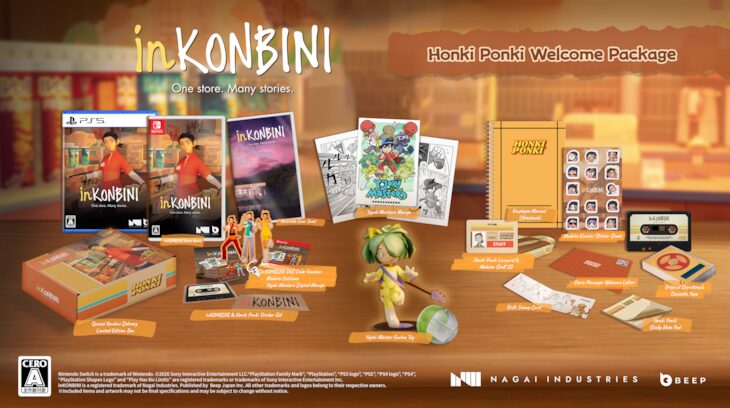
- The Honki Ponki Sticker Set: Featuring the game’s mascot/brand, these stickers allow fans to bring the game’s visual identity into their personal spaces.
- DLC Integration: By including the Makoto costume and Digital Manga, the physical edition ensures that players have immediate access to expanded lore and customization without further digital transactions.
The Limited Edition: The "Manager’s Kit"
The Limited Edition is a masterclass in "feelies"—physical items that relate to the game world. It includes:
- Professional Immersion: A "Welcome Letter" for the Store Manager, a Honki Ponki ID Lanyard, and Makoto’s Employee ID. These items encourage a light form of roleplay, placing the player directly into the shoes of the protagonist.
- Functional Stationery: A notebook and a memo pad designed as sticky notes (reminiscent of the in-game side quest system).
- The Shift Schedule Stamp Card: A clever nod to Japanese loyalty cards and workplace culture.
- Audio-Visual Nostalgia: A physical soundtrack presented on a cassette tape. This choice reflects the retro-modern aesthetic of the game and appeals to the growing "lo-fi" and analog revival trends.
- Tangible Lore: A physical copy of the Yojoki Masters Manga and a Gacha Toy, bringing the in-game fictional universe to life.
Official Responses and Critical Reception
The reception to inKONBINI has been overwhelmingly positive, particularly among critics who value narrative depth. Professional journalists have praised the game for its ability to transform mundane tasks into meaningful interactions.
In her preview, Jupiter Hadley remarked: “Nothing feels rushed… Instead, it feels deliberate and like taking on the role of working in a small town in a known shop. I do like finding the little post-it notes with side quests on them as well, giving you something to do to pass the time.”
This sentiment is echoed across the indie community. The game’s branching choices and conversational paths are frequently cited as its strongest assets. Unlike many simulators where dialogue is flavor text, in inKONBINI, the choices made during conversations can alter the trajectory of the neighborhood’s stories, giving the player a genuine sense of agency within the community.
The developer’s decision to partner with the Beep Store for the Japan/Asia launch has also been seen as a savvy move. Beep is well-regarded for its support of niche and indie titles, ensuring that the physical release reaches a dedicated audience of collectors who appreciate the craftsmanship behind the "Limited Edition" box.
Implications: The Future of Cozy Simulations and Physical Media
The release of inKONBINI: One Store. Many Stories. carries several broader implications for the gaming industry.
The Resurgence of Physical Media
In an era where digital storefronts dominate, the elaborate physical editions of inKONBINI suggest that there is still a robust market for "boutique" physical releases. For indie games, which are often digital-only, a physical release acts as a "prestige" version of the product. It provides a sense of permanence that digital files lack, particularly for games that focus on atmosphere and memory.
The Evolution of the "Cozy" Genre
inKONBINI represents a shift in the "cozy" genre from farming and crafting toward urban "slice-of-life" storytelling. By focusing on a convenience store, the game taps into a specific kind of "urban healing"—the comfort of routine and the beauty found in small, everyday interactions. This suggests a growing appetite for games that explore the poetic nature of modern, everyday life rather than purely pastoral fantasies.
Hardware Speculation: The "Nintendo Switch 2"
The mention of a "Nintendo Switch 2" in the release notes is a significant detail. While Nintendo has yet to officially unveil its successor to the original Switch, the inclusion of the platform in the inKONBINI release schedule suggests that developers are already preparing for the next generation of handheld gaming. If inKONBINI is indeed positioned for this new hardware, it indicates that the "cozy" and "indie" sectors will remain a cornerstone of Nintendo’s software strategy moving forward.
Cultural Diplomacy through Gaming
Finally, inKONBINI serves as a form of cultural ambassadorship. By inviting global players to manage a Japanese corner store, the game educates players on the nuances of Japanese social etiquette, consumer culture, and the unique role the "konbini" plays in the social fabric of Japan. The physical edition, with its lanyards and stamp cards, further bridges this cultural gap, offering a tangible piece of a distant world.
As inKONBINI: One Store. Many Stories. moves toward its Western release in September, it stands as a testament to the power of quiet storytelling. In a medium often defined by noise and speed, the success of a game about stocking shelves and talking to neighbors proves that there is a profound, global desire for a slower, more deliberate kind of play.