Global Perspectives in Nonfiction: Circle Women Doc Accelerator Unveils 2026-27 Cohort
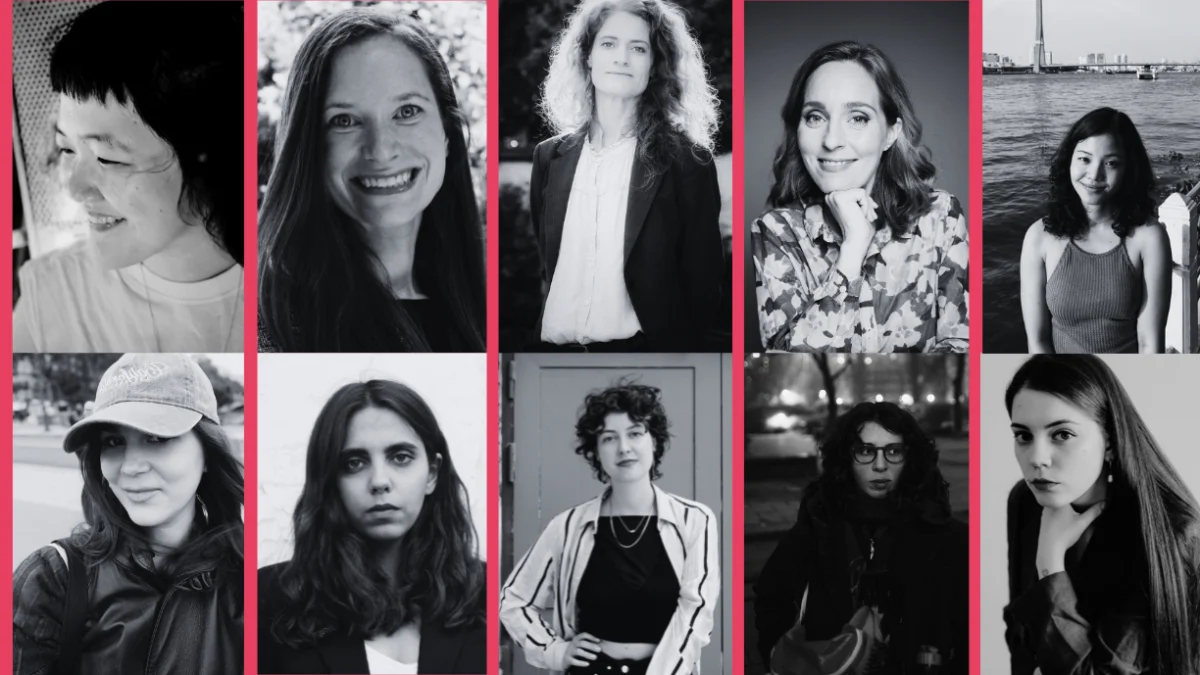
The landscape of international documentary filmmaking is undergoing a profound transformation, driven by a growing demand for diverse perspectives and the dismantling of traditional gatekeeping structures. At the forefront of this evolution is the Circle Women Doc Accelerator, a specialized training initiative designed to empower women and gender-expansive filmmakers. Today, the organization officially announced the ten projects selected for its prestigious 2026-2027 cycle, signaling a bold new chapter for nonfiction storytelling that spans from the war-torn landscapes of Ukraine to the vibrant cultural tapestries of Malaysia and Thailand.
By providing a structured environment for creative development, strategic networking, and market integration, the Circle Women Doc Accelerator has established itself as a vital pipeline for high-impact cinema. This year’s selection highlights a commitment to geographical diversity and thematic depth, featuring filmmakers who are prepared to challenge the status quo of the documentary form.
Main Facts: A Global Mandate for Gender-Expansive Storytelling
The 2026-2027 edition of the Circle Women Doc Accelerator arrives at a critical juncture for the film industry. As global markets become increasingly interconnected, the need for localized stories with universal resonance has never been higher. This year’s cohort was chosen from a highly competitive pool of applicants, representing a wide array of geopolitical contexts including Syria, Germany, Denmark, Romania, Slovenia, Thailand, Ukraine, Georgia, and the United States.
The program’s primary mission is to provide professional and creative support to female-identifying and gender-expansive directors and producers. In an industry where statistical parity remains elusive—particularly in leadership roles such as directing and producing—Circle serves as a corrective force. The ten selected projects are not merely films in development; they are cultural artifacts that seek to explore identity, memory, conflict, and the human condition through a lens that has historically been marginalized.
The selection process was rigorous, overseen by Circle’s leadership team and an international committee of experts. Biljana Tutorov, Circle’s Program Director, and Brigid O’Shea, Co-Head of Studies, led the evaluation, ensuring that each project possessed not only artistic merit but also the potential for international co-production and festival success.
Chronology: The Three-Module Journey (2026–2027)
The Circle Women Doc Accelerator is structured as a year-long journey divided into three intensive modules, each located in a different European cultural hub. This nomadic approach allows participants to engage with different regional film industries while maintaining a consistent focus on their project’s development.
Module 1: Creative Development (Edipsos, Greece – June 2026)
The program kicks off on June 22, 2026, in the historic town of Edipsos, Greece. This initial phase is dedicated to the "creative core" of the projects. Filmmakers work closely with mentors to refine their cinematic language, sharpen their narrative focus, and explore the psychological depths of their subject matter. The serene environment of Edipsos provides a sanctuary for deep reflection and rigorous script and treatment analysis.
Module 2: Strategic Planning (Portorož, Slovenia – October 2026)
In the autumn, the cohort moves to the coastal town of Portorož, Slovenia. Here, the focus shifts from the creative to the structural. This module emphasizes production strategies, financial planning, and international co-production models. Participants learn how to navigate the complex world of European and global film funds, sales agents, and distribution networks. It is a period of "professional hardening," where artistic visions are reconciled with market realities.
Module 3: Market Presentation (Trieste, Italy – January 2027)
The final stage of the program takes place in Trieste, Italy, held in conjunction with the When East Meets West (WEMW) co-production forum. This is the "launchpad" module. Participants present their refined projects to a curated audience of international decision-makers, including festival programmers, commissioning editors, and distributors. The goal of this final meeting is to secure the partnerships necessary to bring these films to completion and onto the world stage.
Supporting Data: The Projects, Mentors, and Alumni Legacy
The strength of the Circle Accelerator lies in its community—a mix of promising new talent, seasoned mentors, and a high-achieving alumni network.
Selected Projects for 2026-2027
The ten projects selected for this year reflect a diverse range of styles, from observational documentaries to experimental essays:
- Rama Abdy (Syria) – House No. 7: Produced by Hazar Yazji (Syria/Qatar), this project promises an intimate look at domesticity and displacement.
- Sophie Ataya (Germany) – Who We Are: A production by SEERA FILMS, exploring identity within the German socio-political landscape.
- Sara Geurtsen (Germany) – Sanctuary: Directed by Areeb Zuaiter and set in the United States, this project examines the concept of refuge.
- Ida Grøn (Denmark) – The Inner Whale In My Ear: A poetic exploration of sensory experience produced by Purple Pictures.
- Beatrice Leong (Malaysia) – The Myth of Monsters: A Southeast Asian perspective on folklore and modern societal fears.
- Diana-Elena Munteanu (Romania) – The Digs: A co-production between Romania and France exploring the layers of history beneath the surface.
- Maja Prettner (Slovenia) – Chasing Horses: A local project that delves into personal and national narratives.
- Piano Primrin (Thailand) – A Journey to the Universe: Produced by Pop Pictures, this project represents the vanguard of Thai nonfiction.
- Marta Smerechynska (Ukraine) – Call Me from the Frontline: A timely and urgent co-production between Ukraine and France.
- Dea Tcholokava (Georgia) – Song to an Emerald Sky: A lyrical exploration of Georgian culture co-produced with German partners.
The Mentorship Powerhouse
To guide these filmmakers, Circle has assembled a team of world-class mentors:
- Diana El Jeiroudi: An Oscar-nominated producer and director known for her work in Syrian cinema.
- Salomé Jashi: The acclaimed director of Taming the Garden, a master of visual storytelling.
- Gianluca Matarrese: A director celebrated for his provocative and intimate documentaries like GEN_.
- Lucila Moctezuma: A veteran documentary consultant with deep ties to the international festival circuit.
The Alumni "Circle Effect"
The success of the program is best measured by its alumni, who have consistently secured spots at major festivals. Recent successes include:
- Rachel Taparjan (Something Familiar) – CPH: DOX 2026
- Alba Zari (White Lies) – IFFR 2026
- Zipporah Nyaruri (Truck Mamma) – IDFA 2025
- Kristina Mikhailova (River Dreams) – Winner of the Ecumenical Jury Award at the Berlinale Forum 2026.
Official Context: Leadership and the Selection Philosophy
The selection of these ten projects was not merely an aesthetic choice but a strategic one. The selection committee consisted of an intergenerational group of film professionals: writer/producer Suzy Gillet, film scholar Jelena Mišeljić, and Circle alumni Koval Bhatia and Zipporah Nyaruri. This blend of academic, practical, and "alumni-first" perspectives ensures that the program remains grounded in the actual needs of filmmakers.
Program Director Biljana Tutorov has emphasized that Circle is looking for "voices that are not afraid to be vulnerable and political at the same time." The inclusion of gender-expansive filmmakers is a deliberate move toward intersectionality, recognizing that the barriers faced by women are often compounded for those with non-binary or fluid gender identities.
Brigid O’Shea, Co-Head of Studies, noted that the program’s strength is its "bespoke" nature. Unlike larger, more corporate labs, Circle maintains a small cohort to ensure that each director and producer receives individualized attention. This "boutique" approach is what allows projects like Call Me from the Frontline or The Myth of Monsters to maintain their unique cultural DNA while preparing for a global market that often demands homogenization.
Implications: Strengthening the Intersectional Documentary Ecosystem
The announcement of the 2026-27 cohort has significant implications for the documentary industry at large.
1. Decentralizing the Narrative
By selecting projects from Syria, Georgia, and Malaysia, Circle is actively decentralizing the documentary narrative. For too long, the "global" documentary scene was dominated by Western European and North American perspectives. Circle provides the structural support necessary for filmmakers from the Global South and Eastern Europe to tell their own stories on their own terms, preventing the "extractive" filmmaking practices often seen in international co-productions.
2. Economic Empowerment
The accelerator is a crucial economic engine. By connecting filmmakers with producers from France, Germany, and Qatar, Circle facilitates the flow of capital into independent film sectors. This not only funds individual films but strengthens the local production infrastructures in the filmmakers’ home countries.
3. Addressing the "Second Film" Crisis
Many female filmmakers struggle with the "sophomore slump"—the difficulty of securing funding and support for their second or third features after a successful debut. Circle’s mentorship and market modules are specifically designed to help filmmakers build sustainable careers, moving beyond "one-hit-wonder" status to become established voices in the industry.
4. Innovation in Form
The inclusion of mentors like Salomé Jashi suggests a focus on the "cinematic" documentary. As streaming platforms lean toward formulaic true-crime and celebrity docs, Circle is a sanctuary for formal experimentation. The projects selected for 2026-27 suggest a move toward more poetic, essayistic, and hybrid forms of nonfiction that challenge how audiences perceive reality.
As the cohort prepares to meet in Edipsos this June, the film world watches with anticipation. The Circle Women Doc Accelerator is more than a training program; it is a vital intervention in the cultural landscape, ensuring that the future of documentary film is as diverse, complex, and inclusive as the world it seeks to document.