The Architect of the Omniverse: The Life, Legacy, and Lasting Influence of Mark Gruenwald
In the high-stakes, multi-billion-dollar landscape of modern entertainment, the concept of a "shared universe" is the industry’s most coveted currency. From the sprawling interconnectedness of the Marvel Cinematic Universe (MCU) to the multiversal crossovers of rival franchises, the idea that thousands of disparate stories can coexist within a single, logically consistent reality is now a foundational principle of pop culture. However, long before the first digital frame of an Avengers film was rendered, the blueprints for this architectural feat were being drawn by a man working out of a makeshift "fort" in a Manhattan office.
Mark Gruenwald, a writer, editor, and executive at Marvel Comics for nearly two decades, was more than just a staffer; he was the self-appointed custodian of an entire reality. Known as Marvel’s "continuity cop," Gruenwald’s influence on the medium of comic books—and by extension, the modern blockbuster—remains profound nearly thirty years after his untimely death. Through his work on the Official Handbook of the Marvel Universe, his seminal run on Captain America, and his philosophical treatise on the "Omniverse," Gruenwald transformed a chaotic collection of adventure stories into a rigorous, encyclopedic mythology.
Main Facts: The Guardian of Internal Logic
Mark Gruenwald’s career at Marvel Comics (1978–1996) coincided with the medium’s transition from a niche children’s hobby to a self-conscious literary form. While other creators of his era sought to deconstruct the superhero, Gruenwald sought to organize it.
His primary contribution was the enforcement of "continuity"—the idea that every story told since 1961 happened to the same people in the same world. To Gruenwald, this wasn’t a creative burden but a sacred trust. He viewed Marvel writers not as "creators" in the traditional sense, but as "transcribers" and "interpreters" of events occurring in an alternate dimension. If two stories contradicted each other, it wasn’t a mere editorial slip; it was a "mistake" in the historical record that required a corrective narrative to fix.
This philosophy culminated in the Official Handbook of the Marvel Universe, a massive project that cataloged the height, weight, power levels, and biographical data of every character in the Marvel canon. It was a task of staggering complexity that required the dedication of a scholar and the obsession of a fan.
Chronology: From the Treehouse to the Bullpen
1953–1975: The Wisconsin Roots
The "clubhouse" motif that defined Gruenwald’s professional life began in Oshkosh, Wisconsin. As a child in the early 1960s, he constructed a custom-built fort above his family’s garage, serving as the headquarters for his "JLA Club." Unlike the stereotypical image of the isolated comic book nerd, Gruenwald was a social and creative dynamo. He excelled academically, starred in rock operas, and approached his fandom as a communal activity.
By the mid-1970s, his passion had evolved into a scholarly pursuit. He published a fanzine titled Omniverse and authored A Treatise on Reality in Comic Literature (TORICL). These works attempted to systematize the "multiverse"—a concept popularized by Michael Moorcock—into a single, unified "Omniverse."
1978–1989: The Golden Age of the "Continuity Cop"
Gruenwald’s encyclopedic knowledge caught the attention of Marvel Editor-in-Chief Jim Shooter, who hired him in 1978. This era saw Gruenwald ascend to the role of Executive Editor. In 1982, at age 29, he and a small team (including Mike Carlin, Eliot Brown, and Jack Morelli) essentially lived in the Marvel offices to produce the Official Handbook. They built a literal fort out of office furniture and used a Xerox machine for warmth during all-nighters—a mirror of the childhood treehouse in Oshkosh.
During this period, Gruenwald also authored a ten-year run on Captain America and the 12-issue maxiseries Squadron Supreme. The latter, which explored superheroes taking over a government to create a utopia, predated and mirrored many themes found in Alan Moore’s Watchmen, though it was often overshadowed by its more cynical contemporary.
1990–1996: The "Marvelution" and the Decline of Continuity
The 1990s brought a seismic shift to the industry. The rise of Image Comics and the "speculator boom" prioritized flashy art and "Issue #1" relaunches over deep lore and internal consistency. In 1994, under the ownership of Ron Perelman, Marvel underwent the "Marvelution," which dismantled the unified editorial structure Gruenwald had spent a decade building. The line was carved into independent "fiefdoms," rendering the role of a company-wide continuity guardian obsolete.
Gruenwald found himself increasingly alienated from a market that favored style over substance. He died suddenly of a heart attack in August 1996, at the age of 43, just as Marvel was preparing to outsource its core characters to external studios—a move Gruenwald reportedly found distressing.
Supporting Data: The Mechanics of a Universe
The sheer scale of Gruenwald’s output provides a quantitative look at his dedication to the Marvel brand:
- The Official Handbook (1983): The original series ran for 15 monthly issues, totaling 330 pages of dense, technical prose. It became one of the highest-selling titles of 1983, proving that fans craved "data" as much as "drama."
- Captain America Tenure: Gruenwald wrote 137 consecutive issues of Captain America, one of the longest sustained runs by a single writer on the title.
- The Omniverse Concept: His TORICL thesis synthesized the work of literary giants like Jorge Luis Borges and Samuel Taylor Coleridge (the "willful suspension of disbelief") to explain how fictional realities function.
- Cheap Laffs: Beyond the page, Gruenwald produced a public access sketch comedy show with Marvel colleagues, documenting the "Bullpen" culture that he helped turn from a marketing myth into a tangible workplace reality.
Industry Perspectives: The Paul Allen Biography
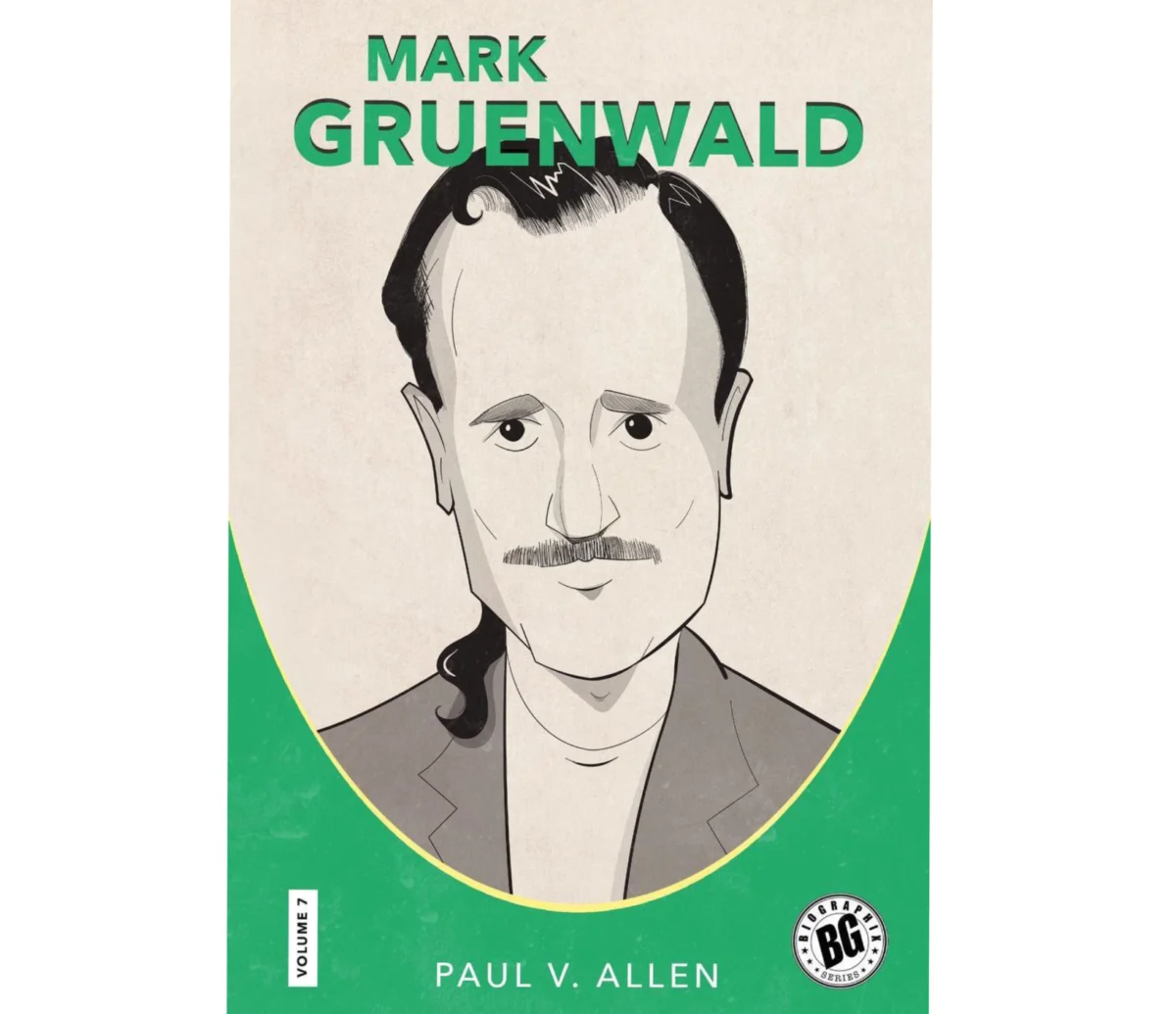
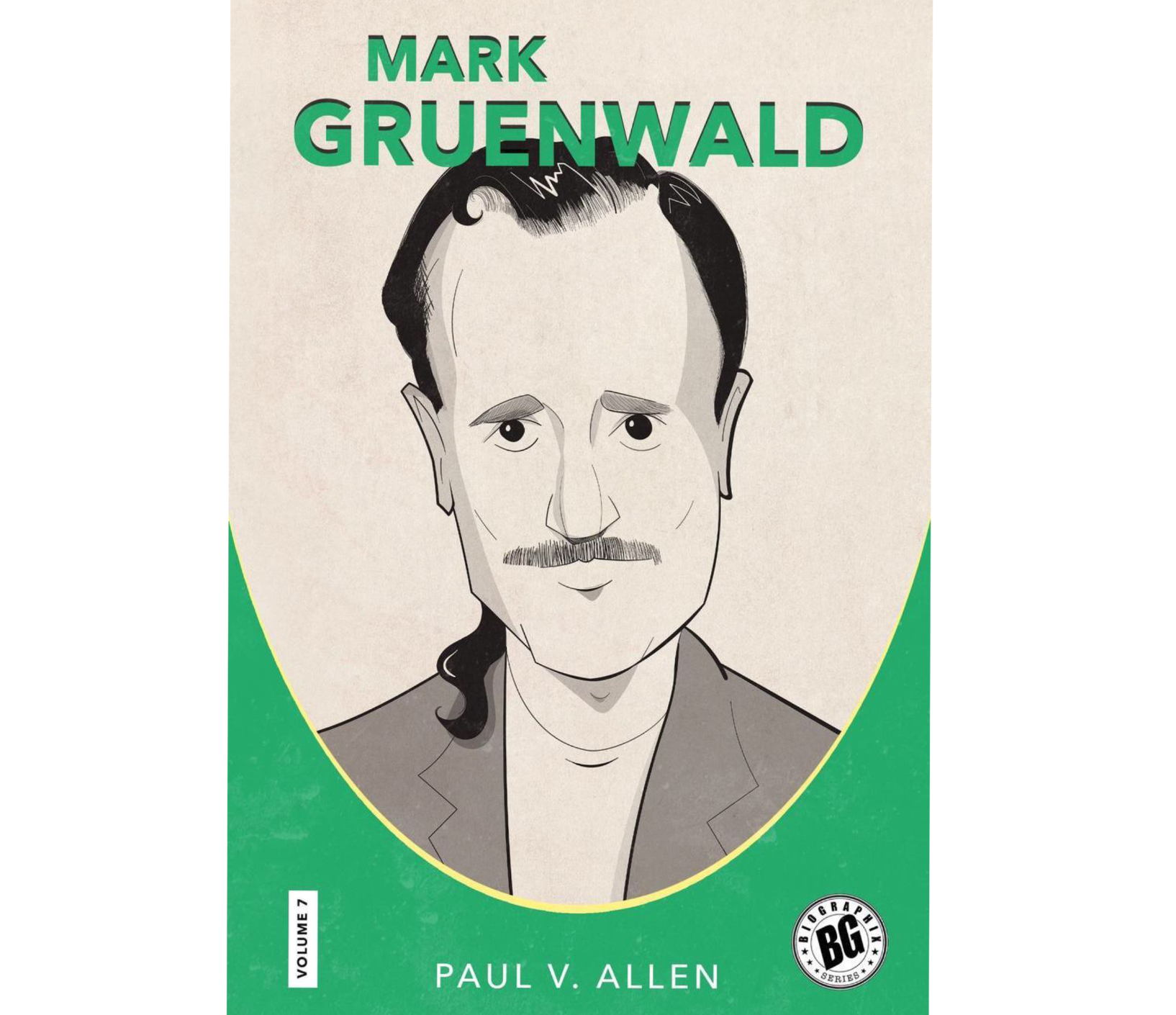
In his recent biography of Gruenwald, author Paul Allen provides an "official handbook entry" for the man himself. Allen’s research suggests that Gruenwald was a bridge between two worlds: the fan-driven enthusiasm of the 1960s and the corporate professionalism of the 1980s.
Allen notes that Gruenwald’s approach was often met with resistance from other creators. For example, his insistence on moving the character Monica Rambeau out of the Avengers leadership role caused friction with writer Roger Stern. Critics argued that Gruenwald’s obsession with logic sometimes stifled organic storytelling. However, Allen argues that Gruenwald’s "mischievous spirit" and lowbrow humor—often involving "scatological puns"—balanced his rigid editorial hand, making him a beloved figure within the Marvel Bullpen.
Implications: The Legacy of the Mixed Ink
Mark Gruenwald’s death was marked by a final, quintessential act of devotion to the medium: per his last will and testament, his ashes were mixed with the ink used to print a trade paperback collection of Squadron Supreme. He literally became part of the story he helped tell.
The Multiverse in the Mainstream
The modern entertainment landscape is, in many ways, the "Omniverse" Gruenwald dreamed of. The MCU’s success is predicated on the very continuity he championed. When audiences cheer for a character appearing in another hero’s film, they are experiencing the "shared gestalt" that Gruenwald spent his life cataloging. The "Multiverse Saga" of the 2020s, featuring films like Everything Everywhere All At Once and Spider-Man: No Way Home, has brought his niche 1970s theories into the global zeitgeist.
The Tension of the "Issue #1" World
However, the conflict that marked Gruenwald’s final years remains unresolved. The industry continues to swing between the "Gruenwaldian" desire for a deep, reward-heavy continuity and the commercial necessity of "reboots" and "jumping-on points." In an era of constant relaunches, the idea of a 30-year unbroken narrative feels increasingly fragile.
Conclusion: The Singularity of Mark Gruenwald
Mark Gruenwald was the man who took the "imaginary" out of "imaginary stories." By treating the Marvel Universe as a real place with real physics, real geography, and real history, he gave it the weight necessary to survive for decades.
Today, as the Marvel brand occupies a central place in global culture, Gruenwald is best remembered not just as a writer or an editor, but as the ultimate architect. He remains in his perpetual clubhouse, surrounded by charts and chronologies—a singularity of passion from which a thousand fictional universes continue to expand. In the end, he proved that if you build a fort strong enough, the rest of the world will eventually want to move in.