Unlocking the Inner Cosmos: Navigating the Power of the Subconscious Mind

Delving into the profound depths of the human psyche, renowned figures throughout history have consistently pointed to a vast, unseen reservoir of mental activity – the subconscious mind. Sigmund Freud famously likened the mind to an iceberg, with only a fraction of its mass visible above the waterline, signifying the conscious mind, while the vast majority remained submerged and hidden. Joseph Murphy, author of "The Power of Your Subconscious Mind," further elaborated, asserting that "Within your subconscious depths lie infinite wisdom, infinite power, and infinite supply of all that is necessary, which is waiting for development and expression." These powerful statements underscore a critical truth: understanding and collaborating with our subconscious is not merely an intriguing philosophical exercise, but an essential journey for profound inner work, spiritual healing, and psycho-spiritual transformation.
The subconscious mind, responsible for over 90% of our mental life, serves as more than just a storage unit for memories and habits; it is the direct conduit to our Soul’s wisdom and our Deeper Self’s intrinsic knowing. Depth psychologist Bill Plotkin succinctly captured this, stating, "Soul is encountered in the subconscious (i.e., that which lies below awareness)." When this intricate inner world is ignored, misused, or misunderstood, its dormant power can manifest as significant challenges in our waking lives, often sabotaging our best intentions and aspirations.
The Unseen Architect of Our Reality
Many individuals experience a profound sense of disconnection, feel adrift, or find themselves trapped in repetitive cycles of self-sabotage. Often, the root of these struggles lies in an inability to comprehend and communicate with the subconscious. We might consciously strive for confidence or empowerment, yet deeply ingrained "false identity scripts" – subconscious narratives formed by past experiences and beliefs – subtly undermine every effort. As psychiatrist Carl Jung poignantly observed, "Until you make the unconscious conscious, it will direct your life and you will call it fate."

Ultimately, the journey of working with the subconscious lies at the heart of many transformative healing modalities, including inner child work and shadow work. It is within this profound realm that our deepest wounds are stored, our behavioral patterns are established, and where we possess the capacity to fundamentally reprogram the past and reshape our future.
But what exactly constitutes the subconscious mind, and how can we effectively tap into its immense power to enact real, lasting, and deeply rooted change?
A Brief History and the Language of the Subconscious
The concept of the ‘subconscious mind’ emerged in the 18th century, first coined by German philosopher Christopher Riegel, and later popularized by Sigmund Freud’s groundbreaking work in psychoanalysis. In the modern era, pioneering thinkers like Carl Jung, Daniel Kahneman, and others have significantly advanced our understanding, revealing its complex mechanisms and profound influence.
We now understand that the subconscious mind communicates in ways distinct from our linear, rational conscious thought. It tends to be non-linear, abstract, and highly creative, operating through:
- Emotions and Feelings: Our gut reactions, inexplicable anxieties, or sudden surges of joy are often messages from the subconscious.
- Symbols and Metaphors: Dreams, spontaneous imagery, and recurring motifs are its preferred vocabulary.
- Intuition and ‘Aha!’ Moments: Sudden insights or a strong ‘knowing’ without logical explanation are direct transmissions.
- Body Sensations: Tingles, chills, or somatic responses can indicate alignment or misalignment with subconscious truths.
- Dreams and Visions: The nighttime world offers a rich tapestry of symbolic narratives.
- Synchronicities and Coincidences: Meaningful coincidences can be the subconscious orchestrating events in the outer world.
Steven Fulmer aptly summarized this, stating, "The language of the subconscious is emotions and story. Which is to say the subconscious is not driven by rational argument, logic, facts, and words."
Unlike the conscious mind, which operates in a ‘black-and-white,’ linear fashion, the subconscious is ‘multicolored’ and multidimensional. This makes it a powerful, often fascinating, and occasionally intimidating inner realm. If the conscious mind is like the sun illuminating the day, the subconscious is akin to the moon, casting its ethereal glow over the mysterious landscapes of the night. It is subliminal, subterranean, and wonderfully strange. Artists like Salvador Dali, with his surreal dreamscapes, and filmmakers like Alejandro Jodorowsky, with his fantastical narratives, embody the bizarre yet profound nature of this inner territory.

While not everyone needs to become a Dali or Jodorowsky, the work of mystic and psychiatrist Carl Jung offers a more grounded yet equally profound model for exploration. Jung, a pioneer in the early 20th century, introduced the concept of "active imagination," a form of conscious dreaming that allows direct engagement with subconscious imagery. Indeed, any altered or liminal state of consciousness can serve as a potent doorway into the subconscious.
For those curious about the current contents of their subconscious, various self-assessment tools, such as a "subconscious mind test," can offer initial insights. The next step, however, is to actively engage with this inner world.
Approaches to Connecting with Your Subconscious
Connecting with the subconscious is a deeply personal journey, with various paths available depending on individual preference and readiness.

1. The Dream World as a Subconscious Mirror
"… the dream describes the inner situation of the dreamer, but the conscious mind denies its truth and reality, or admits it only grudgingly," wrote Carl Jung in "The Essential Jung." Dreams offer one of the most accessible and profound avenues for subconscious exploration, a nightly occurrence for most. The dream world not only provides a rich tapestry of symbolic imagery reflecting our conscious fears, desires, and unmet needs but can also be consciously influenced.
Dream incubation, for instance, is a practice of "seeding an idea" or question within the subconscious before sleep. By intensely focusing on a specific query – such as seeking guidance on a major life decision – and meditating on related imagery, one can invite the subconscious to deliver answers through dreams. Consistent practice can yield remarkable insights. For those who struggle with dream recall, practices like Yoga Nidra or certain herbs like Calea zacatechichi can aid in enhancing dream vividness and memory. Further exploration into dream work and lucid dreaming (becoming conscious within one’s dreams) can unlock even deeper layers of self-discovery.
2. Liminal & Trance States: The Threshold Between Worlds
For individuals who find dream work challenging, accessing the subconscious through liminal and trance states can be a more direct route. These "threshold states" gently tip consciousness just beyond the ordinary waking mind, creating a fertile ground for subconscious communication.

These altered states of consciousness include:
- Meditation: Cultivating sustained focus and inner quiet.
- Hypnosis: Guided relaxation that bypasses the conscious critical faculty.
- Breathwork: Rhythmic breathing patterns that alter brain chemistry and consciousness.
- Visualization: Creating vivid mental imagery to communicate with the subconscious.
- Sound Baths: Immersion in therapeutic sounds that induce deep relaxation.
- Active Imagination: Jung’s technique of consciously engaging with unconscious imagery.
- Deep Relaxation Techniques: Progressive muscle relaxation or body scans.
These practices encourage brainwave states (such as alpha and theta waves) that are conducive to accessing the subconscious, allowing for a more direct, unfiltered dialogue with the inner self.
3. Automatic Writing & Pendulum Work: Bypassing the Conscious Editor
"Your subconscious mind is all wise and knows the answers to all questions," asserted Joseph Murphy. Sometimes, tactile or physical methods offer a more straightforward way to bypass the conscious mind’s tendency to "edit," judge, or dismiss anything that seems illogical or spontaneous.

Automatic writing and dowsing with a pendulum are two such powerful tools. While seemingly curious, these practices can evolve into profound spiritual disciplines with consistent commitment. Pendulum work, particularly beneficial for beginners, involves using a weighted object on a string to receive "yes" or "no" answers from the subconscious, often guided by specific books like "Pendulum for Beginners" by Alyssa Vera. However, relying on a pendulum excessively can hinder the development of one’s own inner wisdom, making it a useful short-term tool.
Automatic writing, on the other hand, is a superior long-term practice as it directly "channels" the wisdom of the subconscious. It involves entering a meditative state and allowing thoughts to flow onto paper in a "stream of consciousness" style, without conscious censorship or judgment. This direct engagement often reveals insights and perspectives unavailable to the logical mind.
4. Symbol, Sigil & the Language of the Deep Self
"The subconscious self is not a dumb brute that can be ordered around, but a highly intelligent entity," noted Jan Fries in "Visual Magick." One of the most potent ways to connect with the subconscious, listen to the Soul’s wisdom, and rewrite old narratives is through symbolism.
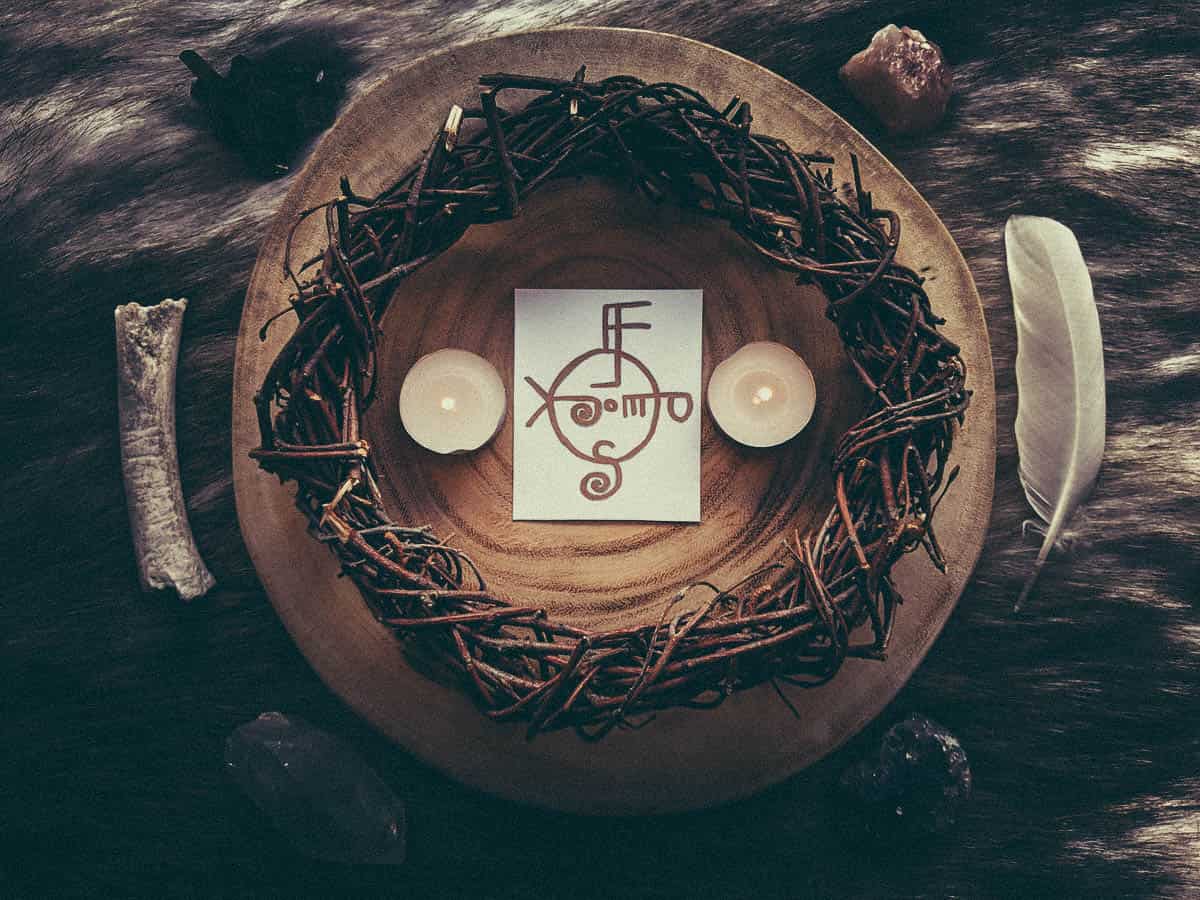
For those who enjoy hands-on creation and resonate with "occult vibes," crafting personal sigils can be highly effective. Sigils are potent, individualized symbols created from a deep personal intention (e.g., developing self-love, finding inner peace, overcoming a limiting pattern). Their power lies in their ability to harness and direct the subconscious mind, much like Florence Scovel Shinn described in "The Game of Life and How to Play It": "The subconscious is simply power, without direction. It is like steam or electricity, and it does what it is directed to do; it has no power of induction." Sigils provide that direction, imprinting intentions directly onto the subconscious for manifestation.
Working with the symbols of tarot or oracle cards is another profound method. Far from fortune-telling, these cards are understood as archetypes of the unconscious – mirrors of the psyche that reveal blind spots, hidden desires, and unfulfilled needs. By selecting a card each morning and reflecting on its imagery, one can engage in a symbolic dialogue with the subconscious, gaining insights into inner dynamics. The key is to remember that the cards themselves are merely reflections; the true power resides in the individual’s innate truth.
5. Intuition and the Subconscious: The Voice of the Soul
"Intuition is the whisper of the soul," stated Jiddu Krishnamurti. If there is one singular approach recommended for working with the subconscious, it is cultivating the ability to directly listen to and trust one’s intuition. Intuition is the Soul’s voice, the subconscious communicating directly in waking life. It manifests as spontaneous "knowing," subtle bodily sensations (tingles indicating danger or opportunity), or an inexplicable feeling that something is or isn’t meant for you.

Intuitive wisdom generally presents in two forms:
- Gut Instincts: Primal and immediate, sourced from the body’s ancient intelligence, often linked to survival mechanisms.
- Intuitive Knowing: A "higher intelligence" that provides understanding without conscious reasoning, an innate sense of truth.
Gary Zukav beautifully encapsulated this relationship: "Intuition is a walkie-talkie between the personality and the soul." Developing this inner "walkie-talkie" involves practices like mindfulness, self-reflection, and consciously choosing to honor these inner prompts, even when they defy logic.
6. Plant Medicine & Psychedelics as Subconscious Catalysts
Finally, plant medicines and psychedelics represent a powerful, direct, and often intense pathway to the subconscious. These substances can radically accelerate the ability to commune with, and even embody, the subconscious in profound ways. Experiences under their influence can range from vivid, bizarre behaviors reflecting subconscious contents to deeply spiritual encounters with unseen entities, as often observed in traditional ayahuasca ceremonies.

A crucial word of warning: While these tools offer immense therapeutic potential and are increasingly being researched for conditions like depression and PTSD, they are not without risk. For some, especially those with neurodiversity or pre-existing mental illnesses, these experiences can be overwhelming, frightening, or even traumatizing. It is imperative to approach this path with extreme caution, ideally under the guidance of a safe, experienced facilitator or a trained psychedelic therapist. The process of psychedelic integration – carefully processing and incorporating the insights gained – is essential to maximize therapeutic benefit and minimize potential harm. For those seeking gentler alternatives, exploring "legal psychedelics" (certain herbs known to enhance dream states) can offer a milder entry point. Regardless of the chosen path, gentleness, slowness, and attunement to one’s inner self are paramount.
Conclusion: Making Friends with Your Depths
As evident, a multitude of pathways exist for communing with and rewiring the old scripts held within our subconscious minds. However, the method of approach is secondary to the ultimate goal of this profound work: healing, self-befriending, and Soul recovery.
Our subconscious minds are not merely repositories of ‘monsters’ and bizarre phenomena, as often sensationalized in popular culture. Instead, they are the very doorways to the wise, wild, warm, welcoming, and whole Self (Soul) residing within us. Irish poet John O’Donohue, in his eloquent "Anam Cara: Spiritual Wisdom from the Celtic World," beautifully articulated this: "We falsely understand the subconscious as the cellar where all of our repression and self-damage is housed. We have imagined monsters down there out of our fear of ourselves… In actual fact these demons do not account for all the subconscious. The primal energy of our soul holds a wonderful warmth and welcome for us. One of the reasons we were sent onto the earth was to make this connection with ourselves, this inner friendship."

Go forth with this empowering vision. Recognize that beneath the surface of your conscious life lies an extraordinarily powerful tool, one that, in Joseph Murphy’s words, "multiplies and magnifies whatever you deposit into it." This is an inner ally, a best friend waiting to be acknowledged and engaged. By cultivating this profound inner friendship, we unlock an unparalleled capacity for growth, healing, and self-realization.
What approach to connecting with your subconscious mind resonates most with you? What insights do you sense might be hidden beneath the surface of your awareness? Share your reflections and experiences as you embark on this transformative journey into your inner cosmos.