The Peculiarly Logical Universe: A Critical Analysis of Øyvind Thorsby’s Webcomics
The digital revolution of the late 1990s and early 2000s birthed an era of unprecedented creative experimentation known as the "infinite canvas" period. While the burgeoning internet allowed thousands of aspiring artists to bypass traditional gatekeepers, the resulting "Web 2.0" aesthetic was often defined by a certain lack of formal training. Many early webcomics focused on niche interests—specifically video games and tabletop gaming—frequently prioritizing relatable punchlines over artistic rigor or narrative depth.
Among this sea of amateurism, however, emerged Øyvind Thorsby. Since beginning his work in 2001, Thorsby has cultivated a body of work that is simultaneously crude in its execution and profoundly sophisticated in its internal logic. By merging the structural complexity of an Oscar Wilde farce with the rigorous constraints of evolutionary biology, Thorsby has created a niche that is entirely his own. His work stands as a testament to the idea that in the world of independent comics, a compelling, logically consistent "big idea" can more than compensate for a lack of aesthetic polish.
Main Facts: The Thorsby Methodology
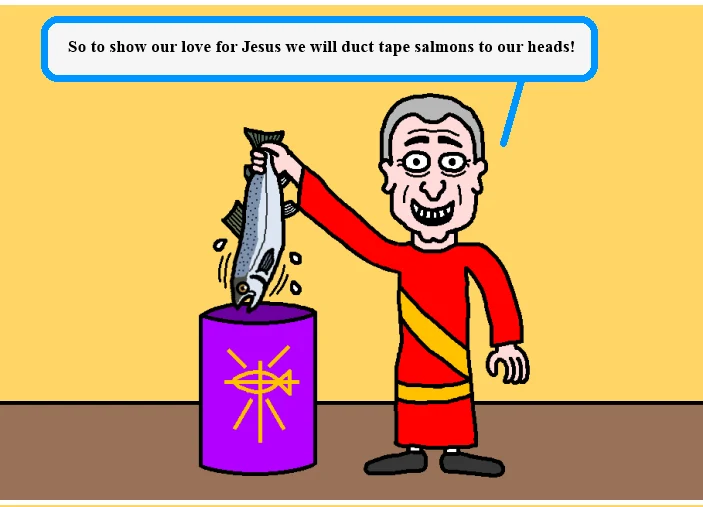
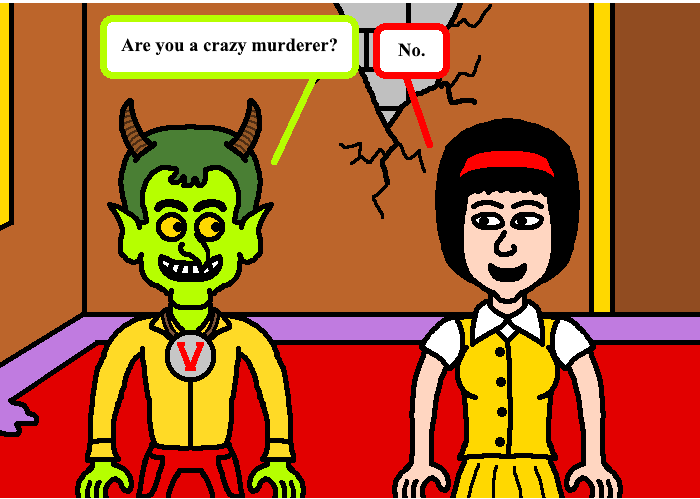
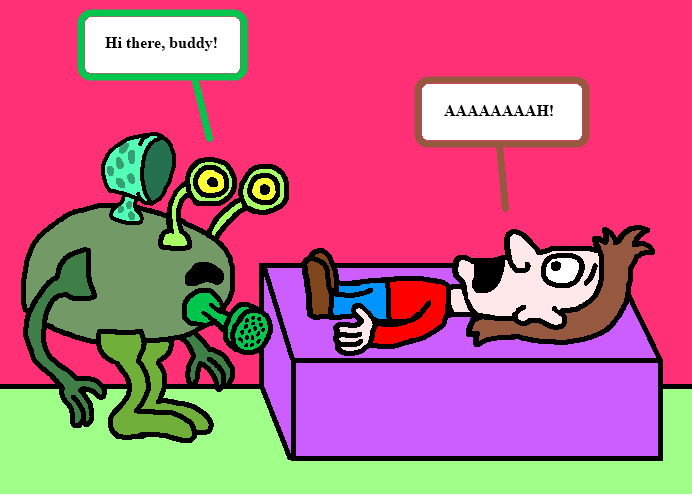
Øyvind Thorsby’s comics are characterized by a "stilted" art style—a mix of squiggly, hand-drawn character profiles and rigid, highly geometric environments. However, this visual simplicity serves a specific purpose: it acts as a neutral vessel for elaborate, text-heavy world-building. Thorsby’s stories do not operate on "cartoon logic" where anything can happen for the sake of a joke; instead, they function as intricate logic puzzles where character motivations are dictated by their specific biological and social evolution.
The core of Thorsby’s appeal lies in two specific axes:
- Elaborate Evolutionary Explanations: Thorsby often pauses his narratives to provide "scientific" justifications for why an alien species behaves the way it does, often grounded in genuine biological principles like light reflection or reproductive fitness.
- Classical Farce: Drawing from the traditions of 19th-century drawing-room comedies, his plots frequently revolve around misunderstandings, "webs of lies," and the unintended consequences of social protocols.
Chronology: From Domestic Deception to Intergalactic Sociology
To understand the evolution of Thorsby’s work, one must trace the progression from his grounded, mundane stories to his more expansive, sci-fi epics.
The Foundation of Farce: Lies, Sisters and Wives
Though many associate Thorsby with alien worlds, his best introductory work is the short, 34-page strip Lies, Sisters and Wives. Devoid of biological world-building, it focuses on the character Jim, who attempts to hide a mistress from a sudden influx of friends and family. The brilliance of the strip lies in the "logical lie"—Jim constructs a series of deceptions that do not technically contradict one another, but as other characters act upon this false information, the situation spirals into a chaotic, yet perfectly logical, disaster.
The Expansion into Space: The Accidental Space Spy
In this long-form narrative, Thorsby moved his farcical engine into the realm of science fiction. The story follows a normal human abducted under the mistaken identity of "Plume," a legendary space spy. The comedy here is an inversion of his earlier work: rather than the protagonist building a web of lies, the hero is a victim of his own ignorance. Lacking the biological and cultural context of the aliens he encounters, his simple requests for information escalate into intergalactic crises. This work marked Thorsby’s first major exploration of how "mismatched understanding" between species creates fertile ground for both comedy and tension.
Political Satire: Hitmen For Destiny and Trixie Slaughteraxe
As his career progressed, Thorsby began incorporating more overt political themes. Hitmen For Destiny explores characters working for a paycheck within a cosmic framework they barely understand, while Trixie Slaughteraxe for President follows a socialist protagonist attempting to save the world of Diabolica through a political agenda. These works are notable for their refusal to engage in simple "soapboxing." Instead, the politics are treated as just another set of rules within the logic puzzle. In Trixie Slaughteraxe, for instance, the heroine "saves" her comrades by accidentally inciting a class war that results in their deaths—a grimly logical outcome of her ideological commitments.

The Current Era: My Other Brain Is An Idiot
Thorsby’s ongoing work represents a "melting pot" of his previous themes. It centers on serpent-like humanoids whose bizarre biology is treated as mundane reality. The narrative is episodic and digressive, moving from smuggling operations to political assassinations to theatrical critiques, yet it maintains the signature Thorsby "weirdness" where every seemingly random event is eventually revealed to be a cog in a larger, rational machine.
Supporting Data: The Technical and Biological Framework
Thorsby’s work is not merely unique in content; it is innovative in form. While many webcomic artists struggled to adapt to the changing digital landscape, Thorsby’s work has aged remarkably well due to several technical and conceptual choices.
Verticality and the Infinite Canvas
Thorsby was an early adopter of the vertical panel organization. Unlike traditional comic pages designed for print, Thorsby’s panels are as long or as wide as necessary to reach the next narrative "cliffhanger." This makes his work exceptionally easy to read on modern mobile devices. More importantly, it allows him the space required for heavy exposition. When a biological concept needs explaining, Thorsby can dedicate as much vertical space as needed without disrupting the flow of the "page."
Scientific Sincerity as a Comedic Tool
One of Thorsby’s most effective tools is his adherence to "hard" science in absurd settings. A recurring example in his work is the treatment of invisibility. While most fiction ignores the mechanics of sight for invisible characters, Thorsby points out that an invisible person would be blind because their retinas would not reflect or absorb light. He uses this "weakness" to create grotesque and hilarious scenarios, such as invisible creatures fumbling through mating rituals or combat.
The Lunnhuis and Rational Suffering
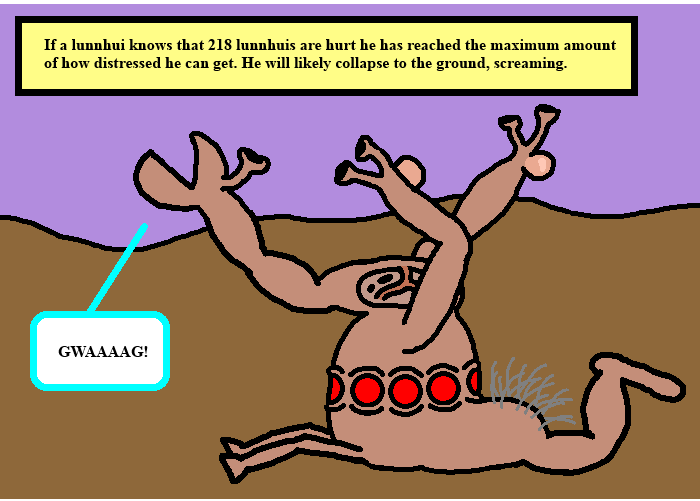
In The Accidental Space Spy, Thorsby introduces the Lunnhuis, an intelligent alien race that feels emotional anguish proportional to the number of people they know are being harmed. Thorsby uses this to make a profound sociological point: a race with "perfect" empathy could never become a major galactic power because they would be paralyzed by the knowledge of widespread suffering. This level of conceptual depth—exploring the evolutionary "utility" of rationalizing pain—is rare in the medium and provides the "supporting data" that makes his worlds feel plausible despite their squiggly appearance.
Critical Analysis: The "Imperfect Presentation" Philosophy
The "official" consensus among critics of the webcomic medium is that Thorsby represents a bridge between the amateurism of the early 2000s and the high-concept digital art of the 2020s. His work is often compared to Nathan Pyle’s Strange Planet, which also uses alien perspectives to highlight the absurdity of human behavior. However, where Strange Planet remains "publication-friendly" and condensed, Thorsby’s work is "genuinely weird."
Critics note that Thorsby’s lack of polish is, paradoxically, a strength. Because the art is so basic, the reader’s focus is directed entirely toward the dialogue and the underlying logic. It serves as a reminder that "big ideas" can thrive even with "imperfect presentation." His characters are often portrayed as stupid or irrational, yet their actions always hinge on specific, rational rules provided by their environment or biology. This creates a "charming resonance"—the blunt presentation gets across the odd ways people think and rationalize in a way that polished, corporate art often obscures.
Implications: The Future of Logical Storytelling
The endurance of Øyvind Thorsby’s career suggests several implications for the future of digital comics and narrative theory:
- The Priority of Internal Consistency: Thorsby proves that audiences will forgive "crude" art if the internal logic of the world is unbreakable. In an era of high-budget "plot holes" in cinema and mainstream comics, Thorsby’s rigorous adherence to his own rules offers a satisfying alternative for readers who crave intellectual consistency.
- The Utility of the Infinite Canvas: As mobile reading becomes the primary way audiences consume comics, Thorsby’s vertical, exposition-friendly layout provides a blueprint for how to handle complex, text-heavy narratives in a digital-first format.
- Science as a Narrative Engine: By using evolutionary biology not just as a backdrop but as a source of conflict and comedy, Thorsby suggests a path forward for "hard" sci-fi that doesn’t lose its sense of humor. His work implies that the more we understand about the "cold, hard science" of our existence, the more we can find the "best possible way" to be weird.
Ultimately, Thorsby’s work stands as a unique monument in the webcomic landscape. It is a world where love can motivate people to do incredibly stupid things, but the reason why they do those stupid things can be traced back to a perfectly logical, biological root. It is a body of work that is as human as art can get—messy on the surface, but driven by a deeply structured, albeit peculiar, heart.