"Of Magic and Empire" Unveils a Refreshing Epic Fantasy Against a World Gripped by Chaos
FOR IMMEDIATE RELEASE
In a literary landscape often dominated by gritty realism and deconstructed tropes, Shay Yates Roberts’ Of Magic and Empire emerges as a vibrant and expansive return to the grandeur of traditional epic fantasy. Reviewed by Julia Kitvaria Sarene for Fantasy Faction, this ambitious debut novel plunges readers into a realm suffused with magic, where an insidious affliction known as "Frenzy" threatens to unravel civilization itself. The narrative follows three disparate, yet profoundly compelling, individuals—a skilled mage, a talented scholar, and a powerful cleric—who are unexpectedly thrust into the forefront of a desperate struggle to save their world from an ancient evil.
Roberts’ work has been lauded for its commitment to the "epic" scale, weaving magic seamlessly into the fabric of society, from religious institutions to military life and everyday adventure. This approach offers a refreshing counterpoint to contemporary fantasy trends that often lean away from overt magical influence. While the novel has garnered praise for its richly built world, engaging characters, and adventurous spirit, critical insights highlight certain narrative choices, such as the rapid formation of character bonds and a perceived lack of sustained tension, as areas for deeper consideration in future installments. Nevertheless, Of Magic and Empire is positioned as a solid choice for readers yearning for a sweeping, character-driven quest unburdened by excessive darkness or punishing stakes.
The Unraveling of a Realm: Main Facts on Of Magic and Empire
Of Magic and Empire, penned by Shay Yates Roberts, is an epic fantasy novel that immediately distinguishes itself through its unapologetic embrace of a magic-rich world. At its heart, the story revolves around a cataclysmic event: the widespread emergence of "Frenzy," a bewildering affliction that systematically strips individuals of their love, kindness, and all semblance of self-restraint. This existential threat plunges the empire into chaos, prompting a desperate plea from the Empress for champions capable of uncovering the malady’s origin and halting its spread.
Responding to this urgent call are three unlikely heroes, each burdened by their own past and unique circumstances:
- Jesmyn: A mage of exceptional talent, she navigates a society that ridicules her due to an unspecified peculiarity of birth. Her journey is characterized by her literal interpretation of the world and her struggle with nuanced social cues.
- Sperling: A uniquely gifted scholar, Sperling is driven by the profound personal crisis of saving his fractured family, providing a deeply human anchor to his grander quest.
- Aurisma: A powerful cleric, she carries the weight of a rare punishment, a consequence of challenging established superiors, suggesting a fierce independence and conviction that sets her apart.
These three protagonists, alongside their developing companions, embark on distinct quests, their paths converging only in their ultimate objective: to confront the pitiless terror behind the Frenzy, an evil born of ancient sin. The narrative is set against a backdrop of intense political, religious, and military infighting, which proves almost as dangerous as the Frenzy itself. The world-building is notably comprehensive, featuring maps, a glossary, and extensive lore that contribute to a truly immersive experience. Magic is not merely a plot device but an integral component of daily life and societal structure, presented as a natural element of the world rather than an intricate system requiring exhaustive explanation. Julia Kitvaria Sarene’s review underscores the novel’s refreshing commitment to its epic scope, its endearing characters, particularly Jesmyn, and its adventurous tone, making it a compelling read for those seeking an expansive fantasy without leaning into grimdark territory.
A Journey Through Chaos: Chronology of the Narrative and its Reception
The narrative of Of Magic and Empire unfolds with a deliberate, episodic pace, charting the progression of its protagonists through a world teetering on the brink. The review by Julia Kitvaria Sarene allows us to reconstruct the story’s critical path and the reader’s journey through its expansive universe.
The Genesis of Crisis: The Frenzy’s Emergence
The story begins with the established order of the empire, a realm forged and sustained by the pervasive power of magic. This initial stability, however, is swiftly shattered by the onset of the "Frenzy." This affliction is not merely a physical disease but a spiritual and emotional plague, systematically eroding the very foundations of human empathy and self-control. Its mysterious origin and devastating impact create an immediate and palpable sense of urgency, throwing society into disarray and prompting widespread fear. As the Empress observes her realm succumbing to this baffling malady, she is compelled to make a desperate call, seeking individuals with the unique skills and courage to confront the unknown. Her choice falls upon Jesmyn, Sperling, and Aurisma, recognizing their latent potential and distinct talents despite their personal struggles and societal standing. This initial setup establishes the high stakes and the personal journeys that will define the narrative.
Divergent Paths, Unified Purpose
Once tasked by the Empress, the three protagonists embark on separate, yet interconnected, quests. Jesmyn, the mage, navigates her path with a distinctive literalness, her profound magical skill often juxtaposed against her social peculiarities. Her journey is enhanced by the companionship of Zanther, whose acceptance of her unique traits fosters a warm, genuine friendship that becomes a highlight of the novel. Sperling, the scholar, confronts the immediate, heartbreaking reality of his broken family, imbuing his quest with a deeply personal motivation that resonates beyond the grander imperial crisis. Aurisma, the cleric, carries the burden of past defiance against her superiors, a testament to her unwavering conviction and a character trait that promises both strength and potential conflict in her mission. Each hero’s individual quest is carefully crafted to explore different facets of the empire and the encroaching darkness, showcasing the diverse ways in which the Frenzy impacts various strata of society and the personal toll it exacts.
Navigating a Fractured Realm
As Jesmyn, Sperling, and Aurisma venture forth, their paths are not merely obstructed by the manifestations of the Frenzy, but also by the deeply entrenched rivalries within the empire’s political, religious, and military factions. These internal conflicts, fueled by divergent agendas and longstanding power struggles, are depicted as being as perilous as the external threat itself. The heroes must navigate this treacherous landscape of intrigue and suspicion, often finding themselves caught between competing loyalties and hidden motives. Their search for answers eventually propels them beyond the "cradle of civilization," into the untamed "wildlands." It is in these ancient, forgotten territories that they must finally confront the true source of the Frenzy—an "evil born of ancient sin"—a confrontation that is foreshadowed to demand a terrible toll from them all, signaling a climactic struggle against a primal force.
The Critical Eye: Julia Kitvaria Sarene’s Assessment
Julia Kitvaria Sarene’s review for Fantasy Faction provides a chronological account of the reading experience, moving from initial impressions to detailed critique. She begins by commending Roberts’ decision to "throw you into a world with magic woven through religion, military life, and adventure," noting its refreshing departure from current trends. Sarene appreciates the commitment to epic scope and the likeability of the three leads, particularly highlighting Jesmyn’s characterization and her relationship with Zanther. However, as the narrative progresses, Sarene observes a recurring pattern: the rapid formation of character bonds, which, while enjoyable, felt unearned. Her critique extends to the narrative’s pacing, where crises are introduced and resolved with a swiftness that diminishes the sense of building threat and consequence. She notes that characters adapt and recover quickly, leading to an "episodic" feel where "nothing in it costs very much." By the novel’s conclusion, Sarene finds that despite the journey, the characters "feel more or less safe," an observation that underpins her assessment of the book’s overall stakes and character development. This chronological unfolding of her critical perspective provides a comprehensive overview of the novel’s strengths and areas for refinement.
Unpacking the Lore: Supporting Data and Critical Analysis
Julia Kitvaria Sarene’s review offers substantial supporting data for understanding the intricate tapestry of Of Magic and Empire, particularly regarding its character development, world-building, and narrative mechanics.
Character Archetypes and Nuances
The strength of Of Magic and Empire lies significantly in its core trio of protagonists. Jesmyn, the mage, stands out as a "particular highlight." Her "literalness and her difficulty reading between the lines are treated as simply part of who she is, not a quirk to overcome or a punchline." This approach to character writing is commendable, portraying her neurodivergent-coded traits not as flaws to be fixed, but as integral aspects of her identity. Her relationship with Zanther, who accepts her unconditionally, forms a "warm without being saccharine" friendship, providing an emotional core to her journey. Sperling, the scholar, embodies the burden of personal responsibility, his quest intertwined with the urgent need to save his "broken family," adding a layer of grounded humanity to the epic scope. Aurisma, the powerful cleric, brings a defiant spirit, having suffered "a rare punishment for challenging her superiors," hinting at a strong moral compass and a willingness to stand for her convictions. Collectively, these characters are described as "likeable and genuinely good company," making the extensive journey enjoyable for the reader. The formation of loyal companionships, though rapid, contributes to the novel’s overall positive and adventurous tone.
Crafting an Expansive World
Shay Yates Roberts’ commitment to world-building is evident and highly praised. The novel presents a "large and clearly well-built" world, complete with the immersive tools of "maps, a glossary, and enough lore to keep worldbuilders happy." This meticulous attention to detail enriches the reader’s experience, providing a solid foundation for the unfolding narrative. A defining feature is the pervasive nature of magic, which is "varied and present in generous amounts, woven into different parts of society in ways that feel distinct." This is a deliberate contrast to recent fantasy trends that often downplay or limit magic. In Of Magic and Empire, magic is not an anomaly but a fundamental aspect of the realm, integrated into "religion, military life, and adventure in equal measure." While the magic system is presented as "a given rather than explained in depth," this choice allows for an organic absorption of the world, appealing to readers who prefer discovery over exhaustive exposition. This robust magical integration reinforces the novel’s "epic" designation and offers a refreshing experience for those seeking a vibrant, enchanted setting.
Narrative Mechanics: Pacing, Stakes, and Consequences
Despite its strengths, the review critically examines certain narrative mechanics. A consistent observation across all three storylines is the speed at which "strangers become trusted companions almost before the conversation has ended." While the friendships are "genuinely enjoyable," this rapid bonding "reads less like a character trait and more like a feature of the world," diminishing the sense that these bonds were "properly earned." More significantly, Sarene points out that "almost nothing in it costs very much." Characters demonstrate remarkable resilience, adapting and recovering "quickly," allowing the story to "move on before the tension has time to settle." This episodic structure, where "a crisis arrives, the characters come through it, and the story moves on," prevents the building of a sustained, escalating threat. The characters, while "good people and capable ones," are described as "almost entirely without edges," lacking the genuine flaws or internal conflicts that might make moments of danger feel truly impactful or create a sense of profound loss. This critique suggests that while the novel succeeds as "expansive and adventurous," its intentional avoidance of being "punishing or dark" inadvertently reduces the perceived stakes, making it an enjoyable but ultimately less emotionally resonant journey for some readers.
Authorial Intent and Critical Discourse: Official Responses
Given that the provided text is a single critical review, "official responses" in the traditional sense from the author or publisher are not present. However, we can infer authorial intent from the text’s characteristics and consider the critical review itself as a vital "official response" within the literary discourse.
Authorial Intent and Creative Vision
From Julia Kitvaria Sarene’s analysis, it is clear that Shay Yates Roberts intended to craft an epic fantasy that deliberately harks back to foundational elements of the genre. The choice to immerse readers in a world where magic is ubiquitous and intrinsic, rather than scarce or deconstructed, suggests a conscious effort to offer a refreshing alternative to the "lean on magic lately" trend. Roberts appears to prioritize an adventurous, sweeping narrative, focusing on the journey and the positive aspects of companionship and heroism. The characters’ "likeable" nature and the relatively swift resolution of crises, as well as their rapid recovery, point towards a creative vision that favors an enjoyable, less arduous reading experience over intense psychological depth or protracted suffering. This approach positions Of Magic and Empire as a "solid choice" for readers who desire an "expansive and adventurous without being punishing or dark" narrative, indicating a clear authorial goal to deliver escapism and wonder rather than grim realism. The extensive world-building, with maps and a glossary, further supports the idea of an author dedicated to creating a rich, accessible, and immersive fantasy world for readers to explore.
Publisher’s Positioning and Market Strategy (Inferred)
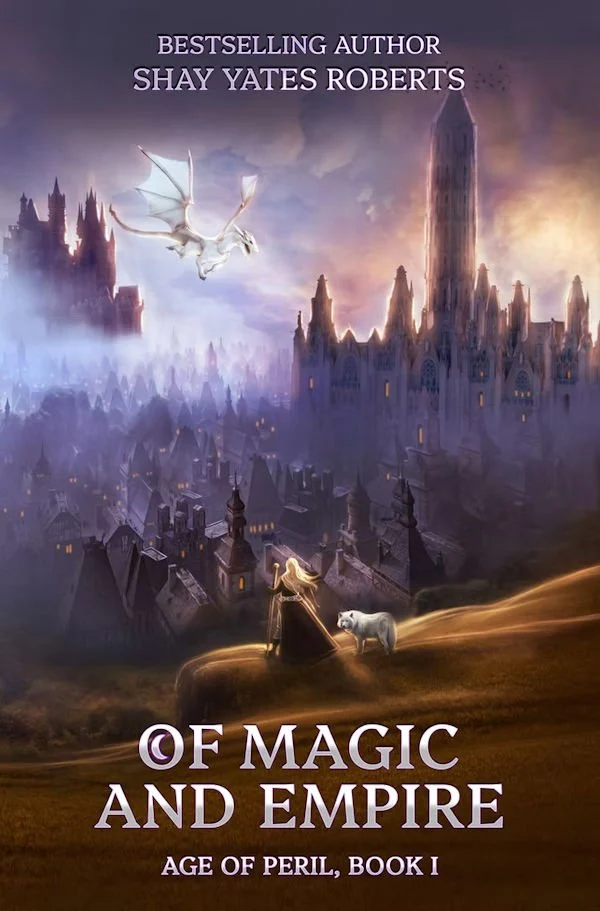
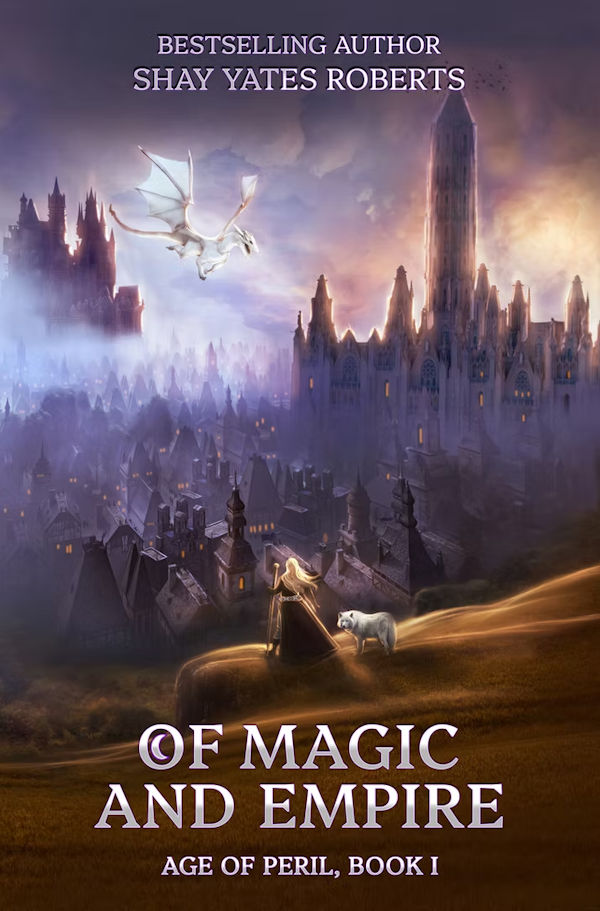
Based on the review, a publisher would likely position Of Magic and Empire as a vibrant, classic epic fantasy. The cover art, depicting a classic fantasy scene, aligns perfectly with this. Marketing efforts would probably highlight its expansive world, rich magic system, and the compelling quest narrative. It would be pitched to readers seeking a refreshing antidote to the "grimdark" subgenre, appealing to those who appreciate heroic journeys, strong character bonds, and intricate lore without the burden of excessive violence or moral ambiguity. The emphasis would be on the novel’s ability to transport readers to a fantastical realm brimming with adventure, making it an ideal choice for readers looking for a traditional, yet engaging, epic. The mention of "book one" suggests a planned series, implying a long-term strategy to build a dedicated readership around this new, expansive world.
The Critic’s Voice: An Essential Dialogue
Julia Kitvaria Sarene’s review itself functions as a crucial "official response" within the literary ecosystem. As a seasoned bookseller with "21 years" of experience and a "veritable wizard of book recommendations," her insights carry significant weight. Her critique is not merely subjective opinion but an informed assessment, contributing to the dialogue surrounding the novel. By highlighting both the novel’s successes (refreshing magic, engaging characters, epic scope) and its perceived weaknesses (rapid relationship development, lack of sustained stakes), Sarene provides invaluable feedback that can inform both readers’ expectations and potentially guide the author’s future work in the series. Her professional, yet passionate, voice helps readers "navigate the realm of swords, magic, and supernatural wonders," solidifying the review’s role as a respected "official" interaction with the published work.
Charting the Course: Implications for Readers, Genre, and Future Works
The emergence of Of Magic and Empire and its critical reception carry several significant implications, touching upon reader expectations, the evolving landscape of epic fantasy, and the potential trajectory of the series.
The Future of Epic Fantasy
Of Magic and Empire signifies a potential resurgence or reinforcement of traditional epic fantasy values. In an era where the genre has often gravitated towards darker, grittier narratives, moral ambiguity, and magic systems that are either minimalist or hyper-analytical, Roberts’ novel offers a refreshing return to grand adventure, overt magic, and clear heroic arcs. This could suggest a diversification within the genre, allowing space for both the grimdark and the genuinely epic. Its success could encourage other authors to explore more traditional, high-fantasy themes without fear of being perceived as anachronistic. The book demonstrates that there is still a significant appetite for stories where magic is abundant, heroes are genuinely good, and the overall tone is one of adventurous wonder rather than unrelenting despair.
Reader Experience and Expectations
For readers, Of Magic and Empire offers a specific, compelling value proposition. It is explicitly recommended for those "looking for epic fantasy that is expansive and adventurous without being punishing or dark." This sets clear expectations: readers can anticipate an engaging quest, a rich world, and likeable characters without the emotional toll often associated with more intense fantasy subgenres. However, those seeking intricate magic systems with deep explanations, morally complex characters with significant flaws, or narratives with constantly escalating stakes and devastating consequences might find the book’s approach less satisfying. The review serves as an excellent guide, helping readers align their preferences with the novel’s unique blend of strengths and stylistic choices. It’s an ideal read for when one desires "an enjoyable quest through a big world with characters worth following," prioritizing pleasant companionship and fluid adventure.
Potential for Series Growth and Evolution
As "book one," Of Magic and Empire lays a robust foundation for a potentially extensive series. The critiques regarding the rapid formation of friendships and the lack of sustained narrative cost offer valuable insights for future installments. Should the author choose to address these points, subsequent books could deepen character bonds through more prolonged development, introduce more significant and lasting consequences for actions, and allow tension to build over longer arcs. The "ancient evil" behind the Frenzy, currently presented as a formidable but somewhat distant threat, could evolve into a more immediate and psychologically taxing antagonist, pushing the "good and capable" characters to their true limits and perhaps revealing the "edges" the review suggests they currently lack. The expansive world and compelling premise provide ample room for such evolution, potentially transforming an enjoyable debut into a truly landmark epic series.
Julia Kitvaria Sarene’s Impact on the Discourse
Julia Kitvaria Sarene’s insightful review not only illuminates Of Magic and Empire but also reinforces her significant role in the fantasy literary community. Her decades of experience as a bookseller, coupled with her genuine passion for fantasy, lend credibility and depth to her critiques. Her ability to articulate both the refreshing aspects of Roberts’ novel and its areas for refinement contributes meaningfully to the broader literary discourse. She acts as a trusted guide for readers, helping them navigate the vast and ever-growing world of fantasy, ensuring that works like Of Magic and Empire find their ideal audience and that authors receive constructive feedback to refine their craft in subsequent works. Her personal connection to the genre, from running through forests to discussing fantasy tomes, underscores the passion she brings to her reviews, making her an influential voice in the contemporary fantasy landscape.