
Ancient Echoes from the Great Below: Unveiling the Sumerian Epic of Inanna’s Descent
Main Facts
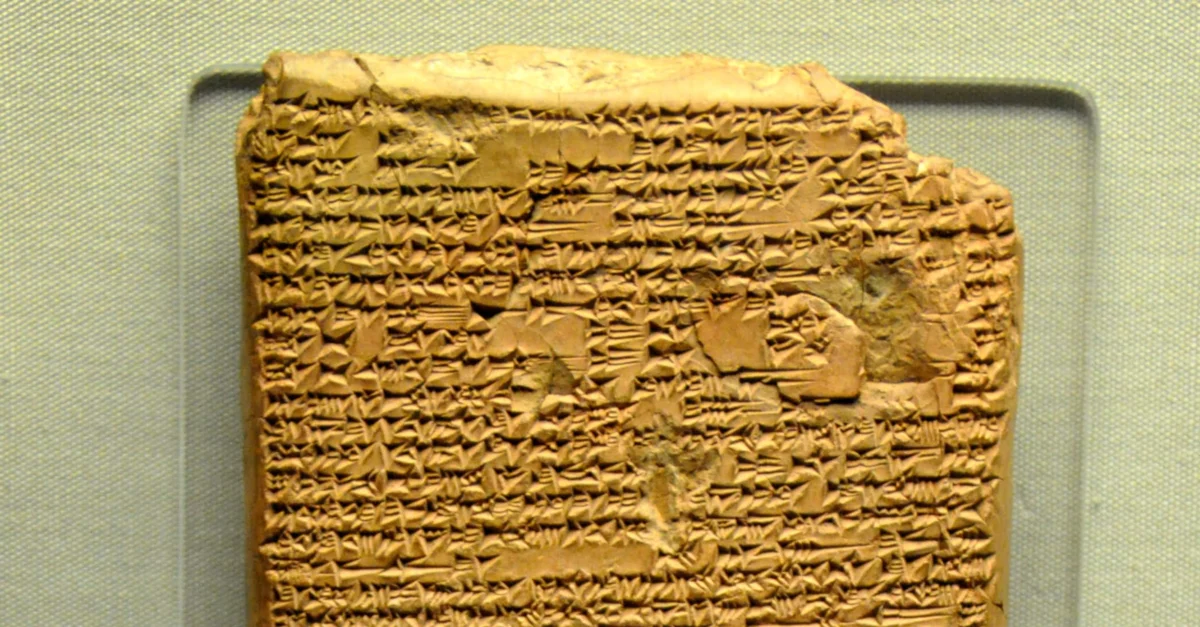
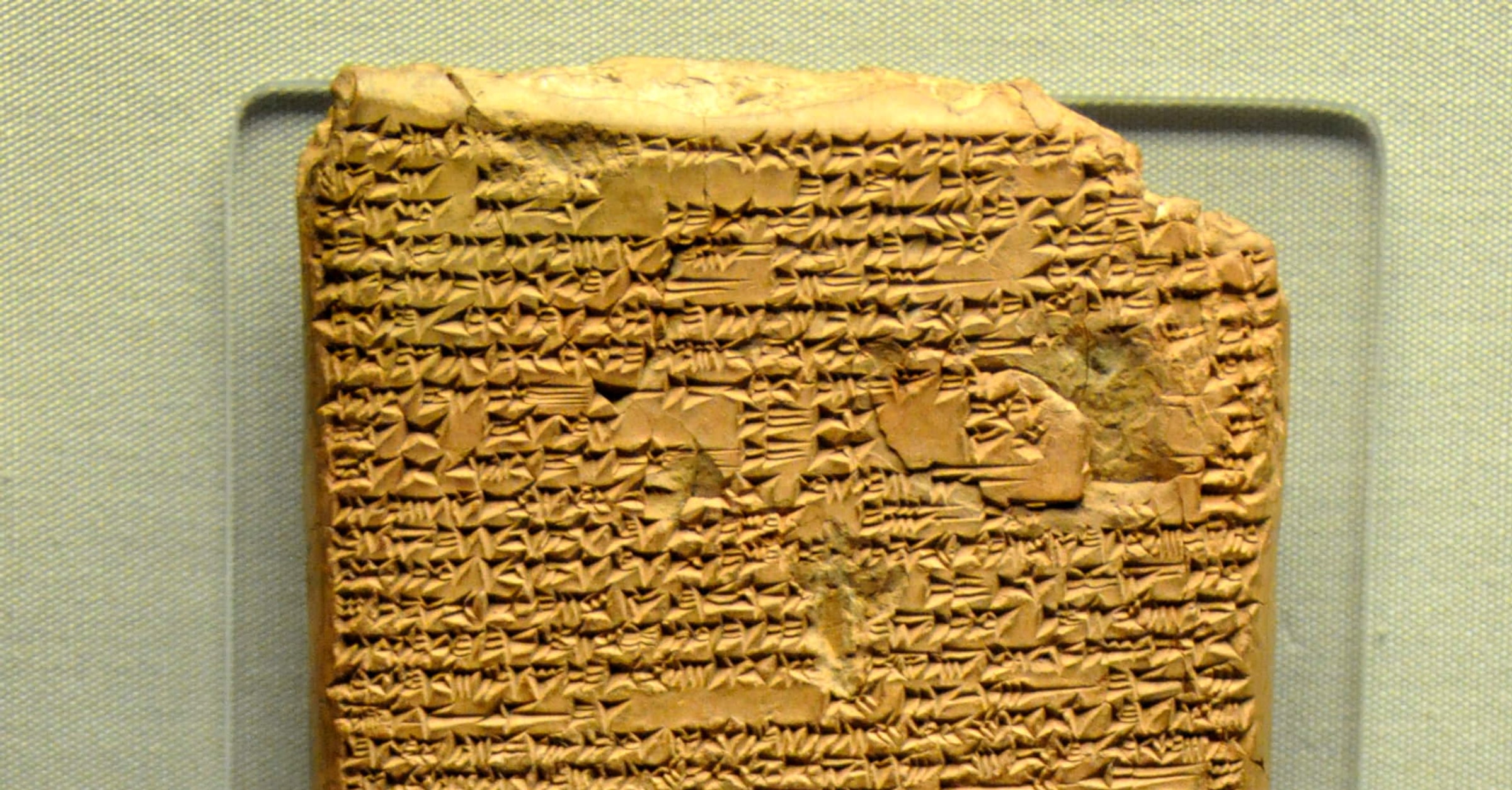
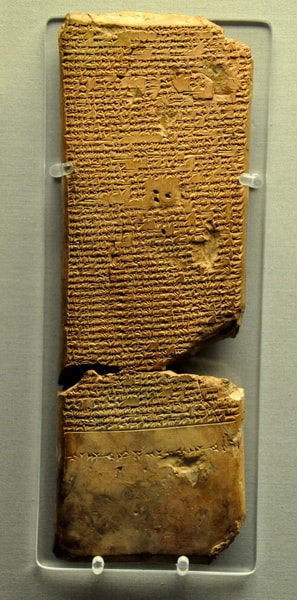
The ancient Sumerian poem, The Descent of Inanna, dating from approximately 1900-1600 BCE, stands as a foundational text in world literature, chronicling a perilous journey into the heart of the underworld. This epic narrative details the audacious quest of Inanna, the revered Queen of Heaven and goddess of love, war, and fertility, as she ventures from her celestial abode to the earthly realm and subsequently descends into Kur, the land of the dead. Her stated purpose: to attend the funeral rites of Gugalanna, the Bull of Heaven, husband to her formidable sister, Ereshkigal, the undisputed Queen of the Underworld.
The poem begins with an iconic invocation, immediately establishing the profound nature of her undertaking:
"From the Great Above she opened her ear to the Great Below
From the Great Above the goddess opened her ear to the Great Below
From the Great Above Inanna opened her ear to the Great Below."
(Wolkstein and Kramer, 52)
This triplicate opening emphasizes the momentous decision and the profound transition Inanna is about to undergo, signaling a journey not merely geographical but spiritual and existential. Accompanied partway by her loyal servant and advisor, Ninshubur, Inanna’s descent sets in motion a chain of events that explores themes of power, vulnerability, divine justice, and the inescapable consequences of actions within the complex pantheon of ancient Mesopotamia.
The Descent Unveiled: A Chronological Account
Inanna’s journey into the underworld is meticulously detailed, portraying a sequence of ritualistic stripping and confrontation that culminates in her demise and eventual resurrection.
Inanna’s Preparation and Departure
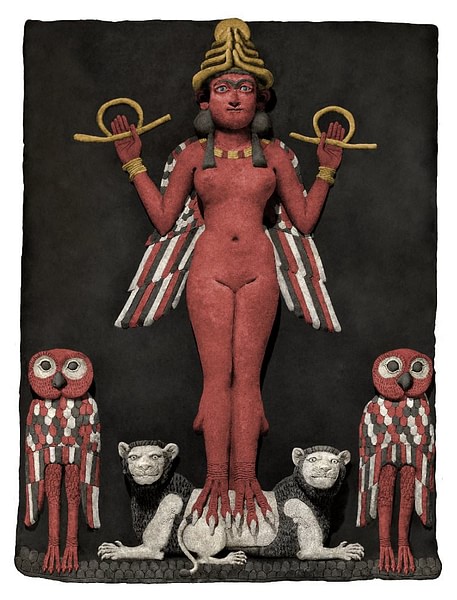
Before embarking on her perilous journey, Inanna meticulously adorns herself in her most splendid attire and symbols of divine authority. She wears the crown of heaven, a necklace of lapis beads, her breastplate, a golden ring, and carries her scepter, the very rod of power. This elaborate preparation underscores her status and her intention to command respect even in the domain of death. However, prescient of the dangers, she wisely instructs Ninshubur, her faithful vizier, on how to seek aid should she fail to return within three days and three nights. Ninshubur is to appeal to Inanna’s father-god, Enki, the wise deity of water and creation, for intervention.
The Seven Gates of the Underworld
Upon reaching the outermost gates of the underworld, Inanna demands entry with an imperious knock. Neti, the chief gatekeeper, questions her identity and purpose. When Inanna declares herself "Queen of Heaven" and states her desire to attend Ereshkigal’s husband’s funeral, Neti expresses skepticism, questioning why she would seek entrance to "the land from which no traveler returns." Inanna reiterates:
"Because of my older sister, Ereshkigal
Her husband, Gugalanna, the Bull of Heaven, has died
I have come to witness the funeral rites."
(Wolkstein and Kramer, 55)
Neti departs to relay this news to Ereshkigal, leaving Inanna to await her sister’s decision. Ereshkigal’s reaction, "She slapped her thigh and bit her lip. She took the matter into her heart and dwelt on it" (Wolkstein and Kramer, 56), is notably devoid of warmth or welcoming sentiment. Instead, she orders Neti to bolt the seven gates of the underworld and to allow Inanna to enter only one gate at a time, demanding that she shed one royal garment or piece of regalia at each threshold.
As Inanna progresses through the seven gates, she is systematically stripped of her crown, beads, breastplate, ring, scepter, and even her clothes. With each indignity, she questions the meaning of this ritualistic disempowerment, only to be met with Neti’s chilling response:
"Quiet, Inanna, the ways of the underworld are perfect
They may not be questioned."
(Wolkstein and Kramer 58-60)
This stripping symbolizes her complete loss of divine power and status, rendering her utterly vulnerable as she enters the domain of death.
Confrontation and Demise
Finally, Inanna enters Ereshkigal’s throne room "naked and bowed low." As she attempts to approach the throne, she is immediately surrounded by the Annuna, the fearsome judges of the underworld. They pass judgment against her, a verdict swiftly enforced by Ereshkigal herself. The Queen of the Dead fixes "the eye of death" upon Inanna, speaks "the word of wrath," utters "the cry of guilt," and strikes her. In an instant, Inanna is transformed:
"Inanna was turned into a corpse
A piece of rotting meat
And was hung from a hook on the wall."
(Wolkstein and Kramer, 60)
This dramatic death underscores the absolute authority of Ereshkigal within her realm and the finality of death in Sumerian cosmology.
Ninshubur’s Plea and Enki’s Intervention
True to Inanna’s instructions, after three days and three nights, Ninshubur, witnessing her mistress’s prolonged absence, begins her desperate appeals. She goes to the assembly of the gods, eventually reaching Enki, Inanna’s father-god, renowned for his wisdom and compassion. Enki, deeply moved by Inanna’s plight, devises a cunning plan for her rescue. He creates two beings, the galla, described as "neither male nor female" or "transgender," imbuing them with the "food of life" and the "water of life." He instructs them to enter the underworld stealthily, "like flies," and, crucially, to sympathize with Ereshkigal’s suffering.
Resurrection and the Price of Return
The galla descend into the underworld and find Ereshkigal in profound distress, experiencing the pains of labor, a striking image of suffering:
"No linen was spread over her body
Her breasts were uncovered
Her hair swirled around her head like leeks."
(Wolkstein and Kramer, 63-66)
The galla, following Enki’s precise instructions, attach themselves to the grieving queen and voice their heartfelt sympathy for her anguish. In gratitude, Ereshkigal offers them any gift they desire. As instructed, the galla request only "the corpse that hangs from the hook on the wall" (Wolkstein and Kramer, 67). Ereshkigal, bound by her promise, grants their wish. The galla then revive Inanna with the food and water of life, and she rises from the dead.
However, the laws of the underworld are immutable. Just as in the later Greek myth of Demeter and Persephone, one who has entered the land of the dead cannot simply depart without a substitute. Thus, Inanna is accompanied back to the surface world by the galla demons, who are tasked with claiming a replacement. They first attempt to seize Ninshubur, then Inanna’s sons, Shara and Lulal, and even her beautician, Cara. In each instance, Inanna intervenes, noting that these loyal individuals are dressed in sackcloth and mourning her, making them unsuitable sacrificial victims.
Dumuzi’s Betrayal and Fate
The dramatic climax arrives when Inanna encounters her lover, Dumuzi. To her shock and fury, she finds him "dressed in his shining…garments…on his magnificent throne," conspicuously not mourning her but instead enjoying his earthly comforts. Enraged by his apparent indifference and betrayal, Inanna points him out to the galla and orders them to seize him. Dumuzi, desperate, appeals to the sun god Utu-Shamash for help and is momentarily transformed into a snake to escape. Yet, his evasion is short-lived; he is eventually captured and dragged down to the underworld.
The tragedy is somewhat mitigated when Dumuzi’s devoted sister, Geshtinanna, volunteers to take his place. A divine decree follows: Dumuzi will spend half the year in the underworld, and Geshtinanna the other half. This arrangement, mirroring the Greek myth of Persephone, provides an ancient explanation for the changing seasons, linking the fertility of the earth to the annual descent and return of a divine figure. However, the poem’s elaborate narrative suggests its purpose extends far beyond a simple meteorological explanation.
Beyond the Surface: Unpacking the Mythological Context (Supporting Data)
To fully grasp the profound implications and underlying motivations within The Descent of Inanna, it is crucial to consider its intertextual relationship with other major Sumerian narratives, particularly The Epic of Gilgamesh. This contextual lens reveals a layer of narrative complexity often overlooked by modern interpretations.
The Crucial Link: Inanna and the Epic of Gilgamesh
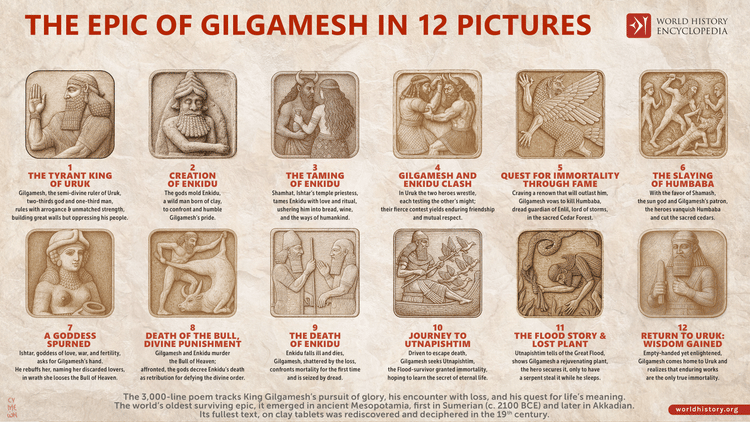
While the written form of The Epic of Gilgamesh (circa 2100-1000 BCE) might have postdated or coexisted with The Descent of Inanna, its oral traditions were undoubtedly well-known throughout Sumerian society. In The Epic of Gilgamesh, Inanna (known by her Akkadian/Babylonian name, Ishtar) makes a pivotal appearance. After Gilgamesh and Enkidu achieve fame by slaying the demon Humbaba, Inanna is captivated by Gilgamesh. She attempts to seduce him, promising him a life of luxury and divine favor as her lover.
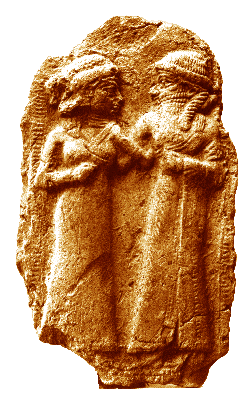
However, Gilgamesh, wise to Inanna’s capricious nature and her history of discarding lovers, vehemently rejects her advances. He recites a scathing indictment of her past relationships, accusing her of mistreating all who have fallen for her charms. He famously states:
"Your lovers have found you like a brazier which smoulders in the cold, a backdoor which keeps out neither squall of wind nor storm, a castle which crushes the garrison, pitch that blackens the bearer, a water skin that chafes the carrier."
(Sandars 85-87)
Gilgamesh concludes his tirade with a pointed question: "And if you and I should be lovers, should not I be served in the same fashion as all these others whom you loved once?" (Sandars, 85-87).
Inanna, wounded and enraged by this public humiliation, appeals to her father-god, Anu, seeking vengeance. Anu, however, dismisses her complaints, attributing her plight to her own "abominable behavior" (Sandars, 87). Undeterred, Inanna threatens to unleash chaos by breaking open the doors of the underworld, promising to "bring up the dead to eat food like the living; and the hosts of the dead will outnumber the living" (Sandars, 87) unless Anu grants her Gugalanna, the Bull of Heaven. This Gugalanna, critically, is the husband of Inanna’s sister, Ereshkigal.
Anu eventually yields to Inanna’s threats, allowing her to unleash Gugalanna upon the city of Uruk. The Bull of Heaven causes widespread devastation, killing hundreds of young men. Gilgamesh and Enkidu confront and slay the Bull of Heaven. In a final act of defiance, Enkidu tears off the bull’s right thigh and hurls it at Inanna, further enraging the goddess. This insolence by a mortal leads the gods to decree Enkidu’s death, striking him down with illness.
Ereshkigal’s Grief and Justified Wrath
With the Epic of Gilgamesh in mind, the events of The Descent of Inanna take on a dramatically different, and clearer, light. Inanna’s stated reason for visiting the underworld – to attend the funeral of Gugalanna – becomes deeply ironic and provocative. It reveals a profound insensitivity on Inanna’s part, as she is directly responsible for Gugalanna’s death. She effectively caused her sister Ereshkigal’s widowhood and, as the poem subtly suggests, her subsequent pregnancy without a living father for her child.
Ereshkigal’s "strange" reaction upon hearing of Inanna’s arrival – her slapping her thigh, biting her lip, and dwelling on the news – is no longer mysterious. It is the palpable response of a grieving widow confronted by the very architect of her sorrow. Her command to strip Inanna of her regalia at each gate is not merely a ritual of the underworld but an act of calculated humiliation and disempowerment, stripping Inanna of the very symbols of the hubris that led to Gugalanna’s demise.
The "word of wrath" and "cry of guilt" that Ereshkigal utters before striking Inanna down are perfectly logical in this context. Ereshkigal is not merely exercising her power; she is delivering a fierce, personal retribution against the one who inflicted such immense pain upon her. The image of Inanna as a "rotting piece of meat" hung on a hook underscores the severity of Ereshkigal’s judgment and the depth of her justified fury.
Divine Intervention and Mortal Consequences
The pattern established in Gilgamesh – Inanna acting impulsively, causing suffering, and then manipulating a father-god figure for her own ends – is mirrored in The Descent. Just as she coerced Anu into releasing the Bull of Heaven, she manipulates Enki into facilitating her return from the dead. And just as Enkidu and the 300 young men of Uruk paid the price for Inanna’s indignation in Gilgamesh, Dumuzi and Geshtinanna are made to pay the ultimate price for Inanna’s insensitivity and rash decision to visit the funeral of the man whose death she caused. Their suffering is a direct consequence of her actions, highlighting a stark reality of the Sumerian cosmos: divine actions, however arbitrary or personally motivated, have tangible and often tragic consequences for mortals and even other gods.
Navigating Interpretations: Scholarly Discourse and Historical Accuracy (Official Responses)
The Descent of Inanna has fascinated scholars and general readers alike, leading to a wealth of interpretations over the centuries. While its symbolic richness invites diverse readings, it is imperative to distinguish between modern, anachronistic interpretations and those grounded in the historical and cultural context of ancient Mesopotamia.
The Allure of Modern Archetypes
A prevalent modern interpretation, popularized by writers applying a psychological, specifically Jungian, view, posits The Descent of Inanna as an archetypal myth of the individual’s journey toward psychological wholeness. In this framework, Inanna’s descent into the underworld symbolizes a confrontation with the "shadow self" – the repressed, darker aspects of the psyche. The stripping of her garments represents the shedding of the ego and superficial attachments, her death signifies ego-death or transformation, and her eventual rebirth denotes integration and self-awareness. Inanna, according to this view, emerges as a "whole person," deeply aware and transformed by her encounter with vulnerability and darkness.
The appeal of such interpretations, often championed by figures like Joseph Campbell who brilliantly connected myths across cultures through archetypal patterns, lies in their ability to render ancient narratives personally resonant for a modern audience. They offer profound insights into universal human experiences of suffering, growth, and transformation.
Critiquing Anachronism
However interesting and even enlightening the modern Jungian view of The Descent of Inanna may be, it faces significant challenges when scrutinized against the primary text and its historical context. As the original article astutely points out, this interpretation is not adequately supported by the textual evidence.
A primary flaw in the Jungian reading is its failure to account for the concluding lines of the poem, which do not praise Inanna’s newfound wholeness, but rather extol Ereshkigal:
"Holy Ereshkigal! Great is your renown!
Holy Ereshkigal! I sing your praises!"
(Wolkstein and Kramer, 89)
If the poem’s ultimate message were Inanna’s psychological growth, the final reverence would logically be directed toward her. Instead, the praise for Ereshkigal, the grieving and avenging sister, strongly suggests that the poem’s underlying message aligns with a different understanding of justice and consequence within the Sumerian worldview. Furthermore, the Jungian interpretation often glosses over the critical role of the Epic of Gilgamesh in explaining Ereshkigal’s motivations, thereby removing the core element of personal grievance and justified wrath that drives the narrative. It also struggles to explain the seemingly unjust fate of Dumuzi and Geshtinanna, who suffer not for Inanna’s "growth" but for her prior actions.
The Ancient Mesopotamian Perspective
A more textually supported interpretation, rooted in the cultural and religious beliefs of ancient Mesopotamia, understands The Descent of Inanna as a narrative illustrating the profound and often unpredictable consequences of divine actions, and the complex interplay of power, justice, and fate. In this view, Inanna is not embarking on a journey of self-discovery, but rather facing the repercussions of her own arrogance and insensitivity, particularly her role in the death of Ereshkigal’s husband.
The poem, therefore, serves as a powerful reminder within Sumerian society that even the most powerful deities are subject to a form of justice and that their actions have ripple effects. Ereshkigal, in this context, is not a "shadow self" but a powerful, legitimate figure of authority and grief whose actions are understood as a righteous response to a profound wrong. The suffering of Dumuzi and Geshtinanna, while tragic, reinforces the idea that life’s misfortunes, even those stemming from divine caprice, are an inherent part of existence.
Enduring Echoes: Implications for Ancient and Modern Worlds (Implications)
The Descent of Inanna, far from being a mere relic of antiquity, offers profound insights into the Sumerian worldview and continues to resonate with timeless themes relevant to contemporary understanding of myth, power, and the human condition.
Sumerian Theology and the Human Condition
In ancient Mesopotamia, the gods were not distant, ethereal beings but intimately woven into the fabric of daily life. Inanna resided in Uruk, Enki in Eridu, and their actions directly impacted the people. The myths, therefore, were not abstract tales but living narratives that helped communities understand their world. The Descent of Inanna illustrates a key aspect of Sumerian theology: the gods, despite their immense power, were often portrayed with very human flaws – pride, anger, jealousy, and insensitivity. They made mistakes, suffered consequences, and sometimes inflicted suffering upon others, both divine and mortal.
This portrayal offered a unique form of solace to ancient listeners. If even powerful goddesses like Inanna could suffer injustice, could be humiliated, killed, and then require others to pay the price for her resurrection, then the daily injustices and disappointments faced by mortals might seem less unbearable. The poem implicitly asks: if life is not always fair for the gods, why should mortals expect perfect justice? This acceptance of life’s inherent unfairness, framed within a divine narrative, could have provided a philosophical framework for coping with hardship. The final praise for Ereshkigal, despite her role in Inanna’s death, can be interpreted as an acknowledgement of the legitimacy of her grief and her assertion of justice within her domain, even if that justice was ultimately subverted.
The Cycle of Life and Death
While not its primary message, the myth undeniably carries an ecological and agricultural implication through the story of Dumuzi and Geshtinanna. Their alternating time in the underworld provides a mythical explanation for the cycle of seasons, particularly the periods of barrenness and fertility in the land. Dumuzi, often associated with vegetation and herds, signifies the yearly death and rebirth of nature. This connection to agricultural cycles would have been profoundly important to a society dependent on the land’s bounty.
A Timeless Narrative of Power and Responsibility
Beyond its ancient context, The Descent of Inanna remains a compelling narrative about the corrupting nature of unchecked power and the far-reaching consequences of personal actions. Inanna’s hubris, her disregard for her sister’s grief, and her willingness to sacrifice others for her own benefit, are themes that transcend time and culture. The story serves as a potent reminder that even those in positions of immense authority are not immune to accountability, and that true justice, even if delayed or imperfectly served, is a powerful force.
Legacy in World Literature
The Descent of Inanna holds a significant place in the development of world literature. It is one of the earliest known examples of a "descent to the underworld" motif, a narrative pattern that would be echoed in countless subsequent myths, epics, and religious texts across diverse cultures – from Orpheus and Psyche in Greek mythology, to Christ’s harrowing of hell in Christian tradition. Its complex characterizations, dramatic narrative arc, and exploration of profound existential questions solidify its status not just as a historical document, but as an enduring masterpiece that continues to be studied, debated, and reinterpreted, reflecting humanity’s persistent fascination with life, death, and the divine.



Leave a Comment