Unearthing the Secrets of Tironian Notes: Cicero’s Shorthand System That Echoes Through Time
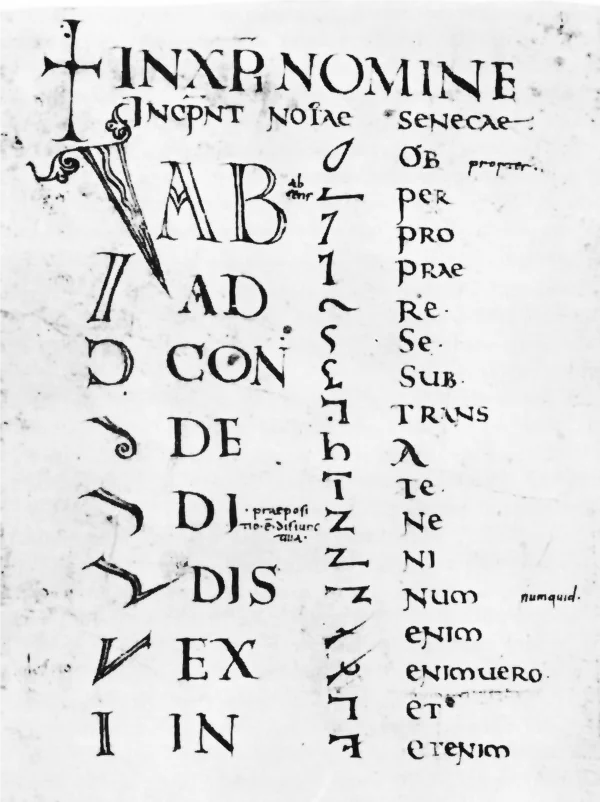
August 14, 2026 – In a world increasingly reliant on rapid digital communication, the echoes of ancient ingenuity often fade into obscurity. Yet, a remarkable system of shorthand, originally devised for one of history’s most celebrated orators, Marcus Tullius Cicero, continues to surprise and intrigue us. Known as Tironian notes, this intricate system, comprised of nearly 4,000 symbols, offers a fascinating glimpse into the intellectual and practical demands of Roman society and boasts a lineage that, remarkably, persists in subtle ways even today. While its direct use has largely waned, the enduring presence of its characteristic symbol – the "et" – in modern typography serves as a tangible link to a sophisticated past.
The Genesis of Speed: Cicero’s Need for Efficiency
The story of Tironian notes begins not with a desire for personal record-keeping, but with the pressing need for efficiency in communication for a prominent Roman statesman. Marcus Tullius Cicero, renowned for his oratorical prowess, legal acumen, and philosophical writings, operated in an era where the spoken word was paramount. Capturing the essence of his lengthy speeches, legal arguments, and political pronouncements required a method far swifter than traditional handwriting.
Enter Marcus Tullius Tiro, Cicero’s freedman and trusted scribe. While the exact circumstances of the system’s creation remain a subject of historical discussion, the prevailing narrative attributes its inception to Cicero’s request around 75 BC. It is believed that Cicero, while stationed in Sicily and tasked with investigating corruption among local officials, recognized the imperative to swiftly and discreetly record vital information. This necessity likely spurred him to task Tiro with developing a specialized script capable of rapid transcription.
The inspiration for this Roman innovation, as with many aspects of Roman civilization, appears to have roots in the Hellenic world. Greek shorthand systems were already in existence, and it is plausible that Tiro adapted and refined these concepts to suit the Latin language. The result was a groundbreaking system that allowed for the rapid recording of syllables, words, and phrases, transforming how information was captured and preserved in ancient Rome.
A Symphony of Symbols: The Structure and Evolution of Tironian Notes
At its core, Tironian notes represented a sophisticated form of abbreviation. Tiro developed approximately 4,000 distinct symbols, each meticulously crafted to represent common syllables, words, or even entire concepts. This was not merely a system of phonetic transcription; it was a semantic shorthand, designed to convey meaning with utmost speed and conciseness.
The system’s efficacy was not limited to political intrigue. Back in Rome, Tironian notes became an indispensable tool for scribes tasked with documenting Cicero’s public pronouncements. Imagine the scene: in the bustling Forum, or during impassioned senatorial debates, scribes wielding styli and wax tablets, rapidly inscribing the orator’s every word using Tiro’s ingenious symbols. Plutarch, in his account of the Catilinarian Conspiracy, specifically notes the use of Tironian notes to record Cicero’s denunciation of Catiline, highlighting the system’s crucial role in preserving pivotal moments of Roman history.
The evolution of Tironian notes did not cease with Tiro. Over time, other users, including the esteemed Stoic philosopher and statesman Seneca, contributed to its expansion. By the time of Seneca, the repertoire of symbols had reportedly grown to around 5,000. This ongoing development underscores the system’s practical utility and its adoption by a wider circle of scholars and officials within the Roman Empire.
The Fading of an Art: Decline and Suppression
The zenith of Tironian notes coincided with the flourishing of the Roman Empire. However, as Rome’s power began to wane, so too did the widespread use of its advanced scribal techniques. The decline was not a sudden event but a gradual erosion influenced by political and societal shifts.
By the 6th century AD, Emperor Justinian I, as recorded by Anita Kreitzman of the National Court Reporters Association, is said to have contemporaneously forbidden its use. While the exact motivations behind this decree are not fully elaborated, it signifies a turning point, suggesting a potential distrust or desire to control the dissemination of information.
Despite imperial pronouncements, Tironian notes did not vanish entirely. It persisted, particularly among annotators of manuscripts and within monastic communities. During the Carolingian dynasty, the system saw a resurgence and expansion, merging with other scribal traditions to encompass as many as 14,000 distinct signs. This period demonstrates the resilience of the system and its adaptation to new contexts.
However, the fate of Tironian notes took another dramatic turn in the medieval era. Holy Roman Emperor Frederick II, ruling from 1212 to 1250, famously deemed the use of shorthand symbols "diabolical" and ordered their destruction. This decree, driven by religious or political apprehension, had a devastating impact. The systematic eradication of shorthand characters led to the rapid decline and eventual loss of much of the knowledge associated with Tironian notes, rendering it a "lost art" for many centuries.
The Dark Ages and the Dawn of Revival
The period following the suppression of shorthand is often referred to as the "Dark Ages," a time when "learning and shorthand seemed to no longer exist." While this statement, as noted by Kreitzman, may reflect the perspective of court reporters who equate abbreviation with civilization, it undeniably points to a significant gap in the historical record of rapid writing techniques.
The true revival of shorthand, however, began to emerge in the late sixteenth-century in London. This era marked a period of immense global transformation, and the burgeoning need for efficient record-keeping in trade, law, and burgeoning scientific inquiry likely fueled the rediscovery and reinvention of shorthand systems. Many different shorthand systems would rise and fall in popularity over the subsequent centuries, each attempting to capture the speed and precision of the spoken word.
The Enduring Echo: Tironian Notes in the Digital Age
In the twenty-first century, the advent of digital technologies has seemingly rendered many traditional shorthand practices obsolete for the average person. The ubiquity of keyboards and advanced text editing software allows for swift and accurate transcription. Yet, the legacy of Tironian notes endures in a rather unexpected and subtle form.
The characteristic symbol for "and" in Tironian notes, the "et," has survived. This symbol, which represented the Latin word for "and," is now recognizable to many as the ampersand (&). Its survival is largely attributed to its adoption in medieval Irish scripts and the subsequent development of Gaelic typefaces. While its functional equivalence in English and other Romance languages might differ, the act of typing this symbol connects us directly to a practice initiated by Cicero’s scribe nearly two millennia ago.
The presence of the ampersand in modern typography serves as a constant, albeit often unacknowledged, reminder of the ingenuity of Tironian notes. It is a testament to the enduring power of a system designed for efficiency and a subtle nod to the intellectual heritage of ancient Rome. The ability to type this symbol, even without fully understanding its origins, allows us to feel a connection to Cicero himself, evoking a sense of the Ciceronian spirit of eloquence and precision.
Supporting Data and Historical Context
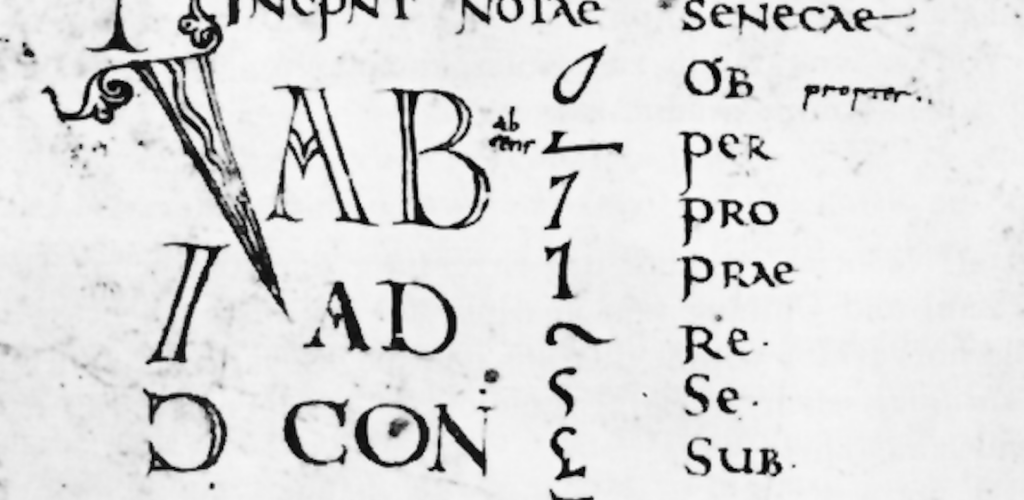
The preservation and understanding of Tironian notes have been significantly aided by the discovery and analysis of various ancient texts. Codices such as the Codex Casselanus, a manuscript containing examples of Tironian notes, have provided invaluable insights into the system’s structure and application. Scholars have painstakingly deciphered these texts, reconstructing the lexicon and grammar of this ancient shorthand.
The relationship between Tironian notes and other historical shorthand systems is also a subject of ongoing research. Comparisons with Greek shorthand, as well as later medieval and early modern systems, help to illuminate the evolutionary trajectory of rapid writing techniques. The influence of Tironian notes on the development of subsequent shorthand systems, even those developed centuries later, is a testament to its foundational importance.
Official Responses and Scholarly Interest
While there are no contemporary "official responses" to the continued relevance of Tironian notes, the scholarly community has shown sustained interest in the system. Historians, paleographers, and linguists continue to study and disseminate knowledge about Tironian notes, ensuring its place in academic discourse. Museums and libraries worldwide house artifacts and texts that contribute to our understanding of this ancient writing system.
The digitization of ancient manuscripts and the development of sophisticated analytical tools have further enhanced scholarly research. Online databases and digital archives are making Tironian notes more accessible to a broader audience, fostering greater appreciation for its historical significance.
Implications and Enduring Legacy
The story of Tironian notes offers several profound implications:
- The Power of Necessity: The system’s creation highlights how practical demands can drive innovation. Cicero’s need for speed and accuracy directly led to the development of a revolutionary scribal technique.
- The Interconnectedness of History: The survival of the ampersand demonstrates how ancient practices can subtly persist and influence modern life, often in ways we overlook.
- The Fragility of Knowledge: The suppression and subsequent loss of much of the knowledge surrounding Tironian notes serve as a cautionary tale about the vulnerability of cultural heritage.
- The Enduring Appeal of Eloquence: The system’s association with Cicero underscores the timeless value placed on clear, impactful communication and the desire to preserve it.
In conclusion, Tironian notes represent more than just an ancient method of fast writing. They are a testament to human ingenuity, a bridge to the past, and a subtle reminder of the complex evolution of language and communication. As we continue to navigate the ever-accelerating digital landscape, the story of Tiro and his remarkable shorthand system offers a valuable perspective on the enduring quest for efficiency and the unexpected ways in which history continues to resonate in our present. The "et" on our keyboards, a simple symbol, carries within it the weight of centuries and the echo of Cicero’s voice.