Locus Magazine Unveils July 2026 Issue: A Tribute to Jane Yolen, Deep Dives, and Industry Crossroads
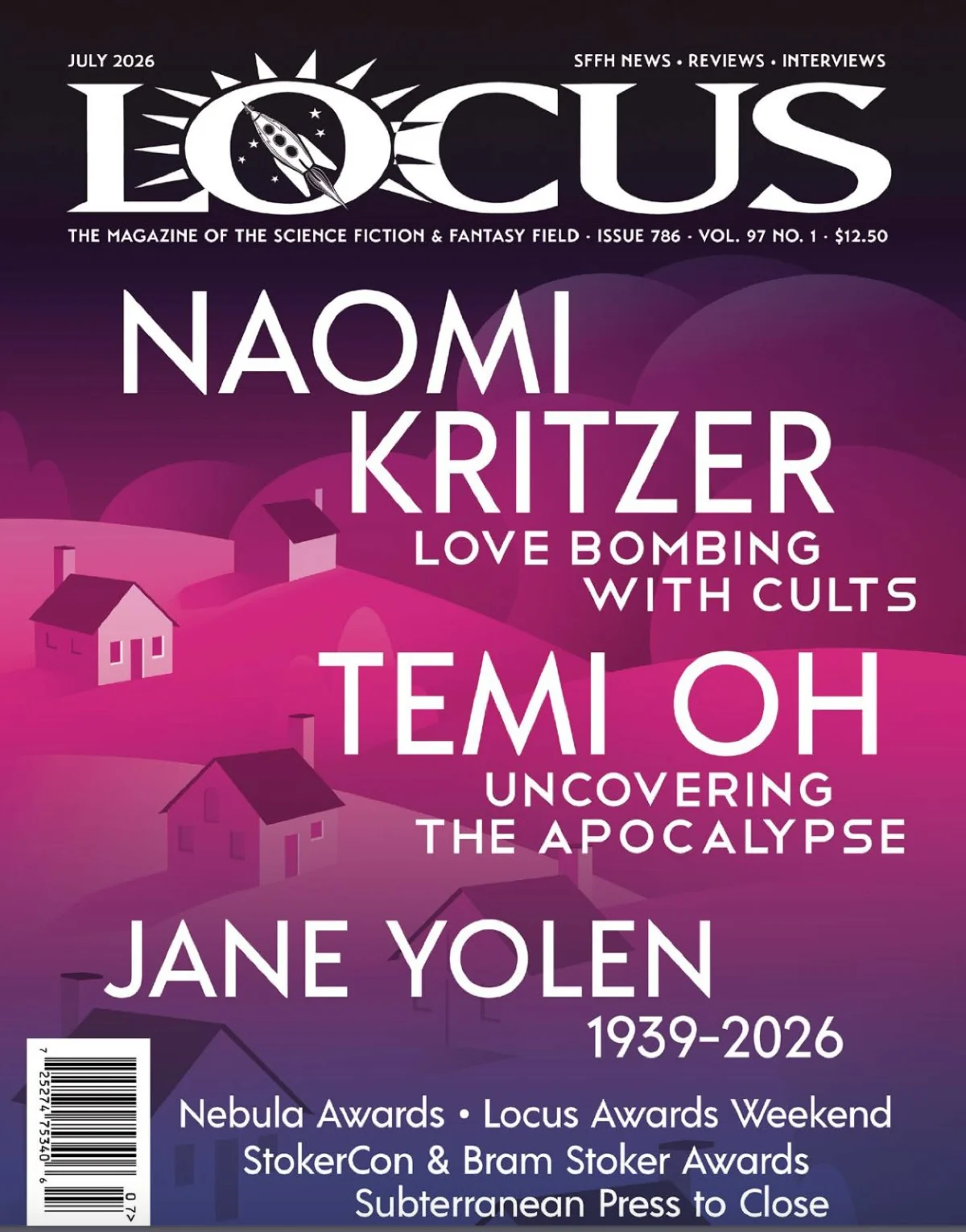
OAKLAND, CA – The July 2026 issue of Locus magazine, the venerable journal of the science fiction and fantasy fields, has arrived, marking its 59th year of publication with issue #786. This edition serves as a poignant retrospective and a crucial snapshot of the genre’s evolving landscape, featuring heartfelt tributes to a titan of speculative fiction, incisive interviews with leading authors, and comprehensive coverage of the awards season, industry shifts, and global trends. From the somber news of beloved author Jane Yolen’s passing to the ongoing debate surrounding artificial intelligence in literature, Locus #786 encapsulates the vibrant, complex, and sometimes challenging realities faced by the SFF community.
The striking cover, an evocative purple scene with houses dotting a hillside, designed by Francesca Myman from art by Forestpath, immediately signals the rich tapestry of content within. Headlining the issue are in-depth interviews with two critically acclaimed authors: Naomi Kritzer, known for her insightful explorations of technology and human connection, and Temi Oh, whose work delves into profound psychological and speculative themes. Readers will also find the highly anticipated results of the 2026 Locus Poll, a crucial barometer of reader preferences within the genre.
A significant portion of the issue is dedicated to remembering the incomparable Jane Yolen, who passed away in 2026. The magazine features an extensive obituary and heartfelt appreciations from her peers, underscoring her immense and enduring legacy. Beyond this tribute, the issue casts a wide net over the SFF world, reporting on the winners of major awards such as the 2025 Nebula, Bram Stoker, and Seiun Awards. Industry news includes the surprising announcement of Subterranean Press’s planned closure, the regional winners of the Commonwealth Prize alongside a brewing controversy over AI, and updates on the Hugo and Lodestar Base Designers. Cory Doctorow contributes his characteristic trenchant commentary in a column titled “Hell Is Other People,” while international reports offer perspectives on SF in Brazil and Bulgaria. The issue also provides extensive coverage of recent conventions, including the Locus Awards ceremony, StokerCon, the SFWA Nebula Conference, the Bay Area Book Festival, and WisCon 48, cementing its role as the definitive chronicle of the genre.
Chronology of a Dynamic Genre: From Interviews to Industry Shifts
The July 2026 issue of Locus meticulously navigates the contemporary currents of science fiction and fantasy, presenting its diverse content with a flow that mirrors the dynamic nature of the genre itself. The journey begins with the intimate voices of its featured authors, then expands to encompass the major events, industry challenges, and critical discussions shaping the SFF world.
The intellectual heart of Locus #786 beats strongest in its interviews, offering readers direct access to the minds behind some of the genre’s most compelling narratives. Naomi Kritzer, a Hugo Award-winner celebrated for her nuanced exploration of online communities and the intricacies of human relationships in a technological age, engages in a discussion titled "Love Bombing With Cults." This likely delves into themes of social manipulation, belonging, and the often-perilous allure of tightly-knit groups, reflecting Kritzer’s signature blend of sharp observation and speculative insight. Following Kritzer, Temi Oh takes center stage with "Uncovering the Apocalypse." Oh, whose work frequently explores identity, memory, and the human condition against vast, often cosmic backdrops, is expected to offer a unique perspective on narratives of societal collapse, rebirth, or perhaps the personal apocalypses that reshape individual lives. These interviews collectively set a tone of thoughtful engagement with complex societal and speculative concepts.
From these personal reflections, the magazine transitions to the collective pulse of the SFF community through its comprehensive news coverage. The most significant and somber announcement within this issue is the passing of Jane Yolen. The magazine dedicates substantial space to her obituary and a series of heartfelt appreciations from fellow authors Ruth Sanderson, Joe Haldeman, and Bruce Coville. This tribute serves not only as a remembrance but also as a chronological marker of a generational shift, acknowledging the profound impact Yolen had on multiple facets of speculative fiction, from mythic fantasy to children’s literature. Her death, while sorrowful, highlights the enduring legacy she leaves behind and the ongoing work of those she inspired.
The news section then meticulously reports on the outcomes of the 2025 awards season, charting the trajectory of recognition within the genre. Winners of the Nebula Awards, celebrating excellence in science fiction and fantasy writing, are detailed, followed by the Bram Stoker Awards, honoring achievements in horror literature. The Seiun Awards, Japan’s premier awards for science fiction, demonstrate the international reach of genre recognition, while the Lambda Literary Awards highlight significant contributions to LGBTQ+ literature. This chronological rundown of awards offers a clear picture of the previous year’s literary triumphs.

Interspersed with these celebrations are crucial industry updates, some signaling significant shifts. The announcement of Subterranean Press’s planned closure is a pivotal piece of news, marking the end of an era for a highly respected publisher known for its deluxe limited editions. This development raises questions about the future of niche publishing and the broader economic landscape facing independent presses. Simultaneously, the issue reports on the Commonwealth Prize Regional winners, a prestigious literary award, but notably frames this alongside an emerging "AI controversy." This juxtaposition highlights a pressing contemporary debate: how technological advancements, particularly in artificial intelligence, are beginning to intersect with and challenge traditional notions of authorship and creative integrity in the literary world.
Further industry data points are presented, including the withdrawal of the Nuremberg Worldcon bid and updates on World Fantasy Convention and Fantasycon 2027, painting a picture of the shifting landscape of major fan gatherings. The final lists of finalists and nominees for other significant accolades, such as the Ignyte Awards, Clarke Award, Sidewise Awards, British Fantasy Awards, Sturgeon Award, Shirley Jackson Awards, Grand Prix de l’Imaginaire, and Prix Imaginales, complete the chronological overview of critical recognition within the genre. This detailed reporting ensures that Locus remains the go-to source for understanding the ebb and flow of SFF’s annual cycle of events and achievements.
Supporting Data: Unpacking the Pillars of SFF Culture
The July 2026 issue of Locus is a treasure trove of supporting data, meticulously chronicling the people, publications, and debates that define the science fiction and fantasy landscape. This section delves deeper into the significance of the magazine’s core features, providing context and insight into their broader implications for the genre.
The Enduring Legacy of Jane Yolen
The passing of Jane Yolen (1939-2026) is undoubtedly the most somber and significant news in this issue, prompting a profound moment of reflection for the SFF community. Yolen was a prolific and versatile author, often referred to as "the Hans Christian Andersen of America," whose career spanned over six decades and encompassed more than 400 books across multiple genres and age groups. Her work seamlessly blended fantasy, folklore, mythology, and history, crafting narratives that resonated with both children and adults.
From picture books like Owl Moon to mythic fantasies such as Briar Rose and historical fiction like The Devil’s Arithmetic, Yolen demonstrated an unparalleled ability to explore complex themes of identity, memory, trauma, and the power of storytelling. She was a recipient of numerous accolades, including the Nebula Award, World Fantasy Award, Mythopoeic Award, Caldecott Medal, and Golden Kite Award, among many others. Her influence extended beyond her written works; she was a tireless advocate for literacy and a mentor to countless aspiring writers.
The Locus obituary, complemented by appreciations from Ruth Sanderson, Joe Haldeman, and Bruce Coville, serves as a testament to her profound impact. Sanderson, likely reflecting on Yolen’s ability to weave intricate tales, would emphasize her storytelling prowess. Joe Haldeman, a fellow grandmaster of the field, might speak to her genre versatility and her unwavering commitment to craft. Bruce Coville, another celebrated author of children’s fantasy, would probably highlight her groundbreaking contributions to young adult literature and her ability to engage young minds with complex narratives. These tributes collectively affirm Yolen’s status as a literary giant whose voice shaped generations of readers and writers.
Authorial Voices: Kritzer and Oh on the Edge of Speculation
The interviews with Naomi Kritzer and Temi Oh offer direct insights into the minds of two contemporary authors pushing the boundaries of speculative fiction. Naomi Kritzer, a Hugo and Nebula Award-winner, gained widespread recognition for Catfishing on CatNet and its exploration of AI, online communities, and the complexities of human connection in the digital age. Her interview, "Love Bombing With Cults," suggests a continuation of her astute commentary on social dynamics, particularly the ways groups form, exert influence, and define identity in increasingly interconnected yet fragmented societies. Kritzer’s work often features a keen understanding of technology’s double-edged sword, offering both profound connection and potential for manipulation.

Temi Oh, whose debut Do You Dream of Terra-Two? garnered critical acclaim for its psychological depth and intricate character work within a spacefaring narrative, now discusses "Uncovering the Apocalypse." This theme aligns with Oh’s tendency to explore profound human experiences against grand, often existential backdrops. Her perspective on the apocalypse is likely to be less about mere destruction and more about the societal and individual transformations that follow cataclysmic events, touching upon resilience, memory, and the reshaping of human civilization. Both interviews provide crucial supporting data on the thematic concerns and artistic approaches of leading voices in today’s SFF.
The 2026 Locus Poll: A Barometer of Reader Preference
The inclusion of the 2026 Locus Poll results is a perennial highlight of the magazine. Unlike juried awards, the Locus Poll is a reader-driven accolade, reflecting the direct preferences of Locus subscribers and the broader SFF readership. It encompasses a wide array of categories, including Best Science Fiction Novel, Best Fantasy Novel, Best Horror Novel, Best First Novel, Best Novella, Best Novelette, Best Short Story, Best Anthology, Best Collection, Best Editor, Best Artist, and Best Magazine. The results serve as a vital piece of supporting data for understanding the prevailing tastes and favored works within the SFF community. They can often signal emerging trends, highlight sleeper hits, or confirm the widespread popularity of established authors, offering a valuable counterpoint to institutional awards.
Industry Crossroads: Subterranean Press and the AI Controversy
The news of Subterranean Press’s planned closure is a significant development in the independent publishing landscape. For decades, Subterranean Press has been synonymous with high-quality, limited-edition speculative fiction, publishing acclaimed works by authors like Stephen King, Joe Hill, and Robert McCammon in meticulously crafted, collector-focused editions. Its closure marks the loss of a revered institution known for its commitment to aesthetic excellence and its role in preserving genre literature in beautiful physical forms. This event signals broader challenges facing specialty presses, including economic pressures, changing reading habits, and the increasing dominance of larger publishing houses. Its impact will be felt by authors seeking unique publication avenues and by collectors who cherished its distinctive offerings.
Simultaneously, the "AI controversy" surrounding the Commonwealth Prize Regional winners highlights one of the most pressing ethical and creative debates in contemporary literature. While the specific nature of the controversy is not detailed, such disputes typically revolve around several key issues: the use of AI tools by authors in generating or assisting their work, the submission of fully AI-generated content to literary competitions, and the ethical implications of AI in creative endeavors. This controversy underscores the tension between technological advancement and traditional notions of human authorship and originality, forcing literary institutions to grapple with new definitions of creativity and intellectual property. It’s a critical piece of supporting data that illustrates the genre’s ongoing struggle to define its boundaries in a rapidly evolving technological world.
Global Perspectives and Critical Discourse
The "SF in Brazil" and "SF in Bulgaria" reports provide crucial supporting data on the internationalization of speculative fiction. These features typically explore local publishing scenes, popular authors, unique thematic concerns, and the challenges and successes of SFF communities outside the Anglophone sphere. They highlight the diversity of global SFF, enriching the understanding of how the genre evolves within different cultural and linguistic contexts.
Cory Doctorow’s column, "Hell Is Other People," adds a layer of critical commentary. Doctorow is renowned for his insights into copyright, digital rights, technology’s impact on society, and the economics of publishing. His title, borrowed from Sartre, suggests a critique of online social dynamics, the pressures of public opinion, or perhaps even the sometimes-contentious nature of creative communities. His column serves as an important piece of analytical data, offering a provocative viewpoint on current issues.
Finally, the extensive review sections—covering new works by a vast array of authors including Ada Hoffmann, Lavie Tidhar, Paul Tremblay, Shannon Chakraborty, and many others, alongside short fiction reviews by esteemed critics like Maria Haskins, Paula Guran, and A.C. Wise—provide the bedrock of Locus‘s critical function. This data not only guides readers to new and notable works but also shapes the critical discourse, influencing perceptions and contributing to the genre’s intellectual vitality.

Official Responses: Voices from the Heart of SFF
In the absence of formal press releases or direct institutional statements from Locus itself, the "Official Responses" within this issue can be interpreted through the magazine’s editorial choices, the direct voices of its interviewed authors, and the recorded reactions of the SFF community to significant events. Locus, as a chronicler and arbiter of the genre, effectively curates these responses, presenting a multifaceted view of the field.
The most profound "official response" within this issue is the collective outpouring of grief and appreciation for Jane Yolen. The inclusion of an extensive obituary, augmented by personal appreciations from Ruth Sanderson, Joe Haldeman, and Bruce Coville, represents the SFF community’s formal acknowledgment of a monumental loss. These tributes are more than mere eulogies; they are official testaments from her peers, articulating Yolen’s profound impact on their own work and on the genre as a whole. Such responses solidify her place in the literary canon and demonstrate the deep bonds within the SFF world. Joe Haldeman’s insights, for instance, would carry the weight of a fellow Grand Master, while Bruce Coville’s perspective would speak to Yolen’s pioneering role in children’s speculative fiction. Their words, recorded within Locus, serve as the official narrative of her legacy.
The interviews with Naomi Kritzer and Temi Oh can also be viewed as official responses from authors regarding their craft and the thematic concerns of their work. Kritzer’s discussion on "Love Bombing With Cults" isn’t just a casual chat; it’s her considered "response" to contemporary social dynamics and the darker side of community, filtered through her unique speculative lens. Similarly, Oh’s exploration of "Uncovering the Apocalypse" is her authoritative statement on how she approaches narratives of societal upheaval and transformation. These interviews provide direct, articulated perspectives from leading creators, offering readers an official glimpse into their artistic intentions and intellectual engagements.
The reporting on major awards—the Nebula, Bram Stoker, Seiun, and Lambda Literary Awards—constitutes Locus‘s official record of industry recognition. By meticulously listing the winners, the magazine is providing the "official response" from the respective awarding bodies on what constitutes excellence in the previous year. This documentation is crucial for historical record-keeping and for tracking the evolution of critical and popular tastes within the genre.
Furthermore, Locus‘s coverage of the Subterranean Press closure, while not a direct statement from the press, functions as the SFF community’s official acknowledgment of the event. The magazine, in reporting such news, acts as the primary journalistic voice, conveying the impact of the closure on authors, readers, and the broader publishing ecosystem. This reporting often involves synthesizing available public statements and contextualizing them for the genre-specific audience.
Similarly, the discussion surrounding the "AI controversy" at the Commonwealth Prize represents Locus‘s "official response" to a burgeoning ethical dilemma. By highlighting this issue, the magazine formally acknowledges the growing debate within literary circles about artificial intelligence’s role in creative work. This inclusion signals to the SFF community that Locus recognizes the importance of these discussions and is committed to documenting how literary institutions and authors are grappling with these new challenges. Cory Doctorow’s column, a consistent feature, serves as his "official response" to a chosen topic, offering a highly informed and often provocative viewpoint that shapes ongoing discourse.
Through its comprehensive coverage and editorial curation, Locus serves as the de facto official repository for the varied responses, triumphs, and challenges that collectively define the science fiction and fantasy genre in July 2026.

Implications: Navigating the Future of Science Fiction and Fantasy
The July 2026 issue of Locus magazine offers more than just a summary of current events; it presents a compelling tapestry of implications for the future trajectory of science fiction and fantasy. From the enduring legacy of its pioneers to the disruptive forces of technology and economic shifts, the magazine illuminates the challenges and opportunities facing the genre.
Generational Shifts and the Weight of Legacy
The most immediate implication stemming from this issue is the ongoing generational shift within SFF. The passing of Jane Yolen, Lalana Dararutana (Piper J. Drake), Ted White, and James Ray Comer reminds the community of the inevitable march of time and the importance of preserving and celebrating the legacies of those who shaped the genre. Yolen’s extensive body of work and profound influence underscore the responsibility of future generations to build upon such foundations while forging new paths. Her passing prompts reflection on how new voices will carry forward the spirit of myth-making, social commentary, and imaginative exploration that defined her career. The collective appreciation from her peers signifies not just a personal loss, but a passing of the torch, implying a renewed focus on mentorship and the continuity of artistic tradition.
The Evolving Landscape of Publishing
The planned closure of Subterranean Press carries significant implications for the business of SFF. This event suggests increasing pressures on independent and niche publishers, who often serve as vital incubators for unique voices and high-quality artisanal editions. The consolidation of publishing power, rising production costs, and changing consumer habits (e.g., digital vs. physical media) all contribute to a challenging environment. The loss of a respected entity like Subterranean could mean fewer avenues for authors specializing in limited-run, collectible editions and a potential shift in how genre classics are presented and preserved. This situation implies a need for greater community support for independent presses and a re-evaluation of sustainable publishing models in the digital age.
AI and the Redefinition of Authorship
The "AI controversy" surrounding the Commonwealth Prize is perhaps the most forward-looking implication within the issue. This incident, emblematic of broader debates, signals a critical juncture for literature and intellectual property. As AI tools become more sophisticated, the line between human creation and machine generation blurs, raising fundamental questions: What constitutes authorship? How do we assess originality? What are the ethical responsibilities of writers using AI, and literary institutions evaluating such work? The implications extend to copyright law, the integrity of literary awards, and even the very definition of "art." This controversy implies that the SFF community, historically adept at grappling with technological change, must now actively define its stance on AI’s role in creative production to safeguard artistic integrity and foster fair competition.
Global Reach and Diversification
The reports on SF in Brazil and Bulgaria highlight the burgeoning internationalization of science fiction and fantasy. These features imply a growing recognition of SFF beyond the traditional Anglophone markets, suggesting a future where diverse cultural perspectives increasingly enrich the genre. The challenges and triumphs of SFF communities in different linguistic and political contexts can offer fresh thematic inspirations and stylistic innovations. This global outlook implies a richer, more varied future for SFF, encouraging translation, international collaborations, and a broader understanding of what speculative fiction can be.
The Enduring Role of Critical Discourse and Community
Finally, the extensive coverage of awards, conventions, and reviews reaffirms the enduring importance of critical discourse and community engagement in SFF. The Locus Poll results, driven by reader input, imply a highly active and discerning readership that continues to shape the genre’s trajectory. The detailed review sections not only guide purchasing decisions but also foster intellectual debate, contributing to the genre’s ongoing evolution. The presence of conventions like StokerCon, Nebula Conference, and WisCon 48 implies the continued necessity of physical spaces for community building, networking, and celebrating shared passions. These gatherings are crucial for maintaining the social fabric of the SFF world, fostering new talent, and ensuring that the genre remains vibrant and connected.
In essence, Locus #786 doesn’t just report the news; it provides a roadmap for understanding the significant forces at play in science fiction and fantasy. It implies a future where the genre continues to honor its past masters, adapt to technological disruption, expand its global footprint, and rely on the robust critical engagement of its dedicated community. The challenges are evident, but so too is the resilience and innovative spirit that has always defined speculative fiction.