The Semiquincentennial Dilemma: Designing a National Identity for a Divided America
As the United States approaches its 250th anniversary in 2026—a milestone known as the Semiquincentennial—the nation finds itself at a crossroads of identity. What was envisioned as a unifying moment to celebrate two and a half centuries of democratic experimentation has instead become a mirror reflecting deep-seated political and cultural fractures. At the heart of this tension lies a fundamental question of design: How do you visually represent a nation when its very symbols are under dispute?
From the official "America250" ribbon logo to the controversial "Patriot Passport," the iconography of the upcoming celebration is being scrutinized as never before. For leading creatives, the challenge is not merely aesthetic but existential. They are tasked with navigating a landscape where the American flag, the eagle, and the colors red, white, and blue are increasingly viewed through partisan lenses.
Main Facts: A Celebration Under Siege
The Semiquincentennial is intended to be a year-long, nationwide commemoration of the signing of the Declaration of Independence. However, the lead-up to the 2026 festivities has been marred by internal conflict and public skepticism.
The Official Branding Controversy
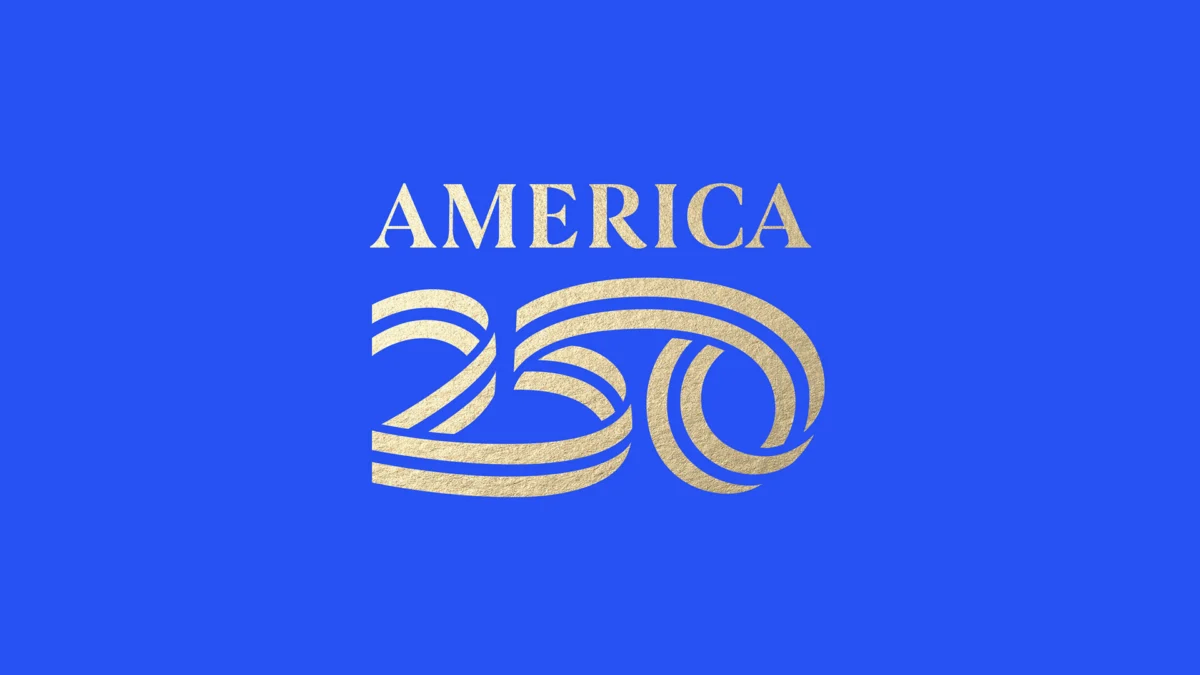
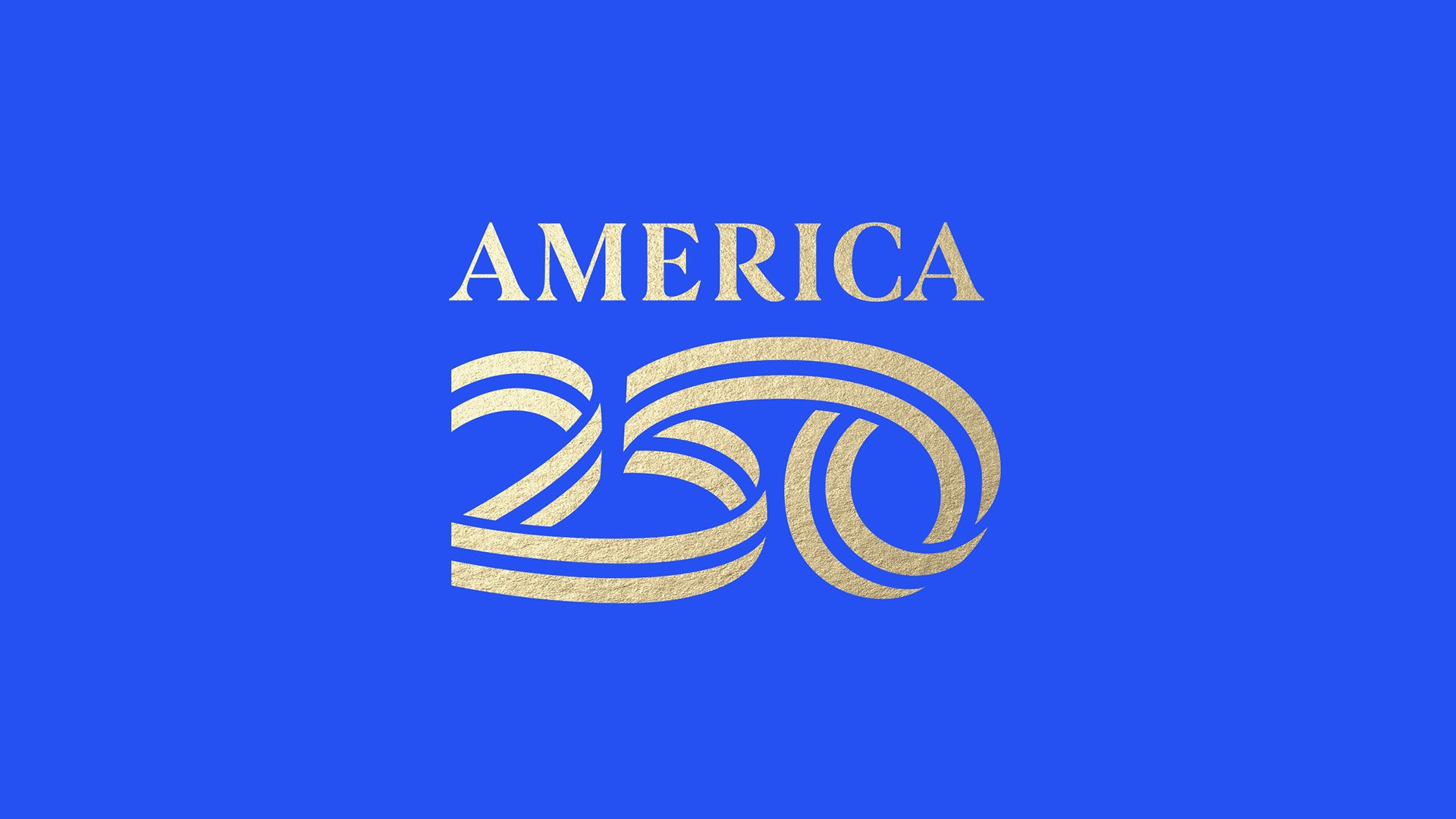
The official "America250" logo, designed by the renowned firm Chermayeff & Geismar & Haviv, features a fluid, multi-colored ribbon forming the number "250." While intended to represent the "continuous thread" of the American story, critics have argued that its abstraction fails to capture the gravity of the occasion. Conversely, more traditionalist factions have criticized the departure from classic heraldic symbols, viewing the modern design as a "dilution" of national heritage.
The Rise of Partisan Iconography
Parallel to the federal effort, various private and state-level initiatives have emerged, some of which lean heavily into partisan aesthetics. The "Patriot Passport," featuring images of former President Donald Trump alongside historical figures, has become a lightning rod for criticism. This bifurcation of imagery suggests that the "American Brand" is no longer a monolith, but a fragmented collection of symbols claimed by different ideological camps.
The Role of Design in Civic Life
Designers like John Ball (MiresBall), Caspar Lam and YuJune Park (Synoptic Office), Mika Saulitis (Sibling Rivalry), and Jessie McGuire (Thought Matter) are now at the forefront of a movement to "reclaim the middle." They argue that design’s role in America250 should not be to enforce a single, sanitized narrative, but to create a visual framework capable of holding multiple, often conflicting, truths.
Chronology: The Path to 2026
The journey toward the Semiquincentennial has been a decade-long process characterized by shifting political winds and administrative turnover.
- July 2016: The U.S. Semiquincentennial Commission is established by Congress under the Obama administration. The non-partisan body is tasked with planning the 250th-anniversary celebrations.
- 2017–2020: During the Trump administration, the commission begins its work, but progress is slow. Early discussions focus on large-scale infrastructure and traditional patriotic displays.
- 2021: The commission faces significant internal turmoil. Several high-ranking officials resign, and whistleblowers raise concerns regarding a "toxic work environment" and a lack of diversity in planning.
- 2022: The "America250" branding is officially unveiled. While professional design circles praise its modernism, it receives a lukewarm reception from a public increasingly polarized by the "culture wars."
- 2023–2024: Several states, including New York and Pennsylvania, begin forming their own commissions, sometimes independent of the federal framework. This "bottom-up" approach is seen as a response to the perceived stagnation of the national commission.
- Present Day: As the 2024 election cycle intensifies, the Semiquincentennial has become a political flashpoint, with debates over "patriotic education" and "inclusive history" bleeding into the design and marketing of the anniversary.
Supporting Data: The Shifting Semiotics of America
The current struggle over American symbols is backed by shifts in public perception and the way branding interacts with national identity.
The "Claiming" of Symbols
Recent sociological studies suggest that traditional American symbols are increasingly associated with specific political identities. In a 2023 survey regarding the American flag, a significant percentage of respondents indicated that the display of the flag in certain contexts (such as on a vehicle or apparel) was now perceived as a political statement rather than a neutral display of patriotism. This "semiotic drift" makes the job of a national designer nearly impossible, as any choice—traditional or modern—is immediately coded as "Left" or "Right."
Historical Precedent: 1976 vs. 2026
Comparing the 1976 Bicentennial to the upcoming 2026 event reveals a stark difference in the design landscape. The 1976 logo—a simple, five-pointed star in red, white, and blue—was ubiquitous and largely uncontroversial. However, the 1976 celebration occurred in the wake of Vietnam and Watergate, a time when the country was also deeply divided. The difference today, experts argue, is the speed and scale of the "outage economy" driven by social media, where a logo can be "cancelled" or co-opted within hours of its release.
Case Study: "Bittersweet Harvest"
John Ball of MiresBall points to the "Bittersweet Harvest" project for the Smithsonian as a model for modern national design. The project, which chronicled the Bracero program (a series of laws and diplomatic agreements for the importation of temporary contract laborers from Mexico), used design to tell a story that was both American and difficult. By focusing on human stories and high-contrast, evocative imagery, the design allowed for a "complex patriotism" that acknowledged both the opportunity and the exploitation inherent in the American story.
Official Responses and Creative Perspectives
The design community’s response to the Semiquincentennial reflects a broader shift toward "inclusive design" and "civic storytelling."
The Multi-Narrative Approach
Caspar Lam and YuJune Park of Synoptic Office suggest that the failure of current national branding lies in the attempt to find a "singular" image. "National identity is a conversation, not a logo," says Lam. Their work in civic design emphasizes the need for flexible systems that allow local communities to "plug in" their own histories and symbols, rather than having a federal aesthetic imposed upon them.
Strategy Over Symbolism
Mika Saulitis, director of creative strategy at Sibling Rivalry, argues that the "brand" of America needs to move beyond colors and shapes. "We are in a post-symbolic era," Saulitis notes. "People don’t trust symbols; they trust experiences and authentic narratives." For Saulitis, the 250th anniversary should be less about "the flag" and more about the "democratic process," using design to make civic engagement feel accessible and modern.
Reimagining the "Patriot"
Jessie McGuire of Thought Matter has been a vocal advocate for "reclaiming the language of patriotism." Her firm’s work often focuses on social impact and community branding. McGuire argues that the current division provides an opportunity to redefine what it means to be a "patriot" in a diverse, 21st-century republic. "Design has the power to take a word that has been weaponized and turn it back into a tool for community building," she says.
Implications: The Future of the "American Brand"
The outcome of the America250 design debate will have lasting implications for how the United States presents itself to the world and to its own citizens.
The End of the Monolith
The most significant implication is the likely end of the "monolithic" American identity. The 2026 celebration may well be characterized by a "patchwork" of identities. While this reflects the reality of a pluralistic society, it poses a challenge for national unity. If there is no shared visual language, can there be a shared national purpose?
Design as a Tool for De-escalation
If designers succeed in creating spaces for "competing visions of America," design could serve as a tool for political de-escalation. By moving away from "winner-take-all" symbolism and toward "both/and" storytelling, the Semiquincentennial could provide a template for how a divided society talks to itself.
The Global Perspective
As the world watches the U.S. prepare for its 250th birthday, the "American Brand" is under international scrutiny. The ability of the U.S. to design a celebration that is both self-critical and celebratory will be seen as a measure of the health of its democracy. A failure to find a cohesive, or at least a functional, visual language for 2026 may signal a deepening of the American decline to observers abroad.
Ultimately, the designers tasked with interpreting America at 250 are doing more than choosing fonts and colors; they are attempting to map the soul of a nation that is still very much a work in progress. As John Ball suggests, the goal isn’t to resolve the friction, but to "make space for more." In that space between the red and the blue, the next chapter of the American story is being written—one pixel and one poster at a time.