The Eternal Frontier: Why Taylor Sheridan Believes the Western is America’s Living Mythology
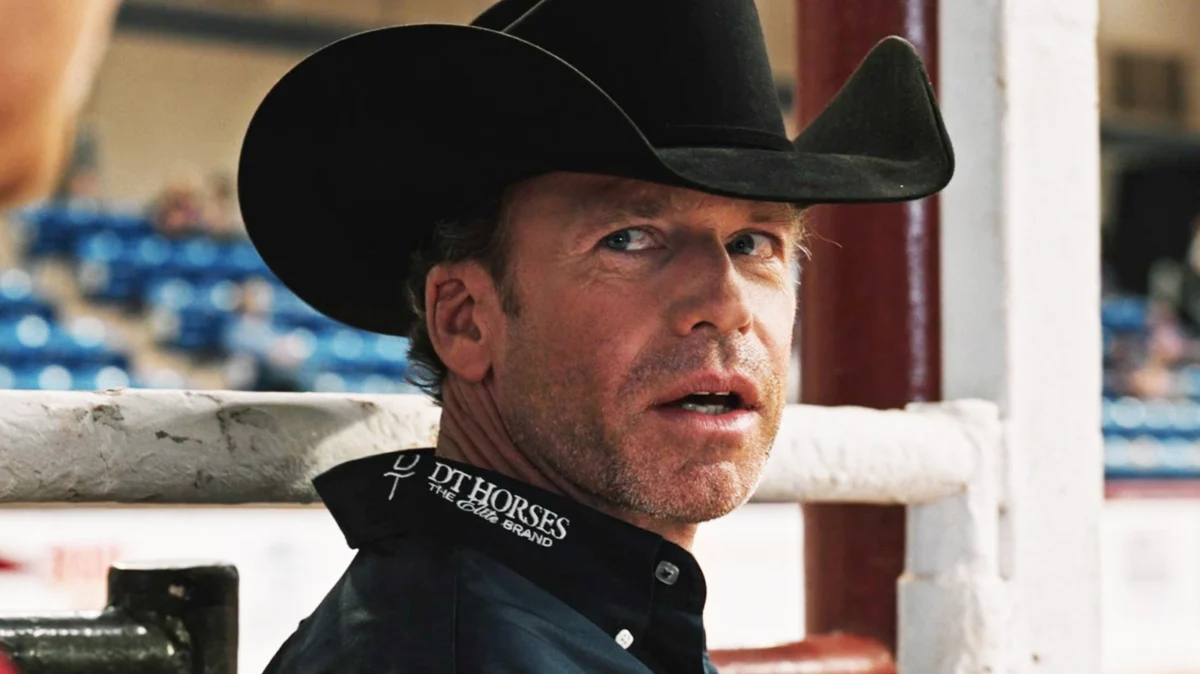
The Western has been "dying" for nearly half a century. From the catastrophic box office failure of Michael Cimino’s Heaven’s Gate in 1980 to the dismissive critiques of the early 2000s, Hollywood’s most quintessential genre has frequently been measured for its coffin. Yet, as the sun sets on traditional cinema and rises on the era of prestige streaming, one figure has stood defiantly against the narrative of the genre’s demise.
Taylor Sheridan, the architect of the Yellowstone universe, posits a different reality: the Western never died, it was simply misunderstood by those tasked with making it. To Sheridan, the Western is not merely a collection of tropes involving ten-gallon hats and six-shooters; it is the American version of the "Dark Ages"—a foundational, medieval epoch that defines the national character.
Main Facts: The Resilience of the American Oater
The core of Taylor Sheridan’s argument rests on a simple premise: quality dictates success. During a revealing appearance on the Bill Simmons Podcast, Sheridan challenged the industry-wide consensus that audiences had outgrown the frontier. He argues that the perceived "death" of the Western was actually a rejection of poor storytelling rather than a loss of interest in the setting itself.
Sheridan’s own track record serves as the primary evidence for this claim. Yellowstone, which debuted in 2018, transformed from a cable underdog into a cultural juggernaut, spawning a franchise that includes 1883, 1923, and several upcoming spin-offs. This "Sheridan-verse" has proved that Western themes—land ownership, family legacy, and the collision of tradition with modernity—resonate with a massive, underserved demographic.
Furthermore, Sheridan identifies the Western as the United States’ unique equivalent to European medieval lore. While Britain has the Arthurian legends and the tales of knights errant, America has the post-Civil War frontier. This period serves as a "dark age" where law was forged from chaos and the modern state was born from the dust.
Chronology: A Century of Ebb and Flow
To understand Sheridan’s perspective, one must look at the historical trajectory of the genre. The Western did not simply disappear; it evolved, faltered, and eventually reclaimed its throne.
The Golden Age and the Revisionist Shift (1940s–1960s)
For decades, the Western was the bedrock of American cinema. Figures like John Ford and John Wayne crafted a mythology of moral clarity. However, by the late 1960s, the genre began to reflect the cynicism of the Vietnam era. 1969 was a pivotal year, delivering both the traditionalist True Grit and the brutally revisionist The Wild Bunch. These films proved the genre could handle complex, violent, and morally grey narratives.
The Great Recession of the Frontier (1970s–1980s)
The 1970s saw the rise of science fiction, with Star Wars (1977) essentially taking the "frontier" into space. The genre hit a nadir in 1980 with Heaven’s Gate. The film’s ballooning budget and subsequent box office failure led many executives to believe the Western was a financial liability. Despite this, the decade still produced hits like Silverado (1985), proving that a vibrant, well-paced Western could still find an audience.
The 1990s Renaissance and the 2000s Slump
The genre saw a massive, albeit brief, resurgence in the early 1990s. Clint Eastwood’s Unforgiven (1992) won Best Picture, stripping away the glamour of the gunslinger and replacing it with a haunting meditation on violence. However, by 2001, films like American Outlaws—starring Ali Larter and Colin Farrell—failed so spectacularly that critic Roger Ebert famously suggested the genre was finally dead.
The Sheridan Era (2010s–Present)
The modern era is defined by the "Neo-Western." Sheridan began this journey not as a director, but as a screenwriter with Sicario and Hell or High Water. By the time he pitched Yellowstone, he was ready to bring the Western back to its roots while grounding it in modern-day stakes.
Supporting Data: Lessons from "Cowboys & Aliens"
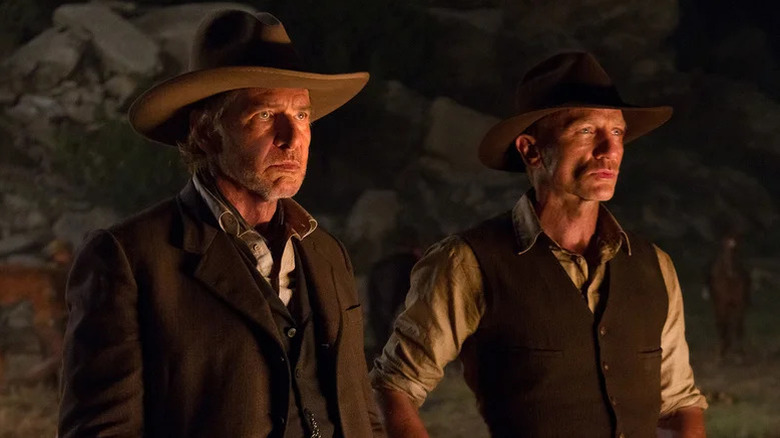
A significant portion of Sheridan’s frustration with Hollywood executives stems from their tendency to blame the genre for the failure of individual projects. A prime example cited by Sheridan is the 2011 film Cowboys & Aliens.
Directed by Jon Favreau and starring heavyweights Harrison Ford and Daniel Craig, the film was a high-concept gamble that ultimately flopped. It earned roughly $174 million against a $163 million budget—a disastrous result when accounting for marketing costs. To studio executives, Cowboys & Aliens was proof that "no one cares about cowboys anymore."
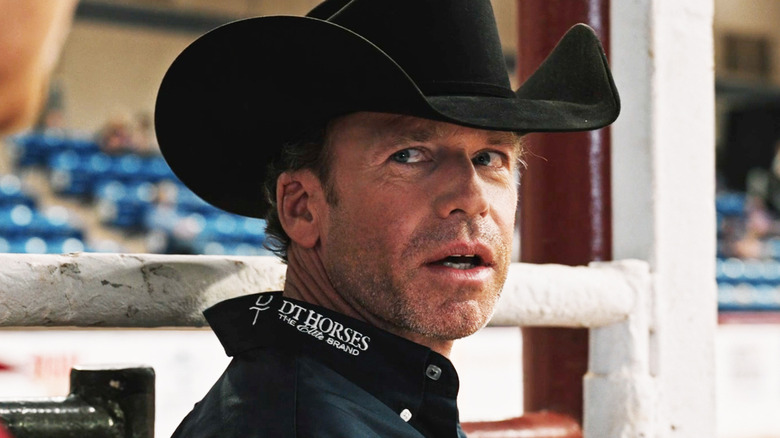
Sheridan’s retort is blunt: "The cowboy genre’s not dead. What’s dead is dumb movies about cowboys and aliens. That’s a bad genre, maybe don’t do that."
He contrasts this failure with the success of "pure" Westerns. Whenever a director focuses on the core elements of the genre—the relationship between man and the land, the struggle for justice in a lawless space—the audience returns. He points to the 2007 remake of 3:10 to Yuma and the continued reverence for Unforgiven as proof that the appetite for the frontier is permanent.
Official Responses and Industry Pushback
Sheridan’s journey to the top was not without significant friction. Before finding a home at Paramount, Sheridan pitched Yellowstone to several major networks, including HBO.
The rejection from HBO has become a piece of television lore. Reportedly, executives were skeptical of the show’s appeal to a broad audience, fearing it was too niche or "too Middle American" for their brand. There were also concerns regarding the staggering cost of production; Sheridan insisted on filming on location in Montana and Utah, utilizing real ranches and thousands of cattle to maintain authenticity.
"I had the argument many times," Sheridan told Bill Simmons. The prevailing wisdom in boardroom meetings was that the Western was a relic of the past. Sheridan’s refusal to compromise on the "Western-ness" of the show—rejecting suggestions to make it more like a traditional family soap opera—eventually led him to Paramount, where he was given the creative freedom to prove his thesis.
The result was a cultural phenomenon. Yellowstone became the most-watched show on cable television, proving that the "flyover states" and coastal elites alike were hungry for the rugged individualism and epic scale that only a Western can provide.
Implications: The Western as the American "Middle Ages"
The most profound element of Sheridan’s philosophy is his classification of the Western as America’s medieval period. This perspective changes how the genre is analyzed and produced.
The Knight and the Cowboy
In European literature, the knight errant is a figure who operates on the fringes of society, bound by a personal code of honor in a world where central authority is weak. Sheridan views the post-Civil War cowboy in the exact same light. By framing the Western as a "dark age," he allows for stories that are epic in scope, involving "kingdoms" (ranches), "dynasties" (families like the Duttons), and "warfare" (land disputes).
Cultural Identity
The Western persists because it grapples with the "original sins" and foundational virtues of the United States. It deals with the displacement of Indigenous peoples, the harshness of the elements, and the American obsession with property and self-reliance. As long as these themes remain central to the American psyche, the Western will remain relevant.
The Future of the Genre
Sheridan’s success has opened the floodgates for a new generation of Westerns. From Netflix’s Godless to the resurgence of Western themes in science fiction (such as The Mandalorian), the industry has finally accepted that the genre is a permanent fixture of the storytelling landscape.
The implication for the future of entertainment is clear: the Western is not a trend that comes and goes. It is a foundational setting that, when handled with respect and authenticity, offers a limitless canvas for exploring the human condition. As Taylor Sheridan has proven, the sun isn’t setting on the Western—it’s just getting started on a new day.