The Digital Canvas Paradox: Navigating the Social Media Pitfalls of the Modern Cartoonist
By Investigative Staff
Published: June 26, 2026
Introduction: The Visual Communicator’s Great Irony
In the burgeoning landscape of the 2026 creator economy, a striking paradox has emerged. While independent cartoonists and illustrators are masters of visual storytelling—capable of distilling complex human emotions into a single frame—they frequently falter when navigating the digital platforms designed to amplify their voices.
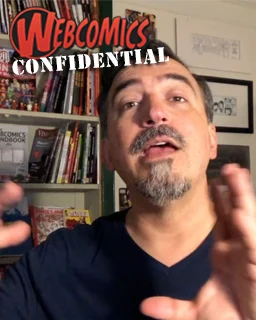
Brad Guigar, a veteran of the webcomics industry and a leading consultant on the business of digital art, recently released a comprehensive breakdown titled "Webcomics Confidential: Mistakes Cartoonists Make on Social Media." His analysis serves as a wake-up call for a community that often finds itself at the mercy of opaque algorithms and shifting platform demographics. As the barrier to entry for digital publishing continues to drop, the barrier to actual visibility has never been higher.
Main Facts: The Core Friction Between Art and Algorithm
The central thesis of the current discourse in the webcomics industry is that "posting" is not the same as "marketing." Guigar and other industry observers identify several critical areas where professional and aspiring cartoonists are failing to bridge the gap between their drawing tablets and their audience’s feeds.
The "Link-Only" Fallacy
One of the most prevalent mistakes identified is the "Link Dump." Many artists treat social media as a mere bulletin board, posting a single image with a link to their personal website or a hosting platform like Webtoon or Tapas. However, modern social media algorithms are designed to keep users within their "walled gardens." Platforms like X (formerly Twitter), Instagram, and Threads actively de-prioritize posts containing external links, leading to abysmal reach for the very content the artist is trying to promote.
Engagement vs. Broadcast
There is a fundamental misunderstanding of the "social" aspect of social media. Guigar points out that many artists use their accounts solely for broadcasting announcements. This one-way communication fails to build the "parasocial" bond that is essential for long-term sustainability in the creator economy. Without community engagement, an artist’s feed becomes a dry catalogue of products rather than a living, breathing brand.
Visual Stagnation
Surprisingly, even visual artists struggle with visual variety on social media. Relying solely on finished comic panels—often cropped awkwardly for mobile screens—fails to capture the fleeting attention of a scrolling user. The modern audience demands "process" as much as "product," yet many artists remain hesitant to show the "ugly" stages of their work, such as sketches, layouts, or time-lapse videos.
Chronology: From Webrings to Walled Gardens
To understand why cartoonists are struggling today, one must look at the evolution of digital distribution over the last three decades.
1995–2005: The Era of Independence (Web 1.0)
In the early days, cartoonists were pioneers of the independent web. Using personal websites and "webrings," artists controlled their entire ecosystem. Readers would bookmark sites and visit them daily. The relationship was direct, and the artist owned 100% of the traffic.
2005–2015: The Rise of the Aggregator and Early Social
The mid-2000s saw the rise of RSS feeds and comic portals. However, the true shift occurred with the explosion of Facebook and Twitter. Suddenly, artists didn’t need to wait for readers to visit their sites; they could go where the readers already were. This era was characterized by organic growth and high visibility. A "Retweet" or a "Share" could launch a career overnight.
2015–2022: The Algorithmic Shift
As social platforms matured, they transitioned from chronological feeds to algorithmic ones. Visibility became a "pay-to-play" game, or at the very least, a "play-by-our-rules" game. This is when the current friction began. Artists who were used to simple chronological updates found their reach decimated unless they conformed to specific, often labor-intensive, posting schedules.
2023–2026: The Fragmentation and Video Pivot
The current era is defined by extreme platform fragmentation and the dominance of short-form video. With the rise of TikTok and the subsequent pivot of Instagram to Reels, static images—the bread and butter of the cartoonist—have been deprioritized. This has forced creators to become video editors and "content creators" in addition to being illustrators, leading to the widespread burnout discussed in Guigar’s recent briefing.
Supporting Data: The Metrics of Visibility
Industry data from the first half of 2026 highlights the severity of the challenges facing visual creators. According to a recent survey by the Digital Creators Guild (DCG):
- Reach Decay: Static image posts on major platforms have seen a 40% decrease in organic reach compared to 2024.
- The Video Premium: Posts containing short-form video (15-30 seconds) receive, on average, 3.5 times more engagement than static comic panels.
- The Link Penalty: Posts containing external links are shown to approximately 65% fewer followers than "native" content that stays on the platform.
- Conversion Rates: While social media engagement is harder to earn, its conversion to paid platforms like Patreon or Ko-fi has dropped by 12% year-over-year, suggesting that "likes" are becoming increasingly decoupled from financial support.
These statistics underscore Guigar’s argument: the old strategies are not just inefficient; they are actively detrimental to an artist’s growth.
Official Responses: Insights from Brad Guigar and Industry Leaders
Brad Guigar, through his Webcomics Confidential series, emphasizes that the solution lies in a psychological shift. "You aren’t a cartoonist who uses social media," Guigar notes in his analysis. "On social media, you are a personality who happens to draw. People follow people, not just pixels."
The "Native Content" Strategy
Guigar advocates for "Native Content"—creating art specifically for the platform’s format rather than just posting a link to a website. This might mean redrawing a comic to fit the vertical scroll of a smartphone or creating a "carousel" post that tells a self-contained story within the social app itself.
The 80/20 Rule of Engagement
Industry experts suggest a strict adherence to the 80/20 rule: 80% of content should be value-driven (entertainment, education, or personal connection), while only 20% should be promotional. When artists flip this ratio, they see a rapid decline in follower retention.
The Professional Consensus
Other industry veterans have echoed Guigar’s sentiments. Speaking at the 2026 Digital Arts Symposium, marketing consultant Sarah Jenkins stated, "The biggest mistake is the fear of being ‘cringe.’ Artists are so protective of their professional image that they refuse to participate in the trends that actually drive the algorithm. In 2026, authenticity—even if it’s unpolished—is the highest form of currency."
Implications: The Future of the Independent Creator
The shift in social media dynamics has profound implications for the future of the medium.
1. The Rise of the "Hybrid Creator"
The distinction between "animator," "influencer," and "cartoonist" is blurring. To survive, the next generation of artists must be multi-disciplinary. This raises concerns about "skill bloat," where artists spend more time editing video and analyzing SEO than actually honing their craft.
2. De-platforming and Direct Ownership
Because of the volatility of social media, there is a renewed movement toward "owned" platforms. Guigar’s advice often includes the necessity of an email newsletter. If a social media platform changes its algorithm or goes defunct, the artist’s direct line to their audience remains intact. We are seeing a "Return to Web 1.0" philosophy, but powered by Web 3.0 and 4.0 infrastructure.
3. The Quality vs. Quantity Dilemma
The algorithm’s hunger for daily content puts artists in a precarious position. Creative work takes time. The pressure to post daily can lead to a decline in artistic quality and an increase in creator burnout. This may eventually lead to a "quality revolution," where audiences migrate to smaller, curated platforms that value substance over frequency.
4. AI and the Saturation of the Feed
As AI-generated imagery floods social media feeds, the "mistakes" Guigar identifies become even more dangerous. If an artist’s social media presence is robotic, cold, and purely promotional, they risk being mistaken for—or replaced by—automated content. The human element, the "mistakes," and the personal voice are the only things AI cannot currently replicate with soul.
Conclusion: Adapting to the New Reality
Brad Guigar’s Webcomics Confidential serves as more than just a list of "don’ts." It is a roadmap for survival in an era where the digital landscape is shifting beneath our feet. For the cartoonist, social media can no longer be an afterthought or a chore to be automated. It must be treated as an extension of the art itself.
The artists who will thrive in the latter half of the 2020s are those who view social media not as a hurdle, but as a unique medium with its own rules, its own language, and its own potential for storytelling. By avoiding the "link-dump" mentality and embracing native, person-driven content, creators can turn the algorithm from an adversary into an ally.
As the digital canvas continues to expand, the lesson is clear: to draw a following, you must first draw them in.