Drawing the Regency Line: The Visual Resurrection of Jane Austen in the Graphic Biography
The year 2025 marked a significant milestone in the literary world: the 250th anniversary of the birth of Jane Austen. While the author herself famously described her work as "pictures of domestic life in country villages," the centuries following her death have seen her influence expand into a global cultural phenomenon. From the Regency-era drawing rooms of Steventon and Chawton, Austen’s narratives have birthed a multi-million-dollar industry of adaptations, ranging from the faithful BBC productions to modern reinterpretations like Clueless, Bridget Jones’s Diary, and Fire Island.
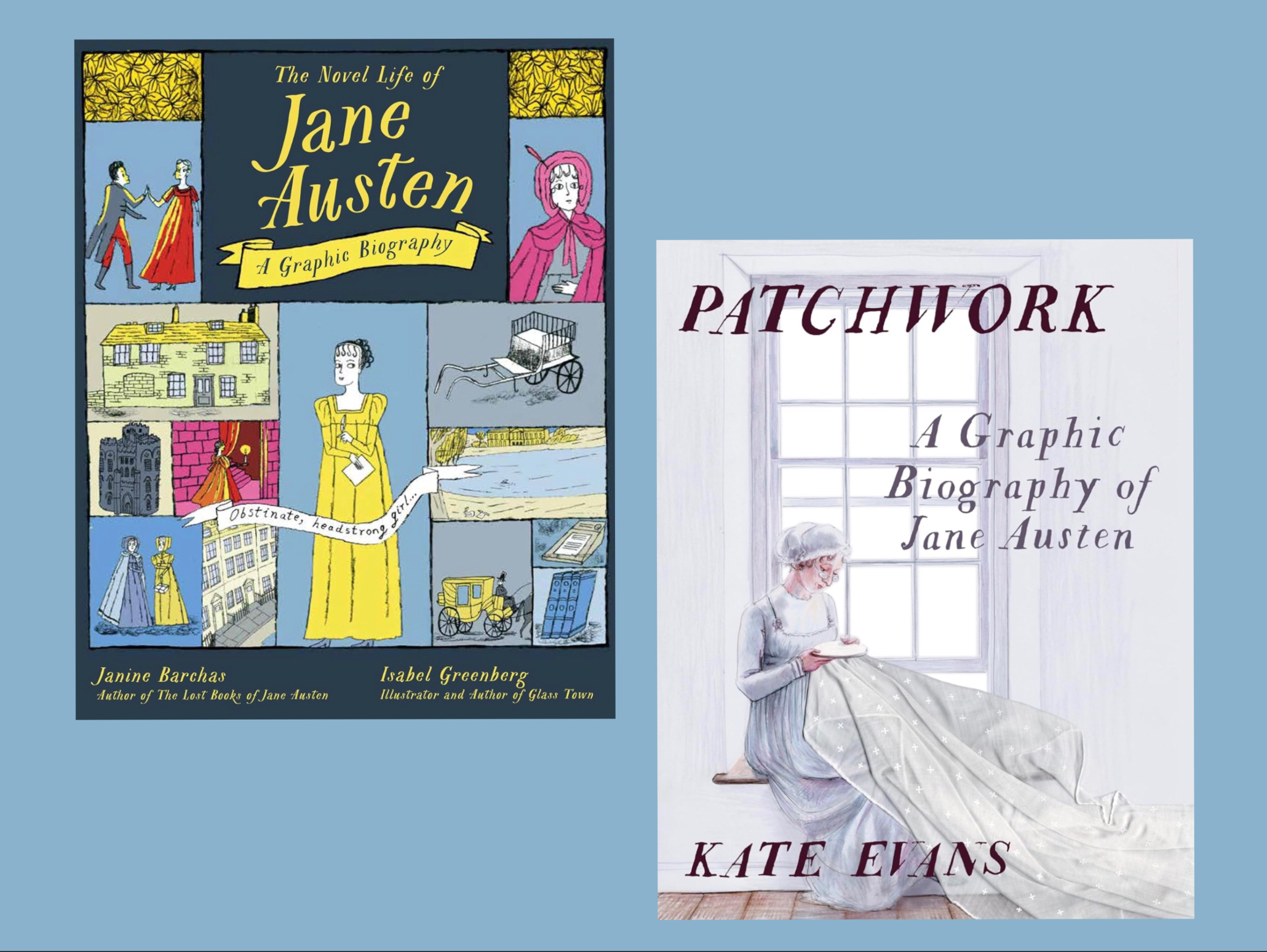
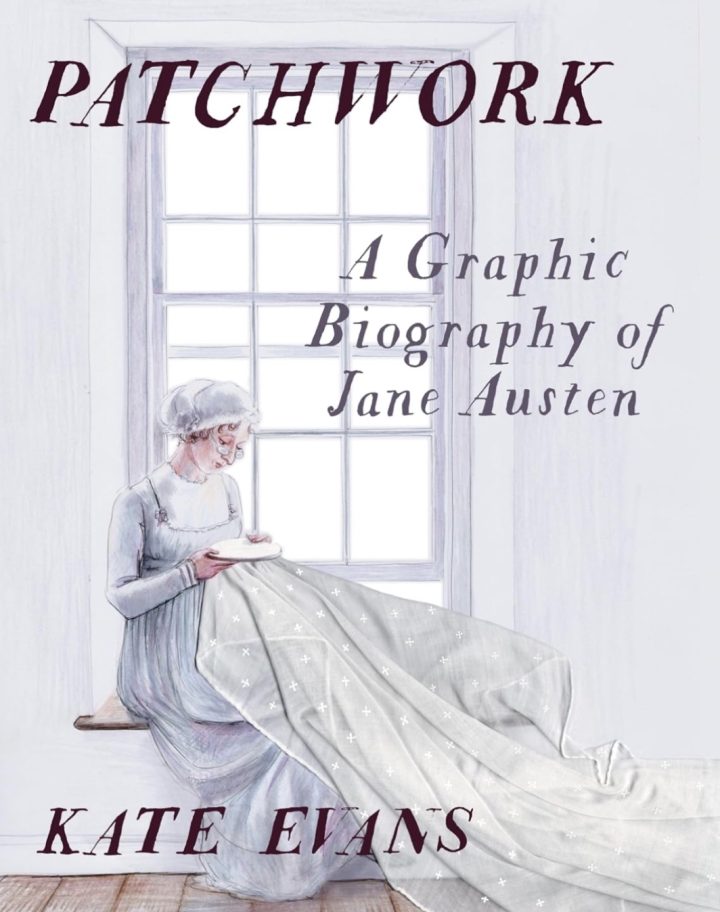
To capitalize on this semiquincentennial, the publishing world has seen a surge of new scholarship and creative interpretations. Among the most notable are two recent graphic biographies that attempt to bridge the gap between the rigid constraints of 19th-century history and the vibrant, expressive potential of the sequential art medium: Kate Evans’ Patchwork: A Graphic Biography of Jane Austen (Verso Books) and The Novel Life of Jane Austen by Janine Barchas and Isabel Greenberg (Hachette/Running Press).
These works arrive at a time when the "Janeite" fandom is more fervent than ever—so much so that the current owner of Austen’s childhood home in Steventon reportedly maintains a herd of aggressive bulls to deter enthusiasts from trespassing on the hallowed ground of her former estate. Yet, for the uninitiated or the "Austen novice," these graphic novels provide something more valuable than a pilgrimage: a visual deconstruction of the woman behind the myth.
The Core Objective: Visualizing the Invisible
The central challenge for any Austen biographer is the lack of primary source material. Following Jane’s death in 1817, her sister Cassandra famously burned the majority of Jane’s correspondence, allegedly to protect her sister’s reputation from the "unbecoming" wit and sharp social critiques contained within. This act of "propriety over posterity" left a void that scholars have spent two centuries trying to fill.
Both Patchwork and The Novel Life utilize what remains—surviving letters, family accounts, and scholarly deductions—but they employ the visual language of comics to fill the silences. Where a traditional biography might describe the "constraints of class," a graphic novel can show the literal walls of a cottage or the suffocating layers of a corset.
Kate Evans and the "Patchwork" of Empire
Kate Evans, known for her acclaimed graphic biography of Rosa Luxemburg (Red Rosa), brings a sharp, socio-political lens to Austen’s life. Her title, Patchwork, serves a dual purpose. It refers to the physical "quilt" of Austen’s life—a literal garment sewn by the Austen women—and the metaphorical stitching together of disparate historical threads.
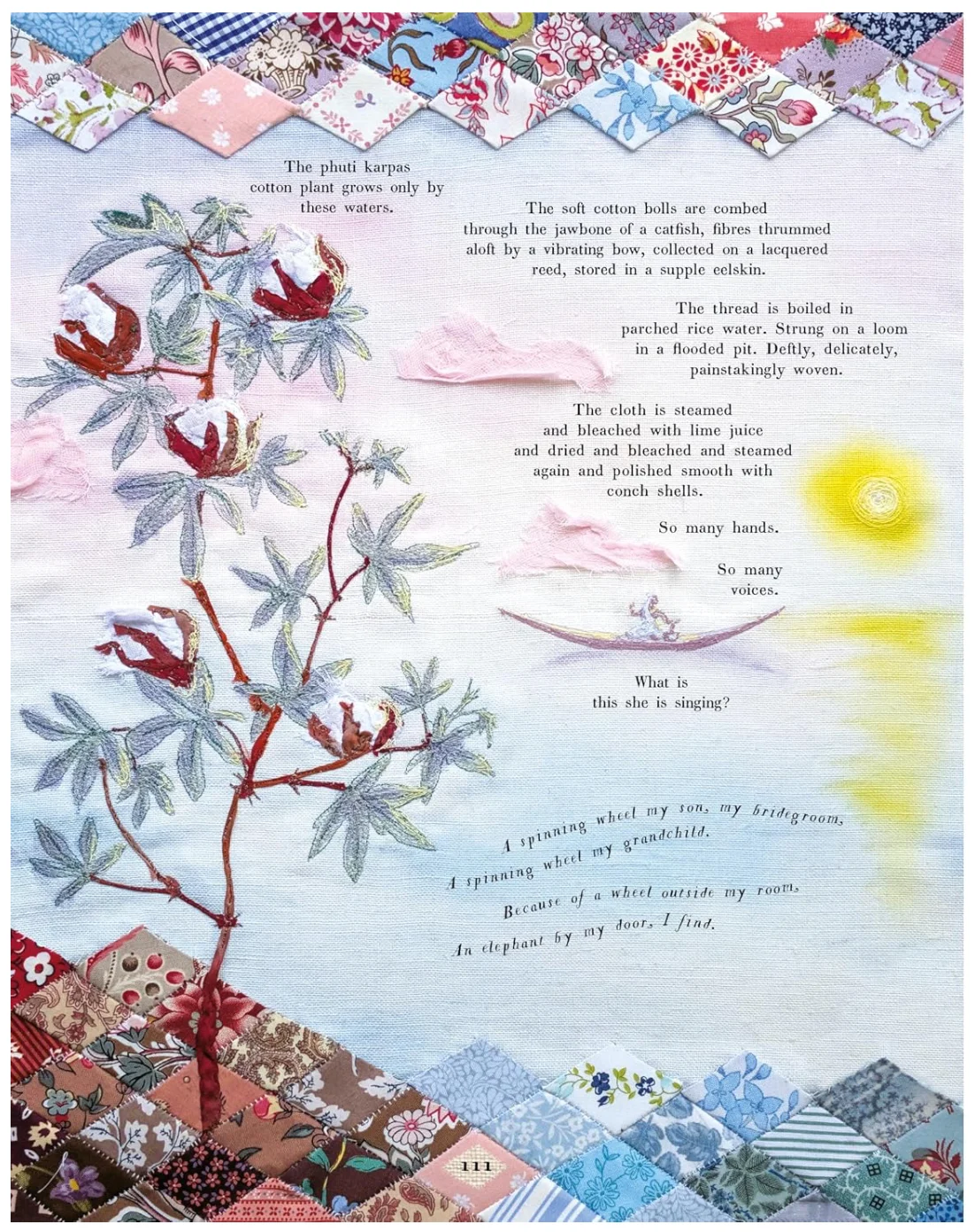
Evans’ work is distinguished by its refusal to view Austen in a vacuum. While Austen is often characterized as an apolitical chronicler of manners, Evans situates her within the brutal machinery of the British Empire. By analyzing the textile trade, Evans connects the fine muslins worn by Austen’s heroines to the Irish peasants, enslaved people in the Caribbean, and child laborers in British factories who produced them.
Barchas and Greenberg: The Intimate Perspective
In contrast, The Novel Life of Jane Austen offers a more concentrated, episodic look at the author’s life. Janine Barchas, a preeminent Austen scholar and professor at the University of Texas at Austin, teams with artist Isabel Greenberg to focus on key psychological turning points. Their approach is less concerned with the global "macro" view and more focused on the "micro" experience of being a female intellectual in a world that valued women primarily as commodities in the marriage market.
A Chronology of Constraint and Creativity
To understand the impact of these books, one must look at the chronology of Austen’s life as they present it—a life defined by a sharp tension between domestic duty and artistic ambition.
1775–1790: The Formative Class Lessons
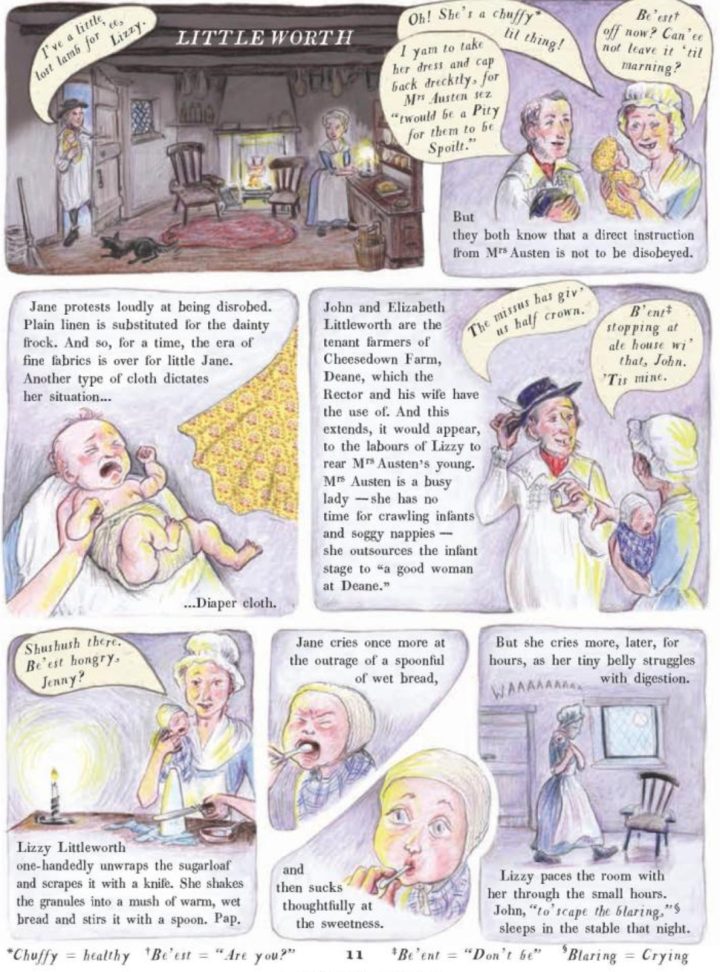
Both biographies highlight a jarring detail of Austen’s infancy: she was sent away as a newborn to be raised by tenant farmers. This was standard practice for "proper" ladies of the time who did not wish to be burdened by the physical demands of child-rearing. Evans, in particular, notes that once Jane was "reclaimed" by her mother, contact with her foster family ceased entirely. This early exposure to the rigid barriers of the class system would later become the bedrock of her fiction.
1801–1809: The Years of Displacement
The biographies cover the "lost years" of Austen’s life when her father’s retirement forced the family to move to Bath. This period is often depicted as one of creative stagnation and financial anxiety. The Novel Life uses this era to illustrate the "humiliations of the marriage market," where women over 30 were treated as depreciating assets.
The books also explore the financial reality of the Austen family. Despite their upper-middle-class status, they were "genteel poor," constantly waiting on inheritances or the generosity of wealthier relatives. Evans uses a clever visual metaphor to show this: a sequence where a promised horse and carriage from a wealthy brother slowly transforms into a humble donkey cart as his stinginess becomes apparent.
1811–1817: The Brief Flash of Fame and Death
Austen’s most productive years occurred at Chawton Cottage, where she finally found the stability to publish Sense and Sensibility, Pride and Prejudice, and Mansfield Park. However, fame remained elusive; she published anonymously ("By a Lady"). Both books handle her death at age 41 with poignant grace. The Novel Life depicts Austen on her deathbed surrounded by the characters she created, suggesting that while she died relatively alone in a literal sense, she was never truly solitary.
Supporting Data: Artistic Methodology
The effectiveness of these biographies lies in their divergent artistic choices:
- Color Palette as Narrative: Isabel Greenberg uses a restricted, flat color palette in The Novel Life. The "real world" is rendered in staid blues and yellows, while Austen’s internal fantasy life erupts in fiery reds, pinks, and oranges. This avoids the cliché of "thought bubbles" and instead immerses the reader in Austen’s vivid imagination.
- The Materialist Approach: Evans uses lush watercolors in Patchwork. Her focus on the physical objects of the Regency era—the pens, the paper, the stitching of a hem—serves to ground the abstract concepts of 19th-century economics in tangible reality.
- Scholarly Foundation: Barchas brings "insider" knowledge to The Novel Life, including practical historical trivia—such as the fact that donkeys were not taxed while horses were, explaining the Austen family’s use of a donkey cart.
Critical Analysis and "Official" Perspectives
The reception of these works reflects a broader shift in how we view the literary canon. In her analysis, Evans echoes the critiques of Edward Said, who famously argued in Culture and Imperialism that the domestic tranquility of Mansfield Park was only possible because of the slave labor on Caribbean sugar plantations. By including these "unseen" classes, Evans provides a corrective to the traditional, sanitized view of the Regency era.
Furthermore, the books highlight a fascinating historical parallel: the 19th-century disdain for the novel. As Barchas and Greenberg point out, novels were once considered "foolish and dangerous" by critics—much like comic books were in the 1950s during the era of Fredric Wertham. By telling Austen’s story through a graphic medium, the authors are essentially reclaiming a "denigrated" art form to celebrate a woman who did the same for the novel.
Implications: Why Austen in Panels?
The publication of Patchwork and The Novel Life suggests that the graphic biography is becoming a preferred medium for historical reclamation. For a figure like Austen, whose life was defined by what was not said and what was hidden behind the curtain of social etiquette, the ability of comics to show the "internal" versus the "external" is invaluable.
The implications for the "Janeite" community are clear: Austen is no longer just a figure of romance and tea parties. She is being reframed as a sharp-eyed observer of global economics, a survivor of a rigid class system, and a pioneer of an art form that was once as misunderstood as the one used to tell her story today.
As Evans concludes in Patchwork, a caretaker at Austen’s grave once asked a visitor, "Was there anything particular about that lady?" For those who read these graphic biographies, the answer is not just that she wrote great books, but that she managed to capture the entirety of the human condition—from the price of sugar to the pain of a broken heart—all within the "two inches of ivory" she called her life.