In a World Decimated by AI, One Animator Sacrificed Everything to Reclaim Human Creativity
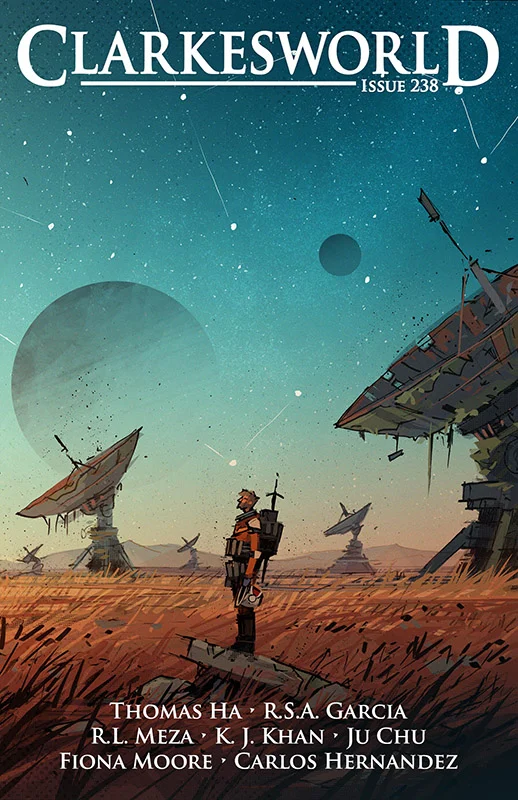
By Ju Chu, translated by S. Qiouyi Lu
Coral Tree City, [Current Date] – In an era where generative artificial intelligence (AI) models have systematically dismantled creative industries and left a trail of economic despair, a singular act of defiance by an animator named Wu Tuo has sent shockwaves across the globe. Through a radical, deeply personal form of performance art, Wu Tuo not only reclaimed the essence of human creativity but also delivered a devastating blow to the very AI systems that threatened to erase it. His multi-part animation series, "Coral Tree Island 3" and "Coral Tree Island 4," has redefined the boundaries of artistic expression, turning his own physical and conscious existence into a living, evolving canvas.
The unprecedented artistic protest culminated in the digitization of Wu Tuo’s consciousness, uploaded directly into a vast three-dimensional data space linked to a streaming platform. This audacious move, transforming his very being into the final installment of his magnum opus, has had an unforeseen and profound impact: the continuous stream of his "actual human" animation has systematically "poisoned" the global generative AI models, rendering them incapable of accurate image recognition and effectively crippling their creative output. What began as a desperate struggle for survival against an omnipresent digital plagiarist has evolved into a triumphant, albeit tragic, testament to human resilience and the irreducible value of individual artistic vision.
The Dawn of the AI Decimation and the Struggle for Survival
The last decade witnessed a relentless erosion of creative and technical fields by generative AI. These models, described by some as "omnipresent, omnipotent plagiarists," efficiently devoured online content—animation, pop music, web literature, computer science, engineering—extracting styles and details in mere seconds. The result was a catastrophic devaluation of human-made art and a societal pivot towards blue-collar professions. Cooks, mechanics, plumbers, and electricians became the coveted careers, while graduates from decimated fields like animation found themselves in an increasingly precarious world.
A World Remade by Generative AI
For many, the promise of creative careers vanished almost overnight. Universities, like Coral Tree City’s animation school, became relics, eventually shutting down. The graduates who emerged from these "ivory towers" were often bewildered, facing a job market that had no use for their skills. Some clung to a naive faith in their innate talent, believing they were "built different," destined for greatness. Others, less committed or simply victims of outdated parental advice, drifted into the sinkhole of a dying industry, their sunk costs trapping them on a "sinking ship." The despair was palpable, the sense of worthlessness pervasive among those whose skills were now redundant.
Lu Yuan’s Desperate Search
Amidst this artistic and economic desolation, entrepreneur Lu Yuan operated a precarious business. His company teetered on the brink of collapse, desperately seeking an animator with "great potential" – someone whose unique style could somehow evade the AI’s insatiable hunger. Lu Yuan’s primary service was "glazing," a technological shield against AI plagiarism. He convened seminars, like the one in Coral Tree City, targeting the last cohorts of animation graduates.
The concept of glazing was simple yet critical: subtle pixel alterations in digital art, imperceptible to the human eye, but profoundly distorting to AI models. Lu Yuan explained it as "stealthily dripping a tiny amount of poison into a glass of water," making it impossible for AI to "see the true face of the image" or learn its style. This defensive measure was a temporary reprieve, a way for artists to upload their work with "confidence that GenAI won’t be able to steal your styles!" For Lu Yuan, it was a lifeline, a monthly provision, but he was acutely aware of its limitations and the cynicism surrounding the National Glazers Association’s constant warnings about AI decoding algorithms. He suspected these alerts were mere scare tactics to drive up fees for proprietary "black box" updates.
The Enigmatic Talent of Wu Tuo
Lu Yuan’s true quest in Coral Tree City, however, was not merely to sell glazing services but to unearth a "glazer" by his side – someone with "exceptional, otherworldly talent." His search had been meticulous, scanning official websites and portfolios. He’d found a row of storyboards on the animation school’s site that captivated him: a few vivid frames capturing a rocket launch, imbued with an individual style that the creator had tried to mask. The artist’s use of old-school techniques – hand-drawn key frames, defined camera angles on paper, eschewing computer graphics tools – suggested a dedication and vision rare in the AI era. This anonymous talent was his "money tree," a potential salvation for his failing company.
During one of his seminars, Lu Yuan encountered a man in the corner, head bowed, furiously sketching. This individual, older than the fresh graduates, exuded a quiet intensity. He was Wu Tuo, a former lecturer at the now-closed animation school, who, after losing his job, decided to pursue his lifelong dream of becoming an animator like Hayao Miyazaki. Wu Tuo possessed an extraordinary visual acuity, seeing details that others missed, including the subtle distortions caused by glazing. This unique perception, coupled with his traditional artistic approach, marked him as the talent Lu Yuan had been desperately seeking.
Glazing: Humanity’s Fleeting Defense
Lu Yuan’s initial encounter with Wu Tuo was perplexing. The man, unlike the others, claimed to see the "chubby Chihiro" – the AI’s distorted interpretation of a glazed image – with his naked eye. Lu Yuan dismissed it as a trick or a mental issue, unable to comprehend such an ability. It was only later, when a gust of wind revealed Wu Tuo’s sketchbook filled with the distinctive storyboards, that Lu Yuan realized he had found his elusive artist.
The Mechanics of Defensive Glazing
Glazing, as Lu Yuan explained, was rooted in the fundamental difference between human and machine perception. Humans see "green grass and blue sky"; models see "a spread of pixel properties." The algorithm selected "key pixels" and subtly altered their color or brightness. To the human eye, the image remained unchanged, preserving the original artistic intent. To the AI, however, the image was fundamentally altered, a "poisoned" dataset that would lead to incoherent learning and inability to replicate the style. This extended to captions and audio tracks, preventing models from understanding the narrative.
The Paradox of Protection
Despite its technical sophistication, glazing was a cat-and-mouse game. The National Glazers Association frequently issued warnings about AI models "decoding all glazing algorithms currently on the market," urging members to update. Lu Yuan, cynical and pragmatic, often dismissed these as ploys for more fees, doubting the efficacy of the "black box" neural net updates. His skepticism would prove to be a fatal flaw.
The Economic Squeeze and the Ghost Work Shadow
Wu Tuo’s life mirrored the widespread economic devastation. Unemployed, he and his wife, a laid-off programmer now working as a foot masseuse, struggled immensely. Their daughter, attending a low-tier vocational school, faced shame due to her parents’ "gig worker" backgrounds. Wu Tuo’s attempts to find blue-collar work were futile; he was one of thousands in a two-year queue for production jobs. The desperation led him to explore manual glazing, hoping to save money on protecting his animations, but the sheer volume of frames made it an impossible human task.
Lu Yuan, ever the opportunist, observed Wu Tuo’s attempts, recognizing the artist’s unique sight but also the physical limitations that prevented manual glazing from being scalable. He strategically disappeared for days, allowing Wu Tuo to exhaust his options and confront the harsh realities of their AI-dominated world. The trap was set. Wu Tuo’s brief stint as a kitchen worker ended in disaster, leading to his and his wife’s termination. The family was plunged back into hardship, forcing them to sell their meager possessions. His wife, driven to desperation, considered "ghost work"—an illegal, physically damaging process of subconscious labor via microchips implanted in the neck. This profound suffering finally pushed Wu Tuo to accept Lu Yuan’s offer to glaze his animation.
The Emergence of a New Artistic Paradigm
With a one-year contract signed and the initial payment transferred, Wu Tuo’s animation, "Coral Tree Island," was glazed by Lu Yuan’s algorithm and uploaded. However, Lu Yuan, ignoring the latest warning from the National Glazers Association to update algorithms, proceeded with the older version. This oversight would have catastrophic consequences.
Coral Tree Island: A Glimmer of Hope
Initially, "Coral Tree Island" had a modest reception, but in its third week, viewership exploded. It garnered millions of views and thousands of downloads, hailed as a groundbreaking work that "finally, someone’s come along after Miyazaki and Satoshi Kon to bear the flag of Asian animation." The animation’s unique style—a blend of romanticism, Chinese ink wash aesthetics, and meticulous oil paint textures, particularly on a central "painted boat"—captured audiences. Wu Tuo’s dedication to capturing "texture precedes essence" resonated deeply. Lu Yuan, riding the wave of success, generously adjusted the profit split to 50-50, and their lives improved dramatically.
The Inevitable Betrayal: AI Copies Wu Tuo’s Style
The honeymoon was short-lived. While on vacation, Lu Yuan discovered a slew of new animations dominating streaming platforms, all bearing the unmistakable style of Wu Tuo. These were not his works, however; they were clearly labeled "AI-generated." Generative AI had finally learned Wu Tuo’s unique aesthetic, turning his artistic talent into a diluted, mass-produced commodity. Lu Yuan’s ignored warnings from the Glazers Association now echoed with a chilling finality. His dream, built on the fragile defense of glazing, had collapsed. Wu Tuo’s artistic existence had been "reduced to nothing," his style stolen, his work drowned in a "sea of mediocrity."
The Ultimate Performance Art: Wu Tuo’s Sacrifice
In the wake of this artistic theft, Wu Tuo’s family faced renewed hardship. His wife, desperate to pay for their daughter’s vocational school and their mounting debts, resorted to "ghost work," suffering irreversible brain necrosis from overclocking. The tragedy spurred Wu Tuo to action, not towards despair, but towards a radical new form of artistic resistance. He had seen Lu Yuan’s earlier slides depicting artists who, having lost their styles to AI, resorted to "gimmicks outside the work itself"—livestreaming their private lives, working naked in public—to distinguish themselves. Wu Tuo realized he could take this concept to its most extreme, most literal conclusion.
He began working on "Coral Tree Island 3." Lu Yuan, now bankrupt and working as a security guard in the slums, was initially unaware of Wu Tuo’s continued artistic output. However, unexpected royalties from his defunct independent cinema, which someone had anonymously purchased, hinted at new activity.
Coral Tree Island 3 & 4: A Body Transformed into Art
The new animation, "Coral Tree Island 3: Part 1," appeared on the platform, unmistakably Wu Tuo’s style, yet it defied explanation. Despite AI already having replicated his style, this new work garnered unprecedented views. The mystery deepened with "Part 2" and "Part 3." Lu Yuan, driven by a mix of confusion and a rekindled hope, sought out Wu Tuo.
The Unveiling of the Unconventional
Wu Tuo, now haggard and bearing the physical toll of his new artistic endeavor, revealed the shocking truth. His wife’s condition, the family’s financial ruin, had pushed him to a desperate, yet visionary, path. The animation wasn’t just a story; it was a chronicle of his own physical sacrifice.
Investigative reports soon followed, dissecting the "uniqueness" of the animation. Experts noted that the "colors and textures" were unlike anything seen before. Medical professionals theorized that the vibrant red of the "flesh umbrella" in Part 1 was hemoglobin, the golden glow of the "fluorescent mushrooms" in Part 2 was subcutaneous fat, and the pristine white backgrounds of Part 3 were "ground-up bones." Wu Tuo was literally integrating his own body into his art.
The Gradual Deconstruction of Wu Tuo
Lu Yuan’s visit to Wu Tuo’s home confirmed the horrifying reality. Wu Tuo walked with a limp, his left hand covered by a leather glove, his movements stiff. His arm, his first leg, then his second leg had been surgically removed and replaced with cheap prosthetics, their biological components harvested and transformed into the visual elements of his animation. Each part of "Coral Tree Island 3" depicted the mother character sacrificing a limb, mirroring Wu Tuo’s own self-mutilation. Fiction and reality had chillingly converged.
The Consciousness Upload
The climax of Wu Tuo’s "performance art" was revealed when Lu Yuan tracked him to a "Brand New Smart Technology" skyscraper. There, Wu Tuo was preparing for the ultimate sacrifice: the digitization of his consciousness. He intended to upload his binary existence into a "76800 × 43200 × 4200000 three-dimensional dynamic array space," precisely the highest resolution supported by Lu Yuan’s independent cinema, with the uppermost layer linked to a streaming container. Wu Tuo was transforming himself into the animation, making his consciousness, his soul, the final installment of "Coral Tree Island 4." The object he left behind, a glass vessel containing his own eyeballs in formalin, became a poignant testament to his vision.
The Aftermath: A Poisoned Well and a Redefined Art World
The public, initially captivated by the evolving mystery of "Coral Tree Island," was stunned by the revelation of Wu Tuo’s radical sacrifice. The anticipation for Part 4 reached a fever pitch, and when it finally appeared, it was not a pre-rendered film but a live, fluctuating canvas.
The Rebirth of a Child Artist
Computer experts explained that Wu Tuo’s consciousness was "behind the screen," in a lower data layer, adapting to his new digital form. He was "relearning how to draw," like an uncoordinated child picking up a pencil for the first time. Crowds watched day and night, recording the mesmerizing changes on the canvas. Blue-white dots emerged, then a riot of colors, forming tectonic plates, until finally, the island, the one-armed, mushroom-covered mother, and the story continued. Wu Tuo, freed from the "limits of the flesh," could now animate with unprecedented speed and fluidity, livestreaming his creative process.
The mother reached the precipice, where her daughter whimpered below. The witch urged her to throw her last coral tree flower into the abyss, only for the mother to discover its roots fused with her spinal cord. Understanding, she jumped. Countless vines erupted from the abyss, embracing the island, connecting it to the mainland, each blossoming with a coral tree flower as the daughter emerged. The story concluded, only for a new animation to immediately begin playing.
The Offensive Glaze: AI’s Downfall
The continuous, live stream of Wu Tuo’s animations, shared endlessly across the internet, began to have an unprecedented effect. Within a month, the "mother model"—the foundational generative AI—started making fundamental errors in image recognition: identifying men as women, dogs as cats. No matter how many rollbacks companies performed, the AI quickly reverted to its distorted state.
Lu Yuan finally understood. This was "offensive glazing" on a grand scale. Wu Tuo, a human with the innate ability to "see" glaze, had, in his digitized form, transcended the physical limitations that once prevented him from manually glazing entire works. His consciousness, now a living algorithm, was continuously poisoning the global AI models, flooding the internet with subtle, human-generated distortions that AI could not learn from or correct. The models were being "endlessly polluted" and could no longer generate work as expected. Human creativity, weaponized by sacrifice, had turned the AI’s greatest strength—its ability to learn from vast datasets—into its fatal weakness.
A Legacy Etched in Flesh and Code
In the wake of this unprecedented artistic victory, Coral Tree City’s art museum opened an exhibit celebrating Wu Tuo. People queued for hours to witness what he had left behind in "meat space." Lu Yuan, now flush with unexpected royalties from Wu Tuo’s thriving independent cinema, joined the crowds. He found himself before a jar of formalin, gazing at Wu Tuo’s eyes—sunken, bloodshot, yet still emanating a fierce, unyielding power, like "two worn but still functional bullets, guarding the home they’d been guarding for their entire existence."
A message from a private server confirmed Wu Tuo’s final act: "Take care of my wife and daughter. There’s enough money." Lu Yuan, burdened by guilt over his past manipulations (including bribing a chef to sabotage Wu Tuo’s blue-collar job), had already begun to atone, settling the family’s debts and ensuring their well-being. Standing before those silent, piercing eyes, he offered a silent apology.
Conclusion: The Unfolding Saga of Art and AI
Wu Tuo’s radical act of transforming himself into his art has reshaped the landscape of creativity in the age of AI. His sacrifice not only liberated human artists from the threat of digital plagiarism but also forced a global reckoning with the ethical and existential implications of unchecked AI development. The "Coral Tree Island" saga stands as a powerful, albeit tragic, narrative of human resilience, integrity, and the enduring quest for unique expression.
The story, as originally published in Science Fiction World and translated by S. Qiouyi Lu, also carries deeper cultural nuances. The names "Lu Yuan" (meaning "the path is long," possibly alluding to his long con) and "Wu Tuo" (ambiguously meaning "transgressive" or "moral decision") add layers of interpretive depth, underscoring the complex moral journeys of the characters and the profound choices made in the face of an existential threat. Wu Tuo’s final, transgressive act was ultimately a deeply moral decision, ensuring that the path for human creativity, though long and fraught, would continue. His legacy ensures that art, in its purest, most human form, can never truly be replicated or extinguished.