London, UK – William Shakespeare’s "The Winter’s Tale," a play often categorized among his later "romances" or "problem plays," continues to captivate audiences and scholars with its dramatic shifts in tone, fantastical elements, and profound exploration of human fallibility and the redemptive power of time. First published in the 1623 First Folio, this enigmatic work, believed to have been composed around 1610, stands as a testament to Shakespeare’s late-career mastery, blending the tragic with the pastoral, the comic with the miraculous, in a narrative that feels as ancient as it is eternally relevant.
Unlike the straightforward classifications of his comedies or tragedies, "The Winter’s Tale" resists easy categorization. Critic F.S. Boas coined the term "problem plays" for works like "All’s Well That Ends Well" and "Measure for Measure," which navigate complex moral dilemmas and oscillate between genre conventions. "The Winter’s Tale" fits squarely into this tradition, commencing with a catastrophic unraveling caused by irrational jealousy before transforming into a pastoral idyll, only to conclude with a breathtaking, almost supernatural, reconciliation. Its narrative journey—from the bitter chill of winter to the blossoming hope of spring—mirrors the emotional arc of its characters, making it a compelling study in human endurance and forgiveness.
Main Facts: A Tale of Two Kingdoms and a King’s Madness
"The Winter’s Tale" unfolds across two distinct settings: the rigid, courtly world of Sicilia and the vibrant, pastoral landscape of Bohemia. The play’s initial acts are dominated by King Leontes of Sicilia, whose sudden and baseless jealousy towards his pregnant wife, Queen Hermione, and his childhood friend, King Polixenes of Bohemia, triggers a cascade of devastating events. This irrational suspicion leads to Hermione’s imprisonment, the tragic death of their young son, Mamillius, and the abandonment of their newborn daughter, Perdita.
A pivotal moment arrives with the pronouncement from the Oracle of Apollo, which unequivocally declares Hermione chaste, Polixenes blameless, and Leontes a "jealous tyrant." Leontes’s defiant rejection of this divine truth immediately precedes the news of his son’s death and Hermione’s subsequent collapse, leaving him to a solitary penance spanning sixteen years.
The play then undergoes a dramatic temporal and geographical shift, fast-forwarding to Bohemia, where Perdita has been raised as a shepherdess, unaware of her royal lineage. Here, the mood lightens considerably, introducing elements of romance, mistaken identity, and comic relief through characters like the roguish peddler Autolycus. The blossoming love between Perdita and Polixenes’s son, Florizel, sets the stage for the eventual return to Sicilia and the miraculous, long-awaited reunion and reconciliation that forms the play’s powerful conclusion. This includes the famous "statue scene," where Hermione, long believed dead, is dramatically revealed to be alive, bringing both joy and the poignant realization that some losses, like that of Mamillius, can never be undone.
Chronology: The Unfolding of Tragedy and Triumph
The Seeds of Suspicion in Sicilia (Acts I-III):
The play opens in Sicilia, introducing the deep, longstanding friendship between King Leontes and King Polixenes. Polixenes, having been a guest for nine months, prepares to return to Bohemia. Leontes, despite his pleas, cannot persuade him to stay longer. It is Queen Hermione’s eloquent and playful intercession that convinces Polixenes to extend his visit, a success that inexplicably ignites a violent, pathological jealousy in Leontes.
Polixenes fondly recalls his and Leontes’s innocent boyhood friendship:
"We were as twinned lambs that did frisk i’th’sun, / And bleat the one at th’other. What we changed / Was innocence for innocence: we knew not / The doctrine of ill-doing, nor dreamed / That any did."
This idyllic memory, however, only fuels Leontes’s warped perception, convincing him of an illicit affair between his wife and friend. He observes their innocent interactions, distorting them into evidence of infidelity:
"Is whispering nothing? / Is leaning cheek to cheek? Is meeting noses? / Kissing with inside lip? Stopping the career / Of laughter with a sigh? — a note infallible / Of breaking honesty."
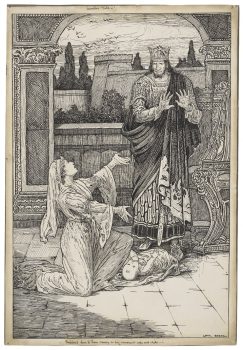
Consumed by this "diseased opinion," Leontes compels his loyal courtier Camillo to poison Polixenes. Camillo, disbelieving the king’s accusations, instead warns Polixenes, and the two escape to Bohemia. Enraged, Leontes publicly denounces Hermione, imprisons her, and claims her unborn child is illegitimate. In prison, Hermione gives birth to a daughter, Perdita. Paulina, Hermione’s fiercely loyal lady-in-waiting, presents the infant to Leontes, who cruelly rejects her:
"This brat is none of mine: / It is the issue of Polixenes. / Hence with it, and together with the dam / Commit them to the fire!"
Leontes commands Paulina’s husband, Antigonus, to abandon the baby in a desolate place. To prove his wife’s guilt, Leontes sends messengers to the Oracle of Apollo. The Oracle’s verdict, delivered during Hermione’s trial, declares her innocent and Leontes a "jealous tyrant." In a moment of hubris, Leontes dismisses the Oracle’s pronouncement as "mere falsehood," only for news to arrive instantly that his son, Mamillius, has died from grief. Overwhelmed by these events, Paulina then announces Hermione’s death. This series of tragedies finally shatters Leontes’s madness, bringing him to a profound and enduring repentance. He vows:
"Once a day I’ll visit / The chapel where they lie, and tears shed there / Shall be my recreation."
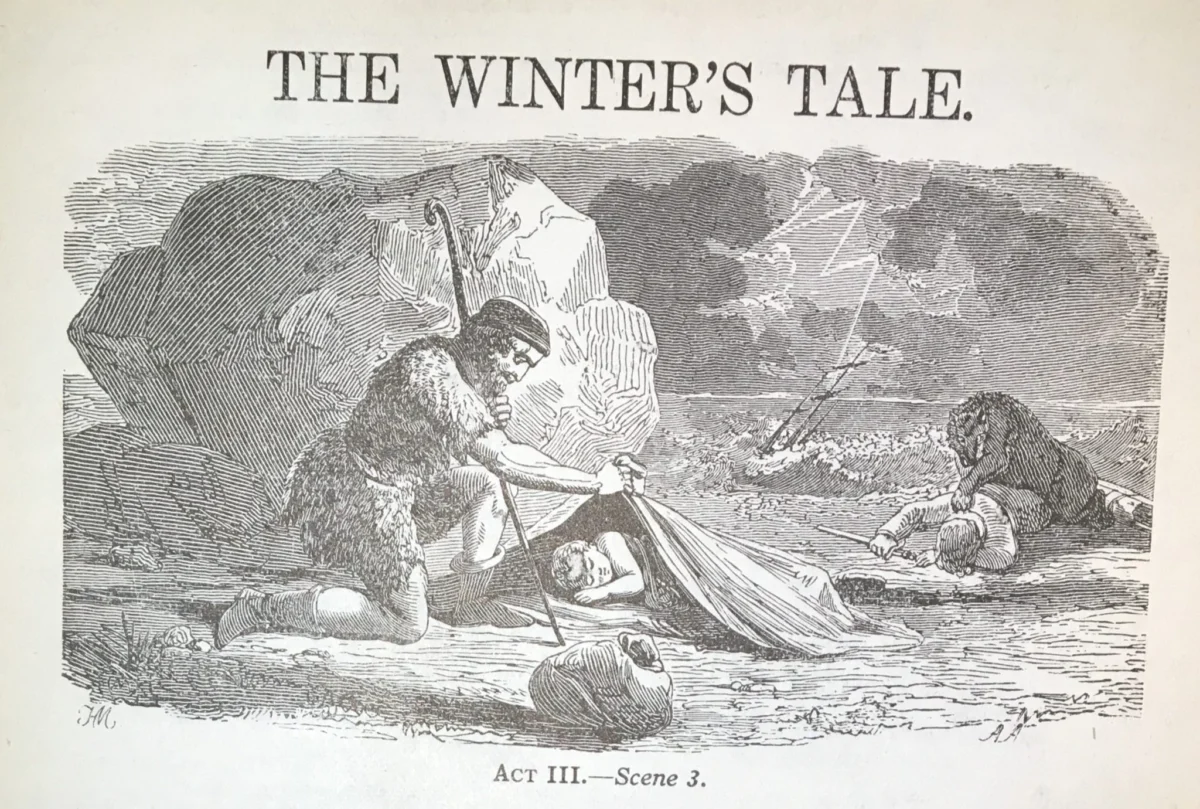
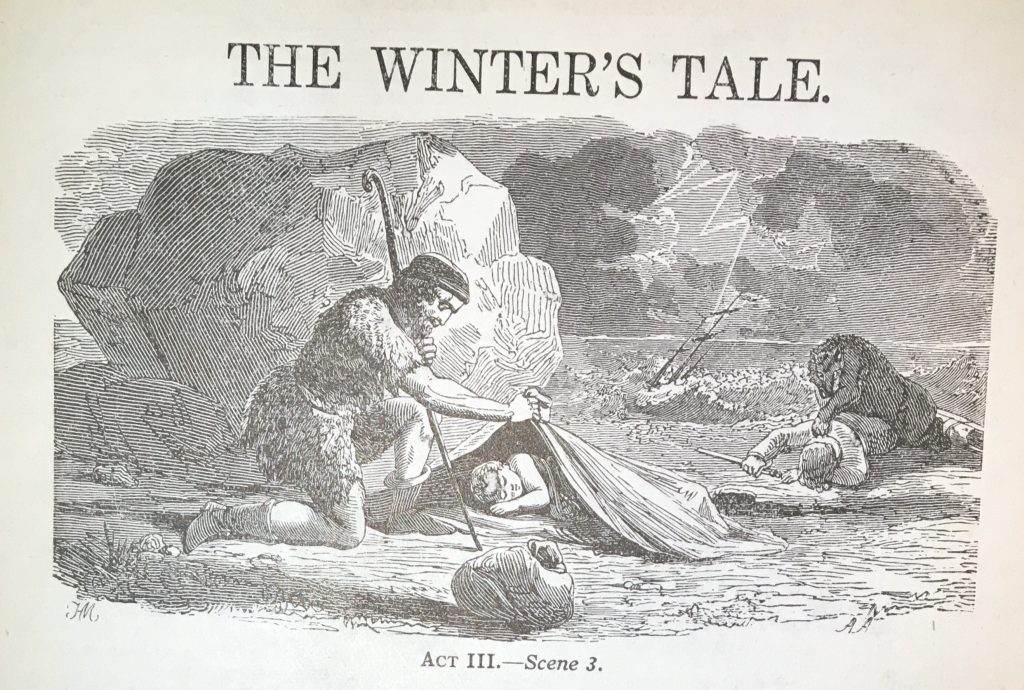
Antigonus, meanwhile, fulfills his grim task, leaving Perdita on the Bohemian coast. A ghost, presumably Hermione’s, appears to him, instructing him to name the child Perdita ("the lost one") and affirming his own imminent death. The iconic stage direction "Exit, pursued by a bear" follows, as Antigonus meets his fate. The infant Perdita, however, is discovered by a kind shepherd and his son, along with a packet of gold and jewels that will later prove her royal identity.
Sixteen Years of Separation and Renewal (Acts IV-V):
A chorus, personified as Time, announces a sixteen-year leap, transitioning the play from tragedy to romance. In Bohemia, Polixenes’s son, Florizel, has fallen deeply in love with Perdita, now a beautiful shepherdess. Polixenes, unaware of Perdita’s true parentage, disapproves of his son’s choice, viewing it as a mismatch of social status. Disguised with Camillo, he attends a sheep-shearing festival where Florizel and Perdita plan to be betrothed.
The festival scenes are rich with pastoral charm and comic interludes, primarily featuring Autolycus, a roguish peddler, pickpocket, and singer of broadside ballads. His various disguises and schemes provide much-needed levity, highlighting the vibrant, earthy world of the common folk. Polixenes eventually reveals his identity, forbids the marriage, and threatens Perdita and her adoptive family.
Florizel and Perdita, aided by Camillo, flee to Sicilia, where Leontes has spent sixteen years in remorse, faithfully visiting the memorial to Hermione and Mamillius. Paulina has been his constant, albeit stern, companion, ensuring his repentance. The arrival of Florizel and Perdita, along with the Bohemian shepherd and his son (who reveal the packet found with the infant), leads to the astonishing discovery of Perdita’s true identity as Leontes’s lost daughter.
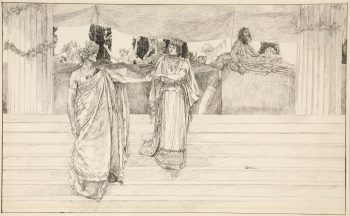
The play culminates in the extraordinary "statue scene." Paulina invites Leontes, Polixenes, Florizel, and Perdita to view a lifelike statue of Hermione. As they gaze upon it, Paulina commands the "statue" to descend. In a moment of breathtaking theatrical magic, Hermione, revealed to have been alive and in hiding for sixteen years under Paulina’s care, steps down. She is reunited with her husband and daughter, though her son, Mamillius, remains a poignant, unfillable void. The play concludes with forgiveness, newfound family, and the prospect of healing, though the scars of past actions are acknowledged.
Supporting Data: Genre, Themes, and Performance
"The Winter’s Tale" is a quintessential example of Shakespeare’s late "romances," a genre characterized by their blend of tragic initial events, long periods of separation, journeys, magical elements, and ultimately, reconciliation. These plays, including "The Tempest" and "Cymbeline," often draw on folklore and myth, featuring lost children, disguised royalty, and seemingly impossible reunions.
The Nature of Jealousy: Leontes’s jealousy is the destructive engine of the play. Unlike Othello’s jealousy, which is carefully manipulated by Iago, Leontes’s arises seemingly from nowhere, a sudden "spasm in his mind." This irrationality has fascinated critics and actors alike. Sir Antony Sher, renowned for his portrayal of Leontes in a Royal Shakespeare Company production, researched "morbid jealousy"—a delusional disorder where a person is convinced of their partner’s infidelity without evidence. This psychological approach helps ground Leontes’s extreme behavior, offering a modern lens through which to understand his sudden transformation from loving husband to tyrannical madman. The play powerfully illustrates how such unfounded suspicion can dismantle not only personal relationships but also the very fabric of a kingdom.
Time as a Healer and Revealer: The sixteen-year gap is not merely a plot device; it is a central thematic element. Time, personified, emphasizes its transformative power. It allows for the maturation of Perdita, the deep repentance of Leontes, and the gradual softening of Polixenes’s heart. It suggests that while immediate justice might be swift and brutal, true healing and understanding often require the slow, patient work of years. Yet, time cannot fully erase the past; Mamillius’s death is a permanent consequence, a stark reminder that even divine forgiveness cannot always restore what was lost.
The Role of Magic and the Supernatural: "The Winter’s Tale" embraces the mystical more overtly than many of Shakespeare’s plays. The Oracle of Apollo is a direct divine intervention, though initially rejected. The ghost of Hermione appearing to Antigonus lends a supernatural quality to Perdita’s abandonment. Most strikingly, the "statue" coming to life at the end borders on the miraculous, reinforcing the "tale" aspect implied by the title – a story told by the fire on a cold winter’s night, where the improbable can become real. These elements contribute to the play’s unique atmosphere, blurring the lines between reality and enchantment.
Character Dynamics: Paulina stands out as a formidable character, a woman of unyielding integrity and courage. She is the only one who dares to speak truth to power, fiercely defending Hermione and holding Leontes accountable for his sins. Her role as both protector and moral conscience is crucial, guiding the play towards its redemptive conclusion. Autolycus, on the other hand, represents the sheer joy of living, a rogue who survives by his wits and charm, providing comic relief and a connection to the world outside the courtly drama.
Official Responses: Critical and Theatrical Interpretations
As a work of classical literature, "official responses" to "The Winter’s Tale" primarily manifest through centuries of critical analysis, academic scholarship, and diverse theatrical interpretations.
F.S. Boas’s classification of "problem plays" provided an early framework for understanding the play’s genre-bending nature. Later critics, such as G. Wilson Knight and Northrop Frye, explored its mythological and archetypal dimensions, particularly the seasonal cycle of death and rebirth, aligning it with other late romances. The shift from tragedy to pastoral romance, and then to a miraculous ending, has been a central point of critical discussion, often seen as Shakespeare’s mature reflection on human suffering and the possibility of grace.
The play’s challenging dramatic structure and shifts in tone have also made it a fascinating subject for directors. Early stagings sometimes struggled with Leontes’s abrupt jealousy, prompting directors to seek psychological underpinnings. Antony Sher’s portrayal of Leontes, informed by research into morbid jealousy, is a notable example of a modern interpretation seeking to rationalize the irrational. His performance in Greg Doran’s Royal Shakespeare Company production (a full recording of which is available online) is frequently cited as a powerful realization of the character’s internal torment and subsequent repentance.
The "statue scene" in the final act presents a perennial directorial challenge: how to stage Hermione’s "resurrection" convincingly, balancing the miraculous with dramatic credibility. Is it truly magic, or has Paulina orchestrated a long-held deception to teach Leontes a final, profound lesson? Different productions lean into varying interpretations, shaping the audience’s perception of the play’s ultimate message.
Implications: Redemption in a Fractured World
"The Winter’s Tale" carries profound implications that resonate far beyond its Jacobean origins, particularly in its exploration of redemption, forgiveness, and the enduring consequences of human action.
The Possibility of Redemption: In an era often characterized by cynicism, the play offers a powerful, albeit complex, vision of redemption. Leontes’s sixteen years of self-imposed penance are not trivial; they are a necessary crucible for his transformation. His journey from tyrannical rage to profound remorse and humility suggests that even the gravest sins can be met with forgiveness, provided there is genuine contrition. This stands in stark contrast to the unyielding tragedy of "King Lear," where self-destruction leads to an apocalyptic end. Shakespeare, in his later works, seems to seek a path beyond pure despair, exploring how humanity might mend what it has broken.
The Limits of Forgiveness: While reconciliation is achieved, the play does not offer a naive "happily ever after." The death of Mamillius is an irreparable loss, a constant reminder that some wounds, once inflicted, can never fully heal. Forgiveness can mend relationships and restore peace, but it cannot undo the past. This nuance is crucial, grounding the play’s fantastical elements in a realistic understanding of consequence and the bittersweet nature of life. It implies that true redemption is not about erasing mistakes but about living with their aftermath, striving for betterment, and accepting what cannot be changed.
Enduring Relevance: The themes of "The Winter’s Tale"—the destructive power of jealousy, the importance of truth (even when unwelcome), the resilience of love, and the capacity for human growth and forgiveness—are timeless. In any age marked by division, injustice, and personal failings, the play’s journey from chaos to harmony offers a hopeful perspective. It encourages introspection on the nature of our own biases, the swiftness with which we judge, and the long, difficult road to genuine understanding and reconciliation.
As Fletcher Vredenburgh aptly notes, "Living in a time when there seems to be little call for or offering of redemption, it almost feels shocking. That’s a powerful thing in any day or age and I want to think more on that." "The Winter’s Tale" serves as a timeless narrative, inviting us to contemplate not only the depths of human depravity but also the astonishing heights of compassion and the enduring power of hope, even after the longest winter.
FOR IMMEDIATE RELEASE [City, State] – [Date] – Goonhammer, a prominent online platform renowned for its in-depth coverage of tabletop wargaming and hobby culture, has announced the introduction of a n
DALLAS, TX – May 23, 2026 – The highly anticipated Warhammer 40,000 GW US Open Dallas 2026 kicked off this weekend, drawing elite players from across the globe to the Arlington eSports arena. Among th
The Phenomenon of Dungeon Crawler Carl and the Adaptation Challenge Matt Dinniman’s "Dungeon Crawler Carl" series, brought to life through Jeff Hays’s masterful narration in its