Navigating the Thriving Landscape of NYT Strands: A Deep Dive into Game #855
The digital puzzle landscape has undergone a seismic shift over the last several years, transitioning from a niche pastime for crossword enthusiasts into a global daily ritual. At the forefront of this movement is The New York Times Games suite, which has successfully captured the collective attention of millions. Today, Monday, July 6, 2026, players around the world are grappling with the latest iteration of its newest hit: Strands.
Game #855 arrives with a theme that is as evocative as it is challenging: "The growing season." As the puzzle enters its second year as a permanent fixture in the Times’ repertoire, it continues to refine the balance between linguistic dexterity and spatial awareness. This article provides a comprehensive analysis of today’s puzzle, the evolution of the platform, and the broader implications of the "word game gold rush."
Main Facts: Deciphering Game #855
For the uninitiated, Strands is a word-search variant where every letter on the grid is used exactly once to form words related to a central theme. Unlike traditional word searches, letters can be connected in any direction—up, down, left, right, or diagonally—creating a "strand" of characters.
The Theme and Spangram
The theme for July 6, 2026, is "The growing season." This clue points toward botanical growth, agricultural cycles, and the vocabulary of vitality.
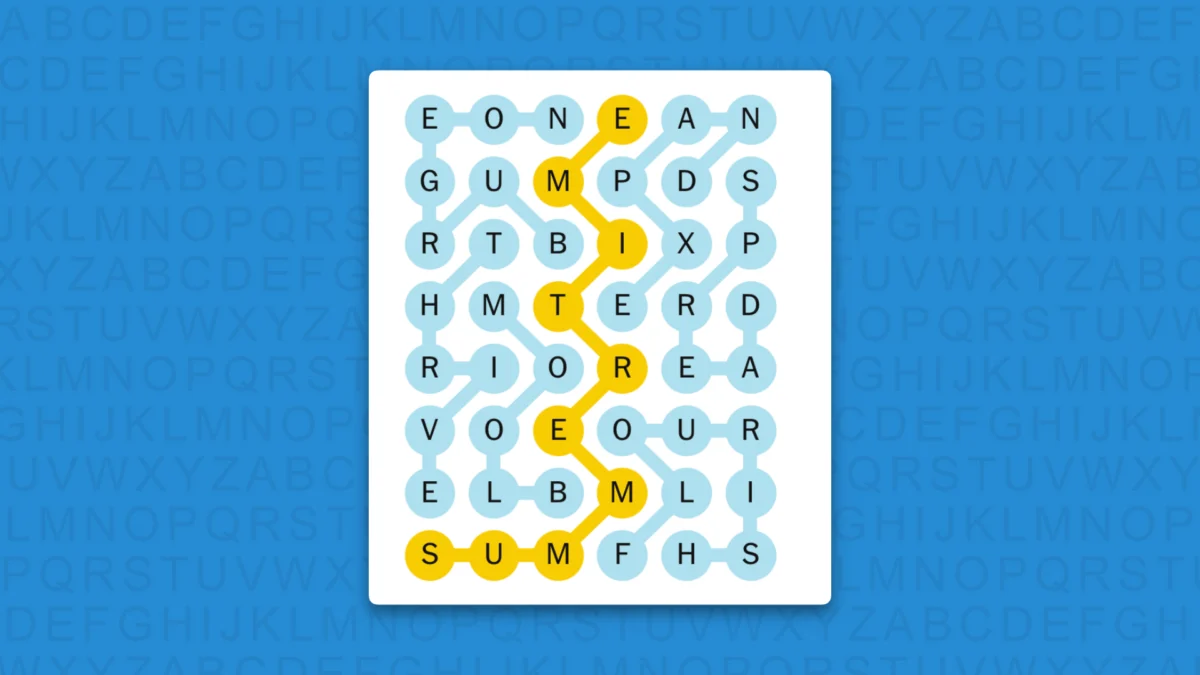
The most critical component of any Strands puzzle is the Spangram. This is a word or phrase that describes the theme and touches two opposite sides of the board. In Game #855, the Spangram is VEGETATION. It consists of 10 letters, beginning in the bottom-left corner (1st column) and winding its way to the top-middle (4th column).
Today’s Solution Set
Beyond the Spangram, players must identify seven theme-related words. The answers for today’s puzzle are:
- SUMMERTIME
- BURGEON
- THRIVE
- FLOURISH
- BLOOM
- SPROUT
- EXPAND
The difficulty in today’s grid lies in the "corkscrew" connections. Words like SUMMERTIME utilize a double-M configuration that forces the player to navigate a tight cluster of letters, while BURGEON acts as a linguistic anchor, sandwiched between THRIVE and the Spangram itself.
Chronology: The Rise of the NYT Games Empire
To understand the significance of Strands Game #855, one must look at the timeline of the New York Times’ digital transformation. The organization’s journey from a traditional newspaper to a "subscription-first" digital powerhouse was paved with puzzles.
2014–2021: The Crossword Foundation
While the NYT Crossword has existed since 1942, the launch of the standalone Crossword App in 2014 marked the beginning of the modern era. The introduction of Spelling Bee in 2018 proved that there was an appetite for simpler, non-clue-based word games.
2022: The Wordle Catalyst
In January 2022, the NYT acquired Wordle from creator Josh Wardle for a low seven-figure sum. This acquisition was a turning point. Wordle’s viral success brought tens of millions of new users to the NYT ecosystem, many of whom stayed to explore other offerings.
2023–2024: Expansion and the Birth of Strands
Following the success of Connections in mid-2023, the Times began beta-testing Strands in early 2024. It was designed to provide a more tactile, visual experience than the grid-based Connections or the minimalist Wordle. By 2025, Strands was promoted to a permanent position on the homepage, filling the "spatial reasoning" gap in the NYT’s portfolio.
2026: Maturity
As of today, July 6, 2026, Strands is no longer the "new kid on the block." It is a mature product with a sophisticated hint system and a dedicated community of players who analyze the "pathing" of each day’s grid with the same intensity once reserved for the Saturday Crossword.
Supporting Data: The Mechanics of Engagement
The success of Strands is not accidental; it is rooted in psychological principles of "flow" and cognitive satisfaction.
Grid Dynamics
The 8×6 grid of Strands contains exactly 48 letters. This finite space ensures that the game is "winnable" within a 5-to-10-minute window, making it the perfect "micro-break" for office workers and commuters.
The Hint Economy
Strands utilizes a unique "earn-your-hint" system. Players who find non-theme words (clue words) fill a meter. Three non-theme words unlock a hint, which highlights the letters of a theme word. According to internal data trends observed over the last year, approximately 40% of players use at least one hint per game, with "abstract" themes (like today’s "The growing season") seeing a 15% uptick in hint usage compared to "concrete" themes (e.g., "Types of Fruit").
Cognitive Benefits
Research into digital word games suggests that puzzles like Strands engage the executive functions of the brain, specifically working memory and cognitive flexibility. By requiring players to trace paths and mentally rotate letter clusters, Strands provides a different neurological workout than the purely deductive reasoning required for Sudoku or the lateral thinking required for Connections.
Official Context: The NYT Strategy
While the New York Times rarely comments on individual puzzles, the leadership—including Jonathan Knight, Head of Games—has been vocal about the role of puzzles in the company’s business model.
The "Bundle" Strategy
The primary objective of the Games suite is to drive subscriptions. The "All Access" bundle, which includes News, Cooking, Games, and Wirecutter, has become the company’s most successful product. By providing a "daily habit" like Strands, the NYT reduces churn; a subscriber who plays a game every morning is significantly less likely to cancel their subscription than one who only reads the news.
Design Philosophy
The NYT editorial team, led by Everdeen Schulz and others, focuses on "curated difficulty." Unlike AI-generated puzzles, every Strands grid is hand-crafted. This ensures that themes like "The growing season" have a human touch—choosing evocative words like BURGEON instead of purely clinical terms. This editorial oversight is what maintains the "prestige" of the NYT brand in a crowded marketplace of copycat apps.
Implications: Why "The Growing Season" Matters
Today’s theme, "The growing season," serves as an apt metaphor for the current state of digital media. As traditional social media platforms become increasingly fragmented and cluttered with AI-generated content, users are retreating to "cozy media"—safe, high-quality, and intellectually stimulating environments.
The Social Aspect of Solitary Play
Despite being a single-player game, Strands is inherently social. The ability to share a "map" of one’s path through the grid (without spoiling the words) has created a new visual language for social media sharing. On platforms like X (formerly Twitter) and Threads, the daily Strands map is a status symbol of mental acuity.
The Future of the Genre
The success of Game #855 suggests that there is still plenty of room for innovation within the word game genre. We are likely to see further integration of multimedia elements—perhaps audio-based hints or augmented reality (AR) versions of the Strands grid—as the NYT looks toward the 2030s.
Summary for the Dedicated Player
For those currently staring at the grid for Game #855, the key takeaway is to look for the "sprouts." Finding the smaller words like BLOOM and SPROUT will clear the visual clutter, making the 10-letter behemoth VEGETATION easier to track.
As we move into the second half of 2026, the New York Times Games suite remains the gold standard of digital puzzles. Whether you are a casual player or a "Strands Pro," today’s puzzle is a reminder of the simple joy of finding order in a sea of letters.
About the Author: Johnny is a freelance journalist specializing in digital culture and the evolution of gaming. He has covered the rise of the "Daily Puzzle" phenomenon since 2020.