R.F. Starzl: The Dual Legacy of a Pulp Pioneer and Newspaper Magnate
Le Mars, Iowa – In the annals of early 20th-century American letters, few figures present as intriguing a dichotomy as Roman Frederick Starzl, known to readers of speculative fiction as R.F. Starzl. Born in the heartland of Iowa in 1899, Starzl carved out a unique legacy, simultaneously pioneering the nascent genre of science fiction in the pulp magazines and steadfastly anchoring himself in the bedrock of local journalism as the owner and publisher of the Le Mars Globe-Post. His career, marked by a pragmatic approach to writing and an unwavering commitment to community, belies the fantastical worlds he helped envision. Yet, his story extends beyond his personal achievements, weaving into the fabric of American history through the extraordinary accomplishments of his son, Thomas E. Starzl, a titan of modern medicine, and his brother, Frank Starzel, who rose to lead the Associated Press.
Starzl’s journey from an ambitious young reporter to a prominent local publisher was intrinsically linked to his brief, yet influential, foray into science fiction. He openly admitted that his fantastical narratives served primarily as a means to a very tangible end: securing ownership of his family’s newspaper. This candid motivation, far from diminishing his contributions, highlights a pragmatic entrepreneurial spirit that was as much a hallmark of his era as the speculative imaginings found in the pages of Amazing Stories Quarterly. His life offers a compelling narrative of ambition, innovation, and the quiet dedication to craft, whether it be building alien worlds or reporting on local events.
A Life Unfolded: A Chronological Journey
Roman Frederick Starzl’s life began on December 10, 1899, in Le Mars, Iowa, a town deeply influenced by its immigrant heritage. His grandparents, alongside their five children, including Starzl’s father, John V.N. Starzl, had journeyed from Austria to the United States in 1895, seeking new opportunities. While the family initially settled in Le Mars, John Starzl ventured to Chicago, where he established a pharmacy. However, the pull of family and community eventually led him back to Le Mars, where he married Margaret Theisen and acquired a local German-language newspaper, Der Herold. John V.N. Starzl’s vision led him to transform the publication, renaming it the Le Mars Globe-Post, laying the foundation for what would become a significant part of his son’s life and legacy.
R.F. Starzl’s formative years were steeped in the world of print journalism. He began his career working as a reporter for his father, an apprenticeship that instilled in him a profound understanding of the newspaper business and the vital role of local media. This hands-on experience would prove invaluable in his future endeavors.
The early 20th century was a time of global upheaval, and Starzl’s life was touched by the defining conflict of his generation. He served in the United States Army during World War I, a period of approximately eight and a half months that undoubtedly shaped his worldview and sense of duty. Upon his return to civilian life, Starzl pursued further education, spending a year at Northwestern University. His professional path then led him to Chicago, where he secured a position in the advertising department of the prestigious Chicago Tribune, working there from 1920 to 1923. This experience in a major metropolitan newspaper offered him exposure to the broader dynamics of publishing and media.
However, the allure of his hometown and the family business eventually drew him back. In 1923, Starzl returned to Le Mars, resuming his work for the Globe-Post. That same year, on November 14, he married Anna Laura Fitzgerald, a nurse. Their union brought forth a son, Thomas, in 1926, who would later achieve global renown. Tragedy struck in 1947 with Anna’s passing, but Starzl found love again, marrying Rita Gertrude Kenaley on July 27, 1948, who would become a steadfast partner in his life and business.
The Pulp Fiction Interlude: A Strategic Diversion
Starzl’s entry into the burgeoning world of science fiction was not driven by an inherent passion for the genre but by a clear financial objective: to amass sufficient capital to acquire ownership of the Le Mars Globe-Post and its printing press. This pragmatic ambition fueled a remarkably productive, albeit brief, period of his writing career.
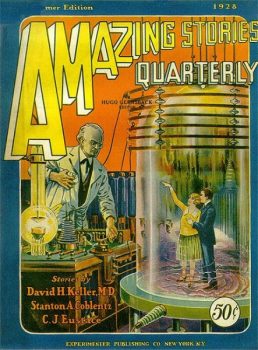
His debut in the science fiction arena came in 1928 with the publication of "Out of the Sub-Universe" in the Summer issue of Amazing Stories Quarterly. This seminal story marked his entrance into a vibrant literary landscape, where imagination knew no bounds and new scientific concepts were explored with daring creativity. Over the next seven years, Starzl proved to be a prolific author, publishing approximately 26 stories. His works frequently appeared in the leading speculative fiction magazines of the era, captivating readers with tales of adventure and scientific wonder.
Starzl also engaged in collaborative efforts, a common practice in the pulp world. He partnered with Everett C. Smith on two stories, "The Metal Moon" in 1931 and "The Martian Cabal" the following year, exploring extraterrestrial themes that resonated with the era’s fascination with space. In 1932, he collaborated with Festus Pragnell on "The Venus Germ," adding another planet to his imaginative explorations. His final story of this prolific period, "World Tube Murders," appeared in the November 1935 issue of New Mystery Adventures.
A curious footnote in his literary career came in 1934 when he participated in "The Cigarette Characterizations" for Fantasy Magazine. This unique literary experiment invited six authors, including Starzl, Jack Williamson, Donald Wandrei, Frank Belknap Long, P. Schuyler Miller, and Arthur J. Burks, to each pen a description of a person smoking a cigarette, with readers challenged to identify the author behind each portrayal. It offered a glimpse into the diverse styles and personalities behind the fantastical narratives of the day.
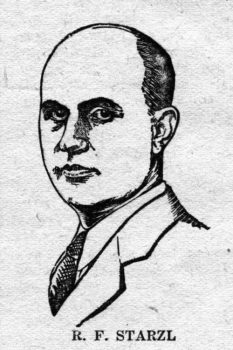
However, Starzl’s commitment to science fiction was always tempered by his primary objective. In 1934, in a candid response to fellow author Raymond Z. Gallun, who had only begun publishing a year after Starzl, he declared, "Your attempt to write to a science fiction author has misfired, because I’ve just quit." This blunt statement unequivocally underscored his instrumental view of his science fiction writing – it was a means to an end, a stepping stone towards his journalistic ambitions. His final science fiction story, "Dimension of the Conquered," appeared in the October 1934 issue of Astounding Stories, effectively closing a chapter that had yielded over two dozen published works, including the influential "Out of the Sub-Universe."
Newspaper Ownership and Later Years
True to his word and his ambition, Starzl achieved his long-held goal in 1934, becoming a partner in the Le Mars Globe-Post. By 1940, his dedication and business acumen led him to become the sole owner and publisher, firmly establishing himself as a pillar of the Le Mars community. Running a local newspaper in the mid-20th century was a demanding endeavor, requiring not just journalistic integrity but also keen business sense and an intimate understanding of the community’s pulse.
Beyond his science fiction pursuits, Starzl also contributed to mainstream magazines like Collier’s, demonstrating his versatility as a writer. Interestingly, he also penned nursing stories, choosing to publish these under his first wife Anna’s maiden name, Fitzgerald, perhaps a tribute or a way to explore different literary avenues discreetly. His intellectual curiosity extended beyond literature; Starzl harbored a genuine interest in actual space flight, evidenced by his membership in both the German Rocket Society and the American Rocket Society, organizations at the forefront of early rocketry research and advocacy.
The later years of Starzl’s life were marked by both personal and professional challenges. In 1962, he suffered a stroke, a significant health setback that necessitated his wife, Rita, stepping in to manage the Le Mars Globe-Post for the following two years, a testament to her dedication and the resilience of their partnership. The newspaper faced another crisis in 1968 when its printing plant was tragically destroyed in a fire. The cumulative toll of these events led Starzl to make a difficult decision in 1969: he sold the Le Mars Globe-Post to its competitor, the Le Mars Daily Sentinel, bringing an end to the Starzl family’s multi-decade ownership of the paper.
R.F. Starzl passed away in Le Mars on April 8, 1976, and was laid to rest in Calvary Cemetery in his beloved hometown. His life spanned a period of immense change, from horse-drawn carriages to the dawn of the space age, a trajectory he both observed as a journalist and envisioned as a science fiction author.
Supporting Data: Context and Connections
The Golden Age of Pulps and Starzl’s Unique Position
R.F. Starzl’s active period in science fiction coincided with the "Golden Age of Pulps," a vibrant era when cheap, oversized magazines printed on low-quality paper offered an escape into worlds of adventure, mystery, and scientific marvel. Publications like Amazing Stories Quarterly and Astounding Stories were crucial incubators for the science fiction genre, fostering a community of writers and readers who dared to imagine the future.
Starzl’s approach to this burgeoning field was notably pragmatic. Unlike many of his contemporaries who were drawn to science fiction by an intrinsic fascination with its themes, Starzl viewed it as a marketable skill, a means to a financial end. This perspective is particularly evident in his contributions to Author and Journalist magazine in 1931. In these articles, he meticulously detailed the market for science fiction and fantasy, providing practical advice on payment rates, identifying key editors, and outlining the specific types of stories each publication sought. This systematic, almost business-like analysis of the literary market was groundbreaking, offering aspiring writers a rare glimpse behind the curtain of the publishing world. It demonstrates that even while writing fantastical tales, Starzl maintained a grounded, professional understanding of the industry, setting him apart from many peers who might have been more artistically inclined. His willingness to share this strategic insight underscores his practical acumen, whether applied to publishing a newspaper or crafting a tale of other dimensions.
The Starzl Family: A Legacy of Impact
The Starzl name, originating from Austrian immigrants, would resonate far beyond the local confines of Le Mars, Iowa, touching national news and global medicine. R.F. Starzl’s brother, Frank Starzl, made his own significant mark in the newspaper industry. Frank, who altered the spelling of his last name to Starzel, ascended through the ranks to eventually become the head of the Associated Press (AP), one of the world’s largest and oldest news gathering organizations. His leadership at the AP placed him at the nexus of global news dissemination, reflecting another facet of the family’s deep engagement with journalism.
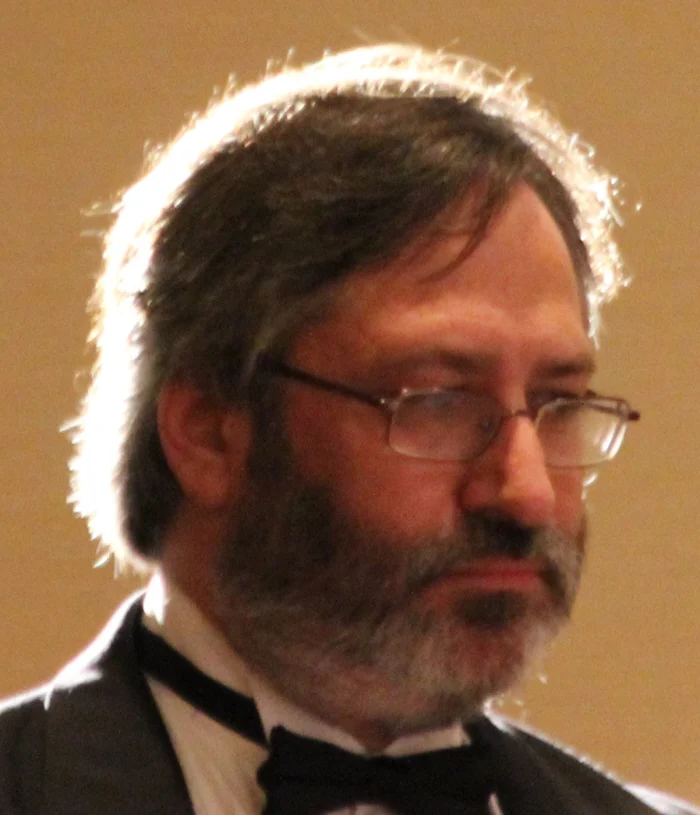
However, it was R.F. Starzl’s son, Thomas Earl Starzl, who would achieve the most widespread and enduring fame, not in literature or journalism, but in the demanding field of medicine. Thomas E. Starzl became a pioneering surgeon and researcher, most notably performing the world’s first successful human liver transplant in 1967. His groundbreaking work revolutionized transplant surgery, saving countless lives and establishing entirely new medical protocols. His contributions were so profound that he was listed at #213 in the authoritative article "1,000 Years, 1,000 People: Ranking the Men and Women Who Shaped the Millennium." This extraordinary recognition places him among the most influential figures in human history. The University of Pittsburgh has honored his legacy with a medical research building named after him, and an honorary street, Thomas E. Starzl Way, further cements his indelible mark on the city and the world of science. The trajectory from a small-town newspaper publisher to the father of a medical giant illustrates a remarkable, if indirect, chain of influence and intellectual curiosity that permeated the Starzl family.
Le Mars: The Heart of the Story
The Le Mars Globe-Post, under Starzl’s stewardship, was more than just a business; it was an integral part of the community’s fabric. In the mid-20th century, local newspapers served as the primary source of information, connecting residents to local politics, social events, personal milestones, and broader regional news. Starzl’s dedication to acquiring and running the Globe-Post reflects a deep commitment to his hometown and a belief in the power of local journalism to inform and unite. His willingness to use his creative writing talents as a stepping stone underscores the value he placed on this community role, making his decision to sell the paper after the fire a particularly poignant moment in his life.
Official Responses and Enduring Voices
While the original article does not provide "official responses" in the form of direct statements from institutions or government bodies regarding R.F. Starzl himself, his own words and the recognition bestowed upon his family members serve as powerful indicators of his and his lineage’s impact.
R.F. Starzl’s direct statement to Raymond Z. Gallun – "Your attempt to write to a science fiction author has misfired, because I’ve just quit" – stands as his most "official" personal response regarding his science fiction career. It is a forthright declaration, leaving no ambiguity about his motivations or his ultimate priorities. This transparency offers a rare and valuable insight into the mindset of a writer who approached a burgeoning creative field with a pragmatic, almost industrial, intent. It challenges the romanticized notion of the artist driven solely by passion, instead presenting a compelling case for writing as a craft, a skill to be leveraged for specific, tangible goals.
Furthermore, the widespread and institutional recognition of his son, Thomas E. Starzl, provides an indirect but potent "official response" to the broader Starzl family legacy. The naming of a medical research building and an honorary street in Pittsburgh, along with his inclusion in a prestigious list of historical figures, speaks volumes about the enduring impact of the family name. This recognition extends beyond the individual to reflect on the environment and values that fostered such exceptional talent, indirectly illuminating the foundations laid by R.F. Starzl in his own life of diligent work and community dedication.
Implications: Bridging Worlds of Imagination and Reality
R.F. Starzl’s life offers a compelling narrative that bridges the seemingly disparate worlds of fantastical imagination and grounded reality. His unique approach to science fiction, seeing it as a means to a practical end, positions him as a fascinating figure in the history of the genre. While his tenure as a science fiction writer was brief, lasting only about six years, his prolific output and the acknowledged influence of stories like "Out of the Sub-Universe" mean his contributions are not to be underestimated. He was a pioneer, experimenting with the nascent forms of speculative storytelling at a critical juncture in its development, even if his heart lay elsewhere.
His story also highlights the vital role of local journalism in American life. For Starzl, owning the Le Mars Globe-Post was not just a business venture but a calling, a commitment to his community. This dedication to the tangible world of daily news, contrasting sharply with the speculative realms of his fiction, underscores a multifaceted intellect capable of excelling in vastly different arenas. He embodied the spirit of the self-made individual, leveraging his talents to achieve a deeply personal and community-focused goal.
The broader implications of the Starzl family’s legacy are profound. From the Austrian immigrants seeking a new life, to R.F. Starzl’s dual career in pulp fiction and local journalism, to Frank Starzel’s leadership at the Associated Press, and culminating in Thomas E. Starzl’s revolutionary advancements in medicine, the family’s impact has been wide-ranging and significant. It is a testament to the power of ambition, intellect, and hard work, demonstrating how a single family’s journey can intertwine with major historical developments in media, science, and societal progress. R.F. Starzl, the pragmatic visionary who built fantastical worlds to secure a newspaper, stands as a symbol of American ingenuity and the enduring power of a well-lived, purposeful life.