Headline: Blood, Bone, and Boundless Joy: How ‘Evil Dead Burn’ Reinvents the Franchise’s Legacy of Cinematic Torture
Introduction: A New Chapter in a Storied History of Horror
For over four decades, the Evil Dead franchise has stood as a pillar of the horror genre, defined by its unique blend of slapstick humor, relentless gore, and the sheer endurance of its performers. From the low-budget, "shaky-cam" ingenuity of Sam Raimi’s 1981 original to the visceral, blood-soaked intensity of Lee Cronin’s Evil Dead Rise, the series has cultivated a reputation for being as difficult to film as it is terrifying to watch. For fans, the behind-the-scenes lore is as vital as the movies themselves: stories of Bruce Campbell being pelted with "blood" made of corn syrup and food coloring for eighteen hours a day, or Lily Sullivan wading through 1,700 gallons of fake blood, have become the stuff of industry legend.
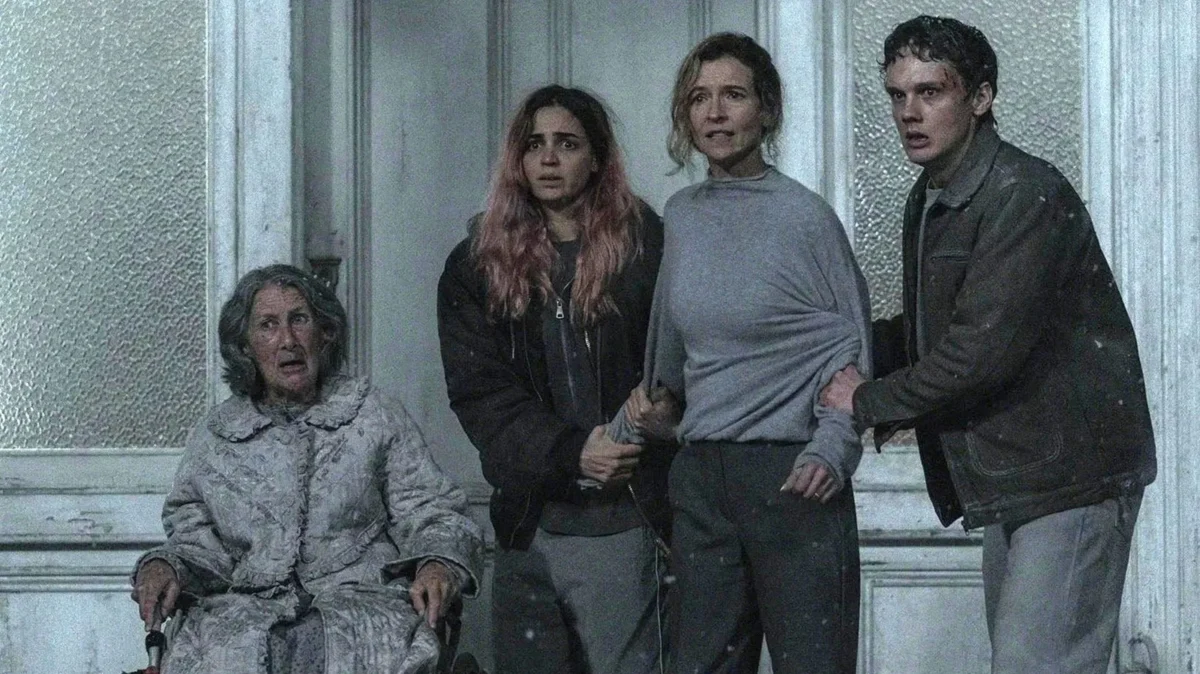
However, as the franchise prepares for its next terrifying installment, Evil Dead Burn, a new narrative is emerging from the set. Scheduled for a theatrical release on July 10, 2026, under the Warner Bros. Pictures banner, the film promises to deliver the signature brutality the series is known for, but with a surprising twist: the cast actually enjoyed the process. In an exclusive deep dive into the production, stars Souheila Yacoub, Hunter Doohan, and Luciane Buchanan reveal how director Sébastien Vaniček managed to balance extreme cinematic violence with a collaborative, creative, and—most shockingly—fun environment.
Main Facts: Redefining the Deadite Experience
Evil Dead Burn marks a significant pivot for the franchise. Directed and co-written by Sébastien Vaniček—the French filmmaker who recently rose to prominence with the claustrophobic spider-horror hit Infested (Vermines)—the film seeks to ground the supernatural chaos of the Necronomicon in a gritty, character-driven reality.
The central narrative follows Alice (Souheila Yacoub), a woman thrust into a nightmarish struggle for survival against the demonic "Deadites." Unlike previous iterations that often leaned into the "Final Girl" trope or the "Chosen One" destiny of Ash Williams, Evil Dead Burn focuses on a group of complex, flawed individuals. The cast is rounded out by Hunter Doohan as Joseph and Luciane Buchanan as Thya, both of whom find themselves caught in a localized apocalypse that tests their physical and psychological limits.
![Evil Dead Burn Cast Reveal What It's Really Like To Star In A Movie This Gruesome [Exclusive]](https://www.slashfilm.com/img/gallery/evil-dead-burn-cast-reveal-what-its-really-like-to-star-in-a-movie-this-gruesome-exclusive/l-intro-1783466919.jpg)
Despite the film’s "relentless" pace and gruesome practical effects, the actors describe the shoot as a highlight of their careers. This stands in stark contrast to the historical precedent of Evil Dead productions being "a rough time." The production reportedly utilized a mix of advanced practical prosthetics and Vaniček’s signature kinetic directing style to create a film that the cast claims "more than lives up to the series’ potential for mayhem."
Chronology: From 1981 to 2026
To understand the weight of Evil Dead Burn, one must look at the timeline of the franchise’s evolution:
- 1981–1992: The Raimi Era. Sam Raimi and Bruce Campbell defined the "cabin in the woods" subgenre. These films were notorious for their grueling shoots in the Tennessee woods and the "torture" of Campbell, who became the face of the franchise.
- 2013: The Reimagining. Fede Álvarez’s Evil Dead stripped away the humor in favor of "hard" horror, famously using record-breaking amounts of fake blood and subjecting actress Jane Levy to buried-alive sequences.
- 2015–2018: The Television Expansion. Ash vs Evil Dead brought the humor back but maintained a grueling production schedule for its aging star and new ensemble.
- 2023: The Urban Shift. Evil Dead Rise moved the action to a Los Angeles apartment building, proving the franchise could survive—and thrive—without the forest setting or Bruce Campbell’s Ash.
- 2024–2026: The Vaniček Era. Following the success of Rise, Warner Bros. and Ghost House Pictures tapped Sébastien Vaniček to helm Evil Dead Burn. Filming took place under a cloud of secrecy, with Vaniček emphasizing a "feminist" approach to the script, focusing on the agency and complexity of its female leads.
Supporting Data: Character Depth and the Subversion of the "Final Girl"
A key element that distinguishes Evil Dead Burn is the psychological depth of its protagonist, Alice. Souheila Yacoub, known for her powerful performances in Dune: Part Two and The Braves, approached the role with a desire to transcend genre cliches.
"The director told me he wanted it to be a feminist movie," Yacoub explained in a recent interview. For Yacoub, this didn’t mean a superficial display of "girl power," but rather the creation of a "human" character who is allowed to be weak, terrified, and complex. This character-first approach is reflected in the film’s pacing, which allows the audience to connect with Alice’s backstory before the supernatural elements ignite.
The film’s commitment to intensity is supported by Hunter Doohan’s performance as Joseph. Doohan, who gained international fame in Netflix’s Wednesday, was tasked with "selling the pain" of the film’s high-stakes action sequences. According to Doohan, the production relied heavily on practical props—such as realistic knives and breakaway glass—which allowed the actors to react to physical stimuli rather than green screens. "It’s just a fun imagination," Doohan noted, describing the process of visualizing the horrific injuries his character sustains.
Luciane Buchanan, who plays Thya, provides the film’s most visceral transformations. Transitioning into a Deadite—the franchise’s possessed antagonists—Buchanan was encouraged to ad-lib and improvise. This creative freedom led to some of the film’s most unsettling moments, including a scene involving the consumption of candle wax and a disturbing interaction with a pair of dentures. This "game" attitude from the cast allowed Vaniček to push the boundaries of the R-rating while maintaining a high level of morale on set.
![Evil Dead Burn Cast Reveal What It's Really Like To Star In A Movie This Gruesome [Exclusive]](https://www.slashfilm.com/img/gallery/evil-dead-burn-cast-reveal-what-its-really-like-to-star-in-a-movie-this-gruesome-exclusive/intro-1783466919.jpg)
Official Responses: A Director’s Vision for Tone and Character
Sébastien Vaniček’s vision for Evil Dead Burn was built on a foundation of respect for the source material and a desire to elevate the performances. Unlike the "dictatorial" horror directors of the past who sought to elicit real fear through discomfort, Vaniček fostered an environment of "discovery on set."
The director’s commitment to tone was a major selling point for the cast. By focusing on "raising the stakes" in every scene, Vaniček ensured that the horror felt earned. His focus on a "feminist" lens was less about political messaging and more about the subversion of the "damsel in distress" narrative. By making Alice a "complex, strong but also weak" human being, Vaniček aims to move the audience emotionally, a rarity in a franchise often celebrated for its "splatterstick" roots.
Warner Bros. Pictures has expressed high confidence in the project, positioning it as a mid-summer blockbuster for 2026. The studio’s support for Vaniček’s "relentless" vision suggests that Evil Dead Burn will not pull any punches when it comes to the gore that fans demand, even as it introduces a more sophisticated character palette.
Implications: The Future of the Evil Dead Franchise
The successful production of Evil Dead Burn has significant implications for the future of the horror genre and the franchise itself.
1. The Shift in "Torture" Culture:
For decades, the idea that a horror movie must be a miserable experience for the actors to be effective has been a dominant narrative. Evil Dead Burn challenges this. If the film is as brutal as early reactions suggest, it will prove that a positive, collaborative set can produce the same (or better) terrifying results as a "tortured" one. This could lead to a shift in how horror films are produced, prioritizing actor safety and creative input without sacrificing the onscreen intensity.
2. The "Prestige Horror" Influence:
By casting actors like Yacoub and Doohan and focusing on deep character backstories, Evil Dead Burn is leaning into the "prestige horror" trend. This move suggests that the franchise is looking to broaden its appeal beyond hardcore gore-hounds to include audiences who value narrative depth and emotional resonance.
![Evil Dead Burn Cast Reveal What It's Really Like To Star In A Movie This Gruesome [Exclusive]](https://www.slashfilm.com/img/gallery/evil-dead-burn-cast-reveal-what-its-really-like-to-star-in-a-movie-this-gruesome-exclusive/hunter-doohan-on-having-fun-and-souhelia-yacoub-on-going-beyond-the-final-girl-archetype-1783466921.jpg)
3. Vaniček’s Rising Star:
If Evil Dead Burn succeeds, it will solidify Sébastien Vaniček as one of the most important new voices in horror. His ability to take a 40-year-old American IP and infuse it with a fresh, European sensibility—while keeping the cast "game" for extreme stunts—marks him as a director to watch.
4. The Longevity of the Necronomicon:
With Evil Dead Rise being a commercial success and Evil Dead Burn generating significant buzz, the franchise has successfully moved past the "Ash Williams" era. It has become a versatile sandbox where different directors can play with the concepts of possession, isolation, and survival.
Conclusion: A Bloody Good Time
As the July 10, 2026, release date approaches, the excitement for Evil Dead Burn continues to mount. By combining the franchise’s legendary appetite for destruction with a modern, character-focused approach, the film appears poised to satisfy long-time fans while inviting a new generation into the fold.
The revelation that the cast had "so much fun" while filming scenes of falling on knives and drinking candle wax is a testament to the evolving nature of the industry. In the world of Evil Dead, the blood may be fake, and the demons may be actors in prosthetics, but the passion for the craft is more real than ever. For Alice, Joseph, and Thya, the nightmare is just beginning—but for the actors who brought them to life, it was a "bloody good time."