"Take Cat": A Pun-tastic Pounce into Family Card Game Fun
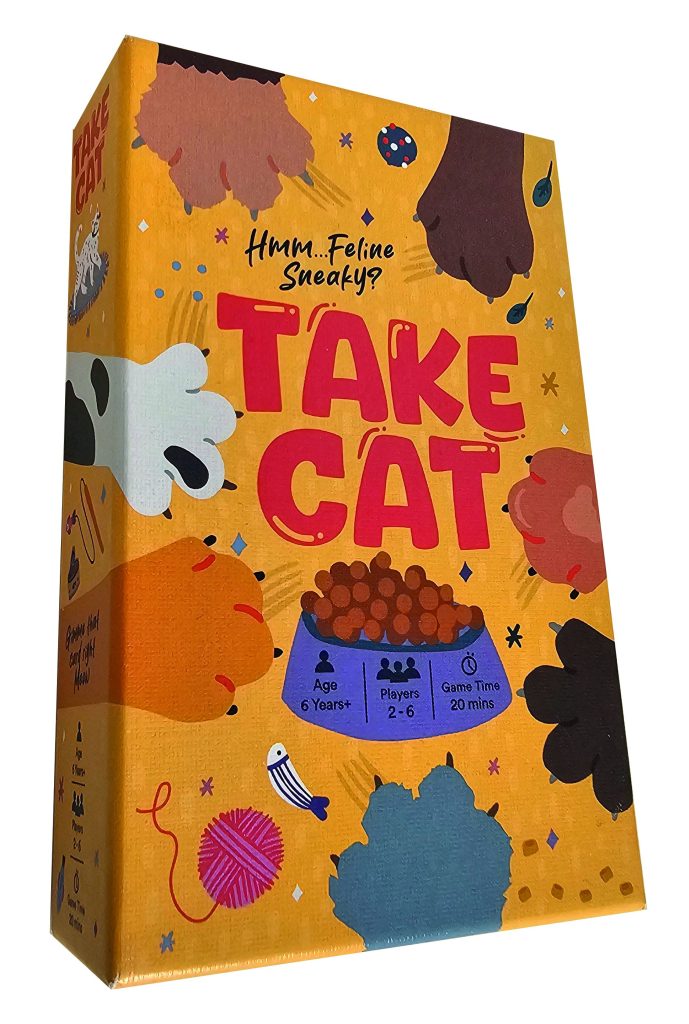
In an era saturated with complex tabletop epics and intricate strategy games, a refreshing simplicity often stands out. Such is the case with "Take Cat," a delightful new card game from Gibsons Games that embraces both its titular pun and the sheer joy of lighthearted competition. Designed by Gareth Edwards, this fast-paced game promises to be a purr-fect palette cleanser for any game night, challenging players to assemble feline friends while navigating a playfully cutthroat world of strategic theft.
Main Facts: Unpacking the Feline Frenzy
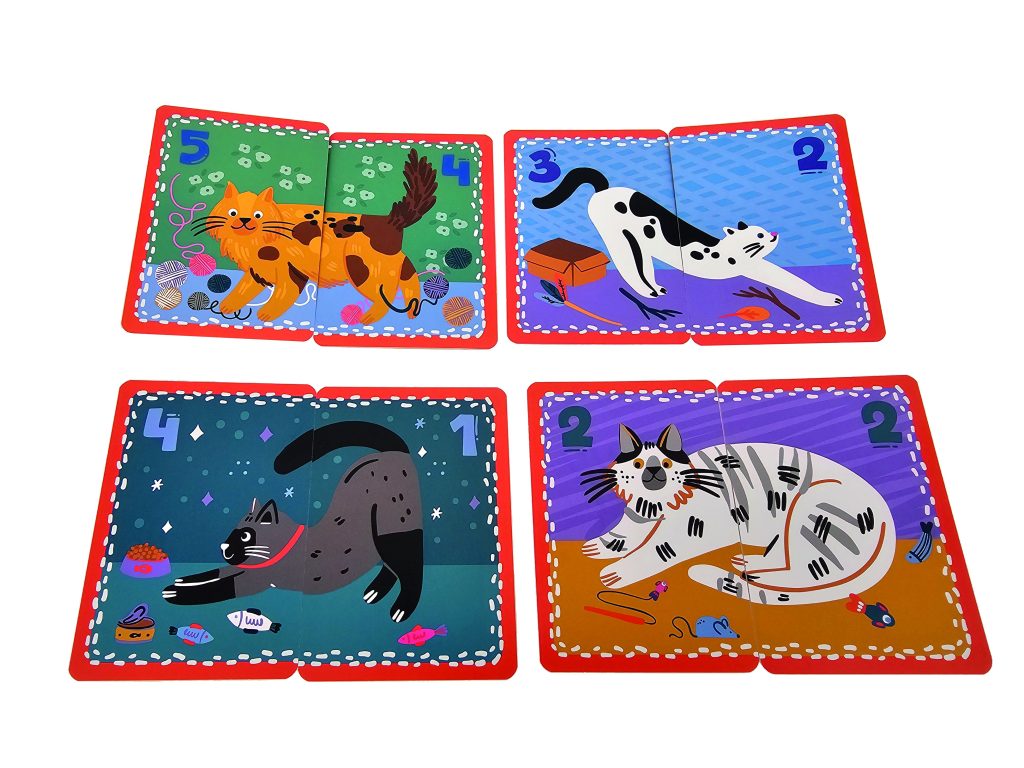
"Take Cat" introduces itself with an immediate, undeniable charm rooted in its very name. As reviewer Hugo Wolton aptly notes, the game’s enjoyment is intrinsically linked to a player’s willingness to "lean into that pun." At its core, "Take Cat" is a competitive set-collection game with a twist of direct player interaction. The objective is deceptively simple: be the first player to collect five complete cat figures. Each cat is formed by matching two halves, drawn from a central deck or the discard pile. However, the path to victory is anything but straightforward, thanks to a clever stealing mechanic that keeps players on their toes and injects a lively dose of mischievous fun into every round.
Each cat piece bears a numerical value, and this is where the game’s competitive spirit truly shines. Should an opponent draw a cat piece with a higher number than one of your proudly assembled felines, they have the power to "catnap" it right from under your nose. The act of theft is punctuated by the game’s signature chant: "Take cat!" This simple declaration transforms what could be a mundane exchange into a moment of playful rivalry, eliciting groans, cheers, and plenty of laughter around the table.
Published by the esteemed Gibsons Games, "Take Cat" is positioned as a quintessential family and party game, offering quick playtime (approximately 20 minutes) and accommodating 2 to 6 players aged 6 and up. With an accessible RRP of £10, it presents an attractive proposition for those seeking an engaging yet undemanding addition to their game collection. The box contains 80 vividly illustrated cards and a concise instruction leaflet, ensuring that players can jump straight into the action with minimal setup. Hugo Wolton’s verdict is a resounding "Yes" to playing it, provided your group possesses a suitable "cat-do attitude."
Chronology: From Concept to Cardboard
The journey of "Take Cat" from an initial spark of inspiration to a retail-ready product is a testament to the enduring appeal of simple, elegant game design. While the full developmental timeline is not explicitly detailed, we can infer a structured process typical of reputable publishers like Gibsons Games.
The Genesis of a Pun-tastic Idea
The origin of "Take Cat" likely began with designer Gareth Edwards’ vision for an accessible, interactive card game. Edwards, like many successful designers, probably sought to distil core game mechanics into their most enjoyable form. The central pun, "Take Cat" (a play on "take that!"), appears to be a foundational element, suggesting that the game’s theme and title were conceived hand-in-hand. This approach often leads to games that are immediately memorable and possess a distinct personality. The challenge for Edwards would have been to craft mechanics that not only supported this pun but also delivered a genuinely fun and balanced experience for a broad age range. The stealing mechanic, tied directly to card numbers and a vocal declaration, perfectly encapsulates this thematic and mechanical synergy. It’s a design choice that leverages human psychology – the joy of triumph and the frustration of loss – in a lighthearted manner.
Development and Iteration: Crafting Feline Fun
The development phase would have involved extensive prototyping and playtesting. Edwards and the Gibsons Games team would have meticulously balanced the numerical values on the cat pieces, ensuring that stealing opportunities were frequent enough to keep the game dynamic but not so overwhelming as to be frustrating. The distribution of cat halves, the overall card count (80 cards), and the winning condition (five completed cats) would have been fine-tuned to achieve the desired 20-minute playtime and maintain a brisk pace. Crucially, the game needed to appeal to both younger players (6+) and adults. This likely involved simplifying rules, ensuring clear visual cues on the cards, and fostering an environment where direct player interaction, even "dickery," remains good-natured. Gibsons Games, known for its commitment to quality family entertainment, would have guided this process, ensuring the game aligned with their brand values of accessibility, durability, and fun. The vibrant artwork, glimpsed in the provided images, would also have been a key part of this development, making the cat characters appealing and distinct.
Market Launch and Positioning: A Niche for the Nimble
Given the contemporary publication dates visible in the image URLs (e.g., "2026/07"), "Take Cat" appears to be either a very recent release or one anticipated in the near future. Its launch into the competitive tabletop market would have been strategic. Gibsons Games likely identified a demand for quick, engaging "palette cleanser" games – titles that don’t demand hours of commitment but offer immediate enjoyment. "Take Cat" fits this niche perfectly. Its low RRP of £10 positions it as an impulse buy or an ideal gift, further broadening its market appeal. By emphasizing its family-friendly nature, direct interaction, and the playful pun, Gibsons Games would aim to differentiate "Take Cat" from more complex offerings, carving out its own space as a go-to option for casual game nights, family gatherings, and social events where laughter is prioritized over deep strategy.
Supporting Data: The Mechanics and Metagame of "Take Cat"
A deeper dive into "Take Cat" reveals the nuanced design choices that underpin its apparent simplicity, creating a surprisingly engaging experience for players of all ages.
Mechanics in Detail: The Art of Assembling and Stealing Cats
The core loop of "Take Cat" is elegantly straightforward. Players begin by drawing cards, either from the face-down central deck or the face-up discard pile, which quickly accumulates as the game progresses. The immediate goal is to collect two matching halves of the same cat. These halves, when united, form a complete cat, which the player then places in front of them, signalling their progress towards the winning total of five. The visual aspect of physically uniting two card halves to form a whole cat adds a satisfying tactile element to the game.
However, the game’s defining mechanic, and its primary source of excitement and tension, is the stealing rule. Each cat half, and consequently each completed cat, features a numerical value. If an opponent draws a card half that, when combined with an existing cat in their hand, would form a complete cat with a higher numerical value than one already owned by another player, they can "Take cat!" and claim it. This creates a dynamic, back-and-forth flow where leads can change in an instant, and no player’s collection is ever truly safe until the game concludes. This direct interaction prevents players from simply building their own collection in isolation, forcing them to constantly assess their opponents’ boards and anticipate potential thefts. It’s a brilliantly simple system that generates constant engagement without requiring complex rules.
Player Experience & Dynamics: Adapting to the "Cat-do Attitude"
The reviewer Hugo Wolton highlights a critical aspect of "Take Cat": the player experience is highly dependent on the group’s "cat-do attitude." Embracing the game’s lighthearted, pun-driven nature is paramount. Players who are willing to openly lean into the silliness of shouting "Take cat!" as they swipe an opponent’s feline are likely to have a more enjoyable and memorable experience. This active participation transforms the game from a mere card-counting exercise into a social event.
The optimal player count is another significant piece of data. While the box states 2-6 players, the review strongly recommends "three to six players," noting that "two is a lot less interesting." This is a common observation for games with direct interaction mechanics; with only two players, the competitive tension can become too binary, lacking the dynamic unpredictability that multiple opponents bring. With three or more players, the "catnapping" becomes a multi-directional affair, creating alliances (often unspoken and temporary) and rivalries, enhancing the strategic depth and social fun.
The game’s versatility across different age groups is also a key strength. For younger players (6+), "Take Cat" serves as an excellent introduction to strategic thinking and basic arithmetic (comparing numbers) in a playful, non-intimidating format. Their "catnapping" is likely to be voiced "in a much more playful way," fostering a jovial atmosphere. For adult players, especially those who embrace the game’s inherent "dickery," the direct stealing and vocal declaration can be hilariously "in-your-face," turning polite competition into boisterous banter. This adaptability ensures "Take Cat" can be enjoyed by a wide demographic, serving as a solid "palette cleanser between bigger plays" for experienced gamers, or a primary source of entertainment for casual family gatherings.
Production Quality and Value: An Affordable Feline Fantasy
At an RRP of £10, "Take Cat" offers exceptional value. The game’s 80 cards are the primary components, and based on the provided images, they feature clear, engaging artwork that makes identifying cat halves and their numerical values straightforward. For a game designed for children as young as six, durable card stock is essential, and Gibsons Games typically maintains high production standards in this regard. The simplicity of the components (cards and instructions) keeps the cost down while focusing resources on the quality of the playing pieces themselves. The comparison to "Cover Your Assets," another family game centered on stealing, further underscores the appeal of this mechanic in accessible card games. These games tap into a primal competitive instinct, allowing players to engage in playful larceny without any real-world consequences, making the experience universally enjoyable.
Official Responses: Perspectives from the Paw-Print Makers
While specific quotes from the designers and publishers regarding "Take Cat" were not provided in the original review, it is possible to infer their likely perspectives based on industry trends, the game’s design, and Gibsons Games’ reputation.
Designer’s Vision: Gareth Edwards on Simplicity and Interaction
Gareth Edwards, the designer, would likely articulate a philosophy centered on accessibility and direct player engagement. "My goal with ‘Take Cat’ was to create a game that anyone, from a six-year-old to a seasoned board gamer, could pick up and understand in minutes," Edwards might explain in an interview. "I believe the best games are often the simplest, especially when they encourage laughter and interaction. The ‘Take cat!’ mechanic was crucial for this – it’s not just a rule, it’s a moment of shared experience, whether you’re the one stealing or being stolen from. I wanted to capture that feeling of playful rivalry, where the competition is fierce but always ends with a smile." He might also emphasize the iterative process of balancing the numbers on the cat cards, ensuring that opportunities for stealing were frequent enough to keep the game exciting without making it feel overly punitive.
Publisher’s Perspective: Gibsons Games on Family Entertainment
Gibsons Games, a publisher renowned for its high-quality puzzles and family-friendly games, would undoubtedly position "Take Cat" as a perfect embodiment of their brand values. A spokesperson from Gibsons Games might state, "We are incredibly excited about ‘Take Cat.’ It perfectly encapsulates our commitment to engaging family entertainment that brings people together. In a world where screens often dominate, games like ‘Take Cat’ offer a fantastic opportunity for face-to-face interaction, laughter, and shared fun." They would likely highlight the game’s affordability and compact nature, making it an ideal choice for travel or as a quick diversion. "We believe ‘Take Cat’ will quickly become a staple in many households, much like our other beloved family titles. Its quick playtime and dynamic stealing mechanic make it irresistible for both casual players and those looking for a lively game night starter."
Community Engagement and Future Prospects
Publishers like Gibsons Games closely monitor community feedback post-launch. Early reviews, social media buzz, and sales figures would inform their future strategies. If "Take Cat" garners significant positive attention, particularly for its replayability and social dynamics, Gibsons Games might explore expansions. These could include new sets of cat cards with unique abilities, additional game modes, or even crossover elements with other Gibsons titles. The simplicity of the core mechanic lends itself well to modular additions, allowing the game to evolve while retaining its original charm. Early convention appearances or online demos would also be crucial for gauging initial interest and refining marketing messages.
Implications: The Ripple Effect of a Simple Card Game
"Take Cat" might appear to be a simple card game, but its design and market positioning carry broader implications for the tabletop gaming industry, family entertainment, and the enduring appeal of clever game mechanics.
Impact on Family Gaming: Bridging Generations
In an increasingly diverse gaming landscape, "Take Cat" plays a vital role in the family gaming segment. Its 6+ age rating and straightforward rules make it an excellent gateway game, introducing younger children to fundamental gaming concepts like turn-taking, set collection, and strategic decision-making (albeit simple ones, like which cat to target for theft). For parents and grandparents, it offers a quick, engaging activity that genuinely fosters intergenerational interaction, moving beyond purely educational games into the realm of shared fun. The "palette cleanser" role also highlights its utility; it’s a game that can easily fill a gap in a family gathering or serve as a warm-up before a longer session, ensuring that everyone remains engaged without feeling overwhelmed.
The Power of Simplicity and Direct Interaction: A Design Masterclass
"Take Cat" stands as a prime example of how simple mechanics, when expertly combined, can create a deeply engaging experience. The direct stealing mechanic, accompanied by the vocal "Take cat!" declaration, is a masterstroke in fostering player interaction. In an industry sometimes criticized for "multiplayer solitaire" games where players focus solely on their own board, "Take Cat" ensures that every player is constantly aware of what others are doing. This high level of direct interaction, while potentially causing playful frustration, ultimately enhances the fun and creates memorable moments. It reinforces the idea that game design doesn’t always need intricate rulesets or sprawling components to be effective; sometimes, less is truly more.
Future Prospects and Potential Expansions: The Longevity of a Feline Theme
The success of a game like "Take Cat" could pave the way for future iterations or expansions. Imagine "Take Cat: Alley Cats" introducing new cat breeds with unique scoring bonuses, or "Take Cat: International Edition" featuring cats from around the world. The core mechanic is robust enough to support additional layers without becoming cumbersome. The game’s affordability and small footprint also make it an attractive candidate for spin-offs or promotional items. Its longevity will depend on its ability to maintain player interest through repeated plays, and the dynamic stealing mechanic is a strong factor in achieving this. The ever-changing landscape of who owns which cat ensures that no two games feel exactly alike.
Broader Trends in Board Gaming: Valuing Social Connection
"Take Cat" aligns with a broader trend in tabletop gaming towards more accessible, social, and light-hearted experiences. Especially in a post-pandemic world, there’s a renewed appreciation for games that facilitate genuine human connection and laughter. Games that prioritize fun over complex strategy, that can be taught in minutes and played in a flash, are becoming increasingly popular for their ability to quickly break the ice and inject energy into any social gathering. "Take Cat," with its pun-driven humor and direct, boisterous interaction, perfectly taps into this desire for easy, enjoyable social gaming, reminding us that sometimes, all you need is a good pun and some adorable cats to have a roaring good time.