The Alchemy of Curiosity: How Frost*collective is Redefining London’s Iconic Museum District Through AI and Victorian Legacy
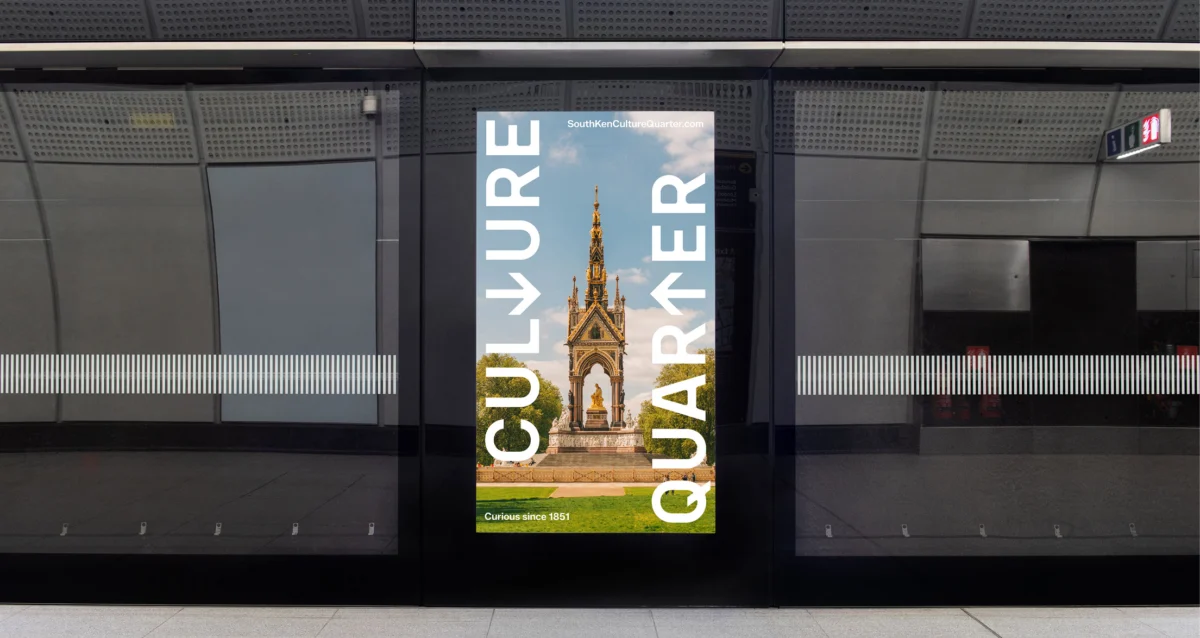
LONDON — In a move that bridges the gap between mid-19th-century industrial optimism and 21st-century artificial intelligence, the design agency Frost*collective has unveiled a comprehensive rebranding of South Kensington’s world-renowned museum district. The 18-month project marks a significant shift in how one of the world’s most visited cultural clusters presents itself to the public, moving away from a traditional "heritage-first" tourism model toward a dynamic identity rooted in the concept of perpetual curiosity.
The new identity, titled South Ken Culture Quarter, replaces the long-standing "Discover South Kensington" brand. It arrives as the district prepares to celebrate the 175th anniversary of the Great Exhibition of 1851—the event that originally birthed the area’s scientific and artistic institutions. By combining deep historical research with cutting-edge AI-powered audience analysis, Frost*collective has created a visual and strategic framework that aims to unify some of the UK’s most prestigious institutions, including the Victoria and Albert Museum (V&A), the Natural History Museum, and Imperial College London.
Main Facts: A Unified Identity for a Fragmented District
The rebranding effort, commissioned by the Exhibition Road Cultural Group (ERCG), sought to solve a perennial problem in place branding: the disconnect between the managing organization and the public-facing brand. Previously, the district operated under a bifurcated identity where the ERCG handled behind-the-scenes institutional collaboration, while "Discover South Kensington" served as the visitor-facing tourism label.
The new "South Ken Culture Quarter" identity eliminates this friction, serving as both the collective voice for the member institutions and the primary destination brand for tourists and locals alike. Central to this new era is the positioning line, "Curious since 1851," a slogan that directly links the district’s Victorian origins to its modern-day role as a hub for innovation, research, and artistic expression.
Key Elements of the Rebrand:
- The Name: South Ken Culture Quarter (SKCQ).
- The Tagline: "Curious since 1851."
- The Color Palette: A signature "Deep Garnet Red," inspired by the ironwork of the original Crystal Palace and the district’s Victorian architecture.
- The Visual Language: A system of rotating and reconfiguring arrows designed to symbolize the non-linear path of exploration and discovery.
- The Framing Device: A versatile "window and mirror" graphic system used to showcase the diverse programming of member institutions.
Chronology: From the Great Exhibition to the Digital Age
To understand the weight of this rebrand, one must look back nearly two centuries. The story of South Kensington is inextricably linked to Prince Albert’s vision following the success of the Great Exhibition in Hyde Park.
1851–1860: The Birth of "Albertopolis"
Following the 1851 Great Exhibition, the profits were used to purchase 87 acres of land in South Kensington. Prince Albert envisioned a permanent district dedicated to the advancement of arts and sciences. This led to the establishment of the V&A, the Science Museum, the Natural History Museum, and eventually, Imperial College. This area became colloquially known as "Albertopolis."
2000s–2023: The "Discover South Kensington" Era
As London’s tourism boomed in the early 21st century, the "Discover South Kensington" brand was established to help navigate the millions of visitors arriving via the Underground. However, as the district evolved into a more complex ecosystem of tech hubs, universities, and contemporary art galleries, the "Discover" label began to feel like a generic tourism pointer rather than a reflection of the intellectual rigor within the buildings.

2023–2024: The Frost*collective Intervention
Recognizing the need for a more cohesive and "future-proof" identity, the ERCG engaged Frost*collective for an 18-month deep dive. The agency was tasked with finding a common thread among institutions as diverse as a world-leading science university (Imperial) and a museum of decorative arts (V&A).
2025: The Launch of South Ken Culture Quarter
The brand is officially rolled out across digital platforms, wayfinding signage, and promotional materials, aligning with the 175th-anniversary celebrations of the 1851 Exhibition.
Supporting Data: The Role of AI in Audience Sentiment
While the visual aesthetics of the rebrand pay homage to history, the methodology used to arrive at them represents a significant leap forward in design practice. Frost*collective utilized an AI-powered interviewing platform to conduct hundreds of simultaneous audience interviews.
Traditional market research often faces a "depth vs. scale" trade-off. Focus groups provide depth but limited numbers; surveys provide scale but lack qualitative nuance. By integrating AI into large recruitment networks, the agency was able to gather high-volume qualitative data in a fraction of the time.
Insights Derived from AI Research:
- Universal Curiosity: The data revealed that despite the different subject matters of the museums, the visitor’s primary motivation was a "search for the unknown." This led to the "Curious since 1851" proposition.
- Connection to Future: Respondents viewed the district not just as a repository of the past, but as a laboratory for the future. This informed the purpose statement: "The more curious we are, the clearer our futures become."
- Visual Recognition: Analysis showed that visitors associated the district with specific architectural textures—the red bricks and ironwork—validating the choice of the "Deep Garnet Red" color.
Official Responses: Strategy and Vision
Representatives from Frost*collective and the ERCG have emphasized that this rebrand is more than a facelift; it is a strategic tool for institutional alignment.
*Vince Frost, Founder and Executive Creative Director of Frostcollective,* noted that the project was about capturing the "spirit of the place."
"South Kensington is unique globally. Nowhere else do you have this density of world-leading science, art, and natural history in one walkable quarter. Our goal was to move the needle from ‘heritage’ to ‘curiosity.’ Curiosity is active; it’s something you do, not just something you look at."*
The Exhibition Road Cultural Group (ERCG) expressed that the new identity has already begun to bear fruit in terms of organizational synergy. By having a single, powerful brand, the member institutions have found it easier to align their programming and, crucially, unlock additional funding. The unified front presents a more compelling case to government bodies and private donors who wish to support "the quarter" as a whole rather than individual silos.

Implications: The Future of Place Branding and Cultural Tourism
The South Ken Culture Quarter rebrand carries significant implications for the future of urban design and cultural management in major metropolises.
1. AI as a Creative Partner
The success of this project serves as a case study for the branding industry. It demonstrates that AI can be used not just for generating images, but for synthesizing human sentiment at a scale previously impossible. This allows designers to base their creative decisions on a much broader and more accurate "human truth."
2. Moving Beyond the "Museum District"
By rebranding as a "Culture Quarter," South Kensington is positioning itself alongside areas like the Southbank Centre or the East Bank in Stratford. It signals that the area is a living, breathing part of the city’s economy—encompassing education, retail, and research—rather than a static "museum zone" that closes at 6:00 PM.
3. Wayfinding and Urban Navigation
A critical component of the Frost*collective project is its extension into wayfinding. The rotating arrow system isn’t just a logo; it is a functional tool. In an area as geographically complex as South Kensington, where visitors often get lost between the labyrinthine tunnels of the Tube and the sprawling museum halls, the new visual system provides a clear, recognizable "north star" for navigation.
4. Economic Resilience
In a post-pandemic world where cultural institutions face fluctuating visitor numbers and rising costs, a unified brand creates economies of scale in marketing. The South Ken Culture Quarter can now run joint promotional campaigns that benefit all members, from the largest museum to the smallest gallery, ensuring the district remains a top-tier global destination.
Conclusion: A Legacy Reimagined
The rebranding of South Kensington by Frost*collective is a sophisticated exercise in "temporal bridging." It acknowledges that while the district’s foundations were laid in the Victorian era, its relevance depends on its ability to engage with the modern mind. By centering the brand on "curiosity"—a timeless human trait—and leveraging AI to understand that trait in the current populace, the South Ken Culture Quarter has secured a visual and strategic language that is as enduring as the institutions it represents.
As the 175th anniversary of the Great Exhibition approaches, the district stands ready not just to look back at 1851, but to look forward with the same sense of wonder that inspired Prince Albert nearly two centuries ago. Through this rebrand, South Kensington reminds the world that while history is what they have, curiosity is what they do.