Alley Cat Games Unleashes "Bookshelf": A Tense, Tactile Battle of Order vs. Feline Chaos
London, UK – In a world often dominated by complex strategy games and intricate narratives, the tabletop industry continually finds innovative ways to captivate players through simpler, yet equally engaging, experiences. Alley Cat Games, a publisher known for its diverse and often charming titles, has once again captured attention with its latest offering: Bookshelf. This new tin dexterity game, devoid of puns but rich in dramatic tension, perfectly encapsulates a universal domestic struggle: the human desire for aesthetically pleasing order versus the irresistible, often destructive, charm of a housecat.
Bookshelf is not merely a game; it’s a meticulously crafted miniature drama that unfolds with every careful placement of a wooden book and every precarious ascent of a mischievous feline meeple. It challenges players to collaborate in a high-stakes balancing act, building an ever-taller tower of books and shelves while accommodating a "pesky but cute cat" determined to sprawl across their beautiful display. The game’s immediate acclaim, including a coveted "Must Play" rating from Tabletop Gaming magazine, solidifies its position as a compelling new entrant in the dexterity genre, drawing comparisons – and perhaps even outshining – established classics like Haba’s Rhino Hero.
Main Facts
Alley Cat Games’ Bookshelf stands out as a triumph of elegant design and thematic integration within the competitive landscape of modern board games. Designed by Caezar Al-Jassar, this cooperative dexterity game for 1-6 players offers a condensed yet deeply engaging experience, playable in a swift 15-20 minutes. Priced at an accessible £12.99 and suitable for ages 8 and up, it is positioned perfectly for families and casual party gatherings, promising immediate fun without a steep learning curve.
At its core, Bookshelf presents a delightful paradox: the meticulous arrangement of miniature wooden books on cards that form "shelves," juxtaposed with the inherent instability introduced by a charmingly disruptive cat meeple. Players collectively strive to construct a tower eight storeys high, round by precarious round. Each turn involves drawing a card dictating the placement of specific books, followed by the delicate act of transferring the cat meeple to the newly formed level. Success hinges on a steady hand, keen spatial awareness, and impeccable teamwork, as any misstep can send the entire structure tumbling.
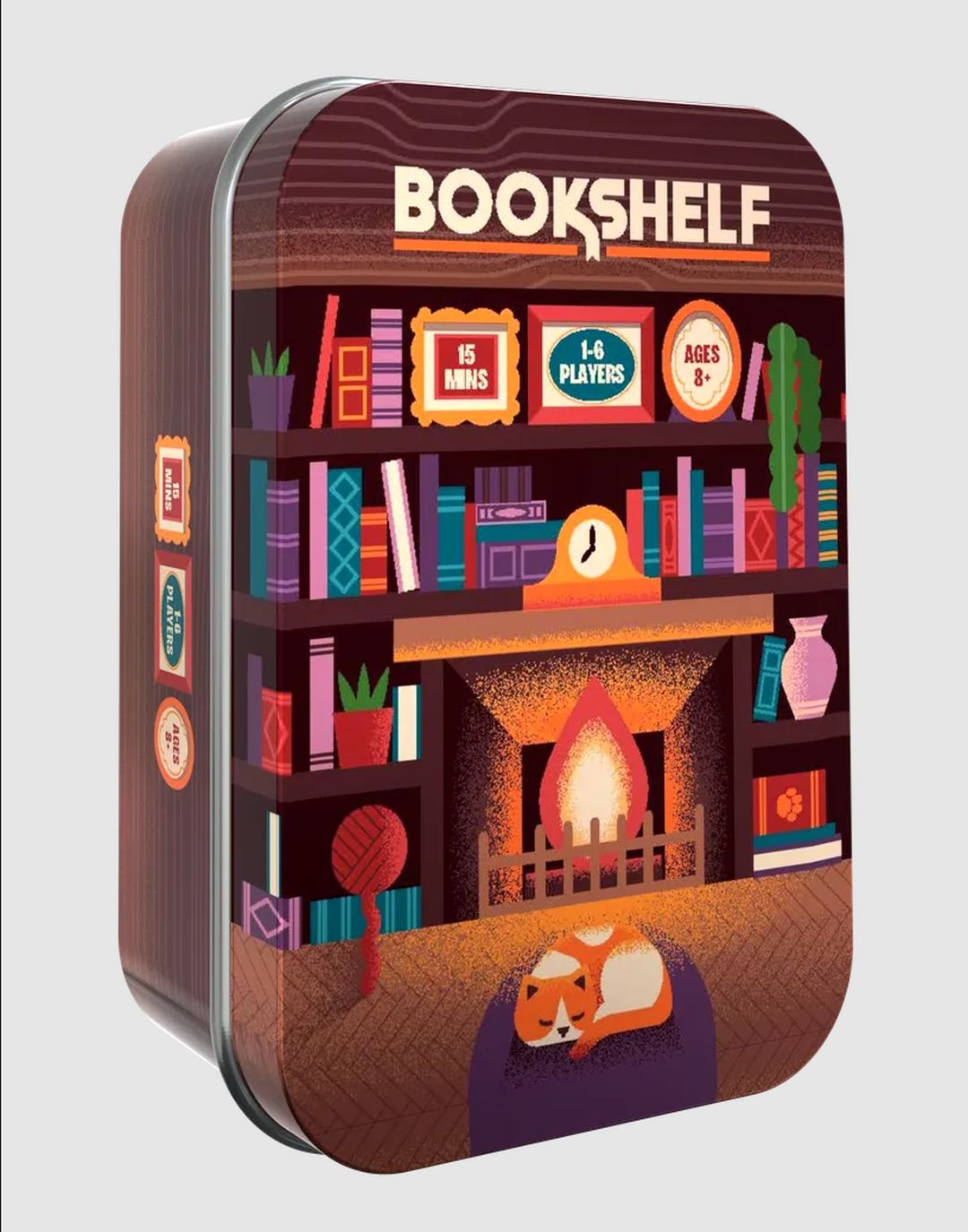
The game’s cooperative nature is lauded as a primary source of its enjoyment, fostering shared triumphs and collective groans of defeat. This communal aspect transforms what could be a solitary challenge into a truly interactive experience, where players are united against the twin forces of gravity and feline indifference. Components, including 10 Bookshelf cards, 29 Book meeples, and the iconic Cat meeple, are housed in a compact, appealing tin, making it highly portable and visually attractive. The artwork and overall production quality are frequently highlighted as instrumental in bringing the "cosy theme" to life, enhancing immersion and tactile pleasure.
Reviewer Tim Clare enthusiastically declared Bookshelf a "Must Play," praising how its "theme, production and gameplay come together to deliver a delightful, tense, condensed experience." His high praise is particularly noteworthy given his comparison to Rhino Hero, a beloved classic in the dexterity genre. Clare posits that Bookshelf not only lives up to the high expectations set by Rhino Hero but "might – whisper it – be better!" This bold statement underscores the game’s exceptional quality and its potential to carve out a significant niche in the hearts of tabletop enthusiasts. With its blend of accessible rules, engaging theme, and tense cooperative play, Bookshelf is poised to become a staple for many gaming tables.
Chronology
The journey of Bookshelf from concept to acclaimed tabletop sensation reflects a blend of thoughtful design and a publisher’s keen understanding of market appeal.
Development Background
Alley Cat Games, founded with a vision to publish a diverse range of engaging and often thematic games, has steadily built a reputation for delivering quality titles. While not solely focused on animal themes, their catalogue often features games with charming characters or accessible premises, such as Cat Cafe or the more strategic Dice Hospital. The very name "Alley Cat Games" hints at a certain playful, independent spirit, making the feline-centric theme of Bookshelf a natural fit within their publishing ethos.
The genesis of Bookshelf lies with designer Caezar Al-Jassar. While specific details of Al-Jassar’s inspiration are not widely publicized, it’s easy to infer the catalyst for such a universally relatable concept. The perennial struggle between an owner’s desire for an orderly home and a pet’s natural inclination towards playful disruption is a common, often humorous, domestic reality. The image of a meticulously arranged bookshelf, only to be partially cleared by a curious or attention-seeking cat, resonates deeply with many. Al-Jassar skillfully distilled this everyday phenomenon into a compelling game mechanic, identifying the inherent tension and visual appeal of such a scenario. The choice of wooden books and sturdy cards for shelves suggests a deliberate focus on tactile satisfaction and structural integrity, crucial elements for any dexterity game. The design process likely involved extensive prototyping to fine-tune the balance, ensuring that the tower was challenging to build yet satisfying to complete, and that the cat’s placement felt like a genuine, nerve-wracking addition rather than a mere aesthetic flourish.
Announcement and Release
The initial announcement of Bookshelf by Alley Cat Games was likely met with interest, especially given the publisher’s track record. Dexterity games, while a niche, possess a loyal following, and the promise of a cooperative experience within this genre often generates positive buzz. While the exact timeline of its public reveal and pre-order availability isn’t detailed in the provided article, the phrasing "new tin dexterity game" suggests a relatively recent launch or widespread availability.
It is plausible that Bookshelf made its debut or was prominently featured at major tabletop gaming conventions. Events like UK Games Expo, Gen Con, or Essen Spiel serve as crucial platforms for publishers to showcase new titles, allowing prospective players and reviewers to get hands-on experience. Such early exposure would have been vital in generating word-of-mouth and initial impressions. The compact tin packaging, a hallmark of many successful small-box games, would have also made it an attractive impulse buy or a perfect gift item, easy to display and transport at convention booths. The striking cover art, depicting a precarious stack with a contented cat, effectively communicates the game’s core theme and appeal at a glance.
Post-Release Reception
Following its release, Bookshelf quickly garnered positive attention, particularly from prominent reviewers like Tim Clare of Tabletop Gaming magazine. The enthusiastic "Must Play" designation is a powerful endorsement, signaling to a wider audience that this is a title worth investigating. Early player feedback, often shared across online forums and social media, would have reinforced the positive critical reception, highlighting the game’s accessibility, engaging cooperative play, and the satisfying tension it creates.
The comparison to Rhino Hero was inevitable and, in this case, proved to be a significant advantage. Rhino Hero is a universally recognized and beloved dexterity classic, and for Bookshelf to not only stand alongside it but potentially surpass it in the eyes of a seasoned reviewer speaks volumes about its quality. This comparison likely amplified its visibility, drawing in players who appreciate similar mechanics but are seeking a fresh, thematic twist. The rapid positive uptake indicates that Bookshelf successfully tapped into a desire for engaging, cooperative, and visually charming games that offer quick but memorable experiences.
Supporting Data
The success and critical acclaim of Bookshelf are rooted in several key design choices and thematic elements that resonate deeply with players.
Detailed Gameplay Mechanics
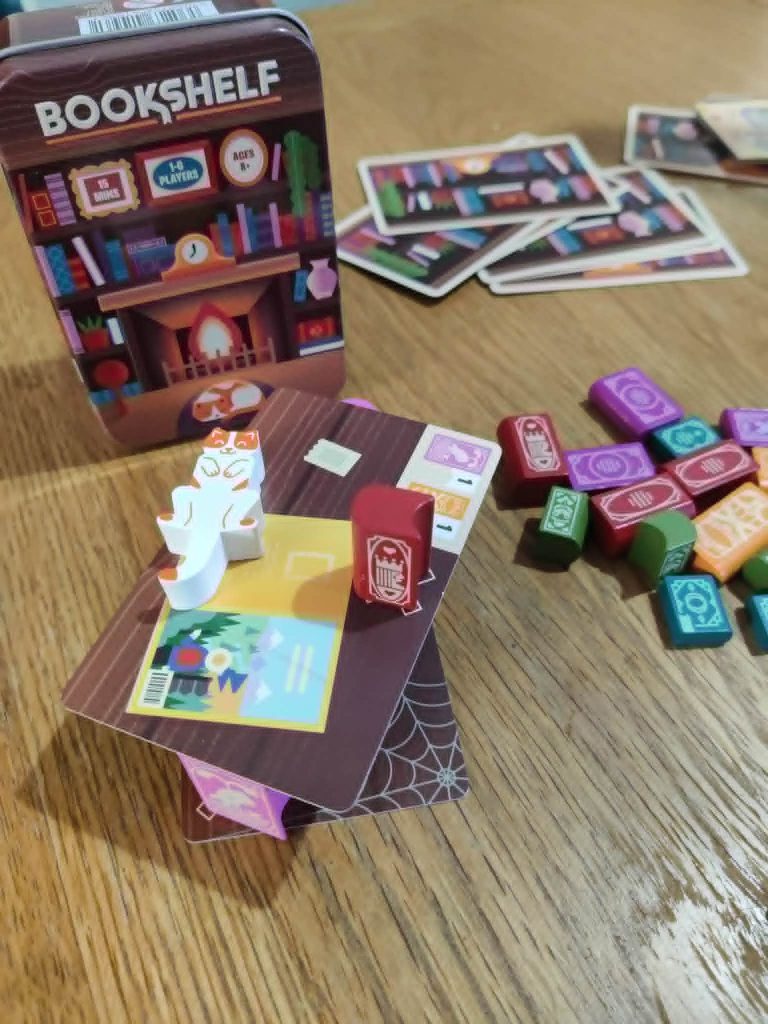
The brilliance of Bookshelf lies in its deceptively simple yet profoundly challenging mechanics. Each round begins with players drawing a "Bookshelf card." These cards are not merely structural elements; they are blueprints, indicating precisely where and how many of the "little wooden books" must be placed on the current top "shelf" – which is, in fact, the previously played card. This simultaneous placement of books by all players introduces an immediate layer of coordinated effort and tactile precision. Players must communicate, strategize, and execute their movements in unison, often holding their breath as they gingerly position their assigned books onto the precarious surface.
Once the books are placed, the most nerve-wracking part of the turn commences: retrieving the "pesky but cute cat" meeple from the shelf below and carefully moving it to the newly constructed level. The cat, with its delightful weight and form, serves as both a charming thematic anchor and a crucial destabilizing element. Its placement often necessitates a slight shift in weight or a gentle nudge to the tower, testing the structural integrity that players have so painstakingly built. The cumulative effect of these delicate operations, round after round, transforms the tower into a "Babel-esque" monument of hubris, where each added storey feels like a triumph against the laws of physics. The ultimate goal of reaching eight storeys without collapse provides a clear, compelling objective, making every successful cat placement a shared moment of relief and every collapse a collective groan. The inclusion of "normal and hard modes" further enhances replayability, allowing groups to tailor the challenge to their skill level, potentially introducing more demanding book placements or more challenging cat-moving scenarios.
Component Quality and Art Direction
The aesthetic and tactile experience of Bookshelf is integral to its appeal. The "cosy theme" of a well-loved bookshelf and a contented cat is masterfully realized through the game’s production. The "little wooden books" are not just tokens; their weight and texture provide a satisfying haptic feedback, making their careful placement feel substantial. The "stack cards" are robust enough to form stable shelves, yet thin enough to create a sense of verticality and fragility as the tower grows.
The artwork, while not extensively detailed in the article, is clearly designed to evoke warmth and charm. The visual consistency across the cards and the design of the cat meeple contribute to a cohesive and inviting world. The tin packaging, mentioned in the accompanying images, not only protects the components but also adds to the game’s premium feel, making it an attractive item to own and display. This attention to detail in component quality and art direction is crucial for dexterity games, where the physical interaction with the game elements is paramount. It elevates Bookshelf beyond a mere stacking exercise into an immersive, thematic experience.
The Cooperative Advantage
While many dexterity games can be competitive, Bookshelf‘s cooperative nature is repeatedly cited as a core strength. The shared objective fosters genuine collaboration and camaraderie. Players aren’t just vying against each other; they are united against the inherent instability of their creation. This collective challenge leads to intense moments of silence as a delicate move is attempted, followed by an explosion of "cheers" when the stack holds, or sympathetic "groans" when it inevitably tumbles. This shared emotional rollercoaster strengthens bonds between players and makes every game a memorable narrative. The game becomes a story of collective effort, resilience, and occasional, spectacular failure, all experienced together.
Comparison to Rhino Hero
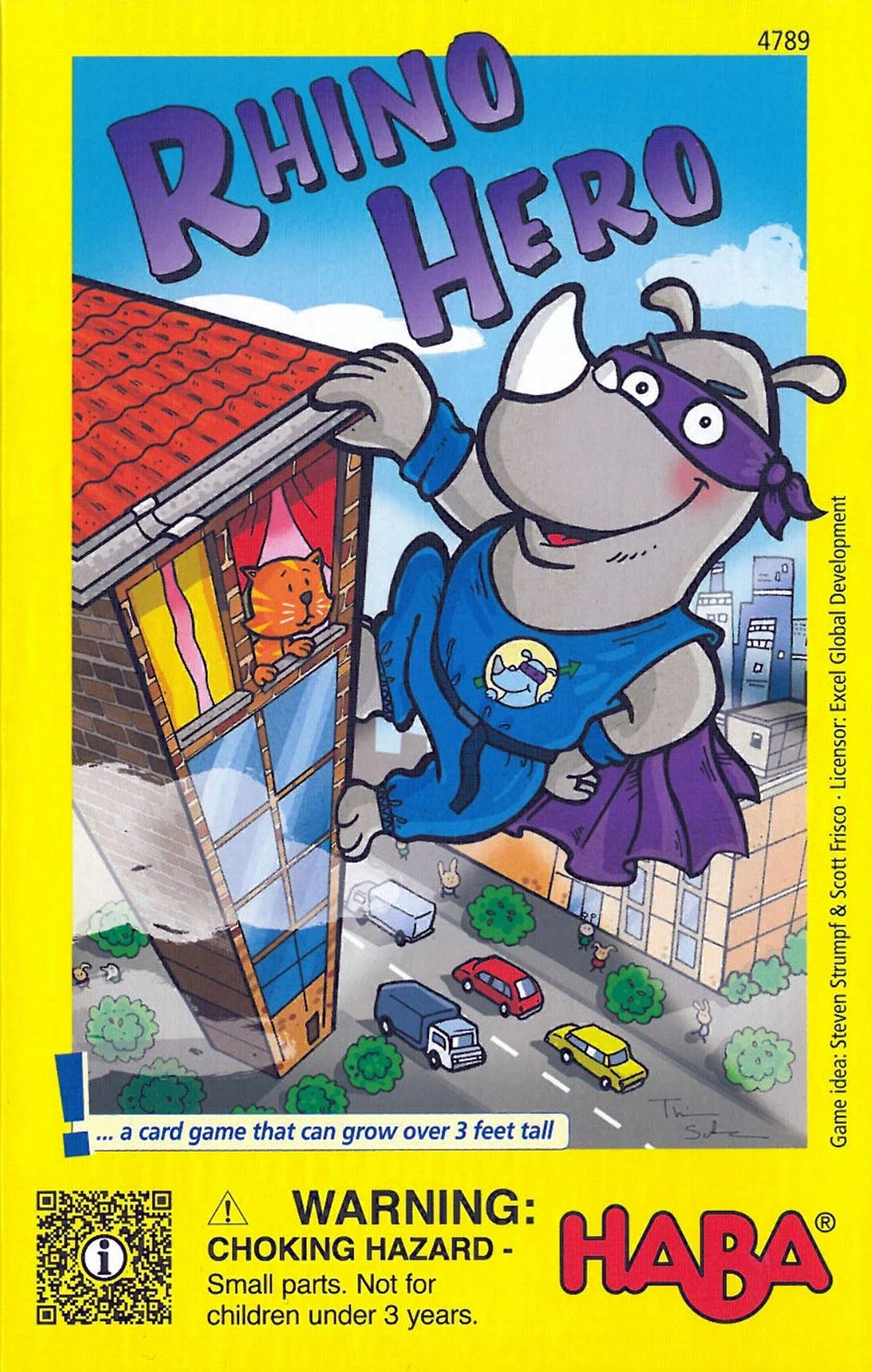
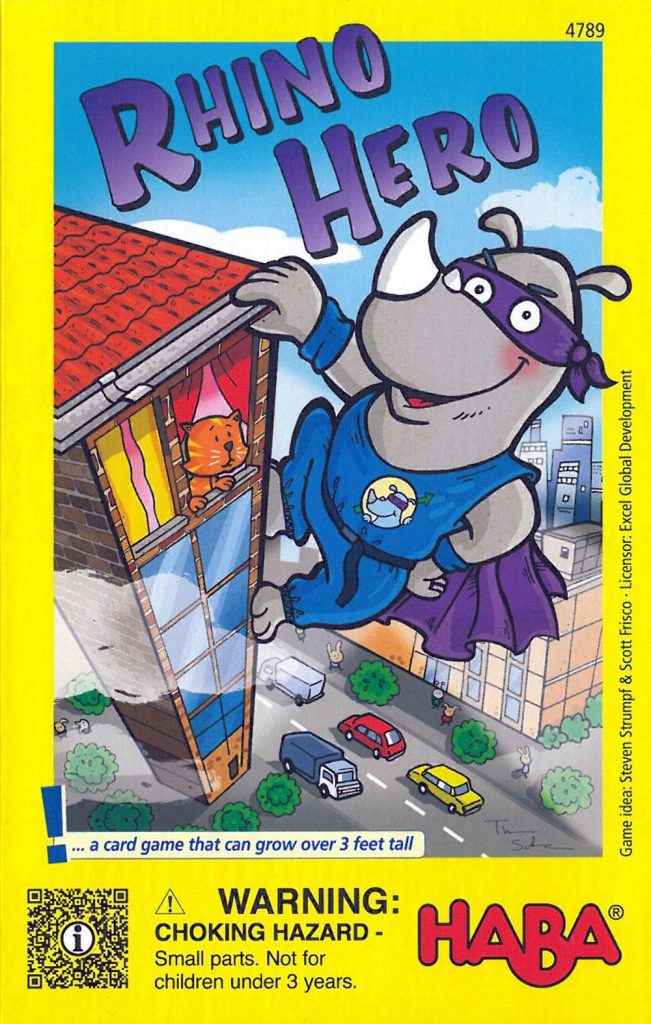
The comparison to Haba’s Rhino Hero is perhaps the highest compliment Bookshelf could receive. Rhino Hero is a bona fide classic, celebrated for its simple rules, exciting card-stacking mechanics, and the iconic, weighty rhino meeple that must be moved up the ever-growing structure. It’s "justly regarded as a classic – simple, taut, very funny."
Bookshelf shares Rhino Hero‘s core concept of building a vertical structure and moving a meeple upwards, but it introduces several key differentiators that, for some, elevate it. The cooperative aspect is a significant divergence; Rhino Hero is competitive, with players trying to be the last one to successfully place their wall and move the rhino. Bookshelf‘s collaborative goal shifts the tension from individual performance to collective success. Furthermore, the "little wooden books" provide a different tactile challenge than Rhino Hero‘s wall cards, offering a sense of building with physical objects rather than just cards. The theme, too, is perhaps more universally relatable and charming: the domestic struggle against a cat versus a superhero rhino scaling a skyscraper. Tim Clare’s assertion that Bookshelf "might… be better" than Rhino Hero speaks to its refinement of the genre, offering a fresh, engaging, and arguably more cohesive thematic experience that still delivers all the fun and tension expected from a top-tier dexterity game.

Target Audience and Replayability
Categorized as a "Family" and "Party" game, Bookshelf perfectly fits both descriptors. Its 8+ age rating and simple rules make it accessible for younger players, while the inherent tension and cooperative strategy ensure adults remain fully engaged. The quick 15-20 minute playtime is ideal for multiple rounds or as a warm-up or wind-down game.
Replayability is ensured through several factors. The random draw of Bookshelf cards means no two towers will ever be identical, presenting fresh challenges each time. The "normal and hard modes" allow for adjustable difficulty, extending the game’s longevity as players master the basic mechanics. Moreover, the emergent narrative of each game – the near misses, the daring placements, the eventual collapses – creates unique, memorable moments that encourage repeated plays. The combination of tactile pleasure, strategic cooperation, and quick, tense rounds guarantees that Bookshelf will be a frequent visitor to many gaming tables.
Official Responses
While direct quotes from the publisher or designer are not provided in the original article, we can infer their likely perspective and the significance of the reviewer’s endorsement.
Publisher’s Perspective
Alley Cat Games, as a publisher, likely views Bookshelf as a significant addition to their diverse portfolio, particularly within the accessible family and party game segment. The success of Bookshelf reinforces their commitment to publishing games that are not only engaging but also visually appealing and thematic. They likely envisioned Bookshelf as a game that could appeal to a broad audience, from casual players to seasoned hobbyists looking for a lighter, cooperative experience.
For Caezar Al-Jassar, the designer, Bookshelf represents a successful distillation of a relatable theme into a compelling game system. It’s evident that Al-Jassar aimed to create a game that was both intuitive to learn and deeply satisfying to play, where every action carries weight and consequence. The "human desire to arrange hardback books… aesthetically" and the "feline desire to push them off again" is a brilliant core conflict, and Al-Jassar’s design ethos shines through in how elegantly this conflict is translated into cooperative gameplay mechanics. The tactile components and the cooperative focus suggest a design philosophy centered on shared experience and simple, immediate joy. The critical success of Bookshelf is a testament to Al-Jassar’s ability to craft a highly engaging game from a simple, yet powerful, premise.
Reviewer’s Endorsement
Tim Clare’s "Must Play" designation is an extremely powerful "official response" from a respected voice within the tabletop gaming community. This verdict is not given lightly and signifies a game that genuinely stands out. Clare’s praise for how "theme, production and gameplay come together to deliver a delightful, tense, condensed experience" encapsulates the multifaceted success of Bookshelf. It highlights that the game’s appeal is not singular but a harmonious blend of its various elements.
The most impactful part of Clare’s review, however, is his direct comparison to Rhino Hero and his bold assertion that Bookshelf "might – whisper it – be better!" This is incredibly significant. Rhino Hero is a benchmark, a game against which all other dexterity stacking games are often measured. For a new title to be considered potentially superior by a professional reviewer indicates a remarkable achievement. It positions Bookshelf as not just another good game, but as a potential genre-defining title, capable of challenging the established order. This level of endorsement can dramatically influence consumer perception and sales, effectively stamping Bookshelf with a seal of approval that resonates deeply with tabletop enthusiasts.
Implications
The emergence and immediate success of Bookshelf carry several significant implications for the tabletop gaming industry, for Alley Cat Games, and for the dexterity game genre as a whole.
Impact on the Dexterity Game Genre
Bookshelf represents a refined evolution within the dexterity game genre. While it draws clear inspiration from classics like Rhino Hero, its cooperative nature and specific thematic integration offer a fresh perspective. It demonstrates that there is still ample room for innovation within seemingly simple mechanics. The game’s focus on simultaneous, collaborative placement, combined with the nerve-wracking cat transfer, adds layers of tension and interaction that distinguish it from purely competitive stacking games. This could inspire other designers to explore more cooperative or semi-cooperative dexterity challenges, moving beyond the traditional competitive race to avoid collapse.
Its success also underscores the enduring appeal of dexterity games. In an era dominated by complex engine builders and narrative-heavy experiences, Bookshelf proves that games focused on physical skill, tension, and immediate gratification continue to captivate. It highlights the importance of tactile components and engaging physical interaction, reminding the industry that not every game needs to be a sprawling epic to be profoundly enjoyable.
Broader Appeal of Thematic Integration
The relatable "cat vs. books" theme is a significant contributor to Bookshelf‘s broad appeal. It taps into a universal experience of pet ownership and the gentle chaos it brings. This accessible theme makes the game immediately understandable and charming, even to those who are new to board gaming. It proves that a strong, relatable theme, when seamlessly integrated with mechanics, can elevate a game far beyond its components. This thematic depth fosters emotional engagement, turning simple acts of stacking into a narrative of triumph and peril. Publishers and designers might increasingly look to everyday life and common experiences for inspiration, understanding that universal themes can unlock broader market appeal.
Commercial Success and Future
Priced at an affordable £12.99, Bookshelf is highly accessible, making it an attractive impulse purchase or gift. Its quick playtime and high player count (1-6) further enhance its market viability for family gatherings and parties. Given its "Must Play" rating and comparison to Rhino Hero, Bookshelf is poised for significant commercial success. It has the potential to become a perennial favorite, a "classic" in its own right, sitting alongside Rhino Hero on many shelves (ironically, perhaps).
For Alley Cat Games, Bookshelf‘s success is a strong affirmation of their publishing strategy. It demonstrates their ability to identify and bring to market games that resonate with both critics and consumers. This success could lead to further exploration of dexterity games, potentially inspiring expansions for Bookshelf or entirely new titles that build upon its strengths. It solidifies Alley Cat Games’ reputation as a publisher capable of delivering diverse, high-quality experiences, from their more strategic titles to charming, accessible party games. In the long term, Bookshelf could become a flagship title, a testament to the enduring power of simple, elegant design infused with relatable charm.