Penelope: The Enduring Icon of Loyalty, Resilience, and Cunning in Ancient Greek Mythology
ATHENS, GREECE – In the annals of Greek mythology, few figures command as much admiration and scholarly intrigue as Penelope, the formidable queen of Ithaca, wife of the resourceful Odysseus, and mother of Telemachus. Her epic narrative, meticulously woven into the fabric of Homer’s enduring masterpiece, The Odyssey (c. 750 BCE), transcends a mere supporting role, positioning her as a central pillar of the narrative and an archetype of unwavering fidelity, intellectual prowess, and steadfast resilience against overwhelming odds. For two decades, Penelope navigated a labyrinth of despair, societal pressure, and cunning adversaries, ultimately emerging as a heroine whose legacy continues to resonate across millennia, inspiring artists, writers, and scholars alike.
The Foundations of a Royal Union: Family and Marriage to Odysseus
Penelope’s lineage traces back to Spartan royalty, born to King Icarius and the enchanting naiad nymph, Periboia. Surrounded by five brothers—Thoas, Damasippos, Imeusimos, Aletes, and Perileos—she grew up within a world of aristocratic privilege and the intricate political machinations of the Greek city-states. Her destiny became entwined with that of Odysseus, the sagacious king of Ithaca, under extraordinary circumstances stemming from the courtship of Helen of Sparta, whose unparalleled beauty ignited a frenzy among the noblest men of Hellas.
Odysseus, initially among Helen’s numerous suitors, foresaw the potential for violent conflict that would inevitably erupt once a choice was made. Demonstrating his characteristic foresight and strategic acumen, he struck a pivotal bargain with Helen’s father, Tyndareus. In exchange for Tyndareus’s assistance in securing Penelope’s hand, Odysseus offered a brilliant diplomatic solution: he proposed that all of Helen’s suitors swear a solemn oath. This "Oath of Tyndareus" bound them to come to the aid of the chosen bridegroom should any harm befall him regarding his marriage. This oath, designed to prevent internal strife over Helen, would ironically become a foundational element leading to the Trojan War and, later, a crucial factor in Odysseus’s desperate attempts to return home, as the very men who would later besiege his palace were bound by a similar code of honor.
True to his word, Tyndareus facilitated the union of Odysseus and Penelope. Their marriage was blessed with a son, Telemachus, whose birth shortly preceded the catastrophic Trojan War. This early period marked the beginning of their shared life, a bond soon to be tested by the most prolonged and harrowing separation imaginable, transforming Penelope into the ultimate symbol of patient endurance.
The Mournful Queen: A Palace Under Siege
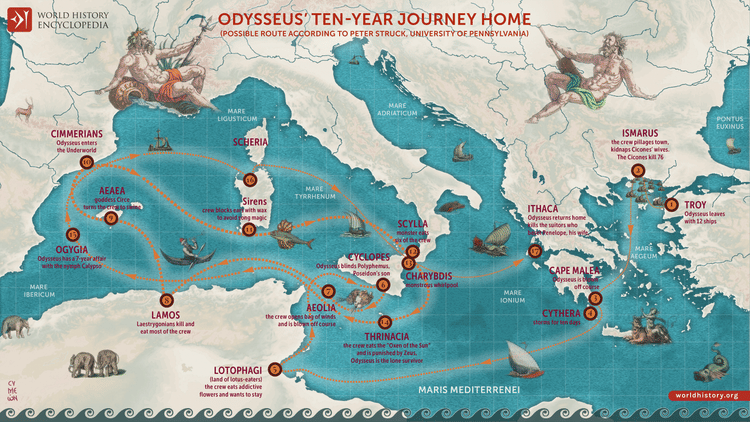
The opening books of The Odyssey immediately cast Penelope in a state of profound grief and acute vulnerability. With her husband absent for twenty agonizing years—ten fighting at Troy and another ten battling the capricious gods and monstrous perils of the wine-dark sea—the palace of Ithaca had been overrun. A horde of rapacious suitors, numbering well over a hundred, had taken root, feasting on Odysseus’s livestock, draining his wine cellars, and relentlessly pressuring Penelope to choose one of them as her new husband. Their presence was not merely an inconvenience; it was a systematic despoliation of Odysseus’s wealth and a blatant assault on his royal authority, with Penelope trapped at its heart.
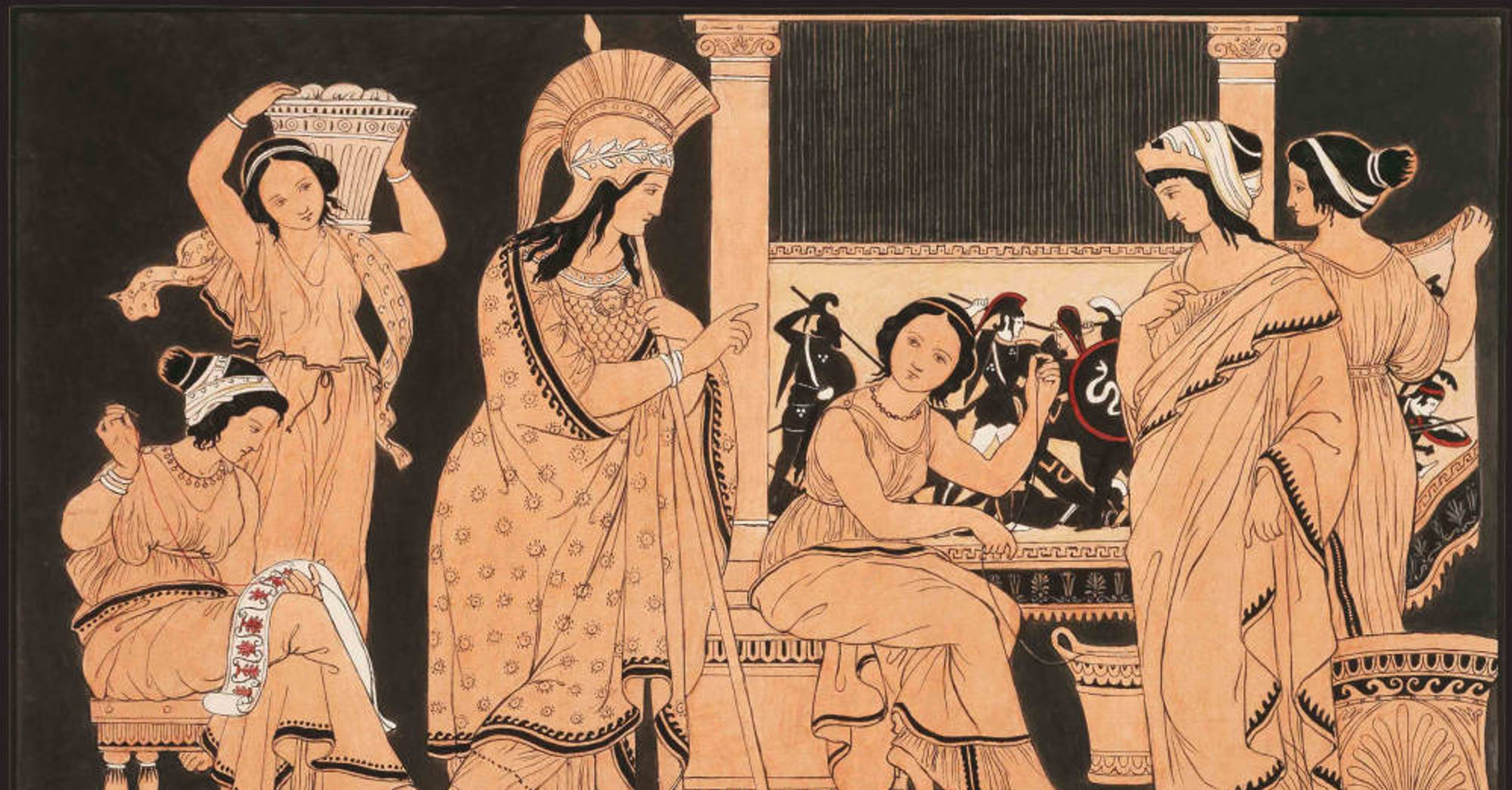
One evening, the oppressive atmosphere of the palace intensified as the bard Phemius sang of the Achaeans’ ill-fated homeward journeys. The strains of his melancholic lyre proved too much for Penelope. Descending from her chambers, attended by her loyal handmaidens, her plea to Phemius was not just a request but an anguished cry from a soul steeped in sorrow:
"How I long for my husband — alive in memory, always,
That great man whose fame resounds through Hellas
Right to the depths of Argos!"
(Homer, The Odyssey, 1.395-398)
This poignant lament encapsulates her deep devotion and the immense personal cost of her husband’s absence. Her words reveal not only her love but also her awareness of Odysseus’s heroic stature, making his prolonged disappearance all the more unbearable. Telemachus, still a young man struggling to assert his authority, attempted to console his mother, gently guiding her back to her chambers. There, she wept inconsolably until the benevolent goddess Athena, ever a patron of Odysseus and his family, intervened, lulling her into a much-needed, blissful sleep, offering a temporary reprieve from her relentless sorrow.
The Loom of Deception: Penelope and the Disgruntled Suitors
The sheer audacity and parasitic nature of the suitors are vividly portrayed in Book 2 of The Odyssey. Telemachus, driven by a burgeoning sense of manhood and desperation, convened an assembly of the Achaeans – a bold move, as it was the first such gathering in his father’s absence. He publicly denounced the suitors, detailing their destructive behavior: the slaughter of their livestock, the incessant feasting, and the depletion of their family’s resources. His impassioned speech underscored not only the material ruin but also the profound disrespect shown to his household and, by extension, to the very concept of proper governance and hospitality.
At the heart of Telemachus’s frustration, and indeed the suitors’ prolonged presence, lay Penelope’s extraordinary intelligence and strategic cunning. For nearly four years, she had employed a brilliant ruse to delay the inevitable choice of a new husband. Antinous, one of the most arrogant and vocal suitors, openly accused Penelope of deceit, exposing her clever stratagem:
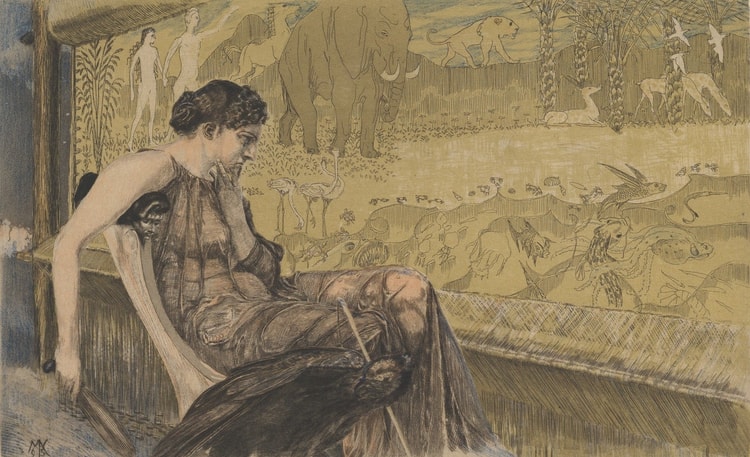
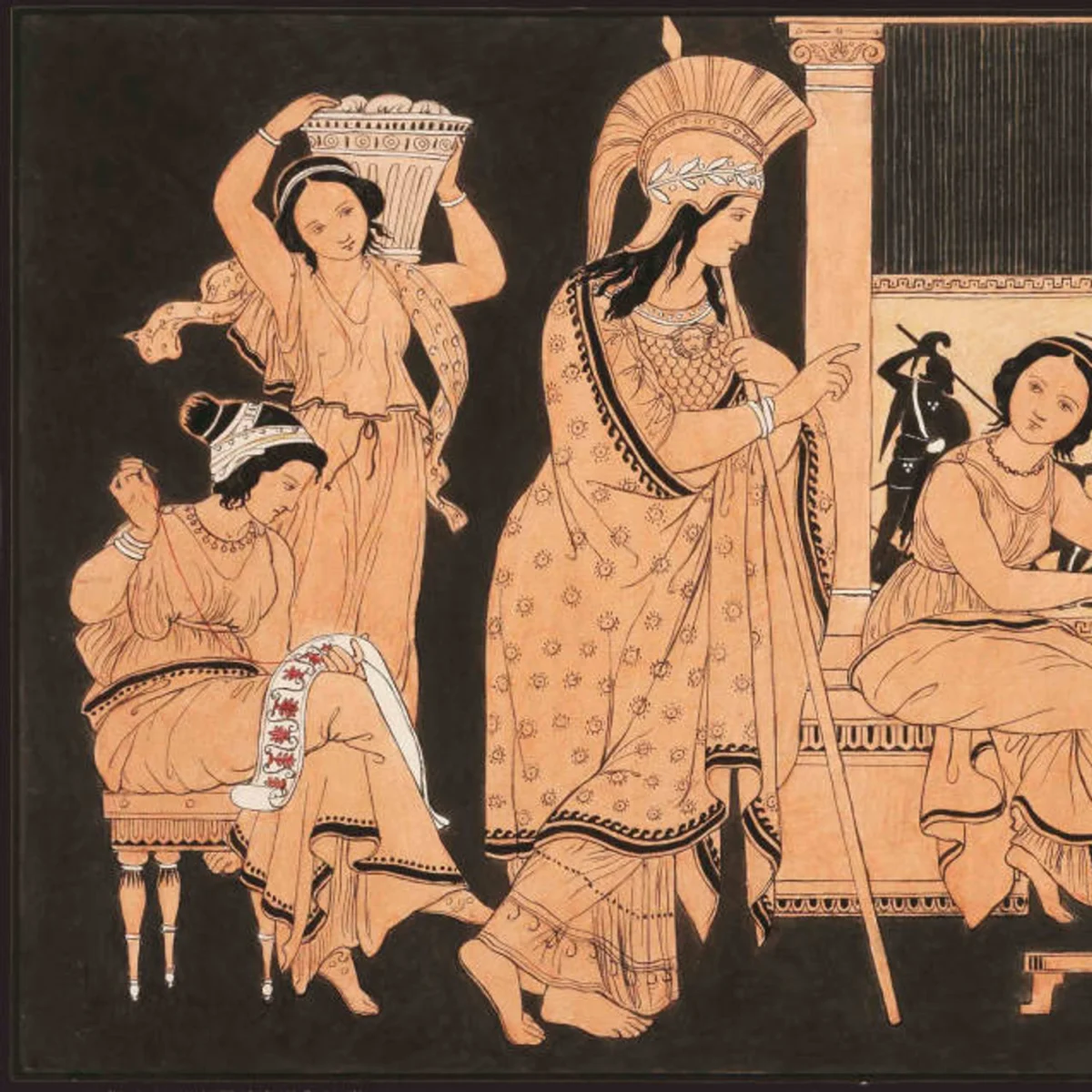
Penelope had promised the suitors that she would select a new husband only after completing a funeral shroud for her aging father-in-law, Laertes. For three years, she meticulously worked on the shroud in the royal halls during the day, giving the impression of diligent progress. However, under the cloak of night, she would secretly unravel her day’s work, ensuring the shroud would never be finished. This intricate dance of weaving and unweaving symbolized her desperate hope, her refusal to accept Odysseus’s death, and her profound commitment to her marriage vows.
The suitors, initially fooled, eventually grew impatient. The secret was ultimately betrayed by one of Penelope’s disloyal maids, forcing her to complete the shroud against her will. Antinous, enraged by her prolonged trickery, delivered a tirade, acknowledging Penelope’s exceptional wit and skill but condemning her "tricks." He declared that as long as she continued to delay, the suitors would remain, draining the palace. He even went so far as to implore Telemachus to send Penelope back to her father’s house in Sparta, where Icarius could arrange a new marriage, effectively stripping her of her agency and Ithaca of its queen.
Telemachus, however, stood firm. He vehemently refused to banish his mother, asserting that if the suitors possessed any sense of shame, they would depart themselves. He invoked Zeus, the king of the gods, vowing divine retribution for their egregious disrespect. As if in immediate response, Zeus sent a powerful omen: two eagles descended, engaging in a violent aerial struggle, a sight that shocked onlookers and fueled frantic debate among the Achaeans. Interpreting the omen, Telemachus announced his intention to embark on a quest to seek news of his father for one more year. Should he receive definitive proof of Odysseus’s death, he would then concede to his mother’s remarriage. Before departing, he shrewdly ensured that Penelope would be kept ignorant of his voyage for twelve days, protecting her from further anxiety and the suitors from anticipating his move.
Divine Intervention: Athena Hears Penelope’s Prayer
With Telemachus away on his perilous quest, the palace remained a hotbed of intrigue and danger. Antinous, the chief antagonist among the suitors, hatched a dark plan to ambush Telemachus in the straits between Ithaca and Same, intending to eliminate him and seize control of the kingdom. The suitors, eager to consolidate their power and secure Penelope’s wealth, readily agreed to this nefarious scheme.
Fortunately, the palace herald, Medon, overheard their plotting and, loyal to the royal family, reported the grave danger to Penelope. The news plunged her into profound shock and dismay. Her maternal instincts flared, questioning why her son had embarked on such a perilous journey without her knowledge and fearing the fate that awaited him.
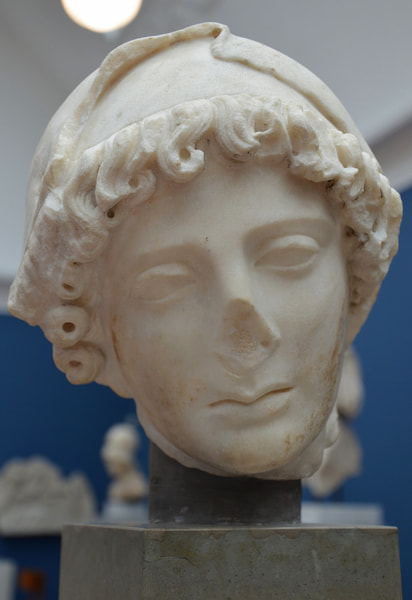
Penelope collapsed, overwhelmed by the dual anguish of her beloved husband’s long absence and now the terrifying threat to her only son. Her anger turned briefly to her handmaidens, whom she chastised for their silence regarding Telemachus’s departure. She desperately urged that her father-in-law, Laertes, be informed, hoping his wisdom could devise a rescue plan. It was her old nurse, Eurycleia—a figure of unwavering loyalty—who offered comfort and counsel. Eurycleia, admitting her complicity in keeping Telemachus’s journey a secret, implored Penelope to pray to Athena, reassuring her that the gods would not allow another heir of King Arcesius (Odysseus’s grandfather) to perish.
Heeding this sage advice, Penelope poured out her heart in a fervent prayer to Athena:
"Hear me, daughter of Zeus whose shield is thunder —
tireless one, Athena! If ever, here in his halls,
resourceful King Odysseus
burned rich thighs of sheep or oxen in your honour,
oh remember it now for my sake, save my darling son,
defend him from these outrageous, overbearing suitors!"
(The Odyssey, 4.859-864)
As Penelope, consumed by worry, refused food and drink, Athena once again intervened. The goddess sent a sweet sleep to her, and in a dream, appeared to Penelope in the phantom form of her sister, Iphthime. This divine apparition offered profound comfort and reassurance, confirming that no harm would befall Telemachus, as he had never wronged the gods. In her half-waking state, Penelope expressed her anxieties for both her husband and son. Athena, still disguised, affirmed her protective watch over Telemachus and assured Penelope that a divine escort would keep him safe. When Penelope inquired about Odysseus’s fate, Athena, maintaining the delicate balance of divine truth and human hope, gently stated that she could not reveal whether he was alive or dead, deeming it wrong to offer false hope. With that, Athena vanished on a breeze, leaving Penelope to awaken with a newfound, albeit fragile, sense of peace.
The Queen’s Fury: Penelope Confronts Her Suitors
Five days after Telemachus’s departure, a herald brought joyous news to the royal palace: her son had returned safely home. This news, a balm to Penelope’s anxious heart, was met with bitter frustration by the suitors. As they watched Telemachus’s ship pull into the harbor, Antinous, ever the instigator, once again stirred their discontent. He proposed a renewed plot to kill Telemachus, aiming to seize his land and wealth for themselves, while leaving Penelope and her eventual new husband to merely inhabit the palace. He then urged the suitors to redouble their efforts to win Penelope’s hand, showering her with gifts and displaying their wealth, believing that the one who offered the most would be deemed divinely favored.
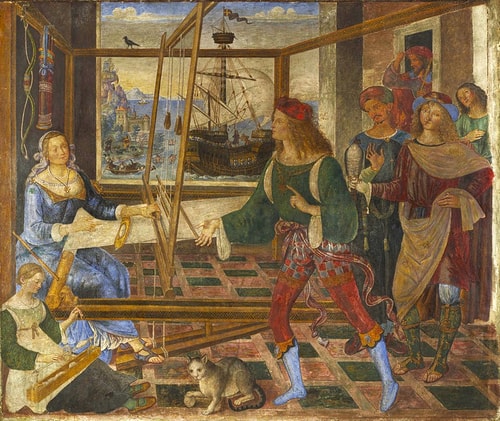
Inspired by a surge of maternal indignation and a desire to protect her family, Penelope finally descended from her chambers to confront her tormentors. Accompanied by her handmaidens, she entered the great hall, directing the full force of her anger at Antinous. In a powerful display of regal authority and moral outrage, she publicly tore down his character, denouncing him as a "madman" and a "schemer." She reminded him of his father’s past, recalling how he had once sought refuge in the royal palace of Ithaca after participating with Taphian pirates in an attack on their allies. This pointed reminder of his family’s own history of lawlessness served to utterly shame Antinous and expose his hypocrisy.
Eurymachus, another prominent suitor, attempted to placate Penelope, offering false assurances that no man alive would lay a hand on Telemachus while he was present. Briefly mollified by his words, Penelope retreated to her chambers, where she once again wept for Odysseus, finding solace only in the sleep that Athena graciously sent her. This confrontation underscored Penelope’s courage and her readiness to challenge the powerful men who sought to usurp her family’s legacy.
The Unseen King: Telemachus Returns with a Disguised Odysseus
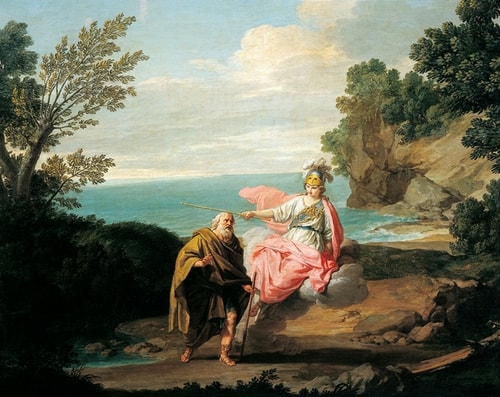
The narrative pivots dramatically with Telemachus’s safe return to the royal palace. Reunited with his mother, Penelope, her first question, laden with years of unspoken longing, concerned Odysseus. An emotional Telemachus, still reeling from his own near-death experience, recounted his escape and instructed Penelope to purify herself, pray to the gods, and promise a generous sacrifice if Zeus avenged them. He then announced his need to collect a "guest" who had traveled with him back to Ithaca. Unbeknownst to Penelope, this "guest" was none other than her long-lost husband, Odysseus, masterfully disguised by Athena as an aged beggar, a disguise designed to allow him to observe the state of his kingdom and the loyalty of his household.
Later, as Penelope dined with her son, her desperate yearning for news of Odysseus resurfaced. Telemachus, carefully revealing fragments of his journey, finally offered her what she had waited years to hear: Odysseus had been sighted on an island, held captive by the nymph Calypso, but was actively seeking a way home. The seer Theoclymenus, present during the conversation, interjected with a more immediate and profound prophecy, swearing that Odysseus was at that very moment on Ithacan soil, plotting the ruin of Penelope’s suitors. Penelope, clinging to this glimmer of hope, promised the seer affection and lavish gifts should his vision prove true.
Odysseus, still in his beggar’s disguise, entered the royal palace. While some suitors showed a semblance of pity, Antinous, hardened and cruel, berated him and struck him in the back with a footstool. Penelope, upon hearing of this abhorrent behavior, prayed for Apollo to strike Antinous down as he had struck the beggar. She confided in her housekeeper, Eurynome, her profound disgust for all the suitors, singling out Antinous as the most detestable. Driven by her innate hospitality and a faint, unacknowledged hope, she instructed the swineherd Eumaeus to bring the beggar to her, wishing to offer him warmth and inquire if he possessed any news of her husband. She even promised him clean clothes if his answers proved truthful. The disguised Odysseus, ever cautious, agreed to meet Penelope, but only at sunset, ensuring a private conversation away from the prying eyes of the suitors.
Strategic Charms: The Suitors’ Gifts and Penelope’s Wiles
Before her private meeting with the beggar, Penelope was inspired by Athena to confront her suitors and her son. The goddess, wishing to enhance Penelope’s allure and authority, induced a deep sleep, during which she bestowed upon the queen immortal gifts, making her taller, fuller in form, and cleansing her face. Penelope awoke feeling refreshed and renewed, resolving to no longer waste her life in passive sorrow.
When she appeared before her suitors, their jaws dropped, and their minds became inflamed with lust. Penelope, seizing the moment, berated Telemachus for allowing the beggar to be treated so cruelly. Telemachus, now more confident and aware of the unfolding drama, acknowledged his own frustration with the suitors’ evil plots.
The suitor Eurymachus, ever the smooth talker, approached Penelope, praising her beauty and declaring her unmatched among all women. Penelope, however, deflected his flattery with a poignant reminder of her enduring sorrow, stating that the gods had "destroyed her beauty the day that Odysseus sailed to Troy." She then shrewdly criticized her suitors, reminding them of ancient customs: past suitors brought gifts for the woman they courted and provided their own provisions. In stark contrast, her suitors had consumed Ithaca’s food and depleted its supplies. Odysseus, observing this from his disguise, swelled with pride at his wife’s sharp intellect and her ability to subtly put the insolent men in their place while subtly extracting resources from them. Antinous, ever impatient, urged Penelope to accept their gifts, declaring they would not depart until she had chosen one of them.
One by one, the suitors presented Penelope with lavish and expensive gifts: a resplendent robe, an amber necklace, intricately crafted earrings, and a choker, among other treasures. Penelope, maintaining her composure, withdrew with her maids, who carried the abundance of gifts, a temporary bounty extracted through her clever manipulation of their covetous desires.
The Beggar’s Tale: Penelope Meets Her Husband
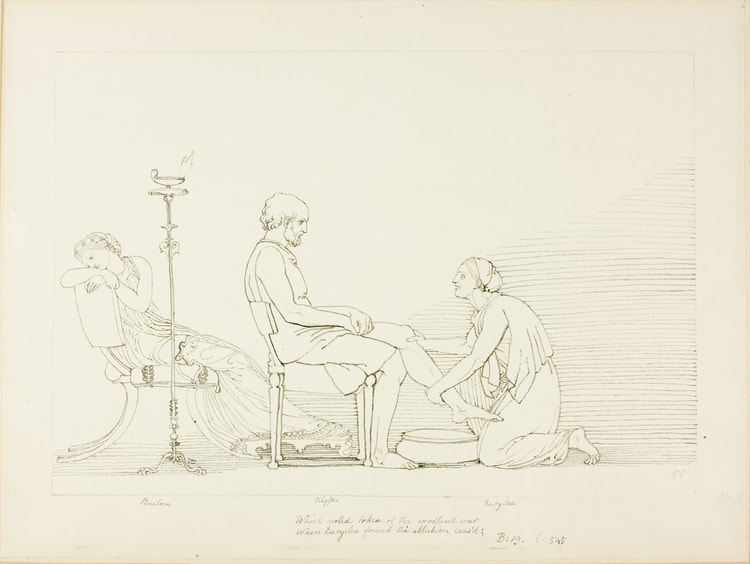
The long-awaited private meeting between Penelope and the disguised Odysseus took place by the fire. Hearing one of her impudent handmaidens verbally attack the "beggar," Penelope swiftly intervened, threatening the maid and instructing the stranger to be seated respectfully. She then poured out her heart, expressing her profound yearning for her husband and her disdain for the relentless suitors. She confided in him about her weaving trick, revealing how her deception had been discovered after three years.
The beggar, drawing on his intimate knowledge of Odysseus, recounted a carefully constructed narrative of how he had met Odysseus on his way to Troy, interweaving truths about Odysseus’s journey with lies about his own identity. Penelope, deeply moved by the familiar details and the genuine sorrow in the beggar’s voice, wept as she listened, a dam breaking after years of stoic endurance. She pressed him for more details about her husband. He steadfastly reassured her that Odysseus was alive and would soon return to Ithaca. Despite her longing to believe, years of dashed hopes and the immense psychological toll of her vigil had instilled in her a deep skepticism, and "she knew in her heart that he was never coming back."
The following morning, Penelope and the disguised Odysseus met again. Penelope, still troubled by her dreams and seeking reassurance, asked the beggar to interpret a vivid dream she had experienced. Upon hearing its details, the beggar, with the knowing certainty of Odysseus himself, replied that it was a clear sign: Odysseus was indeed returning to rescue Penelope from her suitors. This interpretation, while true, still kept Penelope in the dark about the beggar’s true identity, maintaining the dramatic tension and highlighting her cautious nature.
The Ultimate Test: Penelope Challenges Her Suitors
The moment of truth arrived. Inspired by Athena, Penelope conceived the ultimate test for her suitors, a challenge that only one man could possibly accomplish: to string Odysseus’s mighty bow and shoot an arrow cleanly through the aligned eyelets of twelve axes. She retrieved the treasured bow from its hidden vault, a deeply personal artifact imbued with the essence of her husband. The act itself was fraught with emotion; she allowed herself a moment of profound grief before presenting it to the assembled suitors. Explaining the terms of the challenge, she promised to wed the man who successfully completed the impossible feat.
One by one, the arrogant suitors attempted the challenge, their efforts proving futile. The magnificent bow, crafted by Odysseus’s own hands, remained unstrung, a symbol of his singular strength and skill. It was then that Odysseus, still disguised as a beggar, requested a turn, much to the contempt and derision of the suitors. Penelope, ever the gracious host and perhaps sensing something profound in the beggar’s demeanor, promised him fine clothes, a sword, and safe passage if he succeeded. Telemachus, now fully aware of the impending bloodbath, swiftly intervened, sending Penelope back to her chambers. This strategic move ensured her safety and allowed Odysseus and his son to execute their meticulously planned slaughter of the suitors without her direct witness.
The Unveiling: Penelope Reunites with Odysseus
The climactic reunion between Penelope and Odysseus is one of the most celebrated and psychologically complex scenes in all of literature. Penelope was awakened by her old nurse, Eurycleia, who, bursting with joy, declared that Odysseus was finally home and had killed her suitors. Naturally, Penelope, after years of deception and suffering, feared for the nurse’s sanity. Her skepticism was profound; she questioned Eurycleia relentlessly, wanting to believe but not yet ready to fully embrace the impossible truth. She decided to go downstairs to verify the claims for herself.
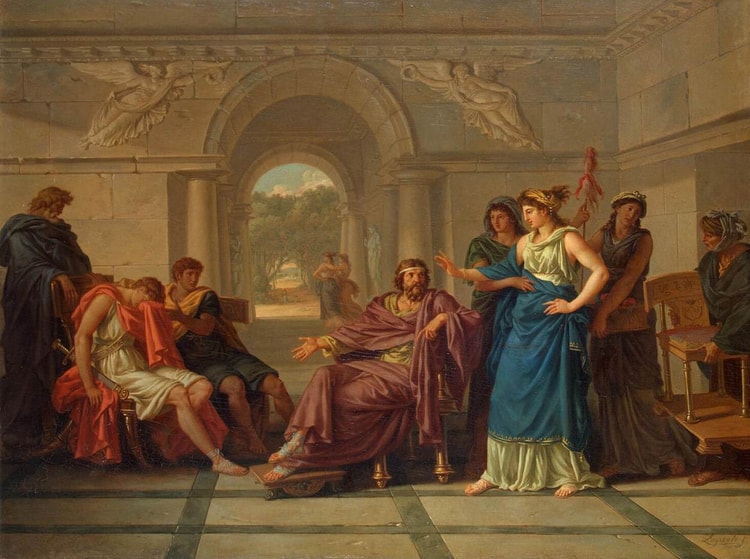
Upon seeing the man who claimed to be Odysseus, Telemachus, frustrated by his mother’s apparent coldness, asked why she did not embrace her father. Penelope’s reply revealed her deep wisdom and her unique bond with Odysseus: she stated that she was "powerless" to look him in the eyes, but if it truly was Odysseus, she would know, for "they have secret signs that only the two of them know." This insistence on a private, irrefutable sign underscores her intelligence and her refusal to be swayed by mere appearances or even the testimony of others.
Odysseus, bathed and transformed by Athena into a more youthful, god-like version of himself, accused Penelope of being coldhearted. Penelope, however, remained resolute, countering that she would not be fooled simply because he looked different after his bath, even if he resembled the man who sailed for Troy all those years ago.
Then came the final, definitive test. She instructed her maid, Eurycleia, to move "their" bed out of their bridal chamber. This seemingly innocuous command struck a nerve with Odysseus, who, angered by the suggestion, demanded to know how anyone could move the bed he had built himself, famously carved into the trunk of a living olive tree. This intimate detail, known only to the two of them, was the "secret sign" Penelope had awaited.
In that moment, Penelope finally realized that this man was, beyond all doubt, her beloved husband. The years of doubt, sorrow, and steadfast waiting dissolved. She ran to embrace him, both of them dissolving into tears, a powerful release of twenty years of pent-up emotion. Odysseus then revealed that one more trial awaited him: a journey in honor of the sea god Poseidon, to appease the deity he had offended. Penelope, her heart now overflowing with renewed hope, replied that, she hoped, this meant they would finally live out their happy lives together. They retreated to their bed, where Odysseus recounted all his extraordinary adventures, and Penelope, captivated, did not close her eyes until she had heard every word, a symbol of their renewed intimacy and shared future.
Divergent Narratives: Different Views of Penelope
While Homer’s Odyssey firmly establishes Penelope as the epitome of loyalty and chastity, historical and mythological sources present alternative, often conflicting, views. Figures such as the lyric poet Pindar (circa 518 BCE) and the Greek historian Hecateus of Miletus (circa 550-476 BCE) suggest Penelope as the mother of the rustic god Pan, attributing paternity variously to Hermes, Apollo, or Mercury. More controversially, the historian Duris of Samos (circa 350 BCE) penned a narrative claiming Pan’s birth was the result of Penelope sleeping with all her suitors, a stark challenge to her Homeric portrayal. This scandalous version was echoed by the travel writer Pausanias (circa 110-180 CE), who recounted a Mantinean tradition in the Peloponnese where Odysseus returned home to discover Penelope’s infidelity and subsequently banished her from Ithaca.
These divergent accounts reflect the fluidity of ancient myths and perhaps a desire in some traditions to undermine the celebrated virtue of a prominent female figure. However, many ancient authors pushed back against this defamatory narrative, often portraying Penelope as a victim of seduction, either by her suitors or by a divine trickster like Hermes, rather than an adultress.
Today, scholarly consensus largely dismisses these alternative narratives concerning Pan’s parentage or Penelope’s infidelity. It is widely believed that the Penelope associated with Pan’s birth was a distinct nymph who, due to a shared name, was mistakenly conflated with the more famous Queen of Ithaca throughout history. This interpretation preserves the integrity of Homer’s Penelope, reinforcing her status as a paragon of marital fidelity.
An Enduring Legacy: Penelope’s Impact Through the Ages
Throughout history, Penelope’s character has commanded immense admiration and respect, her unwavering loyalty to Odysseus becoming her defining trait. Over time, she transcended her role as merely "Odysseus’s wife," evolving into a potent heroine in her own right, celebrated for her intelligence, resilience, and quiet strength. The Etruscans featured her in their distinctive art, recognizing her significance. The Roman poet Ovid (circa 43 BCE – 17 CE) revered her as a powerful symbol of enduring love and fidelity, her virtues becoming an aspirational model for women in ancient Rome who sought to embody her wisdom and faithfulness. Her renown even extended to ancient Egypt, demonstrating the wide reach of her legendary status.
The fascination with Penelope continues unabated in the modern era. Contemporary literature, art, and scholarship frequently revisit and reinterpret her story, offering new perspectives on her agency and significance. Margaret Atwood’s acclaimed 2005 novel, The Penelopiad, offers a compelling re-telling from Penelope’s own voice, narrated from Hades in the 21st century, providing a feminist re-examination of her life and the roles of her loyal (and disloyal) handmaidens. Modern authors and scholars increasingly emphasize Penelope’s power, celebrating her strategic mind and pivotal role in the larger narrative of The Odyssey, moving beyond a purely passive interpretation of her waiting.
Homer’s epic poems, particularly The Odyssey, continue to inspire and captivate global audiences. The enduring power of Penelope’s story will soon reach an even wider audience with the much-anticipated movie adaptation of The Odyssey, directed by Christopher Nolan, slated for release in July 2026. The announcement that American actress Anne Hathaway will portray Penelope has generated considerable excitement, promising to bring this iconic figure of ancient Greek mythology to life for a new generation, solidifying her place as a timeless symbol of devotion, cunning, and indomitable spirit.