CSotD: Could Every Day Be Flag Day?
As the administration attempted to frame the day as a triumph of both domestic strength and international diplomacy—highlighted by a proposed ceasefire with Iran—critics and historians raised alarms over the erosion of democratic norms, the commercialization of the executive branch, and the ongoing dismantling of the Voting Rights Act.
Main Facts: A White House Transformed
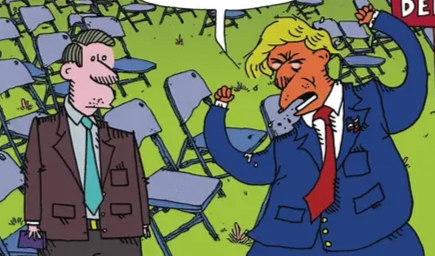
The primary event of the day was the "Birthday Brawl," a commercial Ultimate Fighting Championship (UFC) exhibition held on the White House grounds. Despite legal challenges seeking to halt the event on the grounds of "tastelessness" and the inappropriate use of federal property for private gain, a federal judge declined to intervene. The event was further scrutinized due to President Trump’s personal financial investments in the organization hosting the fight, raising significant ethics concerns regarding the use of the "People’s House" for corporate profit.
Simultaneously, the administration announced a major diplomatic milestone: the remote signing of a Memorandum of Understanding (MOU) intended to signal the end of hostilities with Iran. However, the announcement was met with immediate skepticism as Tehran officials denied that a formal signing would take place on Sunday, suggesting instead that while a 60-day ceasefire was possible, a permanent treaty remained years away.
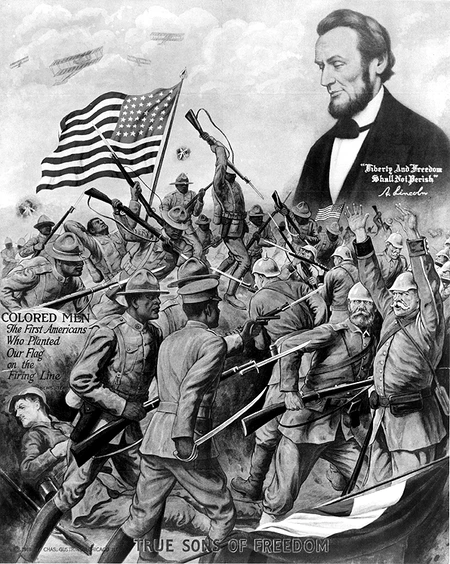
Domestically, the day served as a flashpoint for the debate over the "Double-V" legacy—the World War II-era concept of victory abroad against fascism and victory at home against racial inequality. As the administration celebrated military might, civil rights advocates pointed to the "disassembling" of the Voting Rights Act (VRA) as evidence that the second "V" remains elusive.
Chronology: From the "Double-V" to the Octagon
The historical trajectory leading to this day spans over eight decades of American social and political evolution:
- 1942–1945: The Pittsburgh Courier, a leading Black newspaper, launches the "Double-V" campaign. It argued that Black Americans should fight for democracy abroad (Victory over the Axis) and for democracy at home (Victory over Jim Crow).
- 1965: The passage of the Voting Rights Act represents a "raising of the flag" on the peak of the civil rights movement, providing federal oversight to prevent racial discrimination in voting.
- 1969: During a USO show in Vietnam, legendary entertainer Bob Hope is booed by troops after mentioning President Nixon’s promise to end the war—a moment cited by modern analysts as a reminder that military audiences are not monolithic in their political support.
- 2010–2025: A series of Supreme Court rulings and legislative challenges systematically weaken the enforcement mechanisms of the Voting Rights Act, leading to what critics call the "disassembling" of the landmark law.
- June 2025: Plans for a massive "unifying" concert for the President’s 79th birthday collapse after headline performers withdraw, citing the event’s increasingly partisan nature.
- June 14, 2026: The 80th birthday of the President is marked by the UFC "White House Lawn" event, the closure of the Lincoln Memorial for fighter weigh-ins, and the disputed announcement of an Iran peace MOU.
Supporting Data: Logistics of a Presidential Spectacle
The scale of the June 14 celebrations required a massive mobilization of federal resources and a significant alteration of the Washington, D.C. landscape:
The Audience and Venue:
- Troop Attendance: To ensure a "good turnout" following the poorly attended military parade of the previous year, the administration filled the 5,000-seat outdoor arena primarily with active-duty servicemen. While tickets were free for military members, they were required to fund their own travel and lodging in the capital.
- Public Access: The Lincoln Memorial was closed to the general public to facilitate the weigh-in of UFC fighters. Giant LED screens were erected on the Ellipse to broadcast the fights to crowds gathered outside the White House perimeter.
The Iran MOU Specifics:
- Duration: The memorandum outlines a 60-day ceasefire and a formal "agreement to talk."
- Legal Status: Experts emphasize that an MOU is not a legally binding treaty. Historically, as seen in the 1968 Vietnam peace talks, the gap between an initial agreement to sit at the table and a final treaty can span half a decade (1968–1973).
Ethics and Finance:

- Conflict of Interest: Financial disclosures indicate the President maintains a stake in the parent companies associated with the UFC, leading to accusations that the event served as a "commercial exhibit" for personal enrichment.
Official Responses and Historical Context
The administration has defended the UFC event by drawing parallels to former President Theodore Roosevelt, who famously boxed in the White House. Press officials argued that the "Birthday Brawl" reflects a "Rooseveltian intensity" and a celebration of American "strength and vitality."
However, historians have been quick to dismiss the comparison. "Theodore Roosevelt boxed as a private hobby; he did not sell tickets to the public or host commercial pay-per-view events on the South Lawn," noted one historian in a recent MSN report. "Obama installed a basketball hoop, but he didn’t host NBA games for profit. This represents a fundamental shift from the White House as a seat of government to a venue for commercial entertainment."
International reaction to the Iran announcement has been equally fraught. While the White House prepared for a ceremonial "autopen" signing of the MOU, the Iranian foreign ministry issued a statement through Tehran News stating: "There will be no signing on Sunday. While we are close to an initial deal on a ceasefire, any suggestion of a finalized peace agreement is premature and one-sided."
From the perspective of social commentary, writers like Mike Peterson of The Daily Cartoonist argue that the day should be a time for "looking inward." Peterson suggests that true patriotism involves acknowledging national faults and "pledging to seek victory, not only on battlefields of war, and, certainly, not in an octagon."
Implications: The Future of the American "Flag"
The events of June 14, 2026, carry deep implications for the future of American civic life and international standing.
1. The Normalization of Commercialized Governance:
By hosting a for-profit sporting event at the White House, the administration has set a precedent that blurs the line between public service and private enterprise. This "prizefighting on the lawn" approach suggests that the prestige of federal landmarks is now available for brand alignment and commercial exploitation.
2. The Fragility of Diplomacy by Press Release:
The discrepancy between the White House’s "peace deal" announcement and Tehran’s denial highlights the risks of "performative diplomacy." By prioritizing a birthday "victory" over the slow, often invisible work of treaty negotiation, the administration risks undermining the credibility of future international agreements.
3. The Unfinished Business of Civil Rights:
The invocation of the "Double-V" campaign serves as a stark reminder that military victory and domestic equality are not synonymous. As the Voting Rights Act continues to face judicial challenges, the "raising of the flag" becomes a hollow gesture if the underlying protections of citizenship are being dismantled. The celebration of Flag Day, as Peterson notes, must be "a reminder of efforts already made and of promises still needing to be fulfilled."
4. The Politicization of the Military:
The use of 5,000 troops as a "guaranteed audience" for a partisan-slanted birthday event mirrors the controversial USO shows of the Vietnam era. While the troops in attendance appeared "motivated," the mandate to provide a "happy face" for a political leader’s birthday gala raises questions about the neutrality of the armed forces in a deeply polarized society.
In conclusion, June 14, 2026, will likely be remembered not for the punches thrown in the octagon or the ink on a non-binding memorandum, but for the questions it posed about the nature of the American presidency. As the nation moves toward the mid-2020s, the struggle to balance the "iconic images" of the past with the "tasteless" spectacles of the present remains the central conflict of the American identity. The flag remains raised, but as many observers noted today, the ground beneath it is shifting.