The Haunting Persistence of Memory: Colombia’s ‘Forcibly Disappeared’ Through the Lens of ‘Five Years, Four Months’
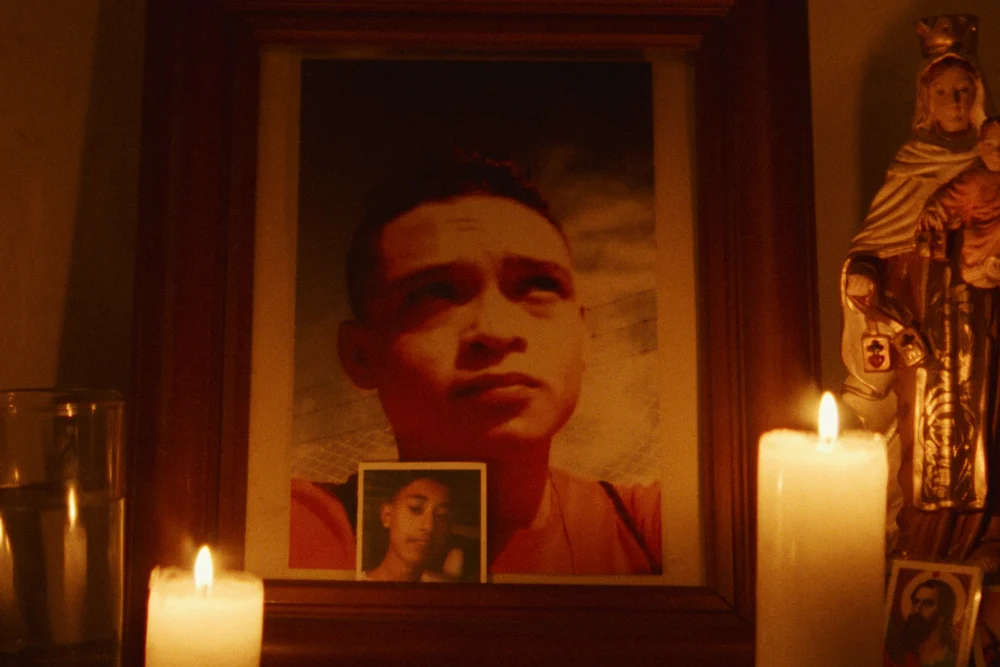
The Karlovy Vary International Film Festival recently played host to the world premiere of Five Years, Four Months, a harrowing yet understated cinematic exploration of one of the most painful chapters in Latin American history. Directed by Juan Miguel Gelacio and Esteban Hoyos García, the film centers on the "forcibly disappeared"—a clinical, bureaucratic term that masks a profound humanitarian catastrophe in Colombia.
Since the mid-1960s, the internal conflict between the Colombian government, various paramilitary groups, and guerrilla factions like the FARC and ELN has left a trail of blood and uncertainty. While the geopolitical details of the conflict are often debated in academic and political circles, Five Years, Four Months shifts the focus to the intimate, agonizing reality of those left behind. Through the character of Martha Baquero, the film serves as a visceral monument to the thousands of mothers still searching for answers in the Colombian soil.
Main Facts: A Cinematic Portrait of Collective Trauma
At the heart of the film is Martha Baquero (portrayed by Jenny Nava), a fictional protagonist whose journey is distilled from the real-life testimonies of women who collaborated with the filmmakers. The title, Five Years, Four Months, refers to the exact duration of time Martha’s son, Fabian, has been missing.
The film debuted in the Crystal Globe competition at the Karlovy Vary International Film Festival, marking a significant milestone for Gelacio and García. The directors utilize a blend of stark realism and psychological horror to convey a state of "perpetual waiting." The movie avoids the sensationalism often associated with narco-thrillers or war dramas, opting instead for a slow-burn character study that emphasizes the alienation felt by the survivors of violence.
Key cinematic elements include:
- A Focus on the "In-Between": The film captures the mundane, administrative, and physical labor of grief—filling out forms, taking cross-country buses, and digging into the earth.
- Sensorial Sound Design: Hyper-realistic audio of wind, traffic, and animals emphasizes Martha’s hyper-vigilance and detachment from the world around her.
- The Casting of Jenny Nava: A largely wordless performance that relies on micro-expressions to convey a grief so deep it has become a physical weight.
- Collaboration with Real Victims: The narrative was built through workshops and interviews with real Colombian mothers of the disappeared, lending the film an undeniable layer of authenticity.
Chronology: From Bureaucratic Search to Spiritual Desperation
The narrative structure of Five Years, Four Months mirrors the psychological evolution of long-term grief, moving from hopeful action to a state of surreal, desperate seeking.
The Phase of Diligence
The film opens by documenting the grueling routine of the search. Martha is seen navigating the labyrinthine bureaucracy of Colombia’s transitional justice system. She travels to remote regions, participating in state-sponsored exhumations where forensic teams sift through mass graves. These sequences are shot with a steady, calm rhythm that highlights the "narratively uneventful" nature of a search that spans years. For Martha, the present is not a lived experience but a series of obstacles to be cleared in hopes of finding a bone, a piece of clothing, or a definitive record of Fabian’s fate.
The Onset of Alienation
As the years progress, the film depicts Martha’s increasing isolation. While the world around her moves on—evidenced by the bustling traffic and the casual gaiety of strangers—Martha remains frozen in the moment her son was taken. The directors use close-up shots to create a sense of claustrophobia, suggesting that while Martha is physically present, her mind is perpetually elsewhere.
The Shift to the Ethereal
The final act of the film marks a departure from the purely realist aesthetic. Martha meets Sandra (played by Carmiña Martínez), another mother who has been searching for her son for 24 years. Sandra introduces Martha to a more fringe, perhaps even dangerous, method of seeking closure: "speaking with a dead man." This leads Martha into a seedy, underworld environment that borders on a crime thriller. However, rather than focusing on the potential for a scam, the film treats this journey as a spiritual necessity—a desperate leap of faith for a woman whom the material world has failed.
Supporting Data: The Magnitude of Colombia’s Missing
The tragedy depicted in the film is rooted in staggering historical data. To understand Martha’s plight is to understand the scale of the Colombian conflict, which is one of the longest-running internal wars in modern history.
- Statistics of the Disappeared: According to the Colombian Truth Commission and the Unit for the Search for Disappeared Persons (UBPD), more than 120,000 people were forcibly disappeared during the conflict. This number exceeds the combined totals of the "Dirty Wars" in Argentina and Chile.
- The "False Positives" Scandal: A significant portion of the "disappeared" were victims of the "False Positives" (Falsos Positivos) scandal, where the military murdered civilians and dressed them as guerrilla fighters to increase body counts and earn promotions. This real-world horror informs the deep distrust Martha feels toward official institutions.
- The 2016 Peace Accord: Despite the 2016 peace agreement between the government and the FARC, the search for the missing remains slow. As of 2023, only a small fraction of the estimated 120,000 bodies have been recovered and identified, leaving thousands of families in the "dizzying gulf" of uncertainty described in the film.
- The Role of Women: Organizations like the Madres de la Plaza de Mayo in Argentina have their Colombian counterparts in groups like the Madres de Soacha. These women have been the primary drivers of justice, often facing threats and stigmatization for their refusal to stop digging.
Official Responses and Critical Reception
The film has garnered praise for its refusal to provide easy answers or a traditional "Hollywood" resolution. At the Karlovy Vary premiere, critics noted the directors’ "impressive control of cinema’s visceral, affective powers."
Critical Analysis
Film critics have highlighted the "hypnotic spell" cast by the cinematography. The inclusion of eerie dream sequences—depicting naked, anonymous bodies in dark forests—has been lauded as a necessary psychological release. Rather than feeling out of place, these sequences provide a visual language for the "anxious yet eager anticipation" that defines Martha’s life.
The Performance of Jenny Nava
Nava’s performance has been described as "opaque" and "inviting curiosity." By playing Martha as inexpressive and blank rather than outwardly hysterical, Nava captures the "numbness" associated with complex PTSD. This choice has been praised for avoiding the tropes of "grief porn," instead offering a dignified and hauntingly accurate portrayal of long-term trauma.
Festival Response
The Crystal Globe competition jury recognized the film for its "understated but very effective filmmaking." By grounding the film in the specific landscape of Colombia—the lush nature, the humidity, and the sound of the wind—Gelacio and García have created a work that is both hyper-local and universally resonant.
Implications: The Social and Psychological Legacy of Loss
Five Years, Four Months carries profound implications for how societies process collective trauma and how art serves as a surrogate for justice.
The Psychology of "Ambiguous Loss"
The film is a masterclass in depicting "ambiguous loss"—a term coined by psychologist Pauline Boss to describe the grief experienced when a loved one is missing but there is no body to bury. This type of loss prevents closure and keeps the mourner in a state of hyper-arousal. The film illustrates how this trauma transforms the individual, making the present a "constant reminder of what has been lost."
Art as a Tool for Memory
In a country like Colombia, where the official narrative is often contested, films like Five Years, Four Months play a crucial role in "memory work." By fictionalizing real testimonies, the directors allow the audience to empathize with the victims on a level that statistics cannot reach. The film suggests that the act of remembering is, in itself, a form of resistance against the "forcible disappearance" of history.
The Small Step Toward the Supernatural
The film’s conclusion, which touches on the belief in benevolent ghosts and spiritual intervention, speaks to a broader sociological reality. When the state and the law fail to provide answers, the grieving often turn to the mystical. The directors do not judge Martha for her "bizarre journey" to speak with the dead; instead, they help the audience understand the logic of such a choice. When the world offers no solace, a belief in the supernatural becomes a survival mechanism.
Final Reflection
Five Years, Four Months is more than a film about a missing son; it is a meditation on the endurance of love in the face of absolute silence. As Martha finally speaks about Fabian in the film’s penultimate scene, the lush nature around her seems to vibrate with his memory. The film leaves viewers with the devastating realization that for thousands of mothers in Colombia, the conflict is not a matter of history books or peace treaties—it is a daily, physical labor of digging through the earth in search of a truth that may never fully surface.