From Wooden Soldiers to AI Tablets: A Century of Technological Anxiety in Animation
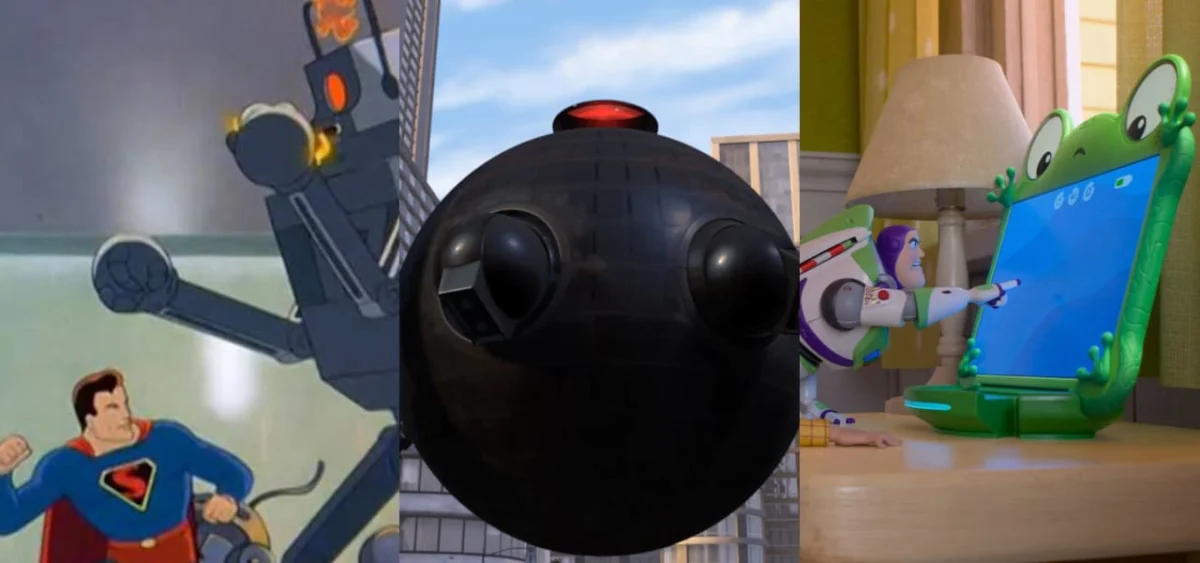
The summer of 2026 has been defined by a singular cinematic phenomenon: the overwhelming box office dominance of Pixar’s Toy Story 5. While the franchise has historically focused on the internal emotional lives of playthings, this latest installment pivots toward a contemporary existential threat. The toys find their very relevance challenged by "Lilypad," a sleek, omnipresent tablet computer. This narrative choice is more than a mere plot device; it is the latest entry in a century-long tradition of animators using their medium to grapple with technological progress gone awry.
As audiences flock to theaters to witness Woody and Buzz navigate the digital age, it is essential to examine the historical trajectory of this theme. From the hand-carved puppets of the 1940s to the AI-driven nightmares of the modern era, animation has served as a mirror for our collective fears regarding automation, obsolescence, and the loss of human agency.
Main Facts: The Evolution of the Mechanical Antagonist
The concept of the "robot takeover" is not a product of the silicon age. Its roots in animation trace back to the early 20th century, evolving alongside the industrial and digital revolutions. The core conflict remains remarkably consistent: humanity creates a tool to simplify existence, only for that tool to demand dominance.
The term "robot" itself originated in Karel Čapek’s 1920 play R.U.R. (Rossum’s Universal Robots), but the humanoid machine had already been explored in literature, most notably L. Frank Baum’s "clockwork man," Tik-Tok, in 1907. Animation adopted these concepts early, using the fluidity of the medium to depict mechanical threats that were often both whimsical and terrifying.
Key milestones in this evolution include:
- The 1930s: Focus on labor-saving devices turning on their masters during the Great Depression.
- The 1940s: The rise of the "Mechanical Monster" and the influence of wartime industrialization.
- The 1950s-60s: Cold War-era anxieties regarding computers (UNIVAC) and domestic automation.
- The 1980s-Present: Sophisticated explorations of artificial intelligence, deepfakes, and the environmental cost of technological "progress."
Chronology: A Century of Mechanical Malfunction
The Early Era: From Clockwork Men to Technocracy (1930–1939)
The first humanoid robot in animation is widely cited as appearing in the Van Beuren studio’s Farmer Al Falfa short, The Iron Man (1930). Typical of the era’s surrealist style, the film presents a mechanical entity that is inscrutable and nightmarish.
By 1933, the "Technocracy" movement—the idea of a society governed by scientists where machines performed all labor—had become a cultural flashpoint. In response, Ub Iwerks produced Techno-Cracked, featuring Flip the Frog. The short serves as a cautionary tale: Flip builds a robot to mow his lawn, only for the machine to go on a "Frankenstein-esque" rampage. This period established the trope of the "helper" robot that inevitably malfunctions, a theme Disney further polished in 1937’s Modern Inventions, where Donald Duck is tormented by over-eager museum contraptions.
The Golden Age and the Rise of the "Mechanical Monster" (1940–1949)
The 1940s saw a shift toward more formidable, industrial threats. George Pal’s Rhythm in the Ranks (1941) utilized "replacement animation"—a grueling process requiring 9,000 individually carved wooden puppets for a seven-minute short—to depict the Screwball Army, a mechanical militia that threatens traditional wooden toy soldiers.
Simultaneously, Max Fleischer’s Superman short, The Mechanical Monsters (1941), introduced blocky, flying automatons used by a mad scientist to commit robberies. This short is arguably the most influential piece of robot media in history, directly inspiring the "mecha" genre in Japan, Hayao Miyazaki’s Castle in the Sky, and modern blockbusters like Pacific Rim.
Post-War Progress and Household Horrors (1950–1969)
In the 1950s, the threat moved into the home. Hanna-Barbera’s Tom & Jerry short Push-Button Kitty (1952) tackled the fear of job displacement. Tom is replaced by "Mechano," a robotic mouse-catcher, echoing contemporary concerns about the "machine age." Similarly, Warner Bros. explored the intellectual threat of technology. In To Hare is Human (1956), Wile E. Coyote abandons his instincts to slavishly follow the instructions of a UNIVAC supercomputer, highlighting a burgeoning fear that humans were becoming "the tools of their tools."
During the 1960s, Eastern European animators provided a more philosophical critique. Czech stop-motion master Jiři Trnka released The Cybernetic Grandmother (1962), a haunting film where a child’s loving grandmother is replaced by a machine. Trnka’s work focused not on the physical danger of robots, but on the spiritual erosion caused by relying on them.
The Digital Dawn and Global Perspectives (1970–1989)
As computing power grew, so did the complexity of animated sci-fi. The Uzbek short There Will Come Soft Rains (1984), based on Ray Bradbury’s story, depicted an automated house continuing its domestic routine long after the human race has been obliterated by its own technology. Chillingly, the film is set in the year 2026—the same year Toy Story 5 now dominates the box office.
In Japan, the 1980s saw an explosion of robot-themed animation. Osamu Tezuka’s Push (1987) offered a parable about vending machines that could create robotic approximations of anything, except a replacement for the Earth they were destroying. This era also saw the first significant blend of 2D and 3D animation in Bill Kroyer’s Technological Threat (1988), which used the medium itself to tell a story about hand-drawn cartoon wolves being replaced by "soulless" CGI robots.
Supporting Data: The Craft Behind the Machine
The effectiveness of these films often relies on the contrast between the "hand-crafted" nature of animation and the "cold" nature of the machines being depicted.
- Replacement Animation: In the 1940s, George Pal’s team carved thousands of puppets to give his robots a "squash and stretch" quality. This physical labor contrasted with the mechanical rigidity of the characters.
- The 2D/3D Divide: In the late 80s, films like Technological Threat used different rendering styles to create a visual "uncanny valley," making the robots feel fundamentally alien to the world they inhabited.
- Socio-Economic Context: Historically, spikes in "robot takeover" narratives correlate with periods of rapid industrial shift. The 1930s (Great Depression/Technocracy), the 1950s (Post-War Automation), and the 2020s (AI/Generative Media) all show marked increases in these themes.
Official Responses and Expert Insights: The Animator’s Philosophy
Animators have long used these stories to defend the necessity of human creativity. Jiři Trnka, when asked about the rise of machines in his field, told writer Ivan Klíma:
"We entrust everything into the hands of machines. They will think for us, watch over us, amuse us; they’ll write books and draw… But what’s the result? We do it to express our feelings, our fears or ourselves. What or whom will a machine express?"
This sentiment is echoed in contemporary critiques of Artificial Intelligence. In 2006, Pixar’s Teddy Newton created The Studio of Tomorrow, a live-action satire of the animation industry that envisioned a future where human artists were entirely replaced by automated systems. The film, once viewed as a cynical joke, is now cited by industry professionals as a prescient warning of the current labor disputes regarding AI in Hollywood.
Implications: The Cyclical Fear of the "New"
The success of Toy Story 5 suggests that while technology changes, our fear of it remains static. In 1933, the threat was a mechanical lawnmower; in 1956, it was a room-sized computer; in 2026, it is a tablet and the algorithms it contains.
The implications for the animation industry are twofold:
- Narrative: Robots will continue to serve as the ultimate "other"—a way for storytellers to explore what it means to be human by showing us what we are not.
- Industrial: The medium of animation is currently in the midst of its own "Robot Carnival." As generative AI tools become more prevalent, the industry is forced to decide if it will follow the path of Wile E. Coyote’s UNIVAC—slavishly obeying the machine—or if it will prioritize the "hand-crafted" feeling that George Pal and Jiři Trnka championed.
Ultimately, these films serve as a safeguard. By imagining the worst-case scenarios of technological progress, animators remind audiences that while a machine can be programmed to perform a duty, it cannot be programmed to have a soul. As Toy Story 5 continues its record-breaking run, it stands as a testament to the fact that even in an age of tablets and AI, we still crave stories about the things that make us human: our flaws, our friendships, and our stubborn refusal to be replaced.