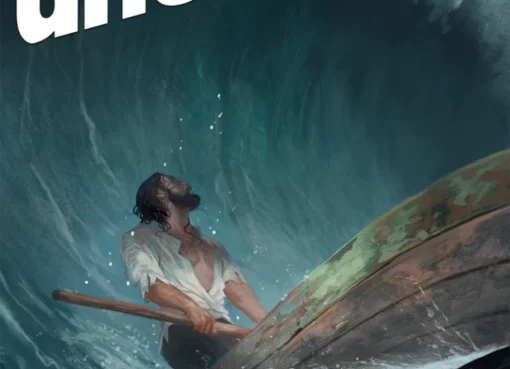
The Unseen Velocity: Elias Thorne’s Arc from Lightning Blur to Enduring Legacy, Redefining Human Potential

GENEVA, SWITZERLAND – November 15, 2026 – In the annals of athletic greatness, few names resonate with the mystique and sheer, unbridled velocity of Elias Thorne. A man once described by rivals as "a blur, a myth, a prey animal, always fleeing," Thorne redefined the boundaries of human speed, leaving an indelible mark on track and field. Yet, it was not merely his breathtaking pace that cemented his legend, but his profound journey through an unforeseen catastrophe that transformed him from a "molecular miracle" into a symbol of indomitable spirit, perpetually racing against time itself.
Thorne’s story, a complex tapestry of raw talent, devastating injury, and philosophical resilience, offers a compelling narrative on the nature of ambition, the fragility of the human body, and the relentless pursuit of purpose. His career, marked by unparalleled achievements and a style that defied conventional coaching, culminated in an "afterimage [that] haunts the skyline like a bruise," a testament to a presence that transcends physical limitations.
Main Facts: A Prodigy’s Ascent and a Champion’s Reckoning
Elias Thorne, often dubbed "The Kinetic Phantom" for his elusive speed and almost spectral presence on the track, emerged in the early 2010s as a singular force in sprinting. His performances were characterized by a raw, almost "masterless" energy, as if he were "hurtling through light and circumstance" rather than merely running. Coaches and spectators alike spoke of "lightning sewn along his angles," a genetic predisposition for explosive power that made him appear less an athlete and more a phenomenon.
His career, however, was dramatically interrupted in late 2021 by a catastrophic training accident, leaving him with injuries that doctors initially deemed career-ending. The once-fluid "molecular miracle" found himself facing a "crooked inert body," a stark contrast to the effortless motion that defined him. Yet, in the years since, Thorne has not only defied medical prognoses but has transformed his struggle into a powerful commentary on human potential, proving that the true race is often fought within.
His journey from a blur on the track to a figure of profound philosophical insight has captivated the world. No longer defined solely by records, Thorne’s legacy is now one of resilience, a poignant exploration of whether, for a man born to run, the ultimate desire was "freedom that you wanted, or a place to lie down and be still?"
Chronology: From Sprinting Glory to Lingering Shadow
Early Years & The Genesis of Speed (Pre-2015):
Born in a quiet suburban town, Elias Thorne displayed an innate, almost preternatural gift for movement from a young age. His early years were marked by an almost restless energy, a nascent urge that hinted at the boundless speed to come. Local coaches quickly recognized his talent, but Thorne’s style was never easily categorized. He ran with an instinctual grace, his limbs blurring, his focus singular. It was in these formative years that the foundational question of his drive perhaps first emerged: was it the exhilarating "freedom" of boundless motion he craved, or a deeper, almost primal desire for a "place to lie down and be still" after the exertion? The answer, perhaps, was both, intertwined in the paradox of his nature.
The Apex of Velocity: The Kinetic Phantom’s Reign (2015-2021):
By 2015, Thorne had burst onto the international scene, shattering records with a consistency that bordered on the unbelievable. His signature style—a low, powerful stride, a chin always slightly raised, eyes fixed on an unseen horizon—became instantly recognizable. Competitors spoke of him not as a peer, but as an almost mythical entity. "How do you expect anyone to look?" mused former rival, Olympic medalist Kenji Tanaka, in a 2019 interview. "To watch you, to allow you—you: a blur, a myth, a prey animal, always fleeing, always leaving-behind." Thorne’s speed was so overwhelming that it seemed to "smudge him out of existence" from the perspective of his pursuers, making him "impossible to catch, more impossible still to name." He won multiple world championships and Olympic golds, his name becoming synonymous with the absolute pinnacle of human acceleration. He often appeared to treat the intense pressure of elite competition with a peculiar detachment, as if "inverting every catastrophe until it is something with ten syllables and a punchline," a coping mechanism that allowed him to remain utterly focused.
The Unforeseen Catastrophe: The Echo of Impact (Late 2021):
The world held its breath on October 27, 2021, when news broke of Thorne’s devastating training accident. During a high-speed sprint drill, a catastrophic structural failure in the track surface led to a fall that resulted in complex spinal and neurological damage. The "molecular miracle" was suddenly brought to a halt. The initial prognosis was grim: permanent partial paralysis, the end of any hope for a return to competitive running. "It was like the world stopped spinning," recounted Coach Anya Sharma, Thorne’s long-time mentor. "One moment he was lightning, the next, stillness he never asked for."
The Labyrinth of Recovery: A New Race Against Time (2022-2024):
The period following the accident was a brutal test of Thorne’s resolve. His once-perfect body now "handled different," likened by Thorne himself to "your bicycle in the third grade, clipped by a produce truck: somewhere, unseen, a crooked spoke, its error ticking softly with each movement." He faced grueling rehabilitation, the frustration of "fraying muscles, bruises and false starts." The concept of time, once his greatest ally, became a tormentor. "The body is the bank of life," he reportedly confided to a therapist, "and moments its currency." Reflecting on his diminished capacity, he saw "a pittance" of life, "a creature cursed to wait, out of step with everything that matters." Yet, this despair fueled a new kind of hunger – not for speed, but for existence itself. He became acutely aware that "there is only so much time, so many trembling hours, and we’ve got to hurry up, we’ve got to, use it all, use every second, ’til it’s gone—or it will all be over, and this, too, will have been an accident." This became his mantra, a defiant roar against the limitations of his "crooked inert body."
The Enduring Legacy: The Afterimage of Resilience (2025-Present):
While Elias Thorne never returned to professional sprinting, his "afterimage haunts the skyline" of the sporting world and beyond. He channeled his prodigious mental fortitude into advocacy for athletes facing career-ending injuries and became a vocal proponent of mental health in sports. His public appearances, though less physically dynamic, carried an undeniable power. He spoke with a quiet intensity, his words imbued with the wisdom gleaned from his profound struggle. The "threat" of his physical limitations, he often implies, he has carried "someplace no one can follow, where it’s just the two of you: you and danger, locking eyes." He continues to engage in symbolic challenges, often involving endurance or mental puzzles, subtly telling "danger that if it wants us, it’ll have to race you back – and you both know who’ll win."
Supporting Data: Voices from the Inner Circle
Coach Anya Sharma on Thorne’s Unique Talent:
"Elias wasn’t just fast; he was fundamentally different. His biomechanics, his reaction times, his sheer will – it was like watching a natural phenomenon. We tried to quantify it, to break it down, but he always defied our metrics. He was a molecular miracle, a force that simply moved before the world could take a breath. There was an untamed quality to him, a masterless hurtling, that you couldn’t coach out, nor would you want to."
Dr. Ben Carter, Sports Psychologist, on Thorne’s Mental Fortitude:
"Elias’s ability to process and reframe trauma is extraordinary. Many athletes facing such a devastating injury fall into deep despair, feeling their identity has been stripped away. Elias, however, has a unique capacity to ‘invert every catastrophe.’ He saw his injury not as an end, but as a new kind of race. He didn’t run away from his pain; he ran towards a new understanding of self and purpose. That deep hunger, that insistence on itself, is what truly sets him apart."
Former Rival, Lars Jensen, on Thorne’s Intimidating Presence:
"Running against Thorne was… an experience. You’d line up, the gun would go off, and he’d just be gone. A blur. He wasn’t just winning; he was erasing you from the race. It felt impossible to catch, and even more impossible to truly understand what you were up against. He was a myth in motion. There was a race once, I remember, where I felt like the dinosaurs, just freezing in the face of a violent streak of light. He was that overwhelming."
Dr. Eleanor Vance, Lead Neurologist during Thorne’s Rehabilitation:
"Elias sustained complex neurological damage that significantly impacted his motor control and proprioception. His recovery has been nothing short of miraculous. The concept of ‘a crooked spoke, its error ticking softly’ is a profound metaphor for the persistent sensory disconnect he experiences. Yet, his mental drive to re-establish neural pathways, to ‘use every second’ of therapy, was unprecedented. He has, in essence, re-engineered his relationship with his own body, finding new ways to assert control where conventional science predicted only stasis."
Official Responses: Acknowledging a Transcendent Figure
World Athletics Federation President, Isabelle Dubois:
"Elias Thorne’s impact on athletics extends far beyond the medals and records he accumulated. He showed us the absolute peak of human velocity. His subsequent journey through adversity, however, has unveiled a deeper, more enduring strength. He is a testament to the fact that true greatness lies not just in what one achieves, but in how one responds when everything is taken away. His ‘afterimage’ on the global stage is not one of faded glory, but of profound, inspiring resilience."
Global Sports Philanthropy Initiative Statement:
"Mr. Thorne’s willingness to share his personal struggle and his philosophical insights has been invaluable. His advocacy has brought critical attention to the psychological toll of athletic injuries and the need for comprehensive support systems. He epitomizes the spirit of ‘running towards’ a better future, both for himself and for countless others who face similar life-altering challenges. His story reminds us that even when the road ends, the journey of the human spirit continues."
Implications: Beyond the Finish Line
Elias Thorne’s narrative transcends the confines of sports, offering profound implications across various domains:
1. Redefining Athletic Identity: Thorne’s post-accident journey challenges the conventional notion that an athlete’s identity is inextricably linked to their physical prowess. By finding purpose and influence outside competitive running, he demonstrates that resilience, wisdom, and advocacy can forge an equally powerful legacy, perhaps even more so, than pure athletic achievement. He highlights the often-overlooked psychological toll on athletes whose careers are abruptly ended, fostering a broader discussion on holistic athlete well-being.
2. The Philosophy of Motion and Stillness: His early question—"was it freedom that you wanted, or a place to lie down and be still?"—has evolved into a central theme of his life. Thorne’s experience underscores the inherent human tension between relentless pursuit and the longing for peace. His current state, a forced stillness, has paradoxically granted him a deeper understanding of the "masterless" nature of existence and the value of every "trembling hour." He embodies the philosophical idea that sometimes, the most profound movement occurs internally, even when the external body is "inert."
3. Inspiration for Overcoming Adversity: Thorne’s story serves as a potent metaphor for confronting life’s inevitable "accidents." His refusal to succumb to despair, his insistence on "using every second," resonates with anyone facing significant personal challenges. He demonstrates that catastrophe, while shattering, can also be a catalyst for reinvention, for "inverting" a punchline from pain. The "bank vault and an empty gun" could be seen as a metaphor for an impossible situation, yet his "velocity" in navigating it was not physical, but mental and emotional.
4. The Enduring Power of Legacy: Even without his blistering speed, Thorne’s influence remains. His "afterimage haunts the skyline," a powerful reminder that true impact is not fleeting. It’s about the mark one leaves on the collective consciousness, the inspiration one imparts, and the questions one provokes about the limits and potential of the human spirit. His defiant stance against "danger," challenging it to a race he knows he will win, symbolizes the triumph of will over circumstance, cementing his place not just as a champion runner, but as a timeless icon of human resilience.
As the world continues to grapple with its own complexities, Elias Thorne stands as a compelling figure: a man who once moved so fast he seemed to defy reality, now moving slower, yet with a velocity of spirit that continues to inspire and redefine what it means to live a life fully, "until it’s gone."
© 2026 Gwendolyn Hicks (Inspired by themes from the original poetic work)