Navigating New Frontiers: From Corporate Acquisitions to Cultural Guardianship and AI Debates
The worlds of speculative fiction, gaming, and scientific endeavor are once again abuzz with a diverse array of developments, ranging from monumental corporate acquisitions and contentious governance debates to critical appeals for scientific preservation and celebratory milestones for creative visionaries. This week’s headlines illuminate the intricate tapestry of these interconnected domains, revealing both their vulnerabilities and their vibrant resilience. A $55 billion acquisition reshapes the gaming landscape, while a pivotal report on Worldcon governance surfaces amidst calls for transparency. The ongoing debate surrounding artificial intelligence in creative fields sparks a significant removal within the Horror Writers Association, and a beloved UK astronomical observatory faces an existential threat. Meanwhile, a prolific director marks a significant birthday, and authors navigate real-world challenges with grace.
Major Industry Shifts and Governance
The economic and governance structures underpinning the creative and scientific industries are currently undergoing significant transformations, marked by an unprecedented corporate takeover and a critical moment for fan organization transparency.
Electronic Arts Under Saudi Ownership: A $55 Billion Shift
In a move poised to dramatically reshape the global video game industry, Electronic Arts (EA), a titan known for blockbuster franchises such like EA FC (formerly FIFA), The Sims, and Mass Effect, has been officially sold for an astonishing $55 billion. The acquisition, finalized this week, sees EA taken private by a consortium of buyers led by Saudi Arabia’s Public Investment Fund (PIF). This monumental transaction also includes Affinity Partners, an investment firm notably led by Jared Kushner, son-in-law to former President Donald Trump.
This deal is not only gargantuan in scale but also historic in its financial architecture, reportedly marking the largest leveraged buyout ever recorded. The PIF’s initial investment of $36 billion was supplemented by an additional $20 billion borrowed from investment bankers JPMorgan, with the considerable debt subsequently absorbed by Electronic Arts itself. The ramifications of this financial maneuver are already a subject of intense speculation among industry analysts and journalists. Bloomberg’s Jason Schreier, a respected voice in gaming journalism, has openly surmised that such a heavily leveraged acquisition could inevitably lead to “mass layoffs, more aggressive monetization, and other big cost-cutting measures” across one of the industry’s most prominent companies. The immediate future of EA’s vast workforce and its consumer-facing strategies remains uncertain, with many anticipating a period of austerity as the company endeavors to service its substantial new debt burden.
Beyond the immediate financial implications, the acquisition carries significant geopolitical weight. The PIF, controlled by Saudi Arabia’s Prince Mohammed bin Salman, has been under scrutiny for its role in what critics term "sportswashing" – leveraging massive investments in sports and entertainment to improve the nation’s international image amidst ongoing accusations of human rights violations. The purchase of EA, a company with unparalleled global reach through its popular titles, introduces a new dimension to this strategy. As Osborn of the BBC suggests, "If the PIF’s football strategy limited them to ownership of Newcastle United and some Saudi Pro League teams, owning EA hands them a relationship with the 20,000 players, 750 clubs and 35 leagues at the top of the professional game." He further warns, "What is clear is that a state seeking to shape perceptions now owns an asset with proven reach to billions of people. How it uses it in the years to come is something we should watch closely.” This sentiment underscores a broader concern about the potential for state influence to permeate global media and entertainment platforms, raising questions about content independence and the subtle projection of soft power.
WSFS Trial Committee Report: Transparency and Future Governance
In the intricate world of fan conventions, particularly the World Science Fiction Society (WSFS) and its flagship event, Worldcon, transparency and governance are perennial concerns. This week marks a significant development in this ongoing dialogue with the official release of the WSFS Trial Committee Report. Crafted by Kat Kourbeti, the report is now accessible to current WSFS and Worldcon members via the Lumi Platform, a digital portal designed for secure document viewing.
Chronology and Access: The report, comprising a main document and a detailed appendix, includes a crucial transcript of an interview with Dave McCarty. Notably, neither document is available for download, a measure implemented to restrict access solely to verified WSFS members, who can log in through the LACon Portal. This controlled distribution underscores the sensitive nature of the report’s contents, which likely address significant internal disputes or ethical concerns that necessitated the formation of a Trial Committee.
The findings and resolutions put forth by the Trial Committee are slated for discussion at the next virtual session of the Business Meeting, scheduled for Sunday, August 9th, at 9 am PDT. This discussion will take place in an executive session, a procedural decision that means none of the proceedings will be recorded or broadcast on LACon’s YouTube channel. Following the adjournment of the Business Meeting, the minutes, alongside the full report, will be made available to WSFS members strictly by request through the MPC (Meeting Planning Committee).
Implications for Governance: The deliberate restrictions on access and the decision to hold discussions in executive session immediately raise questions about the balance between privacy for involved parties and the principle of transparency within a member-driven organization. While executive sessions are common for sensitive matters, the lack of public record for proceedings discussing a critical governance report could foster apprehension among members regarding accountability and openness. The existence of a Trial Committee itself signals a period of internal challenge or controversy, and how its recommendations are handled will be crucial for establishing future precedents for ethical conduct, dispute resolution, and member trust within the WSFS community. The inclusion of Dave McCarty’s interview transcript suggests his involvement was central to the committee’s investigation, adding another layer of intrigue to the report’s potential impact on key figures and organizational dynamics.
Debates and Directions in Creative Industries
The intersection of technology, artistic expression, and societal values continues to spark fervent debate, particularly concerning the burgeoning influence of artificial intelligence. These discussions are shaping organizational policies and influencing how audiences interpret contemporary art.
Horror Writers Association Navigates AI Debate with Trustee Removal
The contentious debate surrounding artificial intelligence (AI) within creative fields has reached a critical juncture within the Horror Writers Association (HWA), leading to the removal of Sèphera Girón from its Board of Trustees. This decisive action by the HWA followed the publication of Girón’s comments on AI and its opponents in her "In the Trenches" column, featured in the August 2026 installment of the HWA Member Newsletter.
Context of the Debate: The rise of generative AI tools has ignited a firestorm across literary communities, particularly concerning issues of copyright, fair use, authorship, and the potential displacement of human creatives. Many writers’ organizations have taken firm stances against the use of AI in ways that undermine human artistry or infringe upon intellectual property rights. Girón’s comments, as indicated by the HWA’s subsequent action, evidently diverged sharply from the association’s prevailing sentiment or established policies, prompting a swift and significant response. While the specific content of her remarks is not detailed here, the context suggests they either championed AI usage in a manner deemed unacceptable by the HWA or critically disparaged those who oppose it, creating an untenable position for a trustee meant to represent the organization’s values.

Implications for Organizations and Free Speech: This incident underscores the profound tension between an individual’s right to express personal opinions and the responsibilities inherent in a leadership role within a professional organization. For the HWA, a body dedicated to supporting horror writers, the stance on AI likely touches upon core principles related to the future of the craft and the livelihoods of its members. The removal of a trustee sends a clear message about the HWA’s commitment to its position on AI, signaling a zero-tolerance approach for public commentary from its leadership that conflicts with its strategic direction or collective ethos. This event is a microcosm of a larger industry-wide struggle, as creative associations worldwide grapple with how to define and enforce policies regarding AI, balancing innovation with the protection of human artistic integrity. It also highlights the challenges organizations face in managing internal dissent when it becomes public and potentially divisive.
"Pluribus" and Bradbury’s "Soft Rains": Art Reflecting Contemporary Anxieties
In a fascinating convergence of classic literature and contemporary television, themes of isolation, societal introspection, and the encroaching presence of advanced technology are resonating deeply with audiences, often in ways unintended by their creators. An NPR feature this week highlighted the enduring relevance of Ray Bradbury’s chilling short story, “There Will Come Soft Rains,” while actress Rhea Seehorn discussed similar accidental prescience in her latest project, “Pluribus.”
Bradbury’s Enduring Vision: The NPR segment, aired on August 5th, 2026, coincidentally the day after Bradbury’s post-apocalyptic world is set, offered a poignant reflection on the story’s themes. “There Will Come Soft Rains” depicts a fully automated house continuing its daily routines in a world devoid of human life after a nuclear holocaust. The NPR piece, which briefly includes Bradbury’s own voice, underscores how the story’s exploration of technology’s indifference to human tragedy, and its eerie depiction of a world carrying on without us, feels particularly relevant today amidst discussions of AI autonomy, climate change, and the fragility of human civilization. Its timeless quality allows it to be reinterpreted through the lens of modern anxieties, proving that classic speculative fiction often holds a mirror to our future concerns.
"Pluribus" and Unintended Interpretations: Meanwhile, Rhea Seehorn, known for her acclaimed work in Better Call Saul, engaged in a compelling Q&A with Deadline about her new series, "Pluribus," and its upcoming second season. Seehorn revealed her surprise at how critics and audiences have interpreted the show’s themes, particularly in relation to AI and the recent pandemic. Creator Vince Gilligan (known for Breaking Bad and Better Call Saul) “doesn’t write in themes,” Seehorn explained, and his long-standing contemplation of “questions about humanity, society” simply found an organic expression in the narrative.
Seehorn admitted her initial astonishment when asked if “Pluribus” was a commentary on AI, or even the pandemic’s isolation. Her focus, she clarified, was purely on inhabiting her character, Carol, within the story’s immediate context. Yet, the audience’s immediate connection to these contemporary issues illustrates the serendipitous power of art to reflect the zeitgeist, even when not explicitly intended. Carol’s journey, which Seehorn likens to her own experience with the pandemic’s isolation (as a self-described "extrovert-introvert"), inadvertently taps into a collective consciousness grappling with unprecedented technological advancements and recent global upheavals. This phenomenon highlights how narratives, when deeply exploring human nature and societal structures, often resonate with unforeseen relevance, allowing audiences to find their own reflections within the created worlds.
Milestones and Cultural Impact
From celebrating the achievements of self-published authors to honoring a director’s eclectic career, the creative landscape continues to evolve, marked by new successes and enduring legacies.
Self-Published Science Fiction Competition 5 Crowns Finalists
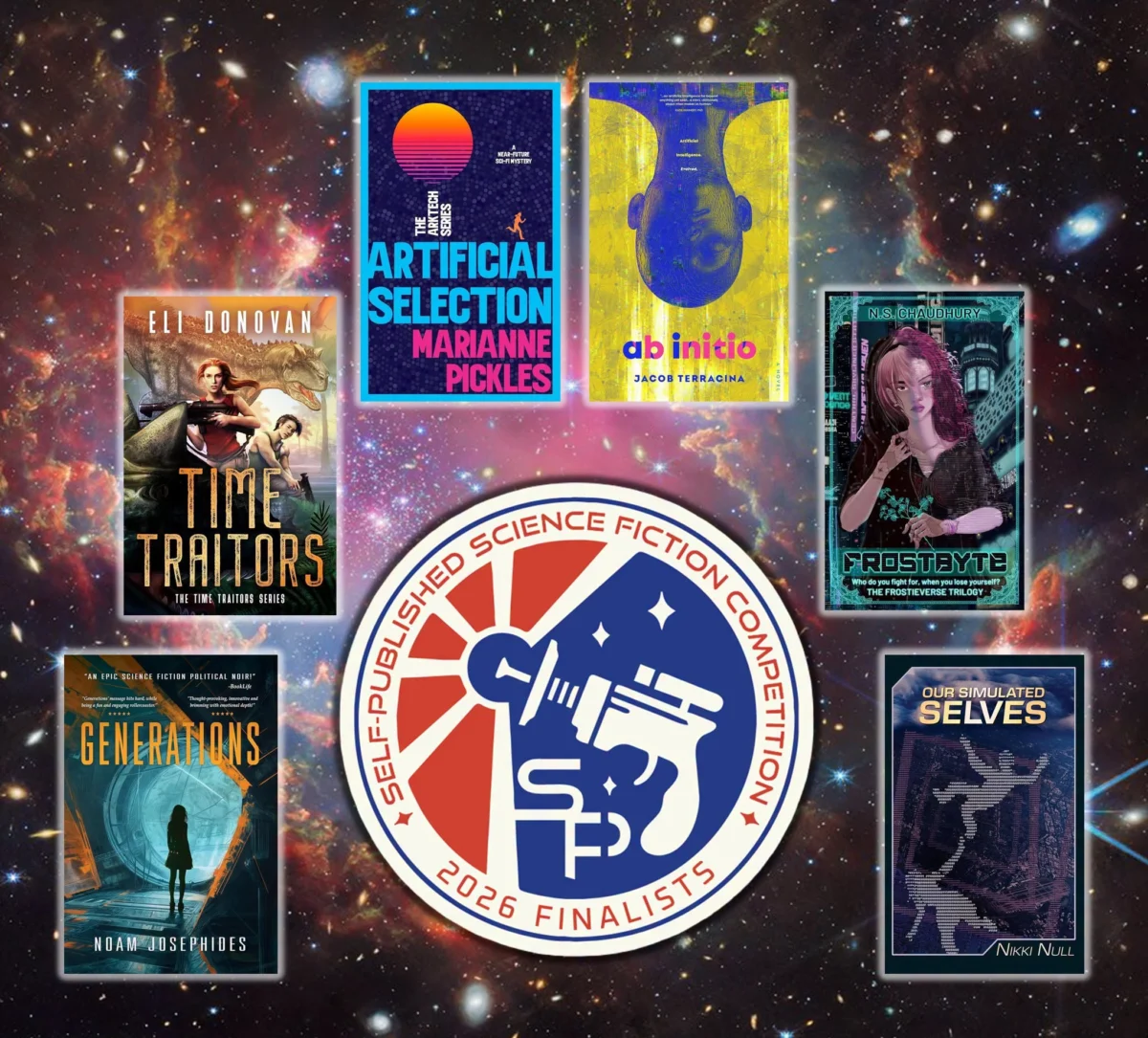
The independent publishing world is celebrating a significant milestone this week as the Self-Published Science Fiction Competition 5 (SPSFC 5) officially named its six finalists. This announcement marks a crucial stage in a competition that has become a vital platform for showcasing the talent and diversity within the self-published science fiction community.
Significance of SPSFC: The SPSFC, initiated as a grassroots effort to highlight quality self-published works, plays an increasingly important role in an industry often dominated by traditional publishing houses. For many independent authors, gaining recognition through competitions like SPSFC can be transformative, providing much-needed visibility, credibility, and readership that can be challenging to achieve without traditional marketing budgets. The competition’s rigorous evaluation process, often involving multiple rounds of judging by dedicated teams of readers, ensures that the selected finalists represent a high standard of storytelling, world-building, and prose within the genre. While the specific titles of the six finalists were not detailed in the original report, their selection underscores the vibrant health and increasing professionalism of the self-published science fiction market. This recognition not only boosts the careers of the individual authors but also helps to elevate the perception of self-published works as a whole, encouraging readers to explore beyond traditionally published imprints.
James Gunn at 60: A Maverick’s Journey from Troma to DC Studios
August 5th marks the 60th birthday of James Gunn, a singular voice in Hollywood whose eclectic career trajectory has spanned the spectrum from cult independent filmmaking to helming some of the biggest superhero franchises in cinematic history. His journey is a testament to versatility, a distinct creative vision, and an unwavering commitment to storytelling that defies easy categorization.
Early Career and Troma Roots: Gunn’s filmmaking origins are rooted in the anarchic, low-budget world of Troma Entertainment. His first significant screenwriting credit was for the 1996 film Tromeo and Juliet, a decidedly R-rated, hyper-violent, and sexually explicit reimagining of Shakespeare’s classic. This audacious debut, which garnered a respectable 61% audience rating on Rotten Tomatoes, immediately established Gunn’s propensity for subverting expectations and embracing the extreme. He then transitioned to scripting more mainstream, albeit still quirky, projects, penning Scooby-Doo (2002) and its sequel Scooby-Doo 2: Monsters Unleashed (2004). Though these received poor critical reception, they showcased his ability to adapt beloved characters. Sandwiched between these family-friendly ventures was a sharp pivot: his script for Zack Snyder’s critically acclaimed 2004 remake of George A. Romero’s Dawn of the Dead, demonstrating a surprising range and a knack for genre-savvy horror.
Directorial Debut and Genre Blending: Gunn made his directorial debut with Slither (2006), a horror-comedy that he also wrote. This film, featuring an intelligent alien parasite brought to Earth by a meteorite, earned a strong 60% rating from critics and audiences, with Allison Shoemaker praising its "visceral experience" and "daring." He continued to blend genres with Super (2010), a dark comedy superhero film about an ordinary man who becomes a costumed vigilante without any actual superpowers. While it achieved a decent 50% rating, Super was a crucial precursor, hinting at the unique blend of humor, heart, and darkness that would later define his most successful work.
Marvel and DC Dominance: The pivotal moment in Gunn’s career arrived when Disney hired him to write and direct Guardians of the Galaxy (2014). Collaborating with Nicole Perlman on the first script and writing the sequels himself, Gunn injected a fresh, irreverent energy into the Marvel Cinematic Universe. The Guardians films (2014, 2017, 2023) were not only extraordinary box office successes but also critical darlings, boasting audience review ratings of 92%, 87%, and 82% respectively. His distinct visual style, curated soundtracks, and knack for crafting endearing anti-heroes transformed a relatively obscure comic book property into a global phenomenon.

His success led to an unprecedented move two years ago when Warner Bros. Discovery tapped Gunn and Peter Safran to co-chair and co-CEO DC Studios. This appointment placed him at the helm of yet another ambitious reboot of the DC Expanded Universe, a franchise notorious for its uneven history. His first major project in this new role is the highly anticipated Superman film, set for release next year, which he is both writing and directing.
Beyond the Blockbusters: Gunn’s influence extends further; he served as an Executive Producer on Avengers: Infinity War and Avengers: Endgame, contributed to the story for the much-discussed Coyote v. Acme film, and even provided motion capture for Baby Groot in the first two Guardians films. His career even circles back to Troma, as he appeared as Doctor Flem Hocking in The Toxic Avenger IV. Notably, it was on the set of this Troma film that he met Stan Lee, the iconic Marvel creator who narrated the movie, a serendipitous connection that perhaps foreshadowed Gunn’s future destiny in the superhero genre. James Gunn’s 60th birthday celebrates not just a director, but a genuine auteur who has consistently challenged conventions and redefined what is possible within the blockbuster landscape.
Science, Culture, and Community Resilience
From the precarious future of a historic astronomical observatory to the personal reflections of an author facing natural disaster, these stories highlight the fragility and fortitude inherent in human endeavors and the natural world.
Jodrell Bank Observatory: A Fight for Scientific Heritage
One of the UK’s most iconic scientific landmarks, the Jodrell Bank Observatory, is facing an urgent crisis following a significant £2.8 million funding cut by the UK Research and Innovation agency (UKRI). This decision, described as “foolish” by a formidable coalition of over 150 public figures, threatens the very existence of the Cheshire observatory, a UNESCO World Heritage Site and a beacon of global astronomy.
The Looming Threat: The University of Manchester, which operates Jodrell Bank, has been given until April 1, 2028, to secure alternative funding, failing which all scientific observations at the site are expected to cease. This impending closure jeopardizes the jobs of 28 observatory staff and, more broadly, impacts the research of nearly 3,000 scientists worldwide who rely on its unique capabilities. The heart of Jodrell Bank is the enormous Lovell Telescope, a colossal radio telescope that was famously voted Britain’s greatest unsung landmark in 2006. Its historical significance in the dawn of radio astronomy, coupled with its ongoing contributions to understanding the universe, makes the funding cut particularly devastating.
A United Front: In response to the UKRI’s decision, an open letter has been signed by an extraordinary roster of luminaries spanning science, music, and culture. Astronaut Tim Peake, Queen guitarist Sir Brian May, musician Jarvis Cocker, Scotland’s Astronomer Royal Prof Catherine Heymans, and physicists Prof Jim Al-Khalili and Prof Brian Cox are among the signatories. Crucially, Judy Spence, daughter of Jodrell Bank founder Sir Bernard Lovell, also lent her voice to the appeal, underscoring the deep personal and historical connections to the site. The letter powerfully asserts Jodrell Bank’s status as "an icon in UK cultural and scientific history" and the "thriving, thumping heart of space observation, research and education in the UK.” It also highlights the observatory’s ambitious future plans for maintaining the UK’s leadership in space exploration.
Official Responses and Implications: The UKRI defended its decision by stating it must focus on projects delivering "the greatest long-term impact." Business Secretary Jonathan Reynolds, while emphasizing the importance of "world class research," pledged to work with UKRI to sustain the UK’s research capabilities and invest in future scientific infrastructure. However, the signatories, which also include musicians like Johnny Marr, Ralf Hütter of Kraftwerk, New Order, Elbow, and Doves, along with comedian Dara Ó Briain and Poet Laureate Simon Armitage, argue that neglecting such a vital, active, and culturally significant institution is a profound misstep. The potential loss of Jodrell Bank would not only represent a significant blow to UK astronomy and international scientific collaboration but also a tragic forfeiture of a UNESCO-recognized piece of global heritage. The campaign to save Jodrell Bank is therefore not just a fight for scientific funding, but a broader battle for the recognition and preservation of cultural and intellectual assets.
C.J. Cherryh Updates on Washington Wildfires: A Glimpse of Resilience
Award-winning science fiction author C.J. Cherryh recently shared a personal update on Facebook, offering an encouraging glimpse into her experience and the broader community’s resilience amidst the ongoing Washington state wildfires. Her post painted a vivid picture of recovery and the subtle, lingering effects of a pervasive natural disaster.
Navigating the Aftermath: Cherryh reported that "the air is clearing, finally," bringing a welcome respite from the heavy smoke that had blanketed the region. Despite the improvement, both she and her partner, Jane, were still experiencing a "nagging cough," a common ailment in wildfire-affected areas, particularly when eating. An ionizer running in their home provided some relief, and the reduced haze allowed for clearer views of distant landscapes.
Her update underscored the practical challenges and community spirit in the face of such widespread devastation. Cherryh noted that she and Jane were "just staying tucked down to relieve the pressure on streets and facilities," recognizing their privilege of having a well-stocked kitchen and ample food. This contrasted sharply with the plight of others, including the manager of their favorite pub, who tragically "lost his whole house." This juxtaposition highlights the uneven impact of such disasters, where some can weather the storm with relative comfort while others face complete displacement and loss.
Personal Well-being and Continued Recovery: On a personal note, Cherryh shared positive news from her regular medical checkup, reporting "all good news" with her bloodwork and overall health. She also proudly mentioned having "dieted off weight," an achievement approved by her doctor. Despite these personal victories, the process of recovery and reorganization continues, as they are "still cleaning up from the sort we did when we hauled out emergency stuff." Her message concludes with a reflection on the silver lining of the crisis: "The heavy smoke has blocked sunlight, so at least we do get cooler temperatures – at least that has been a relief. Otherwise we’d be in the mid-90’s." This pragmatic observation reveals the complex and often contradictory aspects of natural disasters, where even negative events can bring unexpected, albeit minor, benefits. Cherryh’s update serves as a powerful, grounded reminder of the human element in large-scale environmental events, showcasing both vulnerability and the enduring spirit of resilience.
Conclusion
This week’s news underscores the dynamic and often tumultuous nature of the interconnected worlds of science fiction, gaming, and scientific research. From the monumental shifts in corporate ownership and the urgent calls to protect vital scientific heritage, to the nuanced debates around artificial intelligence and the quiet strength displayed in the face of natural disaster, these stories paint a picture of an era defined by rapid change and profound challenges. As industries evolve and communities adapt, the ongoing dialogue about governance, ethics, and the role of creativity and discovery remains at the forefront, shaping the narratives and realities of our shared future.