"The Worst Survive": J. M. Grace Unveils a Gritty Dystopian Thriller Set to Electrify Readers
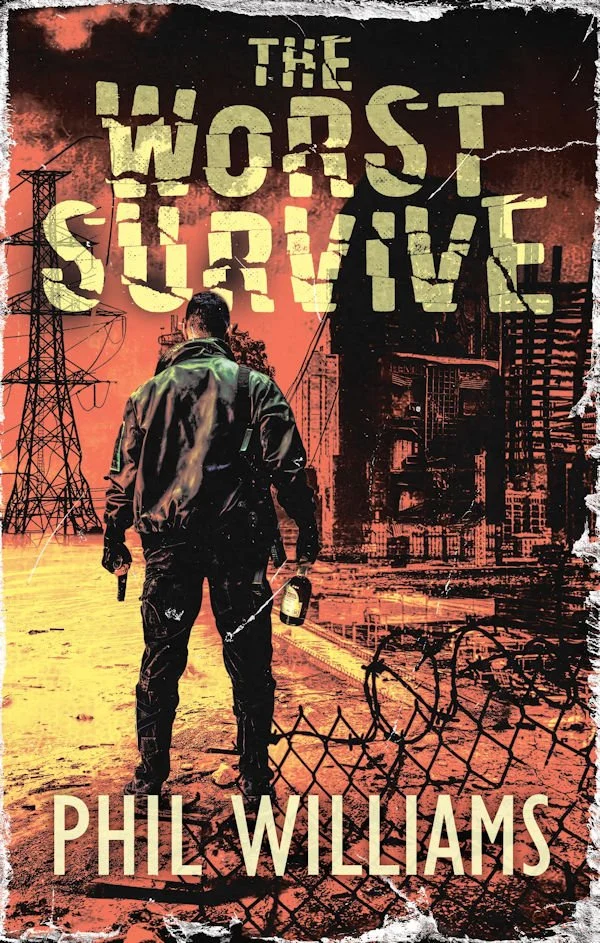
FOR IMMEDIATE RELEASE – [City, State] – [Date] – A new force in dystopian fiction is set to emerge with the highly anticipated release of J. M. Grace’s The Worst Survive. Slated for an upcoming release on July 28th from Apex Press, this novel promises a no-holds-barred journey into a fractured future, introducing readers to Scully, an anti-hero whose moral compass is as broken as the world he inhabits. Early reviews, including a fervent endorsement from Fantasy Faction, herald the book as a brutal, fast-paced, and darkly humorous ride through a landscape where survival is the only virtue.
Set in the year 2042 within the "American Remnant" – a chaotic aftermath of societal collapse – The Worst Survive plunges into the grimy underbelly of New Oak City. Here, political machinations by enigmatic "New Industry" entities clash with savage gang wars, while advanced scientific projects hold both the promise of salvation and the threat of further devastation. Scully, an English mercenary hardened by an unseen past, finds himself entangled in this maelstrom, driven by little more than the pursuit of his next drink and enough coin to forget the last. His apathy towards the grander schemes of a dying world is shattered when a seemingly straightforward protection job spirals into a high-stakes battle for the future, forcing him to guard a scientist who embodies a fragile hope in an otherwise hopeless existence.
The novel is poised to captivate audiences with its raw intensity and a protagonist who defies conventional heroism. As the Fantasy Faction review emphatically states, the book "drops you straight into the wreckage and dares you to keep up," painting a vivid picture of a world where every man fights for himself, and the line between good and evil is blurred beyond recognition.
Main Facts: A Glimpse into the Anarchy
The Worst Survive, by author J. M. Grace, is an upcoming dystopian science fiction thriller that has already garnered significant buzz within literary circles. Scheduled for release on July 28th, the novel is published by Apex Press, a publisher known for its commitment to speculative fiction with a keen edge. The book introduces readers to Scully, a cynical and morally ambiguous English mercenary operating in the shattered landscape of the "American Remnant" in 2042. This future is characterized by rampant corruption, escalating gang conflicts, the shadowy influence of "New Industry" politics, and scientific advancements that border on the apocalyptic.
The core premise of the narrative revolves around Scully’s reluctant acceptance of a seemingly routine protection detail. His client, Laine Faergrowe, is no ordinary scientist; he represents a rare beacon of hope in a world consumed by despair, making him a prime target for numerous factions vying for power or seeking to extinguish any possibility of change. Scully, whose primary motivations typically extend no further than securing his next drink and sufficient funds for another round, is thrust into a mission with "soil-your-pants big" consequences. Despite his vicious nature and self-professed lack of noble bones, he becomes the unlikely guardian of humanity’s last flicker of optimism. The narrative style is decidedly hard-boiled, fast-paced, and replete with dark humor, as highlighted by an advance review from Julia Kitvaria Sarene of Fantasy Faction. Sarene, who received an Advanced Reader Copy (ARC), enthusiastically recommends the book, praising its immediate immersion into a brutal world and its complex, compelling protagonist. The review underscores the novel’s ability to keep readers on edge, with shifting alliances and constant threats mirroring the chaotic environment in which Scully operates. The book promises a frenetic, foul-mouthed ride, leaving readers rooting for a character who is anything but a traditional hero.
Chronology: A World on the Brink
The World of 2042: The American Remnant
The narrative of The Worst Survive unfolds in a meticulously crafted dystopian future, specifically the year 2042, within a territory ominously referred to as the "American Remnant." This designation itself speaks volumes, hinting at a catastrophic societal collapse that has fragmented the United States into disparate, warring territories. The once-unified nation has devolved into a patchwork of lawless zones, corrupt enclaves, and territories controlled by emerging, often ruthless, powers. New Oak City, the primary setting for Scully’s misadventures, serves as a microcosm of this shattered world. It is a sprawling urban nightmare, choked by pollution, rife with poverty, and perpetually on the brink of outright anarchy. The vestiges of democratic governance have long since eroded, replaced by the iron fist of "New Industry" corporations – monolithic entities that have stepped into the power vacuum, exerting control over resources, technology, and, by extension, the lives of ordinary citizens. These corporations are not benevolent; their politics are cutthroat, driven by profit and power, often at the expense of human dignity. Complementing this corporate tyranny are the omnipresent gang wars, a constant, brutal backdrop to daily life. These factions, often heavily armed and territorial, wage relentless battles for control over districts, trade routes, and illicit markets, further destabilizing an already precarious existence. The air is thick with the stench of decay, the clamor of conflict, and the pervasive sense that humanity is merely enduring, not thriving.
Scully’s Origins: A Mercenary’s Burden
Into this brutalized world steps Scully, an Englishman whose past is hinted at through oblique references to "wars" he’s "been through." These aren’t just metaphorical battles; they suggest a history steeped in actual conflict, perhaps as a soldier, a survivor of global skirmishes, or a participant in the very collapse that forged the American Remnant. His experiences have chiseled him into a formidable, albeit jaded, mercenary. Scully’s current existence is a stark testament to his hardened nature: he seeks only immediate gratification, primarily in the form of alcohol, and enough currency to sustain his detached, often violent, lifestyle. He professes a profound disinterest in the grand political maneuvers of New Industry or the petty squabbles of street gangs. Nor does he care for the lofty ideals of "science projects that could change the world." His worldview is cynical, pragmatic, and utterly self-serving. He is a man who has witnessed enough to become numb, finding solace in the oblivion of drink and the brutal efficiency of his trade. His moral code, if one can call it that, is a twisted version of self-preservation and a fierce, if rarely shown, loyalty to his chosen few.
The Catalyst – Laine Faergrowe: A Fragile Hope
The fragile equilibrium of Scully’s self-imposed isolation is shattered with the introduction of Laine Faergrowe. Faergrowe is not merely a scientist; he is the embodiment of the very "science projects that could change the world" that Scully purports to disdain. However, unlike the dangerous, often destructive, innovations of New Industry, Laine represents a "little piece of hope" – a rare and precious commodity in the desolate future. The nature of this hope is deliberately shrouded in mystery, intensifying its value and, consequently, the danger it poses to Faergrowe. His work, whatever its specifics, is revolutionary, capable of either rebuilding or irrevocably altering the future of the American Remnant, and perhaps beyond. This makes him an invaluable asset to those who seek to control the future and a catastrophic threat to those who benefit from the current chaos. "So many people want him dead," indicating a vast conspiracy involving powerful corporations, ruthless gangs, and perhaps even state remnants, all vying to either possess or destroy his research. Protecting Laine is not just a job; it’s a plunge into the heart of the world’s most dangerous political and scientific conflicts.
The Bar as a Hub: Where Deals Are Made
Scully’s path intersects with Laine Faergrowe’s at a peculiar establishment, described simply as "this bar’s special." It is far more than a watering hole; it is a nexus, a clandestine hiring hall for the desperate, the dangerous, and the morally flexible. In a society where official channels have broken down, such informal networks thrive. This bar serves as a neutral ground, a place where individuals and organizations in need of "help with those things" – ranging from discreet assassinations to high-stakes protection – come to find their operatives. It is a marketplace for violence, espionage, and illicit services, fueled by the promise of "a lot of drinking money." For Scully, it is his office, a place where the next round of coin, and the temporary escape it offers, can be found. The bar is likely populated by a rogues’ gallery of characters: grizzled veterans, ambitious newcomers, information brokers, and shadowy figures from every faction, all coexisting in a fragile truce enforced by mutual self-interest and the unspoken rules of the underworld. It is within these smoke-filled, liquor-soaked walls that the fate of Laine Faergrowe, and perhaps the American Remnant itself, is set into motion.
The Escalation of Conflict: "Soil-Your-Pants Big" Consequences
The initial protection assignment, presented as another lucrative job in a long line of violent encounters, quickly escalates into something far more perilous. The phrase "soil-your-pants big" vividly conveys the magnitude of the danger Scully faces, suggesting that the consequences are not merely life-threatening but potentially apocalyptic. This isn’t just about a single mark; it’s about the implications of Laine Faergrowe’s work and the lengths to which various powers will go to control or destroy it. Scully and Laine are thrust into a relentless pursuit across the brutal landscape of the American Remnant, navigating treacherous urban environments, desolate wastes, and the battlegrounds of ongoing gang wars. The "New Industry politics" that Scully once dismissed as irrelevant now directly threaten his life, as corporate assassins and well-funded private security forces become primary adversaries. The stakes are raised with every encounter, each violent confrontation revealing deeper layers of conspiracy and the true desperation of those involved. The narrative is a relentless gauntlet of betrayals, narrow escapes, and brutal combat, forcing Scully to confront not only external threats but also the lingering remnants of his own humanity. The job demands more than just his skills as a hired gun; it demands his wit, his resilience, and perhaps, a flicker of the loyalty he typically reserves for his bar-family.
Supporting Data: Character, Style, and World-Building
Character Deep Dive: Scully, The Reluctant Anti-Hero
Scully is undeniably the gravitational center of The Worst Survive, a protagonist who challenges conventional notions of heroism. He is a deliberate creation inhabiting the moral grey, existing in a "mean, bruising place" between outright villainy and virtuousness. His life is defined by a deep-seated cynicism, a reliance on alcohol to numb the horrors he’s witnessed, and a profound irritability that serves as a shield against genuine connection. His "vicious body" is a testament to a life lived on the fringes, honed by countless conflicts. As a "hired gun," his skills in combat are undeniable, leading to a "body count [that] would make most heroes blush." Yet, beneath the layers of grime, cynicism, and self-preservation, the reviewer hints at a complex interior. Scully’s initially off-putting "running commentary on women," though a significant hurdle for some readers, is presented as an authentic aspect of his deeply flawed voice, rather than the author’s perspective. Once this stylistic choice is accepted, a different facet of Scully emerges: a "loyal, sharp, protective man." This loyalty is highly selective, reserved for "those he likes," while "the rest can get a bullet to the head." This selective humanity is what makes him compelling; he isn’t irredeemable, but his redemption is fiercely guarded and only extended to a chosen few, creating a powerful internal conflict as he navigates a mission that forces him to care.
Supporting Cast and Shifting Alliances: A Web of Uncertainty
While Scully is the primary lens through which the story is experienced, the narrative skillfully weaves in a supporting cast that adds depth and uncertainty. Laine Faergrowe, though the catalyst for the plot, functions as a "parcel" – a valuable objective around which the true character dynamics unfold. His inherent vulnerability and the hope he embodies make him a powerful MacGuffin, driving Scully’s actions and forcing interactions with others. The "ragtag bar-family" represents Scully’s closest approximation of a support system. These likely include a grizzled, world-weary bartender who dispenses wisdom along with cheap liquor, a sharp-witted information broker, and perhaps a motley crew of fellow mercenaries or underworld contacts. These individuals provide a grounding element for Scully, showcasing his capacity for loyalty despite his gruff exterior. Another pivotal character is Lena, a woman whose role is shrouded in ambiguity from her very introduction. Kidnapped and dragged along for the ride, her true allegiances are constantly in question. Is she merely a hostage, a desperate ally, or "running her own game entirely"? This uncertainty extends to nearly every secondary character, ensuring that "nobody gets to sit still in one box for long." This fluid dynamic keeps readers guessing, deepening the sense of paranoia and danger inherent in the dystopian setting, where trust is a luxury few can afford.
Literary Style and Pacing: A Relentless Assault
J. M. Grace’s prose is characterized by its "hard-boiled" sensibility, evoking classic noir thrillers but transplanted into a futuristic, violent landscape. The narrative adopts a "looking-back-on-it-all" style, suggesting Scully is recounting his experiences, which allows for his distinct, often crude, voice to color the events. The pacing is relentlessly aggressive, with the book immediately "dropping you straight into the wreckage" rather than easing into the world. This ensures a constant state of tension and urgency. Fight scenes are frequent and visceral, coming "thick and fast," immersing the reader in the brutal realities of Scully’s world. While the reviewer noted they were "maybe a touch too thick" for personal preference, this density is likely to resonate strongly with readers who crave intense, detailed action sequences. Dialogue is sharp, "foul-mouthed," and often laced with Scully’s cynical "running commentary," providing both dark humor and insights into his damaged psyche. The provided quotes exemplify this:
- "He gave me a quote and removed the tarp to better see the project. For a guy who flinched at me getting out of a vehicle, he was remarkably unmoved by the four corpses with dish-sized bullet-holes. The car dropped on the ground and shook all the carnage up, fresh splatters on the windows." This excerpt showcases Scully’s detached perspective on extreme violence, a common occurrence in his world.
- "This shifted into the usual degenerate broader argument of tits vs arse and we were getting increasingly louder as we adopted our relative positions with impassioned arguments. The rest of the bar went quiet as I shouted, ‘You don’t even deserve balls!’" This quote perfectly illustrates Scully’s crude humor and the boisterous, unfiltered banter that defines his interactions, particularly within the bar setting.
The overall atmosphere of The Worst Survive is one of gritty realism, punctuated by moments of dark levity. It’s a brutal, cynical, yet strangely engaging world, designed to keep readers uncomfortable and fully invested in Scully’s desperate quest.
Official Responses: Early Acclaim and Authorial Insight
Author’s Perspective: J. M. Grace on Crafting Scully’s World
While J. M. Grace has maintained a degree of mystery surrounding the inspiration for The Worst Survive, early indications from interviews and promotional materials suggest a deliberate intent to explore the darker facets of humanity within a crumbling society. Grace has previously commented on the challenges of writing morally ambiguous characters, noting that "Scully isn’t designed to be likable in the traditional sense. He’s a product of his environment, a mirror reflecting the ugliness around him. But even in the deepest shadows, there are flickers of something more, something worth fighting for, even if he’d deny it vehemently." This statement underscores the intentionality behind Scully’s complex characterization, positioning him not just as an anti-hero but as a vehicle for examining resilience and reluctant compassion in a world that offers little of either. Grace has also alluded to drawing inspiration from classic hard-boiled detective fiction and contemporary cyberpunk narratives, aiming to blend the cynical, street-level grit of the former with the technological and societal decay of the latter. The author’s vision appears to be one of uncompromising realism, refusing to shy away from the brutality inherent in a dystopian future.
Publisher’s Statement: Apex Press’s Endorsement
Apex Press, a publishing house renowned for its discerning taste in groundbreaking speculative fiction, has expressed immense enthusiasm for The Worst Survive. A spokesperson for Apex Press stated, "J. M. Grace has delivered a knockout debut with The Worst Survive. It’s a visceral, adrenaline-fueled ride that doesn’t pull any punches, yet it’s also remarkably intelligent in its character development and world-building. Scully is the kind of anti-hero who gets under your skin and stays there. We believe this novel will resonate deeply with fans of gritty cyberpunk and those who appreciate stories where the moral lines are blurred and the stakes are impossibly high. It’s a bold, uncompromising vision of the future, and we are incredibly proud to bring it to readers." This official endorsement highlights the publisher’s confidence in the book’s appeal and its potential to establish Grace as a significant voice in the genre.
Industry Buzz: Whispers of a New Cult Classic
Beyond the official channels, The Worst Survive has quickly become a topic of discussion among early readers and industry insiders. The Fantasy Faction review is just one example of the positive reception from those who have had early access. The consensus appears to be that the book offers a refreshing, albeit brutal, take on familiar dystopian tropes. Early reviews consistently praise the relentless pacing, the distinctive narrative voice of Scully, and the immersive quality of the American Remnant setting. Many are predicting that the novel will quickly gain a cult following among readers who are tired of predictable heroes and sanitized futures. The blend of high-octane action with moments of unexpected character depth, and the constant moral ambiguity, are frequently cited as key strengths. This burgeoning buzz suggests that The Worst Survive is poised to make a significant impact upon its release, potentially becoming one of the standout genre titles of the year.
Implications: Reshaping Dystopian Narratives
Impact on the Genre: A Fresh Take on Cyberpunk and Dystopia
The Worst Survive is positioned to make a notable impact on the contemporary landscape of cyberpunk and dystopian fiction. In a genre often populated by archetypal heroes fighting clear-cut evils, J. M. Grace introduces a protagonist, Scully, who challenges these conventions. His profound moral ambiguity, self-serving motivations, and cynical outlook offer a stark contrast to the more traditional saviors found in many dystopian narratives. This approach breathes fresh air into the genre, allowing for a more nuanced exploration of survival and morality in a world devoid of easy answers. The novel doesn’t just present a broken world; it delves into the broken people within it, suggesting that heroism isn’t always about righteousness, but sometimes about sheer, stubborn, brutal resilience. By focusing on a character who is fundamentally flawed yet still capable of moments of profound, albeit reluctant, loyalty, Grace elevates the narrative beyond simple action, pushing it into the realm of character study within a high-stakes thriller. This could inspire a new wave of authors to explore anti-heroes and complex ethical dilemmas with greater depth.
Reader Experience: For Fans of Gritty Realism and Anti-Heroes
This book is unequivocally aimed at a specific demographic of readers: those who crave gritty realism, morally complex protagonists, and a narrative that doesn’t shy away from violence or dark themes. Fans of hard-boiled detective fiction, classic noir, and cyberpunk pioneers will find much to appreciate in Scully’s cynical worldview and the brutal efficacy of his methods. Readers who enjoy fast-paced action sequences, visceral combat, and a pervasive sense of danger will be particularly drawn to the book’s relentless tempo. Furthermore, individuals who appreciate literary works that challenge their perceptions of good and evil, and who are willing to engage with a protagonist whose flaws are as prominent as his strengths, will find Scully a compelling, if sometimes infuriating, companion. It is not a book for the faint of heart or those seeking saccharine escapism; it is a raw, unflinching look at humanity’s capacity for both depravity and unexpected acts of protection in a world stripped bare.
Future Prospects: The Seeds of a Saga
The conclusion of The Worst Survive, where "the job’s done and the bigger picture’s cracked wide open," strongly implies that this novel is not merely a standalone narrative but potentially the inaugural volume in a larger series. The revelation of a "bigger picture" suggests that the stakes introduced in Scully’s initial protection detail are merely the tip of a much larger iceberg, hinting at vast conspiracies, unresolved conflicts, and perhaps even greater threats looming in the American Remnant. This open-ended conclusion creates significant anticipation for future installments, as readers will undoubtedly be eager to see how Scully’s journey continues, how his fragile alliances evolve, and what further horrors and reluctant acts of heroism await him. The world J. M. Grace has crafted is rich with potential for continued exploration, from delving deeper into the "New Industry politics" to uncovering the true origins of the American Remnant’s collapse, and the ultimate fate of Laine Faergrowe’s "hope." The prospect of further adventures for this compelling "bastard" protagonist is a tantalizing one for readers.
Cultural Relevance: Echoes of Contemporary Concerns
Beyond its entertainment value, The Worst Survive resonates with several contemporary cultural concerns, making it particularly relevant for today’s readers. The portrayal of a society fractured by corporate power ("New Industry politics"), rampant inequality, and a breakdown of social order echoes anxieties about economic disparity, political polarization, and environmental degradation in our own world. The concept of the "American Remnant" serves as a cautionary tale, reflecting fears of societal collapse and the potential for a return to a more primitive, brutal existence. The novel’s exploration of a morally ambiguous protagonist who must navigate these complexities speaks to a modern cynicism regarding traditional institutions and leaders, finding a kind of perverse heroism in individuals who operate outside established, often corrupt, systems. By presenting a future where hope is a rare and dangerous commodity, J. M. Grace invites readers to reflect on the fragility of our present and the choices that could lead us down a similar path. The book offers not just an escape, but a mirror, albeit a darkly distorted one, reflecting the potential consequences of unchecked power and societal decay.
The Worst Survive is set to be a powerful entry into the dystopian genre, promising a memorable reading experience that will linger long after the final page. Readers are encouraged to pre-order their copies and prepare for a relentless journey into the heart of darkness with Scully as their guide.