Suzette Haden Elgin Posthumously Honored with 2026 Cordwainer Smith Rediscovery Award
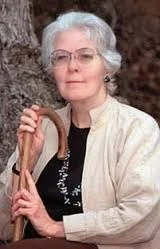
SAN DIEGO, CA – In a significant recognition of a singular voice in science fiction and linguistics, Suzette Haden Elgin has been posthumously named the recipient of the 2026 Cordwainer Smith Rediscovery Award. The announcement, made at Readercon, celebrates an author whose visionary work profoundly blended speculative fiction with groundbreaking linguistic theory, leaving an indelible mark on both fields. Elgin, who passed away in 2015, is best known for her pioneering Native Tongue trilogy and her creation of Láadan, a constructed language designed to express the perspectives and experiences of women.
The Cordwainer Smith Rediscovery Award is presented annually to a deceased science fiction or fantasy author whose work warrants renewed attention and appreciation. The jury, comprising acclaimed editors Ann VanderMeer, Steven H Silver, and Rich Horton, recognized Elgin’s profound impact and the enduring relevance of her themes, particularly in an era increasingly attuned to issues of language, power, and social justice. Her selection underscores the award’s mission to unearth and celebrate writers whose contributions may have been overlooked by mainstream recognition but whose influence continues to resonate within the speculative fiction community and beyond.
A Life of Words: Suzette Haden Elgin’s Journey
Suzette Haden Elgin’s life was a testament to the power of language, both real and imagined. Born Patricia Anne Suzette Wilkens in 1936, her early life experiences likely laid the groundwork for her later explorations of communication and social dynamics. Her academic pursuits led her to a Ph.D. in Linguistics from the University of California at San Diego, a testament to her profound intellectual curiosity and dedication to understanding the fundamental structures of human communication. This rigorous academic background was not merely a career path but a foundational lens through which she viewed the world, a perspective that would later enrich her fictional narratives in unparalleled ways.
Following her doctoral studies, Elgin embarked on a distinguished career as a Professor at San Diego State University, where she shared her expertise with countless students. It was during this period that her interests began to coalesce, bridging the analytical precision of linguistics with the imaginative expansiveness of science fiction. She recognized the unique potential of speculative fiction to explore complex social issues, particularly those related to gender, power, and the very act of speaking and being heard.
Early Forays into Science Fiction
Elgin’s entry into the world of science fiction began in 1969 with the short story "For the Sake of Grace," a piece that hinted at the thematic depth she would later achieve. This initial publication was soon followed by a series of novels centered on the adventures of Trigalactic Intelligence Service agent Coyote Jones. The Coyote Jones series, while perhaps not as critically acclaimed as her later work, established Elgin as a clever and engaging storyteller. These early novels showcased her knack for intricate world-building and her ability to infuse traditional space opera tropes with a distinctive intellectual flair, often exploring cultural misunderstandings and the subtleties of interspecies communication. The series served as an important proving ground, allowing her to hone her craft and experiment with narrative structures that would eventually culminate in her most significant literary achievements.
The Native Tongue Trilogy and the Birth of Láadan
It was with the 1984 publication of Native Tongue that Suzette Haden Elgin truly cemented her legacy and introduced the world to her most ambitious and impactful creation. The novel, the first in a trilogy that also includes The Judas Rose (1987) and Earth is the Alien Planet (1988), masterfully combines her profound linguistic expertise with an unflinching feminist stance. Set in a dystopian future United States where women are stripped of virtually all rights and reduced to chattel, the series presents a chilling yet ultimately hopeful vision of resistance.
In this oppressive future, a clandestine group of women, primarily linguists and scholars, develops a secret language known as Láadan. This isn’t merely a code; it is a fully formed, grammatically complex language designed from the ground up to allow women to precisely express their feelings, experiences, and perspectives that had been rendered inexpressible in the patriarchal common tongue. Láadan was crafted with specific grammatical markers for nuances like certainty, doubt, intention, and emotional states, allowing for a depth of communication previously denied to women. For instance, Láadan distinguishes between statements of fact, statements of opinion, and statements of observation, preventing misinterpretation and fostering clarity. Its vocabulary includes words for concepts like "a feeling of quiet joy upon observing a beautiful scene" or "the specific sense of frustration when one’s knowledge is ignored due to gender."
Elgin’s commitment to Láadan was extraordinary. She didn’t just invent a few words; she developed a complete grammar, a substantial vocabulary, and even a dictionary, publishing it separately as A First Dictionary and Grammar of Láadan (1985). Her aspiration was that Láadan might be widely adopted, not just as a fictional construct, but as a practical tool for empowering women in the real world. This linguistic endeavor was revolutionary, showcasing the inextricable link between language, thought, and power. The Native Tongue trilogy explored how a language shaped by men inherently limits women’s ability to articulate their reality, and how creating a new language could be an act of profound liberation and a pathway to overcoming their oppressed state. The series became a cornerstone of feminist science fiction, sparking discussions about linguistic determinism, the politics of communication, and the potential for language to be a tool for both oppression and resistance.
Beyond Fiction: Linguistics, Poetry, and Advocacy
Elgin’s intellectual contributions were not confined to the realm of speculative fiction. Her academic background and passion for communication led her to publish extensively in the linguistics field. Her most celebrated non-fiction work is The Gentle Art of Verbal Self-Defense series, beginning with the eponymous 1980 book. These works offered practical advice on how to understand and respond to verbal aggression, manipulation, and misunderstanding, drawing directly from her linguistic insights. The series became highly popular, demonstrating her ability to translate complex academic concepts into accessible, actionable strategies for improving interpersonal communication. These books, much like her fiction, underscored her belief that understanding language was key to navigating power dynamics and fostering healthier relationships.
Beyond her novels and academic texts, Elgin was also a prolific poet and songwriter. Her dedication to the artistic expression of language led her to found the Science Fiction Poetry Association (SFPA), an organization dedicated to promoting and celebrating poetry within the speculative fiction genres. Her own poetic talent was recognized with the prestigious Rhysling Award in 1998 for her poem "Rocky Road to Hoe," an accolade that further highlighted her versatile literary abilities. Her poetry, often imbued with the same intellectual curiosity and social commentary as her prose, provided another avenue for her to explore themes of identity, communication, and the human condition. She saw poetry as a distilled form of language, capable of conveying profound meaning with precision and beauty, much like her constructed language, Láadan.
Supporting Data: The Cordwainer Smith Rediscovery Award and Elgin’s Enduring Legacy
The Cordwainer Smith Rediscovery Award holds a unique and vital place within the landscape of speculative fiction honors. Established in 2001, the award’s genesis lies in the desire to prevent important, influential, but perhaps lesser-known or under-read authors from fading into obscurity. It is named after Cordwainer Smith (the pen name of Paul Linebarger), a critically acclaimed but often niche author whose unique blend of science fiction, myth, and psychological depth made him a prime example of a writer deserving of "rediscovery." The award committee, composed of respected figures within the genre, meticulously reviews the careers of deceased authors, seeking those whose works offer lasting literary merit, innovative concepts, and a unique voice that continues to resonate with contemporary readers. Previous honorees include luminaries such as Leigh Brackett, R.A. Lafferty, and Manly Wade Wellman, each of whom made significant, if sometimes understated, contributions to science fiction and fantasy.
Elgin’s selection for the 2026 award places her in distinguished company and speaks volumes about her unique contributions to speculative fiction. Her pioneering role as a feminist science fiction author is undeniable. At a time when women writers were often marginalized or confined to specific subgenres, Elgin fearlessly tackled themes of patriarchy, gender-based oppression, and the search for female agency through the radical act of linguistic creation. She didn’t just write about strong female characters; she explored the systemic roots of oppression and proposed a linguistic solution that empowered women from within.
Her scientific rigor in world-building, particularly with Láadan, set her apart. While many science fiction authors invent cultures and technologies, few have gone to the extraordinary lengths of constructing a complete, functional language with a detailed grammar and vocabulary as a central plot device and a tool for social commentary. This commitment to linguistic authenticity provided a powerful foundation for her narratives, making the struggles and triumphs of her characters feel profoundly real and intellectually stimulating. Her work stands as a testament to the potential of science fiction to engage with academic disciplines and to serve as a laboratory for social and philosophical experimentation.
The impact of Láadan itself extends beyond the pages of her novels. It has influenced discussions on constructed languages (conlangs) within and outside of fiction, inspiring linguists and writers alike to consider the profound ways in which language shapes thought and reality. Elgin’s work predates the widespread popularity of conlangs seen in franchises like Star Trek (Klingon) or Game of Thrones (Dothraki), making her a true pioneer in the field. Her legacy continues to inspire authors who seek to integrate linguistic innovation into their narratives, pushing the boundaries of what speculative fiction can achieve. She paved the way for a more nuanced understanding of how power is encoded in language and how new forms of communication can facilitate resistance and liberation.
Critically, Elgin’s work has also been a subject of academic scrutiny, particularly Native Tongue. Scholars in fields ranging from literary studies to feminist theory and linguistics have explored her unique blend of speculative narrative and linguistic theory. Her exploration of language as a tool for both oppression and liberation remains highly relevant, providing a rich ground for analysis in an era increasingly concerned with the politics of communication, representation, and the inherent biases embedded within linguistic structures. The enduring relevance of her themes—the fight against systemic oppression, the power of collective action, and the fundamental human need for precise and authentic expression—ensures that her work continues to be studied and celebrated.
Official Responses: A Resounding Affirmation
While specific statements from the jury are often brief, the selection of Suzette Haden Elgin for the Cordwainer Smith Rediscovery Award speaks volumes about the collective esteem in which she is held by Ann VanderMeer, Steven H Silver, and Rich Horton. These three individuals are highly respected figures within the speculative fiction community, known for their deep knowledge of the genre’s history and their commitment to literary excellence.
Ann VanderMeer, a World Fantasy Award-winning editor and publisher, has consistently championed innovative and boundary-pushing fiction. Her involvement suggests a recognition of Elgin’s experimental spirit and her profound impact on the genre’s intellectual landscape. Steven H Silver, a widely recognized fan, critic, and bibliographer, brings a deep historical perspective to the jury, ensuring that the chosen author truly warrants "rediscovery" based on a comprehensive understanding of their place in genre history. Rich Horton, a prolific reviewer and anthologist, has a keen eye for literary quality and thematic depth, aligning perfectly with Elgin’s blend of insightful social commentary and compelling narrative.
It can be inferred that the jury’s decision was driven by Elgin’s unique ability to merge high-level linguistic theory with engaging storytelling, creating works that were both intellectually rigorous and emotionally resonant. They likely recognized the groundbreaking nature of Láadan and the Native Tongue trilogy as a cornerstone of feminist science fiction, a body of work that continues to provoke thought and inspire discussion decades after its initial publication. The award serves as an official affirmation from leading voices in the field that Elgin’s contributions are not just historically significant but remain vital and deserving of a broader audience.
The science fiction community is expected to greet this announcement with enthusiasm. For long-time readers and scholars of feminist science fiction, it is a well-deserved recognition of an author whose work has profoundly shaped their understanding of the genre. For newer readers, it offers an exciting opportunity to discover a visionary writer whose ideas about language, power, and social change are more relevant than ever. Linguists and those interested in constructed languages will also likely welcome the renewed attention to Láadan, a project that transcends mere fictional world-building to become a profound statement on human communication.
Implications: Re-evaluating a Master’s Vision
The posthumous awarding of the Cordwainer Smith Rediscovery Award to Suzette Haden Elgin carries significant implications for her legacy and for the broader speculative fiction landscape. Foremost among these is the anticipated surge in renewed interest in her body of work. "Rediscovery" is not merely an honorary title; it is a call to action for readers, publishers, and scholars alike. It is highly probable that this award will lead to new editions of her novels, particularly the Native Tongue trilogy, making them more accessible to a contemporary audience. This will provide a crucial opportunity for a new generation of readers to engage with her groundbreaking ideas, many of which anticipate current societal conversations around gender, language, and systemic oppression.
Furthermore, this recognition will undoubtedly solidify Elgin’s place in the canon of feminist science fiction. Her work, especially Láadan, offers a unique and powerful perspective on the role of language in shaping identity and power structures. As discussions around inclusive language and representation continue to evolve, Elgin’s visionary creation provides a profound historical and theoretical framework for understanding these issues. It underscores that the language we use is not neutral; it is a tool that can either perpetuate or dismantle existing hierarchies. Her influence on subsequent generations of feminist writers and scholars, particularly those exploring linguistic anthropology and critical discourse analysis within a speculative context, will now be highlighted and given the prominence it deserves.
Beyond feminist literature, the award also has implications for the study and appreciation of constructed languages in fiction. Láadan stands as a towering achievement in this niche, a meticulously crafted language with a clear social and philosophical purpose. The renewed attention to Elgin’s work may inspire greater exploration of other fictional languages and their creators, fostering a deeper appreciation for the linguistic artistry within speculative fiction. It reminds us that language invention is not merely an aesthetic choice but can be a powerful narrative device, a character in itself, and a profound statement on human potential.
In a broader cultural context, Suzette Haden Elgin’s work resonates deeply with current socio-political currents. Her exploration of how marginalized groups can develop their own forms of communication and resistance speaks powerfully to contemporary movements for social justice. Her vision of Láadan as a tool for precise emotional and experiential expression offers a compelling counter-narrative to the often-reductive or manipulative uses of language in public discourse. The award, therefore, serves as a timely reminder of the enduring power of visionary fiction to illuminate our present and shape our future. It encourages us to look beyond the immediate bestsellers and rediscover the voices that have truly pushed the boundaries of thought and imagination, ensuring that their profound insights continue to enrich and challenge us for years to come. The Cordwainer Smith Rediscovery Award ensures that Suzette Haden Elgin’s words, both real and imagined, will continue to inspire and empower.