Beyond the Glamour: How Authors Can Master Podcast Guesting for Real Book Sales
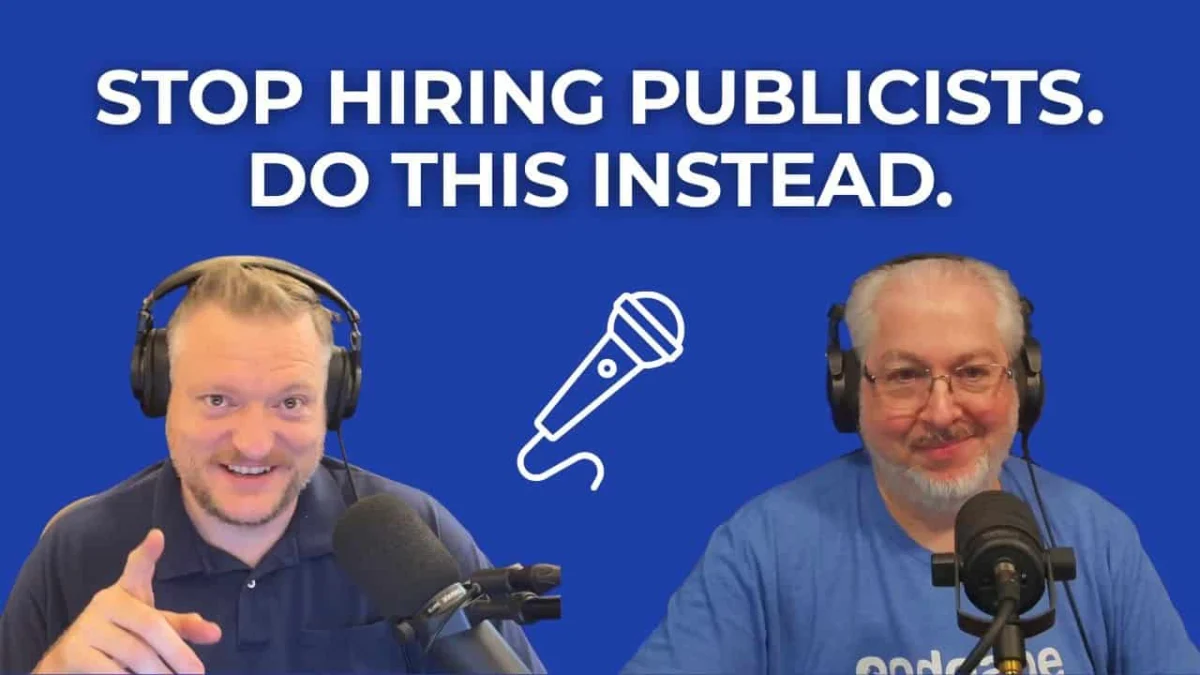
The conventional wisdom surrounding book publicity often centers on high-cost publicists and fleeting media appearances. However, a closer examination, bolstered by practical advice from seasoned experts, reveals a more accessible and potentially more impactful path to readers: the world of podcast guesting. This article delves into why traditional publicists may fall short for many authors, and how mastering the art of podcast interviews can unlock significant opportunities for book sales and author brand building.
The Flawed Equation of Traditional Publicists
For many authors, the journey to reaching readers begins with the daunting prospect of book promotion. The allure of a professional publicist, promising media attention and authorial gravitas, is understandable. Yet, the financial reality of hiring such professionals often presents a significant hurdle, with questionable returns on investment.
"Hiring a publicist is often a waste of money, and I can prove it with math," states Thomas, an author and marketing expert. He outlines the typical fee structure: "$3,000 to $10,000 per month, with a three-month minimum." This translates to a substantial upfront investment of $10,000 to $15,000.
The calculation for recouping this expenditure is stark. With a profit of, say, $3 per book, an author would need to sell an astonishing 5,000 copies simply to break even. "Most PR campaigns don’t sell 5,000 copies," Thomas points out, adding a sobering reality: "They rarely even sell 500." The inherent risk lies with the author, who bears the financial burden regardless of sales success.
The Shifting Landscape of Media Access
The perceived value of traditional publicists has also been eroded by the democratization of media access. Historically, publicists offered a crucial service: access to media outlets. Today, this access is largely commoditized and readily available.
"Publicists used to sell access to media outlets, but now that access is mostly free," explains Thomas. "You don’t need a gatekeeper to get booked on radio, and there are tens of thousands of podcasters hungry for guests." This seismic shift has opened the door for authors to take a more direct and cost-effective approach to securing media appearances.
Mastering the Art of the Pitch: Insights from a Podcast Veteran
The key to unlocking this new media landscape lies in developing a specific skillset: the ability to effectively pitch and engage with podcast hosts. This involves understanding what hosts are looking for, how to craft compelling interview topics, and, crucially, how to transform an interview into book sales rather than just a pleasant conversation.
Dave Jackson, a podcasting pioneer since 2005, a member of the Podcast Hall of Fame, and founder of the School of Podcasting, offers invaluable insights into this process. He emphasizes the critical importance of personalization and demonstrating genuine engagement with a show.
"The first one is to address the pitch to me," Dave advises. "I don’t mean to sound like an egomaniac, but I expect the pitch to say, ‘Hello Dave’ or ‘Hi Dave.’ It just proves that they’ve listened to at least 10 seconds of my show, because within the first 10 seconds I always say, ‘I’m Dave Jackson.’"

Thomas echoes this sentiment, highlighting a common oversight: "I also want to know which of my podcasts you’d like to be on. I’ll often read an entire email pitch and still not know which podcast they mean, because they’ll just say, ‘your podcast.’" This lack of specificity suggests a superficial understanding of the host’s work and a generic, mass-produced pitch.
"It’s all about specifics," Dave reiterates. "If you can prove you listened to the show, it will put you miles ahead of anyone else." He describes receiving pitches that offer vague praise without any concrete examples of what resonated. This lack of research is a sure way to be dismissed.
Perhaps the most jarring example of a failed pitch, according to Dave, is a greeting that reveals a mail merge error: "My absolute favorite is a pitch that starts with ‘Hello, first name,’ with the mail merge field right there in the greeting." Similarly, the use of obscure taglines, rarely uttered by the host, is a dead giveaway that the pitch originates from a database or AI, not a genuine human connection.
The Ineffectiveness of "Carpet Bombing" Podcast Pitches
A common misconception among authors is that pitching a high volume of podcasts, often referred to as "carpet bombing," is an effective strategy. This approach, however, is fundamentally flawed for several reasons.
Firstly, it simply doesn’t yield significant results. "The carpet-bombing approach just doesn’t yield many interviews," Thomas states. The sheer volume of generic pitches sent out often overwhelms podcast hosts, leading to them being ignored or deleted.
Secondly, the podcast landscape is characterized by a steep power curve. While there are numerous podcasts, a select few dominate the listenership within any given genre. "The most popular podcast in your genre probably has more listeners than all the other podcasts in that genre combined," Thomas explains. An appearance on such a prominent show can have a far greater impact on book sales than multiple appearances on smaller, less influential podcasts.
"Your one appearance on that popular show will have a bigger impact on your book sales than all your other appearances put together," he emphasizes. The "carpet-bombing" strategy is particularly ineffective when targeting these highly sought-after shows, which receive a deluge of pitches.
Finding the Right Fit: A Strategic Approach to Podcast Discovery
Instead of indiscriminate pitching, a more strategic approach involves identifying podcasts that are a genuine fit for the author’s book and expertise. Thomas has developed tools to facilitate this process, such as the Podcast Host Directory within the Author Media Patron Toolbox.
"People have asked me for a CSV download for years, and I always say no," Thomas explains. "The friction of interacting with the directory is the whole point. This is not to help you spam podcasters. It’s to help you find the one podcaster who would be a really good fit for your book." The emphasis is on curated connections, not mass outreach.

Dave Jackson also outlines his method for finding suitable shows. He utilizes platforms like PodMatch and PodcastGuests.com, where authors can create profiles and be matched with relevant shows. "If I look at a match and it’s clearly not right, I can pass on it and the system learns what I’m passing on so it doesn’t pitch me the same type of show again."
Crucially, Dave advises a thorough review of the host’s website and recent episodes. "I’ll also look at episode titles to see what they’ve already covered, and I’ll try to find the host’s name from a recent episode so I can address them by name in the pitch." This diligence demonstrates respect for the host’s work and increases the likelihood of a positive response.
Thomas recommends Listen Notes and Podchaser for podcast discovery. Listen Notes provides an indicator of a podcast’s popularity, helping authors identify shows with significant reach. "Listen Notes gives you a sense of how popular a podcast is," Thomas notes. "It won’t tell you exact download numbers, but it will tell you if a show is in the top 10% of all podcasts." This data is vital, as the top tier of podcasts garners the vast majority of listener attention.
Crafting a Compelling Pitch: Beyond the "Me" Factor
A critical mistake authors make in their pitches is focusing too heavily on themselves and their accomplishments, rather than on the value they can bring to the podcast’s audience.
"My pitch must always demonstrate that you’re familiar with the show in some credible way," Thomas asserts. "Your familiarity earns you the right to say, ‘Here is a topic that would be interesting for your audience.’" The pitch should answer the host’s fundamental question: "Why would this topic be interesting to my audience?"
Thomas illustrates this with a hypothetical example: pitching a sci-fi novelist to a Stargate SG-1 podcast. Instead of launching into a lengthy biography, the pitch should lead with a compelling angle related to the show itself. "If you want to go on the Stargate SG-1 podcast to talk about sci-fi, lead with, ‘Here is why Teal’c is an interesting character in such-and-such a way.’"
The pitch should then suggest topics that are similar to, yet distinct from, those already covered by the show. "If they’ve done a lot on Teal’c, come at Teal’c from a different angle, or pitch a Samantha Carter topic." This demonstrates a deep understanding of the show’s content and a thoughtful approach to generating fresh discussion.
"At the end of the interview you can say, ‘If you love Stargate SG-1, you’d love my book that has gates in it, but characters fly through them in spaceships,’" Thomas advises. This approach seamlessly integrates the book promotion into the conversation, making it a natural extension rather than an abrupt sales pitch.
Making the Host Say "Yes": Demonstrating Value and Collaboration
The ultimate goal of a pitch is to convince the podcast host that featuring the author will benefit their audience and, by extension, their show.

"Every good podcaster is trying to deliver value to their audience," Dave explains. "When your pitch says, ‘You’ve talked about this topic before, but you’ve never covered this angle,’ the host realizes you have something new to contribute." This demonstrates that the author has done their homework and has a unique perspective to offer.
"You’ve basically told the host, ‘I know it’s hard to do a podcast. I’ve got an idea for a show, and I’ve done most of the work for you. All you have to do is have me on, ask me a couple questions, and we’re good to go.’" This proactive approach makes the host’s job easier and more appealing.
Thomas likens the pitch to an audition. "It shows whether you can speak our language, whether you’re enough of a Stargate SG-1 fan to connect with the audience, or whether you’re an outsider who won’t make sense to our tribe." The ability to connect with the host and their established community is paramount.
The Power of the "Friend of the Show" Relationship
A key long-term strategy for authors is to cultivate relationships with podcast hosts, aiming to become a "friend of the show." This status can lead to recurring invitations and a more streamlined process for future book launches.
"The real goal for every podcast guest is to become a friend of the show," Thomas emphasizes. "Not every podcast has a formalized system, but Novel Marketing does. You have to be interviewed twice to be a friend of the show." This builds trust and familiarity with both the host and their audience.
"Because Dave is a friend of the show, he’s already established credibility with my audience and me," Thomas notes. "If Dave had a new book coming out that would interest authors, all he’d have to do is send me a quick note. He wouldn’t have to do a formal pitch because we’re already friends." This established rapport significantly simplifies future promotion.
"Popular podcasts tend to invite their ‘friends of the show’ as much or more than they invite new guests," Thomas adds. By nurturing these relationships, authors can secure a reliable stream of interview opportunities for subsequent book releases.
Essential Gear and Preparation for a Stellar Interview
While the pitching and content are crucial, technical preparedness is equally vital for a successful podcast interview. Poor audio quality can detract from even the most compelling conversation.
Thomas offers a comprehensive Podcast Gear Guide, with recommendations for various budgets. He also provides a video tutorial, "Watch This Before Your Next Podcast Interview," which covers essential audio best practices.

Key recommendations include:
- Microphone Placement: "Avoid using condenser microphones and get the microphone as close to your mouth as you can."
- Microphone Arms: "The biggest thing people overlook is using a microphone arm. Don’t use the little desk stand your microphone came with. Get an arm that pulls it in close." This simple investment can dramatically improve audio quality.
- Headphones: "Wear good podcast-looking headphones. It signals that you’re a real podcaster." Headphones are essential for monitoring audio and for the host to perform technical adjustments. Dave Jackson humorously notes, "Taylor Swift wore headphones on her boyfriend’s podcast. If Taylor can do it, you can do it."
Beyond the technical aspects, thorough preparation for the interview itself is paramount.
Nailing the Interview: Tips and Tricks for Maximum Impact
Tip #1: Understand the Audience. During the pre-interview chat, inquire about the podcast’s audience. "Understanding who’s listening will help you tune your examples, stories, and vocabulary, and you’ll know how technical to get." Tailoring your responses to the audience’s level of understanding is crucial for engagement.
Tip #2: Clarify the Interview Goal. Ask the host about their objectives for the episode. "Understanding the goal helps you know which part of your story to lean into." This ensures your contributions align with the host’s vision for the episode.
Tip #3: Gauge the Interview Length. Knowing the allotted time helps you calibrate the depth and breadth of your answers. "If it’s 20 minutes and I give an 18-minute answer to the first question, there’s nothing left." Efficiently managing your time during the interview is key.
Tip #4: Prepare for Standard Questions. Listen to a full episode of the podcast beforehand to anticipate common questions, especially those asked at the end. "The Fantastical Truth podcast asks every guest, ‘When did you ask Aslan to be your Lord and Savior?’ If you’ve listened to the show, you know to expect it."
Tip #5: Don’t Be Afraid to Re-record. "It’s not live radio," Dave reminds us. "If you realize mid-answer you’re blowing it, just say, ‘Hey, can I start that again? I have a better answer.’" This flexibility allows for polished responses.
Tip #6: Integrate Book Mentions Naturally. "Internalize that the goal of the interview is not to sell your book," Thomas cautions. Instead, focus on providing value. Book mentions should arise organically from the conversation. "Learning how to work in those references organically, where it doesn’t feel forced, is a skill." The final question is often an invitation to discuss the book, so practice a concise and compelling pitch.
Tip #7: Speak Your Website Clearly. "Say your website slowly. There are no awards for rattling it off fast," advises Dave. Consider purchasing a dedicated domain for your book to simplify this.

Tip #8: Practice Your Pitch. Self-promotion can be challenging. "We are not naturally good at self-promotion. We get weird and squirrelly. So practice it in the mirror if you have to." A confident and clear description of your book is essential.
Tip #9: Offer a Lead Magnet. A free gift (e.g., a bonus chapter, a quiz) in exchange for an email address can be a powerful tool for building a reader list. "An email subscriber is worth more than a social media follow because you can reach them multiple times over time."
The Long-Term Value of Podcasting
Beyond immediate sales, podcast guesting offers significant long-term benefits. It builds author authority, expands reach, and can even contribute to search engine optimization (SEO) as podcast show notes often include links to the author’s website.
"The skills you build in podcasting transfer directly to YouTube, radio, and TV," Thomas notes. "There are more podcasts than there are local TV shows that interview authors, so you’ll get far more reps."
For authors embarking on their first PR efforts, the advice is clear: start small. "Don’t make your first pitch the number one show in your genre. Start small," Dave advises. By honing your pitching and interviewing skills on smaller podcasts, you build confidence and experience, preparing you for larger opportunities.
In conclusion, while the allure of traditional publicists may persist, the podcasting world presents a more accessible, affordable, and potentially more impactful avenue for authors to connect with readers. By mastering the art of the pitch, focusing on delivering value, and cultivating genuine relationships with podcast hosts, authors can transform interviews from mere promotional spots into powerful engines for book sales and lasting authorial presence.