The Prestige Paradox: Why HBO’s ‘Industry’ Remained Invisible to the Emmy Academy
The annual unveiling of Primetime Emmy nominations is frequently characterized by a predictable cycle of jubilation and outrage. However, in an era of "Peak TV" that has arguably transitioned into "Saturated TV," the mechanics of these nominations have become less about objective quality and more about the strategic intersection of branding, name recognition, and institutional momentum.
In a year where a staggering 510 scripted series were submitted for consideration across more than 100 categories, the Television Academy faces an impossible task: watching it all. Consequently, the series that successfully capture the Academy’s attention are often those that enter the race with a decided advantage. Name recognition and sophisticated awards positioning serve as the lighthouse in a vast sea of unseen content.
HBO remains the undisputed master of this navigation. On Wednesday, the network (alongside its streaming counterpart Max) reaffirmed its dominance by securing 122 nominations—the highest tally of any network or streamer. Yet, amidst this tidal wave of recognition for stalwarts like Hacks and The Pitt, one glaring omission has sent shockwaves through the critical community: the total shut-out of Industry.
Main Facts: The 2026 Emmy Landscape and the HBO Hegemony
The 2026 Emmy nominations served as a powerful validation of the "HBO Brand." Despite the tumultuous corporate landscape—specifically the looming completion of Paramount’s acquisition of Warner Media—HBO’s reputation for quality remains its most valuable currency. This branding is not merely a marketing gimmick; it is the result of a notoriously rigorous development process that filters out flawed programs and refines those that survive into "prestige" artifacts.
The hallmarks of an HBO production—high production values, impeccable casting, and non-formulaic storytelling—are designed to appeal to an audience that values depth over broad accessibility. This strategy paid off handsomely this year:
- HBO/Max Total: 122 nominations.
- Top Performers: The Pitt (Season 2) secured 25 nominations, while Hacks (Season 5) followed closely with 24.
- The ‘Industry’ Result: 0 nominations.
For many pundits, the exclusion of Industry Season 4 is not just a "snub"; it is a systemic failure of the awards model. The series possessed every ingredient traditionally associated with Emmy success: a move to the vaunted Sunday night time slot, a high-profile guest cast including Kit Harington and Sarah Goldberg, and a chorus of critical acclaim that likened it to The Sopranos or Mad Men. Yet, the Academy remained unmoved.

Chronology: The Evolution of an ‘Upstart’ Series
To understand why Industry was ignored in its fourth and arguably best season, one must look back at its unorthodox origins. The show’s trajectory is a study in how initial branding can haunt a series throughout its entire lifespan.
2020: The "Unpolished" Debut
When Industry premiered in 2020, it did not carry the immediate weight of "Prestige TV." It arrived during a period of corporate transition for Warner Media, as then-owner AT&T pushed for a higher volume of content to bolster the fledgling HBO Max. Industry was, by many accounts, the "cheapest" show on the HBO slate. While Succession was spending millions to depict the lifestyles of the ultra-wealthy in global hubs, Industry—set in London—was largely filmed in Wales to save costs.
2022-2024: The Growth of the Creators
The series was the brainchild of Mickey Down and Konrad Kay, two young creators whose primary credential was their personal experience in the Oxford-to-finance pipeline. In early seasons, their lack of experience was evident. Down and Kay have since admitted to making "amateur" story decisions in Seasons 1 and 2 that often painted the narrative into corners. At the time, HBO viewed them as unpolished talents with a sharp ear for dialogue but a limited understanding of television structure.
2025-2026: The Sunday Night Promotion
By Season 3 and Season 4, the "upstart" creators had matured into masterful showrunners. Recognizing this evolution, HBO promoted the series to its prestigious Sunday night lineup. The results were immediate: ratings climbed, and the cultural conversation intensified. Deep-dive profiles in The New Yorker and a passionate weekly audience suggested that Industry had finally arrived in the upper echelon of television drama.
Supporting Data: Branding as an Immutable Label
The data suggests that the Television Academy rarely changes its mind about a show once a "brand" has been established. Awards are a self-selective game where studios and talent decide early on which titles will receive the "awards-friendly" investment.
| Series | Season | Nominations | Branding Category |
|---|---|---|---|
| The Pitt | 2 | 25 | Born Prestige |
| Hacks | 5 | 24 | Established Winner |
| Succession | 4 | 27 | Born Prestige |
| Industry | 4 | 0 | Earned Quality (Non-Prestige) |
The disparity highlights a phenomenon where "Prestige TV" acts as a genre unto itself. If a show is not labeled as such at its inception, it is almost impossible to retroactively apply the label in later seasons, regardless of the jump in quality. For the tens of thousands of Hollywood professionals voting on these awards, Industry Season 4 was likely dismissed as a "non-awards title" before a single episode was even screened for consideration.

Official Responses and Critical Backlash
The total exclusion of Industry has been met with bafflement from industry analysts and the show’s creators alike. While HBO’s awards team celebrated their overall victory, the "Industry" silence was deafening.
The Pundit Perspective:
IndieWire’s editorial team and various awards podcasts have argued that the exclusion of Industry is the "exception that proves the rule" regarding HBO’s branding. Pundits note that while the Academy is quick to reward "name recognition," it is notoriously slow to hop on bandwagons for shows that require a high degree of financial or intellectual literacy to appreciate—especially if those shows didn’t start with a "blue-chip" pedigree.
The Creators’ Stance:
Mickey Down and Konrad Kay have been candid about their journey. While they have mocked their own early storytelling decisions, they have also expressed pride in the show’s evolution. In interviews, they noted that HBO eventually saw them as "ready for the big leagues," yet that internal promotion did not translate to the external validation of the Academy.
The Talent Factor:
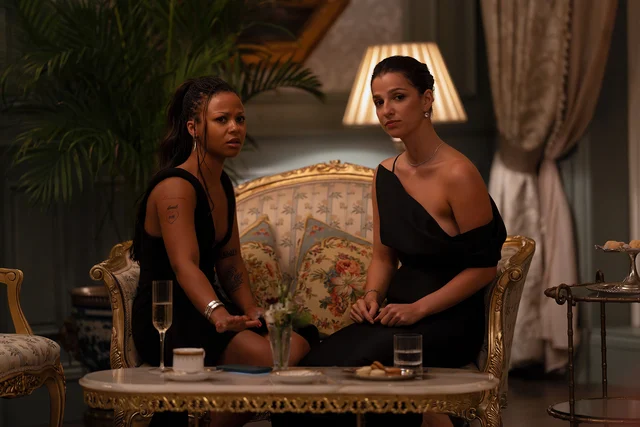
The lack of recognition for the cast—specifically Myha’la, Marisa Abela, and guest star Kit Harington—is perhaps the most surprising element. Harington, an HBO awards veteran from his Game of Thrones days, brought significant "awards heat" to the fourth season, yet even his presence couldn’t break the "peasant" status the Academy seemingly assigned to the show.
Implications: The High Status You Are Born With
The "Industry" snub reveals a sobering truth about the Hollywood awards ecosystem: it mirrors the rigid social hierarchies depicted within the show itself. In the world of Industry, high status is something one is born with, not something that can be earned through mere competence or hard work.
The "Genre" of Prestige
The Academy’s refusal to acknowledge Industry suggests that "Prestige" is a permanent marker. Shows like Succession or The White Lotus are "born" with the moniker. They are positioned by the network as contenders from day one, and the Academy responds accordingly. Industry, having started as a "cheap," unpolished experiment, could never quite shake its "upstart" reputation in the eyes of voters.

The Risk of the "Slow Burn"
This precedent creates a dangerous environment for "slow-burn" hits. If a show must be a critical and awards darling from Season 1 to be considered for Season 4, creators may feel pressured to prioritize immediate "prestige tropes" over long-term character development and narrative growth. The maturity shown by Down and Kay—growing from "amateurs" to "masters"—is exactly the kind of artistic progression the Emmys should be celebrating, yet it is exactly what they ignored.
A Mirror to the Narrative
In a poignant moment from the Season 4 finale, the character Sir Henry Muck (Kit Harington), a disgraced aristocrat, tells the self-made Whitney Halberstram (Max Minghella): "You’re a fucking peasant. I’d rather die as me than run as you."
This line serves as an apt analogy for the 2026 Emmy nominations. The Academy would rather continue rewarding the established "nobility" of the HBO lineup—the shows born into prestige—than acknowledge the "upstart" that fought its way to the top of the Sunday night mountain. For Industry, the quality was there, the audience was there, and the critical consensus was there. But in the eyes of the Academy, it remained a "peasant" show, forever excluded from the high-finance world of Emmy gold.