The Passing of a Legend: Global Film Community Mourns the Loss of Sam Neill
The global entertainment industry has been plunged into mourning following the announcement of the death of Sir Nigel John Dermot "Sam" Neill at the age of 78. Known for a career that spanned five decades and bridged the gap between independent arthouse cinema and massive global blockbusters, Neill passed away surrounded by family, leaving behind a legacy as one of the most versatile and beloved actors of his generation.
The news was confirmed through a poignant statement on Neill’s official social media channels, noting that he transitioned "with the dignity that has characterized his whole life." While the actor had been open in recent years about his battle with Stage 3 blood cancer—a journey he chronicled with characteristic wit and lack of self-pity in his 2023 memoir, Did I Ever Tell You This?—his passing has nonetheless sent shockwaves through the film and television communities in the United Kingdom, Hollywood, and his beloved home of New Zealand.
Main Facts: A Career of Unrivaled Versatility
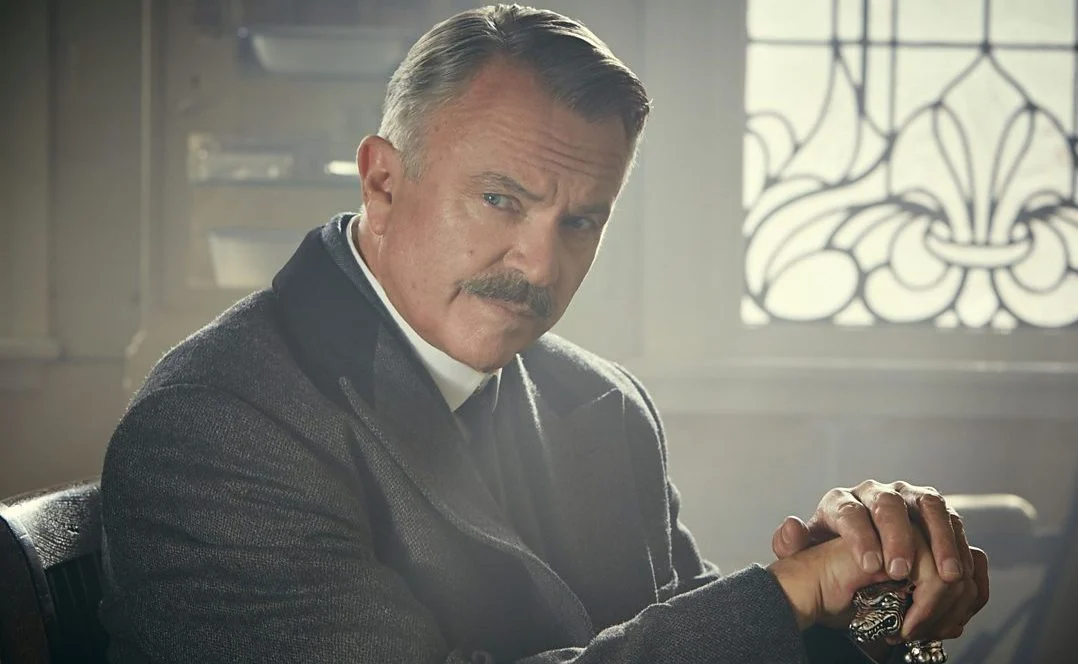
Sam Neill was a rare breed of actor who found equal success playing the stoic hero, the romantic lead, and the terrifying antagonist. To many, he was the face of paleontology as Dr. Alan Grant in Steven Spielberg’s Jurassic Park (1993), a role that defined a generation’s cinematic experience. To others, he was the sinister and obsessive Inspector Chester Campbell in the BBC’s Peaky Blinders, a performance that helped solidify the show as a global phenomenon during its formative seasons.
His filmography includes over 150 credits, ranging from the haunting psychological horror of Possession (1981) to the Oscar-winning drama The Piano (1993). Beyond the screen, Neill was a celebrated viticulturist, founding the Two Paddocks vineyard in Central Otago, New Zealand, and a man known for his deep love of the land and his dry, self-deprecating humor.
The official Peaky Blinders tribute, posted to their seven million followers, encapsulated the sentiment of the industry: "Sam’s portrayal of Chester Campbell is one for the ages. A villain who is despicable, petty, manipulative, but also charismatic, vulnerable, funny, and supremely entertaining to watch. Sam was one of the key forces that got Peaky Blinders off to a running start, for which we will be forever grateful."
Chronology: From Northern Ireland to the Global Stage
Born in Omagh, Northern Ireland, in 1947 to a New Zealander father and an English mother, Neill moved to New Zealand at the age of seven. His journey into acting was not immediate; he initially worked as a director for the New Zealand National Film Unit before finding his way in front of the camera.
The Rise of a Kiwi Icon (1977–1989)
Neill first gained international attention with the 1977 film Sleeping Dogs, the first New Zealand feature to be released in the United States. This led to his breakthrough role in the Australian period drama My Brilliant Career (1979) opposite Judy Davis. By the 1980s, Neill was a rising star in international cinema, taking on the role of Damien Thorn in Omen III: The Final Conflict (1981) and delivering a tour-de-force performance in Andrzej Żuławski’s Possession, which earned him a Best Actor award at Cannes.
The Golden Era (1990–2005)
The 1990s marked the peak of Neill’s commercial and critical success. In 1993, he starred in two of the year’s most significant films: Jurassic Park, which became the highest-grossing film of all time at the point of its release, and The Piano, which won the Palme d’Or. During this period, he also starred in the cult classic Event Horizon (1997) and the Merlin miniseries, proving his ability to anchor big-budget genre pieces with gravitas.
The Television Renaissance (2013–Present)
In the latter part of his career, Neill embraced the "Golden Age of Television." His casting as the primary antagonist in Peaky Blinders in 2013 was a masterstroke. Playing a Northern Irish policeman sent to Birmingham to clean up the streets, Neill used his own ancestral roots to craft a chilling, complex character that served as the perfect foil to Cillian Murphy’s Tommy Shelby. In more recent years, he found a new generation of fans through collaborations with Taika Waititi in Hunt for the Wilderpeople (2016) and his return to the Jurassic franchise in Jurassic World Dominion (2022).
Supporting Data: The Impact of the "Campbell" Era
The significance of Neill’s contribution to Peaky Blinders cannot be overstated. During the first two seasons, the show was a burgeoning British drama trying to find its footing on the international stage. Neill’s presence brought a level of "prestige cinema" credibility to the production.
Critically, Neill’s performance as Chester Campbell is often cited as one of the best "villain" turns in modern television. According to viewership data, the tension between Campbell and Shelby was a primary driver for the show’s early viral success. Producers have often noted that Neill’s willingness to play a character who was truly "despicable" yet humanly "vulnerable" allowed the show to explore themes of morality and corruption that would define its entire six-season run.
Furthermore, Neill’s commitment to the role included perfecting a specific, harsh Belfast accent that he later joked was "the most difficult thing I’ve ever had to do," despite his own Northern Irish heritage. His dedication to the craft, even in a supporting role, set a standard for the high-caliber guest stars that would later join the series, including Tom Hardy and Adrien Brody.
Official Responses: A Community in Grief
The outpouring of tributes from the entertainment world reflects the deep respect Neill commanded among his peers.
The Peaky Blinders Family:
Beyond the official statement, individual cast members shared their personal grief. Joe Cole, who played John Shelby, posted a simple but moving "Rest in peace big dog," while Finn Cole (Michael Gray) added, "Rest easy, Sam." The production team emphasized that Neill was a "key force" whose early involvement helped the show achieve its "running start."
The Jurassic Universe:
Colin Trevorrow, director of Jurassic World, shared a deeply personal tribute: "Sam Neill was a deeply soulful and beautiful man. He was a friend and collaborator at a challenging time, and his strength gave us all strength. I’ll remember him for his tranquility, his love of wine, and for the calm assuredness he brought to his characters. It’s not every lifetime you get to befriend a legend."
The New Zealand Community:
Fellow New Zealander and The Boys star Karl Urban hailed Neill as a "national treasure" and an "inspiration." Urban noted that Neill paved the way for generations of Antipodean actors to succeed on the world stage without losing their identity. "A beautiful man who gave so much to New Zealand and to the world," Urban wrote.
Family and Close Friends:
In a statement that focused on his personal character rather than his professional accolades, his family noted his love for his farm, his animals, and the "quiet life" he led when the cameras weren’t rolling. They requested privacy but encouraged fans to "raise a glass of good Pinot" in his honor—a nod to his passion for winemaking.
Implications: The Legacy of a "National Treasure"
The death of Sam Neill leaves a void in the film industry that will be difficult to fill. He was one of the few remaining actors who represented the transition from the old Hollywood studio system’s emphasis on leading-man charisma to the modern era’s demand for character-driven versatility.
Impact on New Zealand Cinema
For New Zealand, the loss is cultural. Neill was more than an actor; he was a cultural ambassador. He remained a resident of the country throughout his global fame, choosing to run a farm and a winery in the South Island rather than relocating permanently to Los Angeles or London. His success proved that a "Kiwi" voice could be heard and respected globally, directly influencing the careers of figures like Peter Jackson and Taika Waititi.
The "Dignity" of the Public Struggle
Neill’s final years were marked by a courageous and transparent battle with cancer. By choosing to share his diagnosis and his subsequent treatment—including his use of a rare experimental drug—he became a beacon of hope for many facing similar health challenges. His refusal to let his illness define his final years, instead focusing on writing his memoirs and spending time with his farm animals, offered a blueprint for "dying with dignity" that his family highlighted in their final statement.
Future Projects and Archival Legacy
While Neill had slowed down in recent years, his final performances will continue to be released posthumously, providing fans with a few more opportunities to see his craft. However, his true legacy lies in his vast archive. From the terrified Dr. Grant looking up at a T-Rex to the vengeful Inspector Campbell clutching his cane in a Birmingham alleyway, Sam Neill’s work will remain a staple of cinematic education and entertainment for decades to come.
In the end, Sam Neill will be remembered not just for the roles he played, but for the manner in which he played them: with a profound sense of humanity, an understated intelligence, and a legendary wit that made him a favorite of directors, co-stars, and audiences alike. As the "big dog" of the acting world takes his final bow, the industry reflects on a life exceptionally well-lived.