Netflix’s ‘East of Eden’ Adaptation: A Masterful Reimagining of Steinbeck’s American Epic
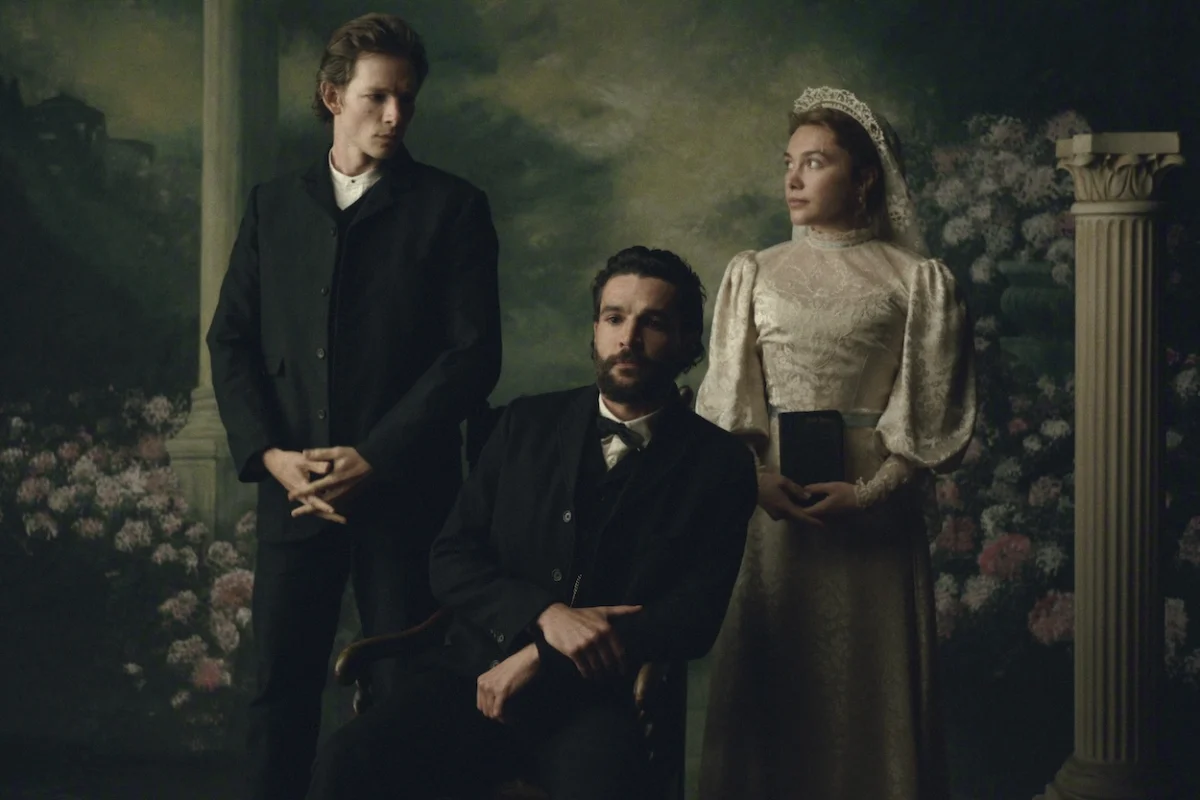
The landscape of prestige television is set for a seismic shift this fall as Netflix prepares to release its highly anticipated limited series adaptation of John Steinbeck’s 1952 magnum opus, East of Eden. Helmed by showrunner and writer Zoe Kazan, the seven-episode series is not merely a retelling of a literary classic but a profound enrichment of its themes, characters, and philosophical inquiries. With a powerhouse cast led by Florence Pugh, Christopher Abbott, and Mike Faist, the production aims to bridge the gap between mid-century Americana and modern psychological nuance.
As the series prepares for its global premiere on Thursday, October 1, early critical assessments suggest that Kazan has achieved the nearly impossible: a faithful adaptation that simultaneously deconstructs and elevates its source material.
Main Facts: A New Vision for a Timeless Tale
At its core, East of Eden remains a sprawling multi-generational saga centered on the Trask family. However, this iteration, penned entirely by Zoe Kazan, distinguishes itself through its focus on the "dreadful beauty" of truth. The narrative spans five decades, tracking the tragic intersections of fate, lineage, and free will.
The series stars Christopher Abbott as Adam Trask, a man whose life is defined by a desperate search for goodness amidst the shadows cast by his oppressive father, Cyrus (Tracy Letts). Opposite him is Mike Faist as Charles Trask, Adam’s brother, whose life is a masterclass in the pain of perceived abandonment and the volatility of brotherly love.
The catalyst for the story’s most harrowing turns is Cathy Ames, portrayed by Florence Pugh. In Kazan’s hands, Cathy is transformed from Steinbeck’s "malformed" psychological monster into a complex provocateur whose choices, however brutal, are rooted in a fierce, desperate pursuit of autonomy within a misogynistic society.

Directed by Garth Davis (Episodes 1-4) and Laure de Clermont-Tonnerre (5-7), the series utilizes a visual language that oscillates between the sweeping grandeur of the California landscape and the suffocating intimacy of domestic strife.
Chronology: From the 19th Century to the Dawn of Modernity
The narrative structure of the Netflix series mirrors the expansive timeline of Steinbeck’s novel, meticulously charting the evolution of the Trask family across several key eras:
- The Formative Years (Late 19th Century): The series opens with the brutal upbringing of Adam and Charles under their father, Cyrus Trask. Tracy Letts delivers a chilling performance as an ex-military patriarch whose rigid discipline sows the seeds of resentment and longing that will haunt his sons for the rest of their lives.
- The Arrival of Cathy: The middle chapters focus on the arrival of Cathy Ames into the Trask brothers’ lives. Introduced in a visceral sequence where she is found crawling through the Trask family fields—her blood staining the soil like a "human pesticide"—Cathy becomes the wedge between the brothers and the central enigma of Adam’s life.
- The Salinas Valley and the Twins: Following a move to the Salinas Valley, the timeline shifts to Adam’s pained attempt at fatherhood. The series introduces the next generation: Aaron (Joe Anders) and Caleb (Joseph Zada). This section of the chronology explores how the sins of the father are—or are not—inherited by the sons.
- The Industrial Shift: As the world moves toward the first World War, the characters grapple with industrial innovations and shifting social mores, providing a backdrop of global change to their personal internal wars.
Supporting Data: Character Analysis and Thematic Depth
Kazan’s adaptation is receiving particular acclaim for its refusal to simplify the moral ambiguities of its characters. This is most evident in the supporting cast, who serve as the moral and intellectual anchors of the series.
The Philosophy of ‘Timshel’
The series places significant weight on the Hebrew word Timshel (translated as "thou mayest"). As articulated by the character Lee (Hoon Lee), Adam’s Chinese-American housekeeper, the concept suggests that humans are not bound by fate or genetic predisposition to be evil. Instead, they have the choice to overcome sin. This thematic pillar differentiates the show from a standard tragedy, offering a glimmer of hope amidst the "dreadful beauty" of the plot.
Lee and Samuel: The Moral North Stars
Hoon Lee’s portrayal of Lee is being hailed as a standout. His character is a repository of knowledge, navigating a world of prejudice through "code-switching"—altering his dialect and demeanor based on the expectations of the white society around him. His friendship with Samuel Hamilton (Ciarán Hinds), a warm-hearted Irish immigrant, provides a counterpoint to the cynicism of the Trask lineage. Samuel represents the father figure Adam never had, played by Hinds with a grounding pragmatism and "even warmth."

Reimagining the ‘Monster’
Florence Pugh’s Cathy Ames is perhaps the series’ most radical departure from the novel. While Steinbeck described Cathy as a "psychic monster" born without a conscience, Kazan frames her actions as a response to systemic oppression. Pugh’s performance is described as "vigilant and commanding," portraying a woman who fights back against the "misogynistic boot on her throat" with a brutal, honest desperation.
Official Responses and Critical Reception
While Netflix has maintained a standard of "prestige secrecy" surrounding the production, the early critical response has been overwhelmingly positive. IndieWire has awarded the series a grade of A-, noting that it "convincingly marries contradictions within individuals that should tarnish their verisimilitude."
Critics have praised the technical execution of the series, specifically the cinematography by Stuart Dryburgh and Sam Chiplin. The visual palette is noted for its "fiery, mountainside sunsets" and "comforting, homestead greenery," which serve to punctuate the big emotional beats of the script.
Furthermore, the collaboration between Zoe Kazan and co-showrunner Jeb Stuart has been highlighted as a successful pairing of Stuart’s experience with large-scale narrative architecture and Kazan’s intimate, character-driven insights. The fact that Kazan wrote every episode herself has resulted in a singular, cohesive voice that is often missing from modern writers’ rooms.
Implications: The Legacy of Literary Adaptation in the Streaming Age
The success of East of Eden carries several significant implications for the future of streaming content and literary adaptations:

1. The ‘Kazan’ Legacy
Zoe Kazan’s involvement carries profound historical weight. Her grandfather, Elia Kazan, directed the iconic 1955 film adaptation of East of Eden starring James Dean. By choosing to adapt the same material for a new generation, Zoe Kazan is not only reclaiming her family’s cinematic legacy but also expanding upon it. Where the 1955 film focused primarily on the final third of the book, the 2026 series provides the space for the full, sprawling epic to breathe.
2. A Shift in Female Archetypes
By humanizing Cathy Ames, the series challenges the "femme fatale" trope that has dominated period dramas for decades. The implication is that modern audiences are ready for—and demand—female antagonists whose villainy is contextualized by their environment rather than dismissed as innate "evilness."
3. The Future of the Limited Series
Netflix’s decision to release all seven episodes at once suggests a confidence in the "binge-ability" of high-brow literary drama. If East of Eden performs well, it may signal a shift away from "content for content’s sake" toward a more curated, auteur-driven approach to the limited series format.
4. Steinbeck’s Enduring Relevance
The series proves that Steinbeck’s explorations of identity, lineage, and the American dream remain potent. In an era of deep social and political division, the message of Timshel—that individuals have the power to choose their path regardless of their history—resonates with a renewed sense of urgency.
Conclusion
Netflix’s East of Eden arrives as a landmark achievement in television. It is a series that looks unflinchingly at the "dreadful beauty" of the human condition, refusing to offer easy answers or simple villains. Through the lens of Zoe Kazan’s writing and the powerhouse performances of its cast, it invites viewers to recognize their own "darkest shame" and, like its characters, keep crawling toward a state of grace.

The seven-episode limited series will be available in its entirety on Netflix starting October 1, 2026. For fans of Steinbeck, period drama, and complex character studies, it promises to be the definitive television event of the season.