The Democratization of Augmented Reality: Xreal Launches ‘X By Xreal’ and the $299 a01+ Glasses
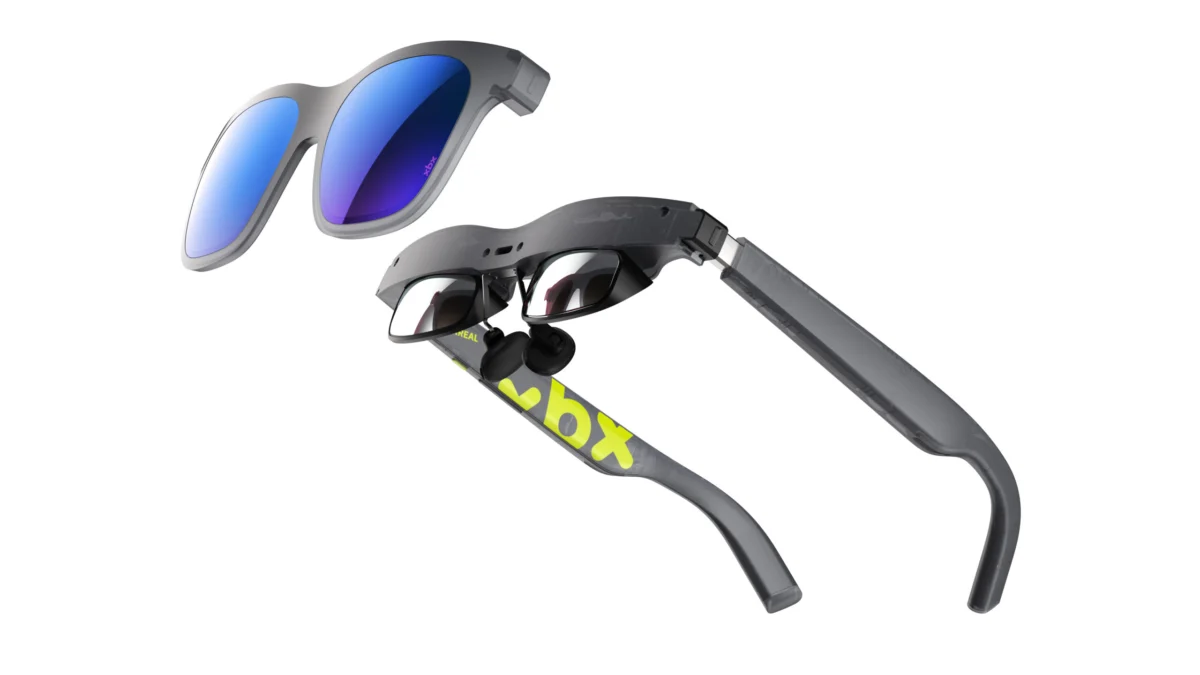
The landscape of wearable technology is currently undergoing a significant bifurcation. On one side, tech giants are pushing the boundaries of "spatial computing" with high-fidelity, high-cost headsets that aim to replace the traditional computer. On the other, a more pragmatic movement is gaining momentum: the "portable big-screen" experience. Leading this charge is Xreal, a company that has consistently defined the augmented reality (AR) glasses category. Today, Xreal has announced a strategic expansion of its ecosystem with the launch of a new sub-brand, X By Xreal (xbx), and its debut product, the xbx a01+.
Priced at an aggressive $299, the a01+ represents a calculated move to lower the barrier to entry for AR technology. By focusing on core entertainment and gaming utilities rather than complex spatial processing, Xreal is positioning itself to capture a broader consumer demographic that prioritizes portability, price, and visual performance over high-end computing features.
1. Main Facts: Bridging the Gap Between Luxury and Utility
The xbx a01+ is not merely a "lite" version of Xreal’s existing lineup; it is a specialized tool designed for the modern digital nomad, the handheld gamer, and the frequent traveler. Available immediately in the United States, the device is being distributed through a robust network of major retailers, including Amazon, Best Buy, B&H, and Micro Center, as well as Xreal’s own e-commerce platform.
Key Specifications at a Glance:
- Price: $299 USD.
- Weight: 62 grams (approximately 15% lighter than the flagship Xreal One).
- Display Technology: Dual-layer Micro-OLED.
- Brightness: 1,600 nits peak brightness.
- Refresh Rate: Up to 120Hz.
- Field of View (FoV): 50 degrees.
- Virtual Screen Size: Equivalent to a 147-inch display viewed from four meters.
- Connectivity: USB-C (DisplayPort Alt Mode).
The core value proposition of the a01+ is its simplicity. Unlike standalone VR headsets that require their own operating systems and battery packs, the a01+ is a "plug-and-play" peripheral. It draws power and data from a host device—be it a smartphone, a MacBook, a Steam Deck, or a Nintendo Switch—and projects a high-definition virtual monitor into the user’s field of vision.
2. Chronology: The Evolution of the Xreal Ecosystem
To understand the significance of the xbx a01+, one must look at the trajectory of Xreal over the past three years. Formerly known as Nreal, the company rebranded and pivoted toward a more lifestyle-oriented approach to AR.
- The Early Era (2021-2022): Xreal (then Nreal) introduced the Air series, which popularized the concept of "screen mirroring" via AR glasses. These devices were lauded for their form factor but often criticized for limited software ecosystems.
- The Spatial Computing Push (Early 2024): Xreal launched the Xreal One and One Pro. These devices featured the proprietary X1 chip, enabling native 3DoF (Three Degrees of Freedom) tracking. This allowed the virtual screen to "pin" in space, a crucial feature for productivity and immersive media.
- The Firmware Revolution (Mid-2024): Xreal released a major firmware update for the One series, introducing 120Hz support and significant improvements to text readability and power management. This update signaled the company’s commitment to the gaming community.
- The Launch of xbx (Present): Recognizing that a $500+ price tag remains a hurdle for many, Xreal established the "X By Xreal" sub-brand. The a01+ is the first fruit of this labor, distilling the high-end display technology of the One series into a more affordable, 0DoF (standard mirroring) chassis.
3. Supporting Data: Technical Deep Dive and Ergonomics
While the price suggests a "budget" device, the technical specifications of the a01+ suggest otherwise. Xreal has leveraged its supply chain to include high-end components that are typically reserved for more expensive hardware.
Display Excellence and Pixelworks Collaboration
The a01+ utilizes dual-layer Micro-OLED panels. These are not standard LCDs; Micro-OLED offers near-infinite contrast ratios and true blacks, which are essential when projecting an image onto a semi-transparent lens. The device achieves a peak brightness of 1,600 nits, ensuring visibility even in well-lit environments.

A standout feature is the integration of a dedicated image-enhancement chip co-engineered with Pixelworks. This chip facilitates:
- Real-time SDR-to-HDR Conversion: Enhancing standard content to take advantage of the high-dynamic-range capabilities of the OLED panels.
- Color Accuracy: Covering 145% of the sRGB color gamut and supporting 1.07 billion colors.
- Custom Viewing Profiles: Users can toggle between "Cinema" (high contrast), "Eye Care" (reduced blue light), and "Standard" modes.
Ergonomics and the "Playful" Design Philosophy
At 62 grams, the a01+ is one of the lightest AR glasses on the market. Xreal’s design team opted for a translucent aesthetic, featuring a hidden fluorescent logo that only appears under certain lighting conditions. This "sporty" vibe is a departure from the sleek, Ray-Ban-esque look of the Xreal Air.
Furthermore, Xreal is embracing the maker community. The a01+ supports snap-on front frames, allowing users to change the look of their glasses instantly. The company has partnered with MakerWorld to provide 3D-printable designs, enabling a level of customization rarely seen in consumer electronics.
Comfort has been addressed through data-driven engineering. Xreal claims to have analyzed over 2,000 facial profiles to refine their nose pad system. The a01+ includes:
- Three different nose bridge fits.
- Adjustable arms and flexible hinges to accommodate various head shapes.
- TÜV Rheinland Certifications: The glasses hold 5-star ratings for Eye Comfort, Low Blue Light, and Flicker-Free performance, addressing the primary concern of long-term wearable use.
4. Official Responses and Strategic Positioning
Xreal’s leadership has framed the xbx sub-brand as a necessary step in the maturation of the AR market. In official communications, the company emphasizes that while the "One" series remains the flagship for those seeking spatial computing and 6DoF (Six Degrees of Freedom) through accessories like the Xreal Eye, the "xbx" line is about accessibility.
The a01+ is positioned as a companion to the Xreal Beam Pro. The Beam Pro is a dedicated Android-based controller that looks like a smartphone but functions as a spatial computing hub. When paired with the a01+, the Beam Pro allows for dual-window multitasking and the capture/playback of stereoscopic 3D photos and videos. This "modular" approach allows users to start with the $299 glasses and add the $200+ Beam Pro later if they desire a more "spatial" experience.
Industry analysts suggest that Xreal is taking a page out of the smartphone industry’s playbook—creating a "Pro" line for enthusiasts and an "A-series" (similar to Google’s Pixel A-line) for the mass market. By separating the brands, Xreal can experiment with more daring, "playful" designs under the xbx banner without diluting the professional image of the Xreal parent brand.

5. Implications: The Future of Portable Displays
The release of the xbx a01+ has several significant implications for the tech industry and consumer behavior.
The Decline of the Physical Monitor?
For gamers and remote workers, the a01+ poses a threat to the traditional portable monitor. A 15-inch portable screen is cumbersome to carry and requires a flat surface. In contrast, the a01+ fits in a pocket and provides a 147-inch equivalent screen that can be used on a plane, a train, or in a coffee shop. At $299, the price is now comparable to mid-range portable monitors, potentially shifting the market toward wearables.
The Handheld Gaming Synergy
The rise of the "Handheld PC" (Steam Deck, Lenovo Legion Go, ASUS ROG Ally) has created a perfect storm for AR glasses. These consoles have high-end internals but are limited by 7- or 8-inch screens. The a01+, with its 120Hz refresh rate, is perfectly tuned for these devices, offering a cinematic gaming experience that fits in a backpack.
The Google Connection: Project Aura
While the a01+ focuses on the present, Xreal is also looking toward a high-end future. The company is currently collaborating with Google on Project Aura, an initiative to develop Android XR display glasses. This partnership suggests that Xreal is being viewed as the hardware standard-bearer for Google’s return to the AR space. The existence of the a01+ ensures that Xreal has a "bottom-up" strategy to capture users today while they build the "top-down" enterprise and spatial solutions of tomorrow.
Final Thoughts
The X By Xreal a01+ is a testament to the idea that for AR to succeed, it doesn’t always need to be "smart"—it just needs to be useful. By stripping away the complex sensors and high-cost chips required for full spatial awareness, Xreal has produced a device that excels at one specific task: providing a beautiful, massive screen anywhere you go. At $299, the a01+ is no longer a futuristic curiosity; it is a practical tool for the modern digital life.
Note: As with many tech products, links to retailers may include affiliate programs where commissions are earned. Prices and availability are subject to change based on regional market demands.