Truecaller Transitions Beyond Caller ID: The Launch of ‘Scam Checker’ and the Future of Digital Trust
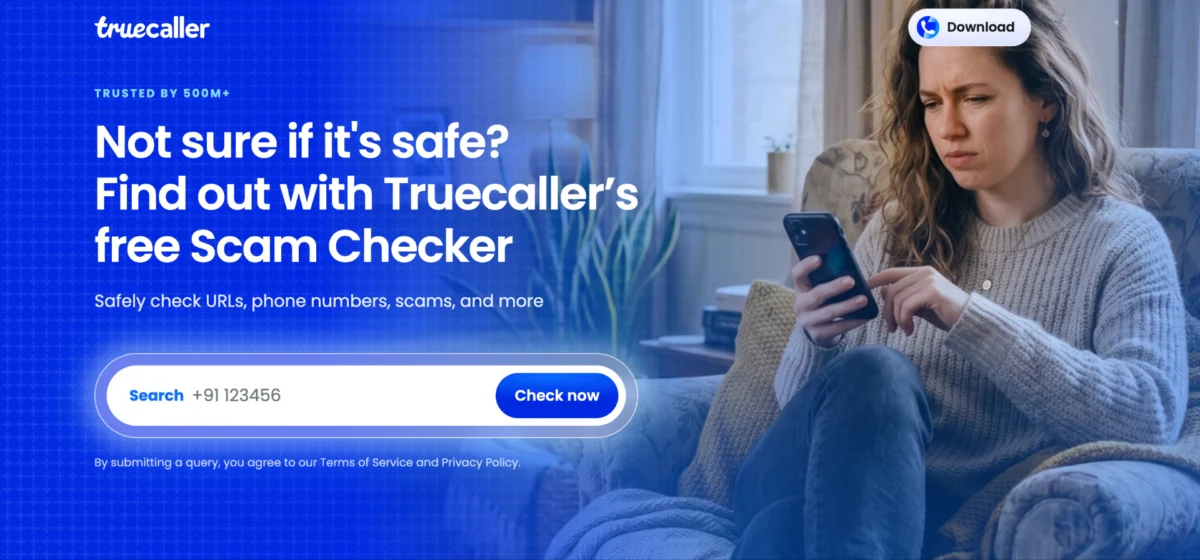
In an era where digital fraud has evolved from simple nuisance calls into sophisticated, multi-channel predatory schemes, the Swedish tech giant Truecaller is attempting a strategic pivot. After more than a decade of dominating the caller identification market and amassing a user base exceeding 500 million, the company has announced the launch of "Scam Checker." This new web-based and Android-integrated service marks a significant departure from Truecaller’s traditional model, offering a friction-free, no-app-required gateway to its massive repository of scam intelligence.
The move comes at a critical juncture for the company as it faces maturing growth in its primary markets and mounting regulatory pressure in India, its largest revenue and user hub. By opening its proprietary "ScamFeed" to the open web, Truecaller is not just launching a tool; it is repositioning itself as a comprehensive cybersecurity layer for the modern internet.
Main Facts: A New Frontier in Fraud Detection
The "Scam Checker" tool is designed to address the "moment of doubt" that occurs when a user receives a suspicious communication. Unlike the core Truecaller app, which requires installation and account creation, Scam Checker is a free-to-access web portal. Users can simply visit the site and paste a phone number, a URL, or the text of a suspicious message to receive an instant risk assessment.
Key Features and Mechanics
- Cross-Channel Verification: The tool is built to handle the diversity of modern scams. It can analyze traditional phone numbers, shortened links common in SMS phishing (smishing), and the content of messages from platforms like WhatsApp and Telegram.
- URL Deconstruction: To combat "hidden" malicious links, the service automatically expands shortened URLs and follows redirects to the final destination, checking the ultimate landing page against a proprietary risk database.
- Community-Driven Intelligence: The engine behind the tool is "ScamFeed," a crowdsourced repository where millions of users report fraudulent activity in real-time. Currently, Truecaller reports that approximately 20,000 active scam reports are live on the Indian version of ScamFeed alone, with over 1,300 new reports added weekly.
- Privacy-First "Lite" Access: While the full Truecaller app provides detailed names and profiles associated with numbers, ScamChecker provides a binary risk assessment (Safe vs. Suspicious) without requiring a sign-in, lowering the barrier to entry for casual users.
Initially launched in India, the service is slated for a rapid rollout across Latin America, the Middle East, Africa, and Southeast Asia—regions where digital adoption is high but consumer protection frameworks are often still evolving.
Chronology: The Evolution of a Global Guardian
To understand the significance of Scam Checker, one must look at the trajectory of Truecaller’s development over the last fifteen years.
The Era of Caller ID (2009–2018)
Truecaller began as a solution to a simple problem: identifying unknown callers. By crowdsourcing contact lists, the company created a global "phonebook" that allowed users to see who was calling before they picked up. During this decade, the primary threat was telemarketing and "one-ring" scams.
The Rise of Messaging Scams (2019–2023)
As telecom operators and smartphone OS developers (Apple and Google) began integrating basic spam filters, scammers migrated. The focus shifted from voice calls to SMS and third-party messaging apps like WhatsApp. Truecaller responded by integrating SMS filtering and "Flash messaging" into its Android app, but these features remained locked within the app’s ecosystem.
The Pivot to the Open Web (2024–Present)
In late 2024, Truecaller recognized a shift in consumer behavior. Data analyzed by the company suggested that users were performing approximately 14 million web searches every month to verify suspicious links or numbers. Instead of forcing these users into an app download, Truecaller decided to meet them on the search engine results page. This led to the Sunday launch of Scam Checker, signaling a transition from a "closed" utility app to an "open" web intelligence service.
Supporting Data: The Multi-Channel Threat Landscape
The necessity for a tool like Scam Checker is backed by alarming statistics regarding the shifting nature of digital fraud.
The GSMA 2025 Report
A 2025 survey conducted by the GSMA among Indian adults highlighted a fragmented threat landscape. According to the report:
- 46% of scam victims were approached through messaging apps (WhatsApp, Telegram).
- 37% were targeted via traditional SMS.
- 32% were reached through voice calls.
These figures illustrate that voice-based protection—Truecaller’s original bread and butter—now covers less than a third of the total attack surface.

Truecaller’s Internal Analytics
The sheer scale of the problem is reflected in Truecaller’s recent operational data. Between September 14 and September 20, 2024, the company’s systems evaluated 12.9 billion messages globally. Of those, 20.3 million were flagged as fraudulent. This high-volume detection capability is what Truecaller is now exposing to the public via the Scam Checker web interface.
Official Responses: Strategy and Vision
Rishit Jhunjhunwala, CEO of Truecaller, has been vocal about the philosophy driving this new product. In an interview with TechCrunch, he emphasized that the company must "follow the scammer."
"When you need it [protection], you’re usually somewhere else," Jhunjhunwala explained. "The link shows up on WhatsApp. Your mum gets a message about a traffic fine. A friend forwards you a screenshot and asks, ‘Is this real?’ What people do in that moment is search."
Jhunjhunwala also clarified the business logic behind the free tool. While Scam Checker is consumer-facing, it serves two secondary purposes:
- Lead Generation: It acts as a "freemium" entry point that encourages users to eventually download the full app for more detailed caller ID features.
- B2B Data Enrichment: The reports gathered through Scam Checker feed into "Truecaller for Business," a suite of fraud and risk products sold to enterprises to help them protect their own customer bases.
Addressing Regulatory Friction
The launch also serves as a strategic countermove to regulatory developments in India. The Indian government has been pushing the Calling Name Presentation (CNAP) service, which would force telecom operators to provide caller ID services natively. Furthermore, the Telecom Regulatory Authority of India (TRAI) recently ordered caller-ID apps to share their spam report data with telcos—a move Truecaller criticized as a "one-way exchange" that could potentially undermine their competitive advantage. By moving to the web and diversifying into link and message verification, Truecaller is building a moat that native telecom services cannot easily replicate.
Implications: The Future of Digital Trust
The introduction of Scam Checker carries profound implications for the tech industry, the regulatory environment, and the average consumer.
Competitive Dynamics with Big Tech
Apple and Google have made significant strides in native spam protection. Google’s "Verified Calls" and Apple’s "Silence Unknown Callers" have integrated Truecaller’s core functionality directly into the smartphone OS. By pivoting to a web-based scam checker that analyzes URLs and message text, Truecaller is moving into a space where OS-level protection is currently fragmented. This allows the company to remain relevant even as its original USP is commoditized.
The Shift to "Intelligence as a Service"
Truecaller is effectively transitioning from a utility app to an "Intelligence as a Service" provider. By making their database accessible via the web, they are positioning themselves as the "Google of Fraud." If successful, Scam Checker could become the default destination for anyone in the world questioning the legitimacy of a digital interaction.
Technological Advancements: AI and Beyond
The company has already hinted at the future of Scam Checker, which includes the ability to upload screenshots for AI-driven analysis. This is particularly relevant as deepfake technology and AI-generated phishing messages become more prevalent. Truecaller’s ability to use computer vision to analyze a screenshot of a suspicious chat and identify "red flags" (such as urgency, grammatical errors, or known malicious links) could set a new standard for consumer cybersecurity.
Conclusion
The launch of Scam Checker is a calculated gamble. By giving away a portion of its data for free on the open web, Truecaller risks cannibalizing some of its app traffic. However, in the face of aggressive competition from Google, Apple, and government-backed services, the company has recognized that its true value lies not in the "Caller ID" interface, but in the massive, real-time database of "bad actors" it has spent fifteen years building. As scams become more complex and multi-channel, Truecaller is betting that its community-driven intelligence will be the most effective shield for the next 500 million users.