Redefining the Virtual Toybox: The Rise of ‘Loony Laps’ and the Future of Mixed Reality Racing

The landscape of immersive gaming is often dominated by high-fidelity simulations and sprawling open worlds. However, a new contender in the spatial computing arena is looking to capture a different kind of magic: the tactile, chaotic joy of childhood toy car racing. Loony Laps, a solo-developed arcade racer, has officially been announced for the Meta Quest 3 and Quest 3S, with a release window set for the first quarter of 2027.
Developed by Paulo Cunha, Loony Laps represents a growing trend in the Quest ecosystem—games that leverage Mixed Reality (MR) to transform the user’s physical environment into a digital playground. By blending the nostalgia of die-cast collectibles with the cutting-edge capabilities of Meta’s latest hardware, Cunha aims to deliver an experience that prioritizes "chaos and laughs" over the rigid physics of traditional racing simulators.
Main Facts: A New Vision for Tabletop Racing
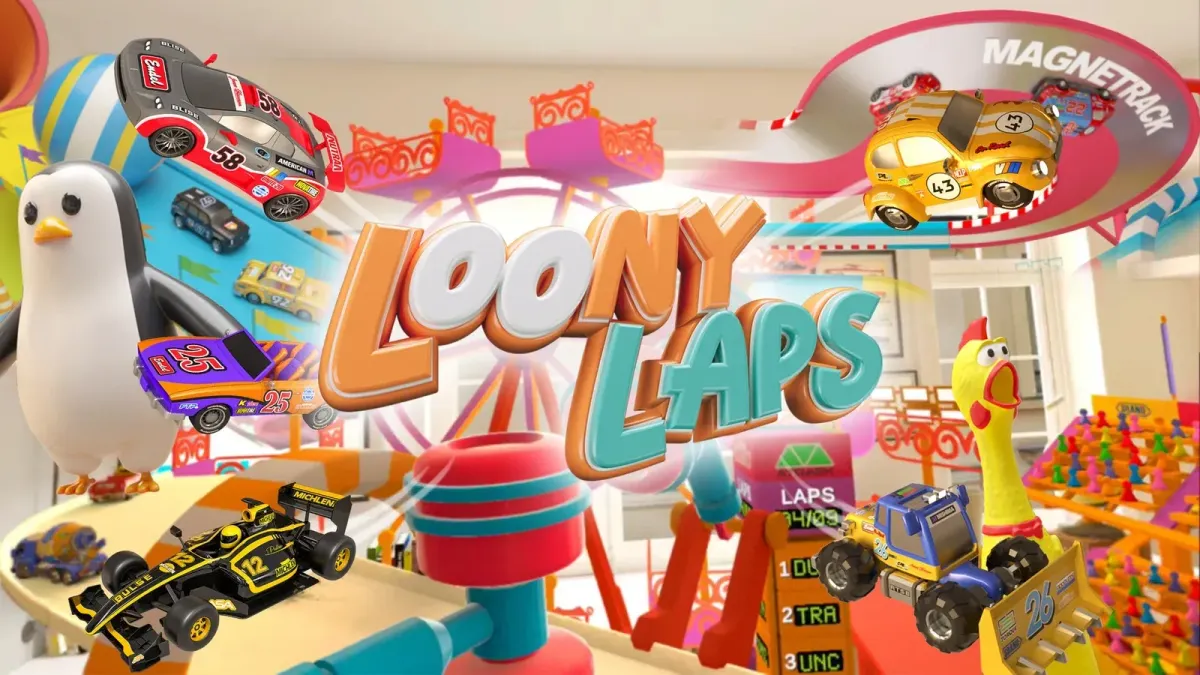
At its core, Loony Laps is an arcade toy racer designed specifically for the Quest 3 family of headsets. Unlike traditional racing games that place the player in the driver’s seat, Loony Laps adopts a "god-view" or tabletop perspective, reminiscent of playing with Hot Wheels or Matchbox cars on a living room floor.
The Core Gameplay Loop
The game is built around short, highly replayable sessions. At launch, it will feature 29 handcrafted tracks. These are not mere circuits but elaborate obstacle courses filled with:
- Dynamic Hazards: Mobile machinery and "ridiculous" obstacles that require split-second timing.
- Gravity-Defying Mechanics: Loops, jumps, and magnetic surfaces that allow cars to traverse walls and ceilings.
- Branching Paths: Multiple routes through a single track, encouraging exploration and strategic shortcuts.
Dual-Mode Immersion: VR vs. MR
One of the standout features of Loony Laps is its dual-mode functionality.
- Virtual Reality (VR) Mode: Players are transported to a dedicated miniature environment—a stylized "toy room" or digital basement where the tracks are permanently installed. This offers a fully immersive, controlled aesthetic.
- Mixed Reality (MR) Mode: Utilizing the high-resolution color passthrough of the Quest 3 and 3S, the game projects the tracks directly into the player’s physical room. A racetrack might wind around a real-world coffee table or leap over a sofa, effectively turning the player’s home into a life-sized diorama.
Customization and Progression
Despite being a solo project, the game promises a robust customization suite. Players can modify their die-cast vehicles with various paints, wheel types, and materials. Progression is handled through three primary modes:
- Championship: The main campaign where players unlock new cars and increasingly complex tracks.
- Quick Race: A mode designed for immediate play without the pressure of progression.
- Time Trial: A competitive mode focused on precision and mastering the intricacies of each track’s shortcuts.
Chronology: From Concept to 2027
The development of Loony Laps follows a timeline that mirrors the evolution of Meta’s hardware strategy.
The Conceptual Phase (2023-2024)
As Meta transitioned from the Quest 2 to the Quest 3, solo developers like Paulo Cunha began experimenting with the possibilities of "Passthrough" technology. The initial concept for Loony Laps was born out of the desire to recreate the physical sensation of "toy car logic"—where the rules of physics are secondary to the fun of the crash.
The Hardware Catalyst (Late 2024)
The announcement of the Meta Quest 3S—a more affordable entry point into high-quality Mixed Reality—provided a clear target audience for Loony Laps. Cunha’s decision to focus exclusively on the Quest 3 and 3S (omitting the older Quest 2) allowed for a higher degree of visual fidelity in the die-cast models and more complex physics calculations for the MR track placement.
The Official Reveal (September 2026)
In late 2026, the first official trailer for Loony Laps was released. The footage showcased a "well-polished machine," highlighting the vibrant colors and the seamless integration of digital tracks into physical spaces. The trailer immediately drew comparisons to classic titles like Micro Machines and TrackMania, but with the added depth of spatial computing.
The Road to Q1 2027
With the Meta Horizon Store page now live and open for wishlisting, the project enters its final year of polish. This period is expected to focus on optimizing the MR anchoring systems—ensuring that tracks remain stable even as players move around their rooms—and refining the AI of the "loony" opponents.
Supporting Data: The Technical and Market Context
The success of a title like Loony Laps is backed by significant shifts in the VR/MR market and the technical capabilities of modern standalone headsets.
The "Tabletop" Renaissance
Market data from 2024 and 2025 indicated a high attachment rate for "tabletop" style VR games (e.g., Demeo, LEGO Bricktales). These games reduce the motion sickness often associated with first-person VR, making them accessible to a broader demographic. Loony Laps sits firmly within this comfortable, high-engagement category.
Hardware Performance
The Quest 3’s Snapdragon XR2 Gen 2 chipset is a critical component for Loony Laps. The game utilizes:
- Spatial Mapping: To allow tracks to "interact" with furniture.
- High-Resolution Textures: To give the cars their "die-cast" look, complete with metallic flakes and plastic sheen.
- Low-Latency Passthrough: Essential for the MR mode to feel grounded in reality.
Solo Developer Viability
The rise of Paulo Cunha as a solo developer is part of a larger trend. With tools like Unity and Unreal Engine providing robust VR/MR frameworks, the barrier to entry for high-quality indie titles has dropped. However, a 2027 release date suggests a commitment to quality rarely seen in solo projects, which often rush to market.
Official Responses and Developer Philosophy
While Paulo Cunha has maintained a focused development cycle, his public statements and the game’s marketing materials offer a clear look at the project’s philosophy.
"Chaos Over Realism"
In a statement accompanying the trailer release, the design ethos was clarified: Loony Laps is not a simulator. "The tracks are designed around chaos and laughs," the developer noted. This is a deliberate departure from the "sim-racing" trend, aiming instead for the "Saturday morning cartoon" vibe. The goal is to evoke the feeling of a child throwing cars across a room, rather than a driver hitting an apex at Le Mans.
The Meta Partnership
While not a first-party Meta title, the presence of Loony Laps on the Meta Horizon Store with full Quest 3/3S optimization suggests a close alignment with Meta’s push for MR content. Meta has been vocal about wanting "room-scale" experiences that justify the upgrade from the Quest 2, and Loony Laps serves as a flagship example of this "Living Room Arcade" concept.
Implications: The Future of Spatial Gaming
The arrival of Loony Laps in 2027 carries several implications for the gaming industry and the evolution of Mixed Reality.
1. The Normalization of Mixed Reality
For years, VR was seen as an isolating experience—a headset that cuts you off from the world. Loony Laps represents the shift toward "inclusive" gaming. Because the game can be played in MR, the player remains aware of their surroundings, making it a more social experience that can be shared with others in the room who can watch the "miniature" race unfold on the floor.
2. The Longevity of the Quest 3 Lifecycle
By targeting a 2027 release, Loony Laps suggests that the Quest 3 and 3S will remain the primary consumer standard for several more years. It reinforces the idea that we are currently in the "sweet spot" of MR development, where the hardware is finally powerful enough to realize the visions developers had a decade ago.
3. The "Micro-Transaction" Alternative
In an era of live-service games and "battle passes," Loony Laps appears to be leaning toward a traditional "premium indie" model. By focusing on 29 handcrafted tracks and a dedicated progression system, it offers a complete, finite experience that values the player’s time—a trend that is seeing a resurgence among core gamers tired of "forever games."
4. A Template for Solo Developers
If Loony Laps succeeds, it will serve as a blueprint for other solo creators. It demonstrates that one person can create a highly polished, platform-specific experience by focusing on a specific niche (toy racing) and a specific technology (MR passthrough) rather than trying to compete with AAA studios on scale.
Conclusion
Loony Laps is more than just a racing game; it is a testament to the enduring power of play. By digitizing the toybox and placing it in our actual living rooms, Paulo Cunha is tapping into a universal nostalgia while pushing the boundaries of what a "game world" can be. When the first quarter of 2027 arrives, Quest 3 and 3S owners won’t just be playing a game—they’ll be turning their homes into the ultimate, gravity-defying racetrack. As the line between the physical and the digital continues to blur, Loony Laps stands as a colorful, chaotic, and highly anticipated milestone in the journey of spatial computing.