Unearthing Ancient Echoes: Enki’s Journey to Nippur and the Foundations of Mesopotamian Civilization
ERIDU, ANCIENT MESOPOTAMIA – In the fertile crescent of what is now modern-day Iraq, a profound narrative emerged approximately 4,000 years ago, weaving together the divine and the terrestrial. Known as Enki’s Journey to Nippur, or alternatively Enki Builds E-engura and Enki’s Journey to Nibru, this Sumerian origin myth offers a captivating glimpse into the foundational beliefs of one of humanity’s earliest civilizations. Dating back to circa 2000 BCE, the poem not only chronicles the creation of the sacred E-engura temple in Eridu by the revered god Enki but also delineates the divine ordination of musical instruments for use in the vibrant festivals of ancient Mesopotamia. More than a mere tale, this intricate composition served as a cornerstone of advanced study within the edubba, the prestigious Mesopotamian scribal schools, forming part of their demanding Decad curriculum.
The significance of Enki’s Journey to Nippur extends far beyond its narrative content. It functions as a charter myth, providing divine justification for core cultural practices: the sanctity of temples, the role of alcohol in religious celebration, and the indispensable place of music in worship. Furthermore, it offers invaluable insights into the curriculum of ancient scholarship, revealing the intellectual rigor and theological depth expected of Sumerian scribes. The poem also showcases a pervasive ancient motif – the creation of existence through divine speech – a concept that echoes powerfully in later religious texts, including the foundational chapter of the Biblical book of Genesis.
Main Facts: A Divine Blueprint for Culture
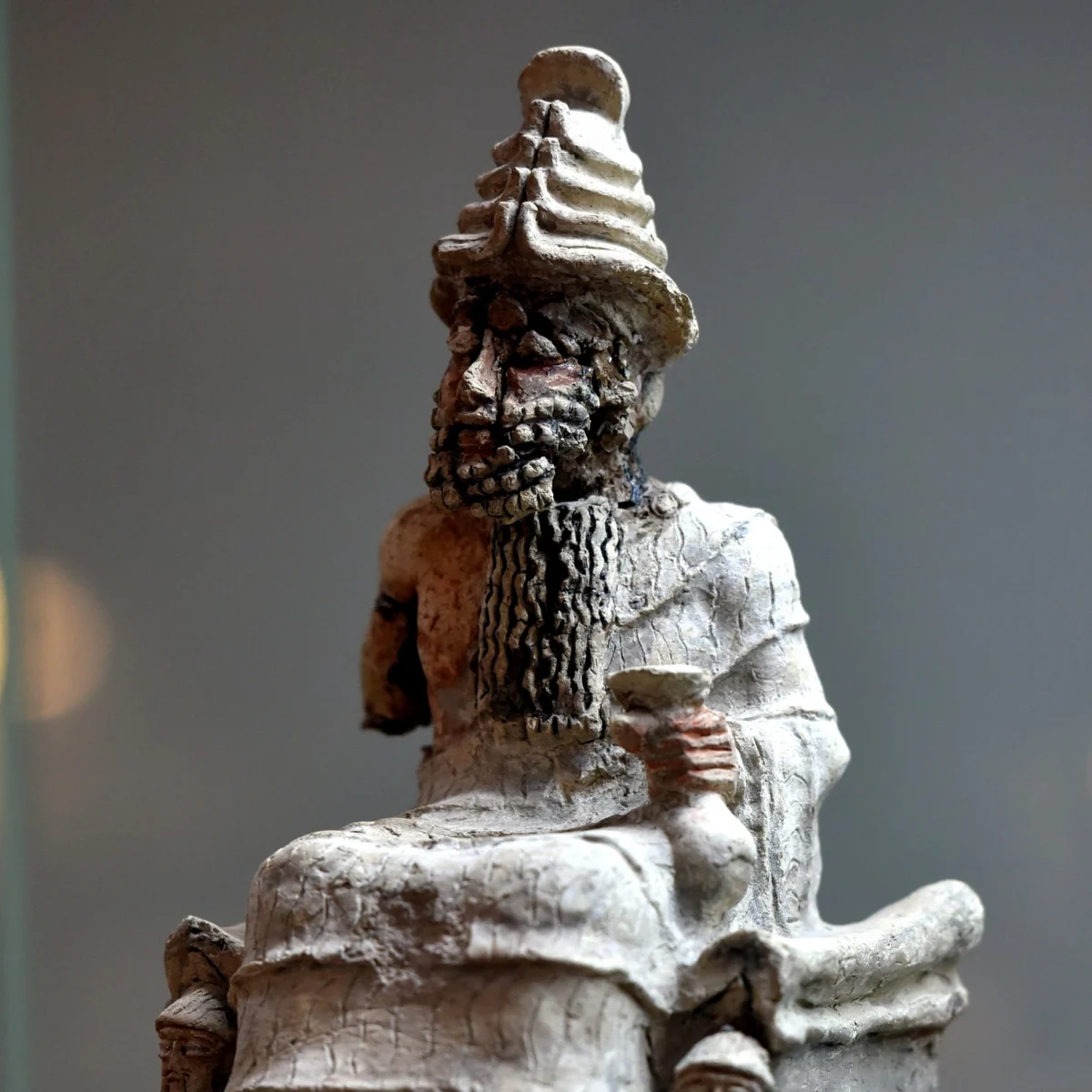
Enki’s Journey to Nippur presents a structured narrative centered on the Sumerian god Enki, deity of wisdom, freshwater, crafts, and creation. The poem’s primary focus, despite its title, is the meticulous construction and consecration of his temple, the E-engura, in the city of Eridu. Eridu, considered the oldest city on earth by the Sumerians, was believed to be the site where divine order, law, and kingship were first established, making Enki’s temple its symbolic heart.
The narrative unfolds in distinct phases:
- Divine Construction: Enki, lord of the abzu (the primordial freshwater ocean beneath the earth), raises his temple from this cosmic deep, adorning it with precious materials like silver and lapis lazuli. This act symbolizes not just physical construction but the bringing of order and beauty from chaos.
- Ministerial Praise and Instrument Ordination: Enki’s loyal minister, Isimud, offers an eloquent hymn of praise for the newly built E-engura. This section details the temple’s magnificent architecture and, crucially, lists various musical instruments—such as the lyre, aljar instrument, balaj drum, harhar, sabi-tum, and miritum—that Enki himself created to "offer their best for his holy temple." This moment solidifies the divine origin and sacred purpose of music in worship.
- Journey and Celebration: The final, shorter segment of the poem depicts Enki’s journey to Nippur, the sacred city of the supreme god Enlil. There, Enki hosts a grand drinking party, inviting major deities like An, the Anuna gods, and Enlil to celebrate his accomplishment. This divine banquet, focused solely on alcohol, underscores the integral role of beer and liquor in religious festivities and ritualistic gatherings, culminating in Enlil’s blessings upon Enki and his magnificent creation.
This myth, therefore, serves as a theological blueprint, legitimizing central aspects of Sumerian religious and social life. It demonstrates how cosmic order was established, how sacred spaces were consecrated, and how specific rituals involving music and communal drinking were divinely sanctioned, reflecting the Sumerian worldview where the divine permeated every aspect of existence.
Chronology: From Ancient Tablets to Modern Scholarship
The historical journey of Enki’s Journey to Nippur spans millennia, from its original composition and recitation in ancient Mesopotamia to its decipherment and study by modern Assyriologists.

Circa 2000 BCE: Composition and Early Dissemination
The poem is generally dated to the Old Babylonian period, roughly 2000-1600 BCE, a time of significant literary output and the formalization of scribal education in Sumer. While the events described within the myth recount a primordial past, the textual evidence places its written form firmly in this era. It was likely composed in Sumerian, the language of the region, and intended for oral performance as well as written study. Its inclusion in the "Decad" suggests it was a staple for advanced students, implying a consistent presence in educational institutions throughout the Old Babylonian period. This widespread educational use contributed to its preservation across different cities.
Mid-19th Century: Rediscovery in Nippur
The first fragments of Enki’s Journey to Nippur were unearthed during archaeological excavations at the ancient city of Nippur, located in present-day southeastern Iraq. Nippur was a vital religious and intellectual center of Sumer, home to the temple of Enlil and renowned scribal schools. The discovery of these cuneiform tablets in the mid-19th century marked the initial re-entry of this ancient narrative into human consciousness after millennia of silence. However, these early finds were often incomplete and fragmented, presenting a tantalizing but challenging puzzle to early decipherers.
Early 20th Century: Completing the Puzzle in Ur
Further crucial pieces of the poem were discovered during excavations at the city of Ur (modern Tell el-Muqayyar) in the early 20th century. Ur, another major Sumerian city, was also a hub of scribal activity. The tablets found here, often in better condition, provided missing lines and sections, allowing scholars to piece together a more complete version of the narrative. This process of combining texts from different sites, often revealing variations in wording (as noted in the provided text excerpts), is a common practice in Assyriology and highlights the dynamic nature of ancient literary transmission. The combined efforts of archaeologists and philologists over decades brought Enki’s Journey to Nippur from fragmented obscurity to a coherent, readable text.
21st Century: Digital Scholarship and Global Access
Today, texts like Enki’s Journey to Nippur are accessible through initiatives like The Electronic Corpus of Sumerian Literature (ETCSL), which provides transliterations, translations, and bibliographic information. This digital accessibility has revolutionized scholarly research, allowing for comparative studies and broader public engagement with these ancient narratives, ensuring their continued relevance and study.
Supporting Data: The Pillars of Sumerian Belief and Practice
The poem is rich with details that illuminate key aspects of Sumerian culture, religion, and daily life.
Enki: The Master Architect of Order
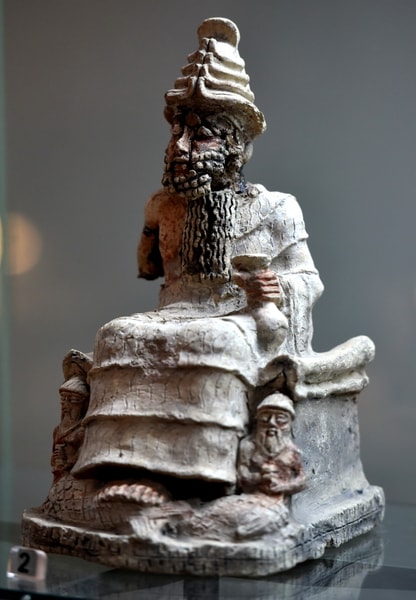
Enki was a complex and multifaceted deity, embodying wisdom, intelligence, trickery, crafts, magic, healing, creation, virility, fertility, and freshwater. His primary domain was the Abzu, the mythical freshwater ocean believed to lie beneath the earth, serving as the source of all springs and rivers. Scholar Stephen Bertman aptly describes Enki’s association with "arcane wisdom, embodied in both skilled crafts and sorcery," stemming from water’s "secret and potent source." As the founder of Eridu, the first city and the wellspring of order and kingship, Enki held a preeminent position within the Mesopotamian pantheon. He was often known by other names, such as Nudimmud (a name used in the poem), Ninsiku, Nissiku, Enkig, and Ea (his Akkadian counterpart), each reflecting different facets or cultural interpretations of his divine persona. While often considered the son of An (Anu), the sky god, his occasional reference as Enlil’s son in texts like this poem is understood symbolically, signifying his alignment with or execution of Enlil’s cosmic plans. Enki’s presence alongside An, Enlil, Inanna, Nanna, Ninhursag, and Utu-Shamash in the list of the Seven Divine Powers underscores his foundational importance.
The E-engura Temple: A Cosmic Nexus
The E-engura, Enki’s temple in Eridu, is depicted as a marvel of divine architecture. Raised from the abzu and adorned with silver and lapis lazuli, it symbolizes the emergence of order and civilization from the primordial waters. The poem vividly describes its features: "artfully made bright crenellation," "precious metal," "gold," "brickwork makes utterances and gives advice," "eaves roar like a bull," and a "fearsome lion" for a bolt. This anthropomorphic and zoomorphic imagery imbues the temple with a living, breathing presence, reinforcing its sacred power. The temple was not merely a building but a dynamic entity, a conduit between the divine and human realms, a place where the "fates were determined." Its association with the abzu also links it directly to Enki’s wisdom and life-giving power, making Eridu a spiritual heartland for the Sumerians.
Music and Ritual: A Divine Symphony
The poem’s explicit mention of various musical instruments and their divine creation by Enki is profoundly significant. It establishes a sacred etiology for music, presenting it not merely as entertainment but as an essential element of worship, directly mandated by a god. Instruments like the lyre, aljar instrument, balaj drum, ala drums, and ub drums are named, signifying their presence in Sumerian cultic practice. As scholar Dahlia Shehata notes, the religious status of an instrument is inferred from its context in mythology, its presence in temples, and its role in rituals. Enki’s Journey to Nippur perfectly illustrates this, showing Enki making instruments to "offer their best for his holy temple" and linking sacrificial offerings with the installation of drums. This divine sanction elevated music to a crucial ritual act, a means of communicating with and honoring the gods, ensuring that festivals were vibrant, sonorous expressions of devotion.
Beer and Celebration: The Nectar of the Gods
The drinking party hosted by Enki in Nippur is not a mere social gathering but a ritualistic celebration with deep cultural resonance. Beer was a staple beverage in Mesopotamia, consumed daily by all social classes, but it also held immense religious significance as "the drink of the gods." The divine drinking competition justifies and mirrors mortal traditions of communal feasting and drinking at religious festivals. The absence of food, focusing solely on beer and liquor, emphasizes the festive and perhaps even intoxicating aspect of the divine gathering, underscoring its celebratory and ritualistic nature. This portrayal reinforces the idea that human practices, particularly those associated with communal joy and worship, had divine precedents and approval.
The Edubba: Cradle of Mesopotamian Scholarship
The inclusion of Enki’s Journey to Nippur in the Decad curriculum of the edubba, the Sumerian scribal schools, highlights its advanced textual complexity and theological importance. Students began with simpler texts (the Tetrad) before progressing to more challenging compositions like this poem. The edubba was not just a place for literacy but for comprehensive education, encompassing language, mathematics, law, history, and theology. Scribes were central to Sumerian administration, economy, and intellectual life. Studying Enki’s Journey to Nippur would have provided scribal students with insights into cosmogony, divine hierarchy, ritual practices, and the intricate symbolism of their religious architecture, all while honing their linguistic and interpretative skills. The fact that it was one of the few Enki myths included underscores its didactic value in praising Enki as a creative deity and establishing cultural norms.
Scholarly Interpretations and Enduring Significance
Modern scholarship has extensively analyzed Enki’s Journey to Nippur, examining its literary techniques, theological implications, and cultural influence.
The "Creation by Speech" Motif and its Echoes
One of the most compelling aspects of the poem is its subtle yet powerful portrayal of creation through divine utterance. While not as explicit as in Enki and the World Order, where Enki literally speaks the world into existence, lines like "What Enki says is irrefutable; … is well established" followed by his act of raising Eridu "like a mountain" (lines 68, 71) strongly imply a similar creative power inherent in his word. This motif, where a deity’s command brings forth reality, is a common feature in ancient religious literature across various cultures.
Samuel Noah Kramer, a prominent Sumerologist, observed that Sumerian myths often attribute creation to Enki’s "creative efforts usually by merely stating what amounts to ‘Enki did it.’ Where the creative technique is mentioned at all, it consists of the god’s word and command, nothing more." While Kramer’s assessment points to a certain "superficiality" in explaining origins, it’s crucial to understand this within the ancient worldview. For a Sumerian audience, the act of divine creation and the authority of the creator were paramount. The how was secondary to the that.
This concept resonates significantly with later traditions. The first chapter of the Book of Genesis, for instance, famously depicts God creating the world through speech: "And God said, ‘Let there be light,’ and there was light." The parallels between these ancient Mesopotamian narratives and the foundational texts of Abrahamic religions suggest a profound literary and theological influence, indicating a shared cultural substrate for understanding divine power and creation. The idea of a god’s word being inherently creative power is a powerful and enduring concept.
Cultural Reinforcement and Worldview
The poem served a vital function in reinforcing the Sumerian worldview. It provided a divine narrative for the existence of Enki’s temple in Eridu, justifying its sacred status and the rituals performed within it. By showing the gods celebrating with beer and music, it validated human religious festivals and communal practices. These narratives fostered a sense of cultural and social unity, encouraging trust in the gods and adherence to established traditions. An ancient Sumerian audience sought assurance that their world was ordered, purposeful, and under divine care. Myths like Enki’s Journey to Nippur offered precisely that, demonstrating that the gods were active, trustworthy, and had laid down the very foundations of civilization and worship.
Implications: A Legacy Etched in Clay
The enduring implications of Enki’s Journey to Nippur are multifaceted, extending from the specificities of ancient Mesopotamian life to the broader currents of human intellectual and religious history.
Understanding Ancient Ritual and Society: The poem provides invaluable primary source material for understanding the religious rituals of ancient Mesopotamia. It confirms the importance of temples as cosmic centers, the sacred role of music and specific instruments in festivals, and the ritualistic significance of alcohol consumption. These details help scholars reconstruct the sensory and spiritual experiences of ancient Sumerians, offering a richer, more nuanced picture of their daily and sacred lives.
The Evolution of Religious Thought: The motif of creation through divine speech, so clearly present in this Sumerian text, highlights a crucial point in the evolution of religious thought. It demonstrates how early human civilizations grappled with fundamental questions of origin and order, often arriving at similar conceptualizations of divine power. The potential influence on later traditions like the Abrahamic faiths underscores the interconnectedness of ancient intellectual landscapes and the long-term impact of foundational narratives.
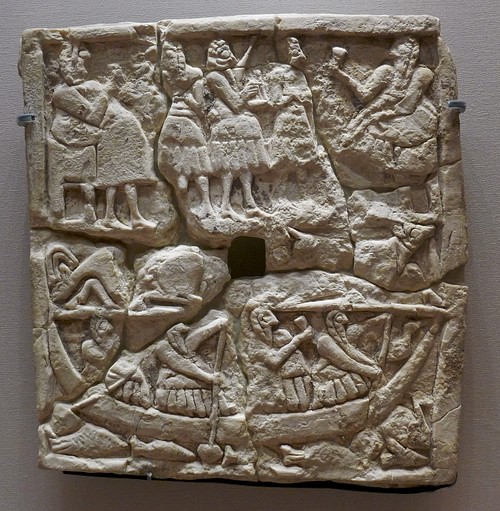
Insights into Ancient Education: As a canonical text in the edubba, the poem is a window into the sophisticated educational system of Mesopotamia. It reveals the advanced literary and theological demands placed upon scribal students, emphasizing not just rote memorization but also the comprehension of complex narratives that underpinned their civilization’s cosmology and social order. It showcases the intellectual legacy that Sumer passed down, not just in technology and law, but in the art of storytelling and critical thought.
An Enduring Literary Masterpiece: Beyond its historical and religious significance, Enki’s Journey to Nippur remains a powerful piece of ancient literature. Its vivid imagery, the detailed descriptions of the temple, the praise sung by Isimud, and the depiction of divine revelry all contribute to its artistic merit. It stands as a testament to the literary sophistication of the Sumerians, whose works continue to captivate and inform us about the dawn of human civilization.
In conclusion, Enki’s Journey to Nippur is far more than an ancient poem. It is a vital artifact, a key that unlocks understanding of Sumerian cosmology, religious practice, and intellectual life. From the mudbrick foundations of Eridu to the hallowed halls of the edubba, this myth charted the divine course for a civilization, shaping its understanding of creation, worship, and the very fabric of its existence, leaving an indelible mark on the tapestry of human history.