The End of an Era: Remembering Hal Williams, the Bedrock of the American Sitcom
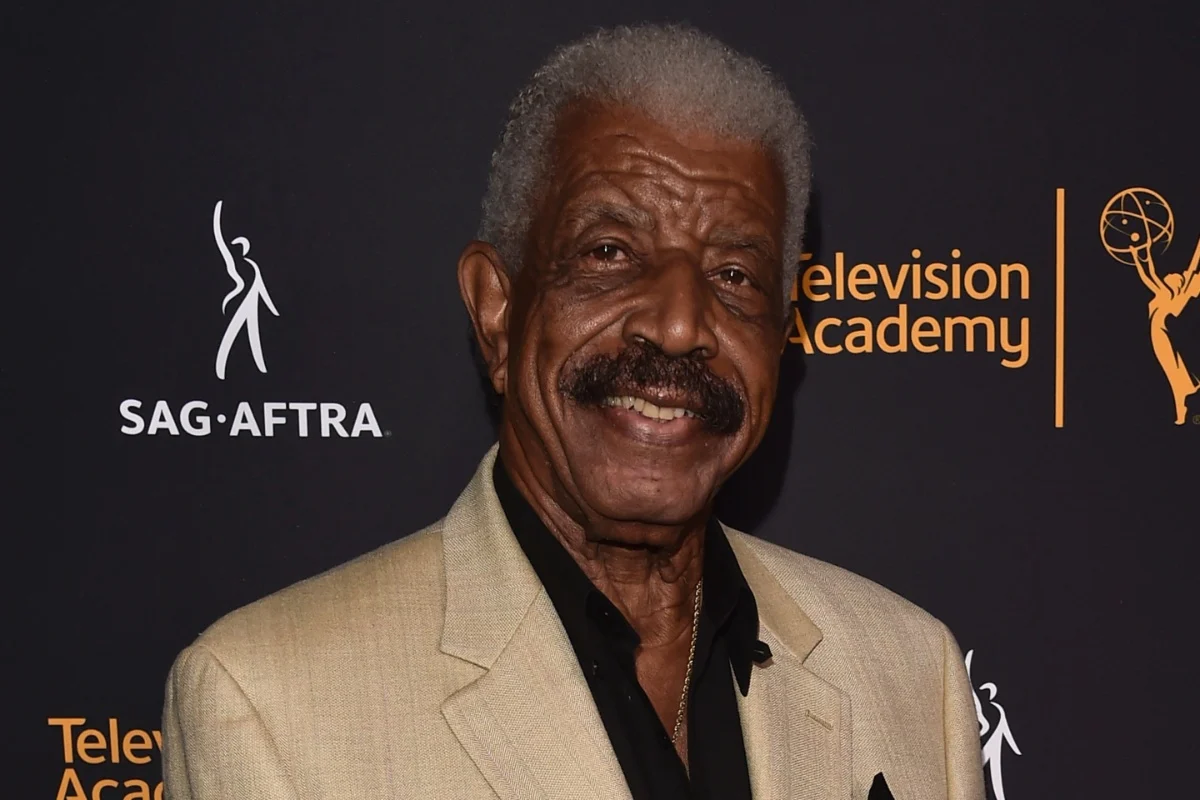
The landscape of American television has lost one of its most enduring and versatile figures. Hal Williams, a veteran actor whose career spanned over six decades and included iconic roles in some of the most beloved sitcoms in history, has passed away at the age of 91. His death was confirmed by his manager, marking the conclusion of a storied life that saw Williams transition from a reliable character actor to a household name and a foundational figure in the representation of Black families on television.
Williams was perhaps best known for his portrayal of Lester Jenkins on the hit NBC sitcom 227 and his recurring role as Officer "Smitty" Smith on the legendary Sanford and Son. His presence on screen was characterized by a unique blend of gravitas, warmth, and impeccable comedic timing—qualities that made him a favorite among audiences and peers alike.
Main Facts: The Passing of a Television Titan
Hal Williams died at the age of 91, leaving behind a legacy that touches multiple generations of viewers. While the specific cause of death has not been disclosed, his passing marks the departure of one of the final links to the "Golden Age" of the 1970s and 80s sitcom era.
Williams’ career was defined by his ability to play the "straight man" to some of comedy’s most eccentric personalities, yet he never faded into the background. Whether he was trading barbs with Redd Foxx or providing a stable center for the high-energy ensemble of 227, Williams brought a sense of reality and dignity to every role.
His most recent work demonstrated that his passion for the craft never waned. Even in his 90s, Williams remained active, recently appearing in the CBS reimagining of Matlock, starring Kathy Bates. This final role served as a poignant bookend to a career that began in the early 1970s, proving his relevance in an industry that often overlooks veteran talent.
Chronology: A Career Built on Consistency and Character
The 1970s: Finding a Footing in "Sanford and Son"
Hal Williams first rose to national prominence during the 1970s, a decade of radical change for Black representation on television. In 1972, he joined the cast of Sanford and Son in the recurring role of Officer "Smitty" Smith. Appearing in 22 episodes, Williams became half of one of the most memorable comedic duos of the era alongside Howard Platt, who played Officer "Hoppy" Hopkins.
The dynamic between Smitty and Hoppy was a masterclass in character-driven comedy. The recurring "bit" involved Hoppy delivering complex, jargon-heavy police reports, only for Smitty to "translate" the information into plain English for Fred Sanford. This role was significant not just for its humor, but for depicting a Black police officer as the more grounded, competent half of a professional pair—a subtle but important subversion of common tropes of the time.
The 1980s: The "227" Phenomenon
If Sanford and Son made him a recognizable face, 227 made him a star. Premiering in 1985, the show was centered on the lives of residents in an apartment building in Washington, D.C. Williams played Lester Jenkins, a construction company owner and the devoted husband to Mary Jenkins, played by Marla Gibbs.
For five seasons and 116 episodes, Williams anchored the show as the quintessential father figure. He provided the necessary balance to the vibrant, often chaotic energy of characters like Sandra Clark (played by Jackée Harry). His chemistry with Marla Gibbs was the heart of the series, portraying a loving, middle-class Black marriage with a level of normalcy and affection that was still relatively rare on network television.
It was also during this time that Williams played a pivotal role in the early career of Regina King, who played his daughter, Brenda Jenkins. The bond between the cast members was evident on screen and contributed to the show’s massive success, which included an Emmy win for Jackée Harry in 1987.
The 1990s to the Present: A Diverse Portfolio
Following the conclusion of 227 in 1990, Williams did not slow down. He continued to work steadily across television and film. He appeared in The Sinbad Show and had guest-starring roles in classics like The Waltons, On the Rocks, and Private Benjamin.
His film career was equally impressive, with credits in high-profile projects such as Hardcore (1979), The Rookie (1990), and the 2005 remake of Guess Who starring Bernie Mac and Ashton Kutcher. One of his more notable late-career film appearances was in the 2012 drama Flight, where he shared the screen with Denzel Washington, further showcasing his range as a dramatic actor.
Supporting Data: The Impact of a Half-Century in Entertainment
The longevity of Hal Williams’ career is backed by impressive statistics and a filmography that spans the evolution of the medium:
- Longevity: Williams’ career spanned 55 years, from his early uncredited roles in the late 1960s to his final appearance in 2024.
- Syndication Power: Both Sanford and Son and 227 have remained in nearly constant syndication for decades, ensuring that Williams’ work reached new audiences in the 1990s, 2000s, and beyond.
- Genre Versatility: While known for comedy, Williams appeared in over 80 different television series and films, ranging from gritty crime dramas to family-oriented period pieces like The Waltons.
- Cultural Milestone: 227 was a ratings powerhouse for NBC, often ranking in the top 20 shows during its peak, and served as a precursor to the "urban" sitcom boom of the 1990s.
In a recent interview with WKYC, Williams reflected on the creative freedom he enjoyed during his early years. Discussing the "Smitty and Hoppy" gag on Sanford and Son, he revealed that much of the comedy was born from improvisation and rehearsal: "We did it one time in rehearsal and the producers thought it was funny… Some days, we would come to rehearsal and they didn’t have anything solid. [The producers would then say,] ‘Go out, take a break for two hours, and bring us something back.’" This anecdote highlights Williams’ intrinsic understanding of comedy and his contribution to the writing process of his characters.
Official Responses and Industry Tributes
The news of Williams’ passing has prompted a wave of tributes from former co-stars and industry leaders, many of whom cite him as a mentor and a steadying influence on set.
His manager, in the official statement announcing his death, described him as "a true professional whose kindness off-camera matched his talent on-camera." The statement emphasized his love for the craft and his dedication to his family.
While formal statements from some of his high-profile co-stars like Marla Gibbs and Regina King are expected to follow, the social media landscape has already begun to fill with memories from fans and younger actors who grew up watching him. Many have pointed to his role as Lester Jenkins as one of the first times they saw a "regular, hardworking Black dad" portrayed with such consistency and respect on a major network.
Jackée Harry, who rose to fame alongside Williams on 227, has frequently spoken in past interviews about the "family atmosphere" Williams helped foster on set, noting that he was the "rock" that allowed the more flamboyant characters to shine.
Implications: The Legacy of the "Everyman"
The death of Hal Williams is more than just the loss of a talented actor; it is the loss of a cultural archetype. Williams played a vital role in humanizing the Black experience for a broad American audience during a time when media portrayals were often limited to extremes.
The Evolution of the Black Fatherhood Image
Through Lester Jenkins, Williams helped redefine the image of the Black father on television. He wasn’t a caricature or a "problem" to be solved; he was a businessman, a husband, and a father navigating the everyday challenges of life. This portrayal paved the way for future shows like The Cosby Show, Family Matters, and Black-ish.
The "Smitty" Legacy in Police Procedurals
His role as Officer Smitty in Sanford and Son also holds historical weight. By playing a character who was intelligent, composed, and essential to the "translation" of authority, Williams helped shift the narrative of Black men in uniform. The "buddy cop" dynamic he shared with Howard Platt can be seen as an early ancestor to the diverse police ensembles common in modern television.
Mentorship and the Next Generation
Williams’ legacy also lives on through the actors he influenced. By providing a stable environment for young actors like Regina King on the set of 227, he contributed to the development of some of today’s most prestigious Hollywood talents. His professionalism served as a blueprint for how to maintain a long, dignified career in an industry known for its volatility.
As the television industry continues to evolve into the era of streaming and niche programming, the career of Hal Williams stands as a testament to the power of the traditional network sitcom to unite audiences. He was a man who brought laughter and a sense of home to millions of living rooms, and his work will undoubtedly continue to be celebrated as a cornerstone of American broadcasting history.
Hal Williams was 91 years old. He leaves behind a body of work that is not only a record of a life well-lived but a map of the progress of Black artistry in the 20th and 21st centuries.