The Resurgence of the Vigilante: Why a Justice-Starved World is Turning to Unsanctioned Heroes
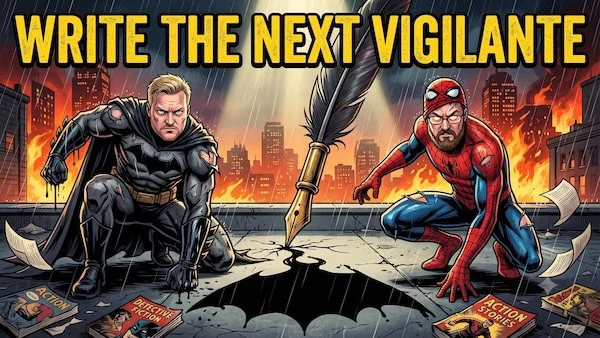
A palpable shift is underway in the cultural landscape. Forget caped crusaders battling extraterrestrial threats; the current zeitgeist is captivated by a more grounded, yet equally compelling, figure: the vigilante. Stories of individuals who dispense justice when the established system falters are simultaneously dominating bestseller lists and streaming charts, signaling a profound societal hunger for a brand of justice that feels increasingly absent.
This surge is not an isolated phenomenon. In June 2026, Larry Correia’s novel American Paladin rocketed to the top of Amazon’s urban fantasy charts, unseating popular "romantasy" titles immediately following a substantial $300,000 Kickstarter campaign. Coinciding with this literary success, the low-budget film Citizen Vigilante, starring Armie Hammer, defied conventional release strategies to break into the top 10 on iTunes. Despite a reported production budget as low as $5 million and a complete absence of theatrical distribution, the film has already grossed an estimated $65 million and continues its upward trajectory. These aren’t mere anecdotal successes; they are powerful indicators of a growing appetite for narratives that explore the complexities of justice outside the confines of bureaucracy.
The Market’s Embrace of the Unsanctioned
The market’s reaction to these emergent cultural touchstones is undeniable. According to Apple TV chart trackers from FlixPatrol, Citizen Vigilante made a swift entry into the top 10 movies on iTunes in the United States shortly after its June 19, 2026 release. The film, which features Armie Hammer as an American who takes justice into his own hands against criminals within a perceived broken justice system, resonated deeply with audiences.
The "low budget" designation, often implying a ceiling of around $5 million for independent cinema, has proven to be a deceptive metric for Citizen Vigilante‘s financial impact. Its impressive $65 million gross, achieved without a traditional theatrical run, underscores a potent demand for its themes. This phenomenon is not lost on those who craft narratives, suggesting a significant shift in reader and viewer preferences.
Adding another layer to the film’s reception, German film authorities controversially de facto banned Citizen Vigilante by refusing to assign it any age rating, despite its violence levels being comparable to widely available films like John Wick and The Equalizer. The narrative draws inspiration from real German cases where violent attackers received suspended sentences, often attributed to appearing remorseful in court. The American audience’s response to this perceived censorship has been to propel the film further up the charts, indicating a strong resonance with the frustration of seeing individuals who commit grave offenses escape meaningful consequences.
Simultaneously, Larry Correia’s American Paladin achieved remarkable commercial success. The novel not only claimed the number one position in urban fantasy categories but also secured strong placements across hardcover, e-book, and hot new release charts. These figures, impressive as they are, do not even account for the dedicated fan base that contributed $300,000 to its Kickstarter campaign, demonstrating a pre-existing and enthusiastic market for the book’s themes.
The novel itself centers on Mike Spears, a drifter vigilante who combats monstrous incursions from otherworldly dimensions in the contemporary American West. His methods involve a firearm and a personal code, operating entirely outside the purview of official authority. As one observer noted, the initial narrative of American Paladin bears a striking resemblance to Citizen Vigilante, with the protagonist engaging in battles against both human and supernatural "monsters." While Correia’s narrative quickly diverges into the supernatural, it taps into a similar vein of a character seeking to rectify wrongs when the system fails. This suggests the emergence of a new archetype, or perhaps, more accurately, the reemergence of a deeply ingrained archetype that has resonated with American readers for centuries.
The Ancient Roots of the Vigilante Archetype
The concept of the vigilante is far from a modern invention; its roots stretch back to antiquity. Biblical narratives often depict figures who dispense justice in the absence of established legal frameworks. The Old Testament is replete with instances where divine intervention or divinely appointed individuals served as arbiters when human systems proved inadequate. Samson, for example, operated outside the legal framework, challenging the prevailing powers. Similarly, Shamgar, armed with little more than a sharp stick, is portrayed as a force for justice.
In America, the lineage of vigilante fiction can be traced back to at least 1782. During the Revolutionary War, Colonel Charles Lynch was indemnified by the legislature for conducting extrajudicial tribunals against Loyalist plotters. His methods involved punishments such as whippings, fines, and property seizures, all enacted outside the established legal system.
The practice of "Lynch’s Law" itself, which involved collective action to administer justice when formal channels failed, predates the term’s later racial connotations. Historical accounts, such as those found in the Boston Gazette of January 25, 1774, describe acts like tarring and feathering – a brutal punishment inflicted upon a tax collector deemed to be enforcing unjust laws. This act, resulting in severe burns and even fatalities, represented a direct appeal to popular justice when perceived governmental overreach went unchecked. Initially, Lynch’s Law was applied to anyone perceived to have escaped judicial consequences, including those loyal to the British Crown.
The Literary Ancestry of Modern Vigilantes
The archetypal masked vigilante, a cornerstone of modern comic books and popular fiction, finds its literary progenitor in Robert Montgomery Bird’s 1837 novel, Nick of the Woods. The protagonist, Nick of the Woods, a Quaker pacifist whose family was murdered by Native Americans with no recourse from the government, was forced to cultivate his own skills to dispense justice. His transformation into a relentless avenger, operating outside the law, has been widely recognized as the blueprint for characters like Zorro, Batman, and The Punisher. The novel’s enduring legacy is amplified by its public domain status, allowing aspiring writers to draw inspiration and craft their own vigilante narratives without copyright concerns.
The enduring power of Nick of the Woods lies in its ability to encapsulate a primal fear and a corresponding desire: the fear of unchecked malevolence and the yearning for someone to confront it. This narrative thread, from Nick of the Woods to the contemporary vigilantes gracing our screens and bookshelves, highlights a consistent human need for figures who confront darkness when official channels falter.
The evolution of Batman’s character, for instance, often mirrors shifts in the cultural zeitgeist. His portrayal has fluctuated between lighthearted adventure and grim brooding, reflecting societal anxieties and desires. In recent years, a trend towards a more lethal Batman suggests a reader base increasingly receptive to more brutal forms of justice, a direct consequence of a perceived deficiency in real-world accountability. This longing for retribution, for justice that feels truly delivered, is finding its outlet in fictional narratives.
The Shifting Sands of Vigilante Narratives: From "Can’t" to "Won’t"
A crucial distinction separates the vigilante narratives of the past from the current wave. Historically, characters like Spider-Man, often labeled as vigilantes by figures like J. Jonah Jameson, operated in a context where the authorities were perceived as good but simply outmatched. Spider-Man’s interventions were framed as necessary due to the extraordinary nature of the threats he faced – aliens, gods, and advanced scientific marvels – which were beyond the capabilities of conventional law enforcement. His message was one of necessity: "I can fight this, you can’t. Let me do what you’re unable to."
The contemporary vigilante, however, operates on a fundamentally different premise. The issue is no longer about the system’s inability, but its unwillingness. Both American Paladin and Citizen Vigilante share a core narrative: the police are unwilling to investigate, to prosecute, or they allow convicted individuals to walk free. The targets of these vigilantes are frequently individuals who have already faced the legal system and been released, often for heinous crimes like rape or murder. The vigilante’s mission, in these stories, is to deliver the justice that the system failed to provide.
The scene in Citizen Vigilante where the protagonist confronts a victim of sexual assault and asks if she feels she received justice, only to act when she confirms she did not, encapsulates this shift. The film’s subsequent ban in Germany, juxtaposed with the permissible violence against Russian characters, highlights the sensitive and often politically charged nature of these narratives. The audience’s embrace of such stories suggests a deep-seated frustration with perceived systemic failures and a yearning for a more direct, albeit unsanctioned, form of accountability.
This theme is echoed in the 2009 film Law Abiding Citizen, where Gerard Butler portrays a man whose family is brutally murdered, and one of the perpetrators is granted a plea deal. The protagonist, a former CIA assassin, embarks on a campaign of retribution against all those complicit in the miscarriage of justice, including law enforcement officials and judges. The film masterfully blurs the lines of morality, leaving the audience questioning the righteousness of his actions, further reflecting the complex ethical landscape of vigilante justice.
Revenge vs. Vigilante Justice: A Father’s Duty and Institutional Accountability
The distinction between a pure revenge story and a vigilante narrative often hinges on the concept of extended paternal protectiveness. While both may stem from personal harm, a vigilante story frequently expands the scope of the protagonist’s mission. When a vigilante encounters another young person, particularly a girl, who mirrors the vulnerability of his own wronged child, his protective instincts extend outward. This is not merely about settling a personal score; it is about fulfilling a role that predates the state – the role of the family protector. The vigilante becomes a surrogate father, offering the justice that the state failed to provide.

This contrasts with narratives like John Wick. Despite Wick’s adherence to a code and his targeting of only those who wronged him, his actions are perceived as vengeance, not vigilante justice. The satisfaction he seeks is personal, for the loss of his dog – a surrogate for his deceased wife – rather than for a broader sense of societal justice or for the protection of others. While John Wick is a masterclass in storytelling that imbues the dog’s death with profound emotional weight, its core motivation remains personal retribution.
The key differentiator lies in the vigilante’s role as a neutral arbiter, operating under a code of objective, transcendent justice. Characters like the Paladin or the protagonist of Citizen Vigilante are not simply acting on personal vendettas. They are striving to uphold a higher standard, a moral compass that guides their actions. This adherence to a code is what allows readers and viewers to accept their actions, viewing them as replacements for a justice system that has fallen short.
This contrasts with traditional Western narratives, where a sheriff or a similar figure often intervenes to quell mob justice and restore an institutionalized process. Vigilante justice, in its purest form, targets not just individuals but also the institutions that enable their impunity. The police officers in Citizen Vigilante who stand aside, or the judge who fails to convict, become targets not out of personal animosity but as representatives of systemic failure. This focus on institutional accountability distinguishes it from pure revenge, which would typically be enacted by the victim themselves.
The concept of vengeance, while intertwined with justice, is ultimately personal. Vigilante justice, however, seeks to address a systemic breakdown. The narrative often explores the idea that "the only thing necessary for the triumph of evil is for good men to do nothing." This resonates deeply with audiences who feel a similar helplessness in the face of perceived injustices.
The Mechanics of a Compelling Vigilante Character
The success of any vigilante narrative hinges on the protagonist’s adherence to a strict code. In both American Paladin and Citizen Vigilante, the protagonists meticulously target only the guilty. This careful discrimination is crucial; without it, the narrative risks devolving into mob mentality, eliciting visceral revulsion rather than a sense of justice. A life for an eye is often perceived as excessive, while a life for a life, when balanced against a heinous crime, can resonate as a form of righteous retribution.
The current surge in vigilante fiction can be interpreted as a reflection of challenging times breeding a particular kind of protagonist. American Paladin‘s world is depicted as darker and more perilous than Correia’s previous works, a setting that amplifies the beacon of hope and justice offered by the Paladin. The stark contrast between the oppressive environment and the vigilante’s unwavering commitment to justice is a powerful narrative device.
The ability to convincingly portray a character capable of dispensing violence, without succumbing to gratuitousness, is a rare skill. Jonathan, one of the commentators, suggests that a certain personality type, one less averse to inflicting harm and more attuned to dispensing justice, is essential for crafting authentic vigilante characters. This is not about sociopathy, but about a profound understanding of human depravity and a resolute commitment to preventing its proliferation. This often requires a deep exploration of one’s own moral compass and a willingness to confront uncomfortable truths about human nature.
The distinction between a true vigilante and a sociopath is critical. While both may exhibit a disregard for conventional rules, the vigilante operates with a moral framework, however unconventional. The concept of redemption, as explored in literature like C.S. Lewis’s The Lion, the Witch and the Wardrobe, suggests that even characters exhibiting sociopathic tendencies can be guided towards a conscience, often through external moral influence.
Opportunities for Writers in the Vigilante Genre
For writers, particularly independent authors, the current landscape offers a fertile ground for exploring vigilante narratives. Traditional publishing houses and major Hollywood studios may be hesitant to greenlight such content, but the readership is demonstrably hungry for it. The success of American Paladin, despite its premium pricing and unconventional distribution, underscores this point.
Vigilante fiction lends itself naturally to episodic storytelling, a format that has historically proven successful for characters like Zorro, Batman, and The Punisher. The formula is straightforward: present a crime, illustrate the system’s failure to address it, and then introduce the vigilante who delivers justice. This structure provides a consistent framework for engaging narratives that resonate with audiences seeking clear-cut resolutions.
The father-figure vigilante, as seen in the film Taken and the character of the Mandalorian, proves particularly compelling. The instinct to protect one’s children, or those who represent innocence, taps into a primal and universally understood emotion. The Mandalorian’s unwavering pursuit of Grogu, even against overwhelming odds, exemplifies this potent narrative drive.
The Tragic Element and the Need for Hope
While the allure of vigilante justice is undeniable, questions arise about the ultimate trajectory of these characters and their stories. The concept of tragedy, while often shied away from in contemporary Christian fiction, holds significant narrative power. However, a purely tragic ending may not align with the current public need for hope.
The successful integration of tragic elements, as seen in Marvel’s Infinity War, suggests that audiences can engage with somber outcomes when they are part of a larger, more hopeful narrative. The idea that the "hard men who make good times" may not necessarily enjoy those good times, and may even meet a tragic end in the process, offers a nuanced perspective. The vigilante’s journey often involves accepting the full moral weight of their actions, understanding that "he who lives by the sword dies by the sword."
The Narnia series, for instance, masterfully weaves tragic elements into its narrative, culminating in The Last Battle. While this particular installment is often cited as less popular, its exploration of profound loss and sacrifice contributes to the series’ overall thematic depth. The key lies in balancing tragedy with an underlying sense of hope and redemption, a balance that has been a hallmark of enduring literature.
The Peril of Misinterpreting Vigilante Narratives
The power of vigilante fiction also carries a significant responsibility. If mishandled, these stories can distort moral frameworks and, in the most extreme cases, inadvertently encourage real-world vigilantism of the revenge-killing variety, potentially exacerbating cycles of violence and factional conflict. The resonance of these narratives with large segments of the population, particularly young men, demands a cautious and ethically grounded approach from creators.
The distinction between the nuanced justice of American Paladin and the more explicit and less morally centered portrayal in Citizen Vigilante highlights the critical choices writers face. While Citizen Vigilante delves into darker territory, the absence of a truly "divinely directed" paladin leaves room for a more spiritually grounded narrative. The opportunity exists for writers to craft stories that explore righteous justice, guided by a clear moral compass, offering a more wholesome and ethically sound vision of the vigilante archetype.
Ultimately, the success of vigilante narratives lies in their ability to tap into a deep-seated human need for justice and order, especially when those seem absent. The nuance lies in understanding this need and delivering it responsibly, incorporating elements of tragedy as cautionary tales without extinguishing the essential flame of hope. As the cultural appetite for these stories grows, the responsibility falls on writers to explore this complex genre with integrity, offering narratives that not only entertain but also illuminate the enduring human quest for a just world.