The Unending Quest for Meaning: Can Language Truly Capture Reality?
A philosophical inquiry into the limits of words and the enduring human drive to comprehend existence.
[City, State] – [Date] – In an era saturated with information, where communication flows ceaselessly across digital landscapes, a fundamental question lingers: can the very tools we use to articulate our thoughts—language—truly grasp the vastness and complexity of reality? This profound inquiry, posed by an inquisitive individual identified only as William, has been met with a thoughtful exploration by philosopher Geoffrey Klempner, shedding light on a perennial puzzle that has occupied thinkers for millennia. Klempner’s response delves into the historical evolution of this debate, tracing a lineage of philosophical giants who grappled with the inherent limitations of language in representing the world and addressing humanity’s most profound philosophical questions.
William’s poignant challenge, "Letters are just lines. The combinations are finite. So why do we fall so heavily onto language to communicate and solve the nature of big philosophical questions? Language will never have the capacity to represent reality, so why try? Why don’t we consider it a lost cause?" echoes a sentiment of profound skepticism. It’s a question that strikes at the heart of human endeavor, from the scientific pursuit of objective truth to the artistic exploration of subjective experience. If language is inherently incapable of fully encapsulating reality, then what becomes of our attempts to understand ourselves, the universe, and our place within it?
Klempner’s answer, far from dismissing the concern, embraces it as a cornerstone of philosophical inquiry. He acknowledges the seemingly paradoxical nature of language: arbitrary symbols—lines on paper or fleeting sounds—that nonetheless possess the remarkable capacity to represent an external reality. This very phenomenon, he suggests, is what makes the philosophy of language so compelling. The act of communication, he explains, is not merely a descriptive act; it is imbued with speaker’s intentions and the complex interplay of meaning. These fundamental concepts, Klempner asserts, are the bedrock upon which our understanding of how language functions, or perhaps fails to function, is built.
The Genesis of the Linguistic Paradox: From Ancient Greece to the Enlightenment
The philosophical quandary of language and its representational power is not a modern invention. Klempner traces its roots back to ancient Greece, pointing to Plato’s dialogue, Cratylus, as a pivotal moment in crystallizing this philosophical problem. However, the initial spark can be attributed to the Presocratic philosopher Heraclitus, who famously pondered the enigma of meaning in a perpetually changing world. Heraclitus’s observation that "you can never step into the same river twice" highlights a core tension: how can a stable word-label like "river" be applied to an object that is, by its very nature, in constant flux? This enduring problem underscores the challenge of assigning fixed meanings to fluid phenomena.
Fast forward to the 17th century, and we encounter the influential philosopher John Locke. Locke proposed a theory that words function as labels for "ideas" derived from our sensory experiences. For Locke, the meaning of any statement ultimately resided in the combination of these internal mental representations. This "two-stage process" suggested that language’s connection to reality was mediated by our internal conceptual frameworks.
Simultaneously, across the English Channel, Gottfried Wilhelm Leibniz, a contemporary and intellectual rival of Locke, was exploring a different avenue. Leibniz envisioned a characteristica universalis, a universal language that could articulate reality with such precision that all philosophical disputes could be resolved through logical calculation. While this ambitious project remained largely theoretical, it powerfully illuminated Leibniz’s recognition that the very structure of the language we employ inherently imposes limitations on our capacity for thought.
The Dawn of Modern Logic: Frege and the Quest for Precision
The 19th century witnessed a groundbreaking development in the formalization of thought and language with the work of Gottlob Frege, an obscure mathematician with a profound philosophical bent. Frege’s creation of the Begriffschrifft, an early system of symbolic logic, was revolutionary. For the first time, it provided a means to effectively represent quantifiers—terms like "all x" and "some x"—and to clearly display the logical relationships between quantified statements. This was a feat that had eluded even giants like Aristotle and generations of philosophers who followed. Frege’s work laid the crucial groundwork for understanding the logical structure underlying meaningful propositions, a necessary precursor to analyzing how these propositions relate to the world.
Wittgenstein’s Revolution: The Picture Theory and Its Discontents
It was within this intellectual landscape, shaped by Frege’s logical innovations, that Ludwig Wittgenstein emerged as a towering figure. Initially drawn to mathematics at Manchester University, Wittgenstein’s fascination with the underlying principles of numbers and their representation led him to Cambridge, where he encountered Bertrand Russell. Russell, building upon Frege’s ideas, had pushed the boundaries of symbolic logic, applying it not just to mathematics but also to epistemology and metaphysics. Like Locke before him, Russell believed that the logical analysis of language could unlock insights into how words serve as conduits for knowledge about the external world.
The crucible of World War I profoundly shaped Wittgenstein’s thinking. During his service in the Austrian Army, he meticulously documented his evolving philosophical ideas in his 1914-1918 Notebooks. These writings ultimately formed the basis of his seminal post-war work, the Tractatus Logico-Philosophicus.
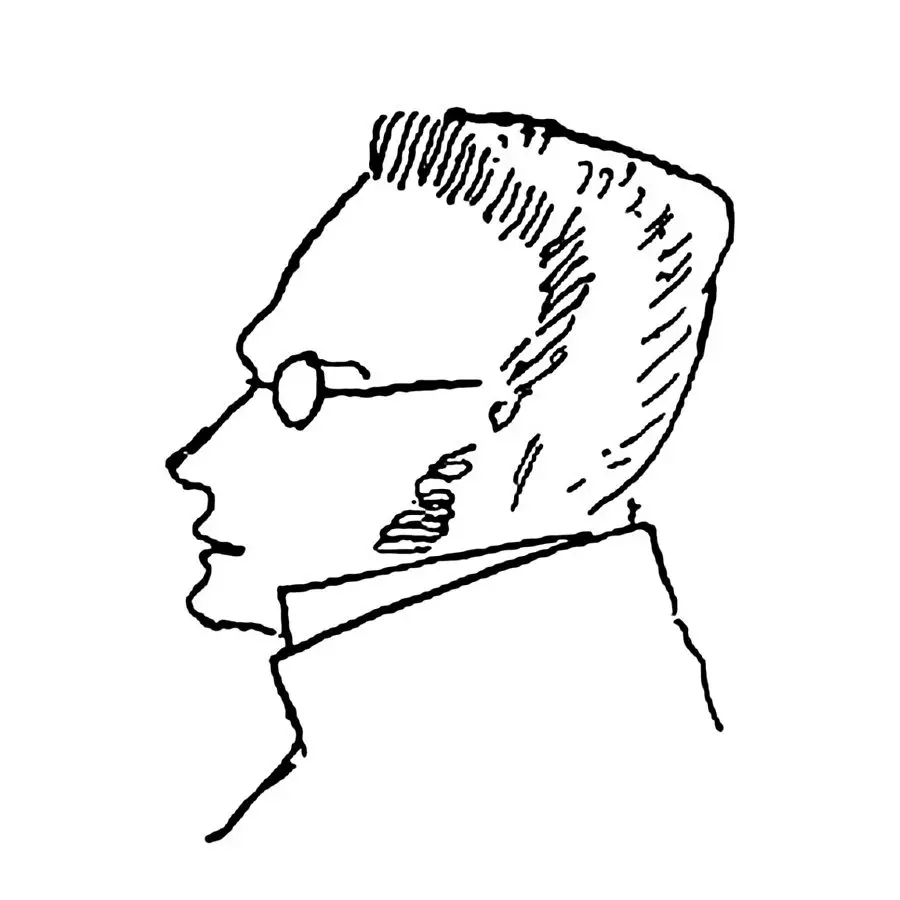
For many, including Klempner, the Tractatus was a mind-altering experience. Wittgenstein’s initial premise, elegantly articulated, was that words arranged in a sentence function as a "picture" of reality. He posited that any conceivable statement could ultimately be broken down into simpler, "atomic" sentences. These atomic sentences, in turn, would correspond to discrete "bits of the world," and their structure would directly mirror the relationships between these bits. The analogy often employed is that of chess notation, where every possible move and game state can be represented algebraically. Wittgenstein argued that the world, though seemingly more complex, operated on a similar underlying logical structure, even if it wasn’t immediately apparent.
This was indeed a revolutionary idea: that the very fabric of our linguistic expression could be understood as a direct, albeit complex, mapping of reality.
The Limits of Representation: Beyond the Picture
However, Wittgenstein’s intellectual journey did not end with the Tractatus. In his later philosophical work, he recognized the inherent limitations of his earlier "picture theory" of meaning. While it offered a compelling framework, it ultimately fell short of providing a complete answer to the fundamental question of how words acquire meaning in the first place.
Crucially, for the purpose of William’s question, the Tractatus presents a stark conclusion: anything that cannot be reduced to a "picture of reality" or a representation of "plain fact" is, in essence, unsayable. This implies that a vast swathe of human discourse, particularly that which concerns ethics, values, and the fundamental existential questions—"why is there anything at all?" or "why am I here to experience it?"—is rendered meaningless from an objective, logical standpoint. Such statements, while they may evoke subjective impressions or feelings, do not say anything in a factual, representational sense.
This radical proposition leaves philosophers in a precarious position. If the very questions that drive philosophical inquiry—questions about meaning, purpose, and existence—are, by Wittgenstein’s early logic, considered "gibberish," then where does that leave us?
The Later Wittgenstein and the "Language Games"
Klempner acknowledges that the later Wittgenstein offered a different perspective, suggesting the existence of numerous "language games." These games, he proposed, are diverse ways in which we use language for different purposes. Discourse about God, values, or the ultimate nature of reality could be understood as participation in these specific linguistic games, legitimate within their own contexts, albeit not necessarily representing objective facts.
However, Klempner expresses a personal frustration with this approach, a frustration that likely resonates with many who grapple with these profound questions. When posing such questions, the intent is not to "play" a game, but to genuinely seek understanding and discover objective truth. The desire is to know, not merely to engage in a linguistic exercise. The challenge, as Klempner articulates, lies in the inherent difficulty of fully explaining what one means to actually mean when attempting to articulate such deep-seated inquiries. The quest to bridge the gap between subjective intention and objective meaning remains a central, and often frustrating, aspect of philosophical exploration.
The Enduring Significance: A Call to Continued Inquiry
Despite the apparent limitations of language, Klempner’s response, and indeed the history of philosophy, suggests that abandoning the pursuit is not the answer. The very act of questioning the capacity of language is, paradoxically, a testament to its power and our inherent drive to understand. Philosophers, from Plato to Wittgenstein and beyond, have continuously refined our understanding of language, logic, and meaning, not to declare victory over reality, but to better navigate its complexities.
The ongoing dialogue, initiated by William’s query and explored by Klempner, highlights the enduring human need to grapple with the fundamental questions of existence. While language may never perfectly mirror reality, our persistent attempts to use it to describe, analyze, and question reveal a profound aspect of the human condition: our unyielding quest for knowledge and meaning in a universe that often defies simple explanation. The limitations of language, rather than serving as a dead end, may instead function as a perpetual invitation to deeper inquiry, more precise articulation, and a continued exploration of the intricate relationship between our inner worlds and the external reality we strive to comprehend. The philosophical journey, fueled by the very words we question, continues.