Unveiling "Take Cat": A Purr-fectly Pun-tastic Card Game That Embraces the Chaos
FOR IMMEDIATE RELEASE
In an era where board gaming continues its meteoric rise, offering everything from sprawling strategic epics to intricate narrative experiences, there remains a cherished niche for games that prioritize immediate fun, social interaction, and a healthy dose of lighthearted rivalry. Into this vibrant landscape bounds "Take Cat," a charmingly simple yet surprisingly engaging card game from the esteemed Gibsons Games. This review delves into the mechanics, player experience, and broader implications of a title that unabashedly leans into its feline-inspired puns, promising a fast-paced "take that" experience that will have players gleefully shouting its namesake phrase.
Unpacking "Take Cat": The Core Mechanics and Appeal
At its heart, "Take Cat" is a card-collecting game designed by Gareth Edwards, distinguished by its accessibility, rapid gameplay, and a central mechanic that ensures constant player interaction. The objective is straightforward: be the first player to successfully assemble five complete cats. However, as with any well-crafted family game, simplicity often belies a layer of strategic depth and unexpected player dynamics.
A Feline-Inspired Card-Collecting Frenzy
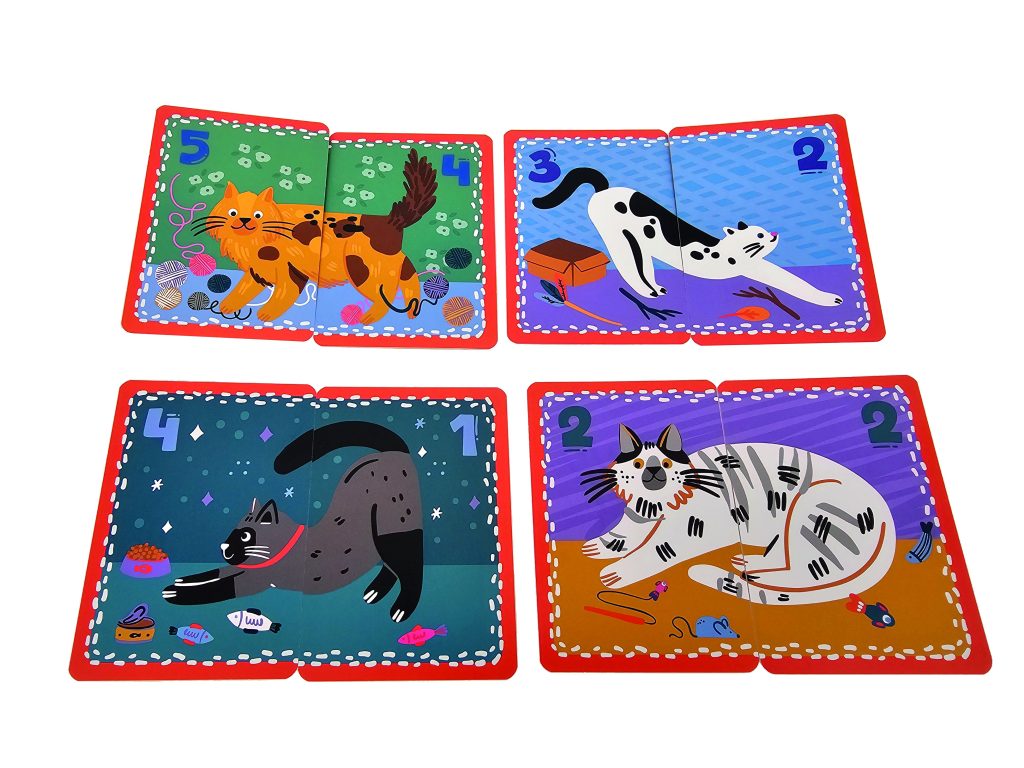
The core gameplay loop is elegantly simple, making it incredibly easy for players as young as six to grasp. Players draw cards from a central deck or, once established, from the discard pile. The goal is to collect two halves of the same cat – a top half and a bottom half – to form a complete feline illustration. Each of these cat halves, critically, bears a numerical value. Once a pair is matched and a cat is assembled, it is placed face-up in front of the player, marking progress towards the five-cat victory condition.
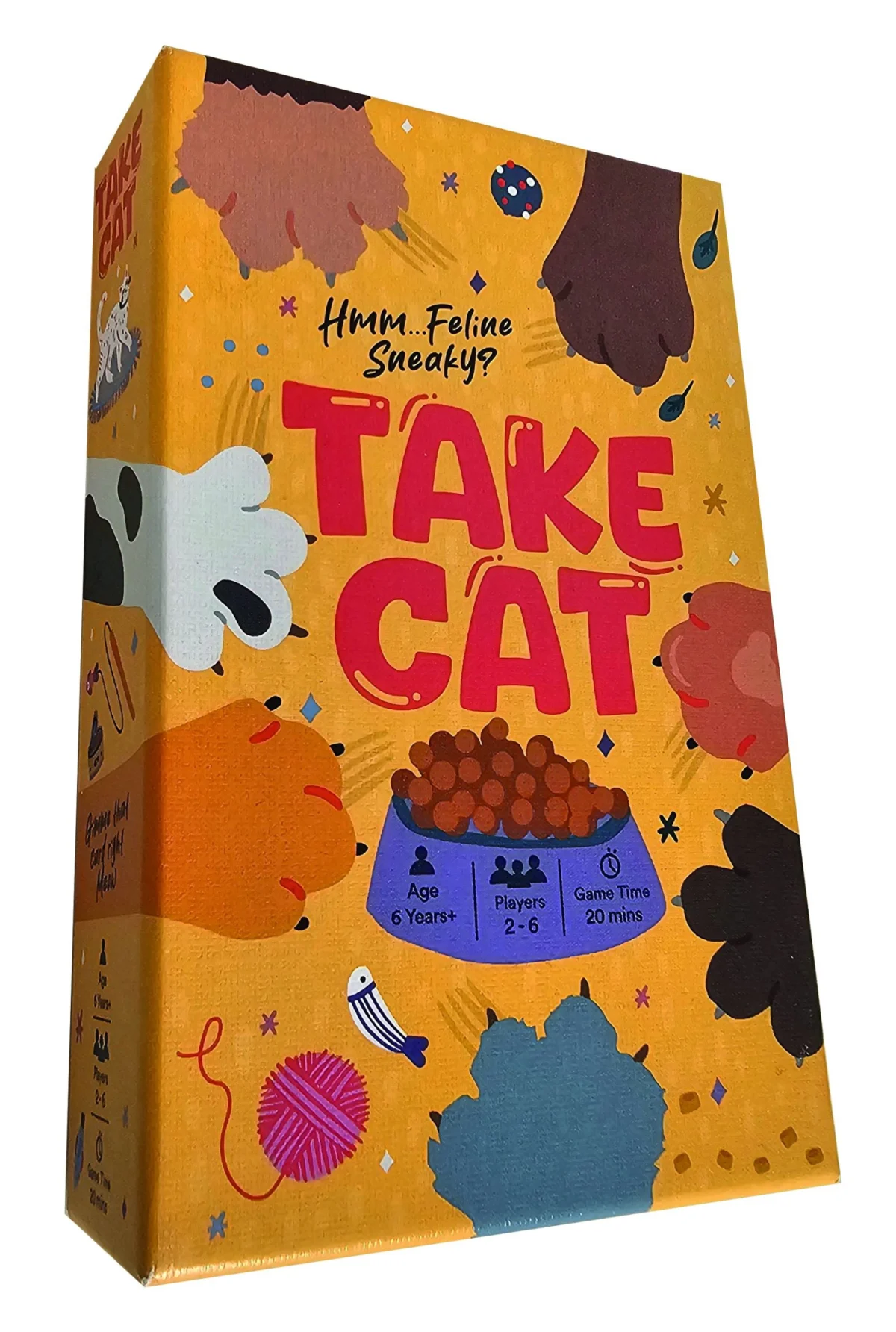
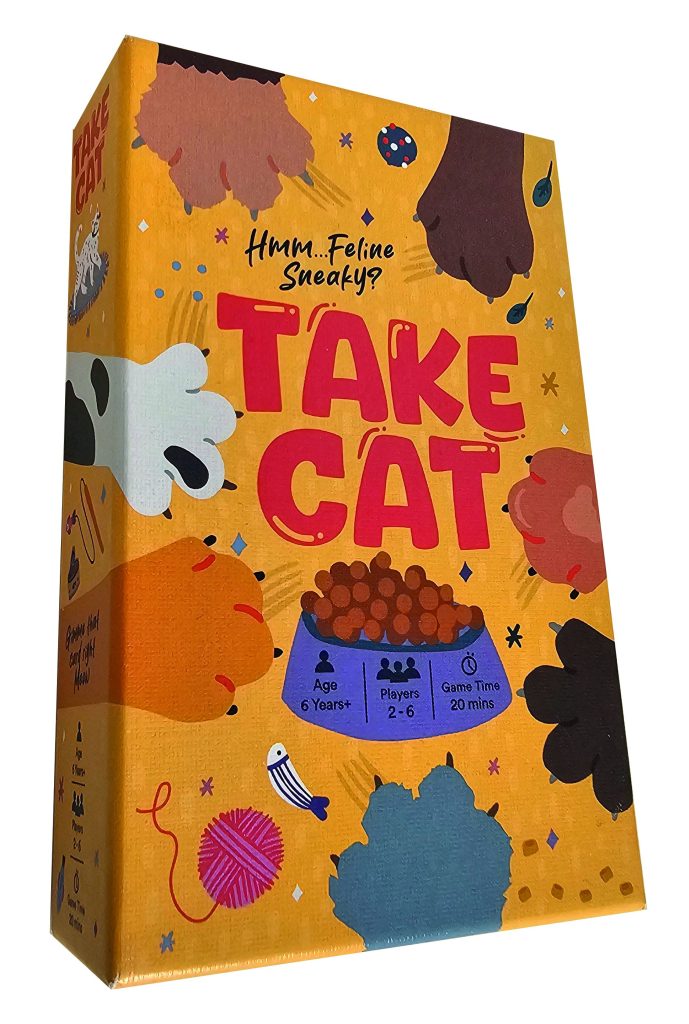
The artwork, as glimpsed from promotional materials and game images, appears vibrant and playful, showcasing a variety of whimsical cat characters that contribute to the game’s lighthearted atmosphere. The visual appeal is a crucial element for family games, immediately drawing in younger players and setting a cheerful tone for the competitive antics to come. The initial satisfaction of matching two halves and completing a cat is immediate and rewarding, creating a positive feedback loop that encourages continued play.
The Thrill of the Steal: "Take Cat!"
Where "Take Cat" truly distinguishes itself and injects its unique brand of playful aggression is in its "take that" mechanism. The numerical values on the cat pieces are not merely decorative; they serve as the linchpin of player interaction. If an opponent draws a cat piece (either a top or bottom half) that possesses a higher numerical value than one of the completed cats displayed in front of another player, they have the opportunity to steal that entire completed cat.
This action is not just a quiet exchange of cards; it’s a declared event. The rules explicitly mandate that the player executing the theft must exclaim, with a certain theatrical flourish, "Take cat!" This verbal component transforms a simple card exchange into a moment of boisterous triumph for the stealer and, often, mock indignation for the victim. It is this specific interactive element, combining strategic card play with a mandatory vocal declaration, that elevates "Take Cat" beyond a mere set-collection game and firmly plants it in the realm of party-friendly fun. The game cleverly leverages human nature’s inclination towards both competitive play and playful teasing, making each steal a memorable event rather than a dry transaction.
Designed for Instant Gratification
With an estimated play time of just 20 minutes, "Take Cat" is perfectly positioned as a "palette cleanser" – a quick, engaging interlude between more substantial gaming experiences, or an ideal opening act for a game night. Its compact nature, comprising 80 cards and an instruction leaflet, along with its accessible RRP of £10, further cements its status as an impulse purchase that delivers significant entertainment value. This combination of low cost, minimal setup, and rapid playtime makes it an attractive option for casual gamers, families, and those looking to inject a burst of energy into their social gatherings without committing to a lengthy engagement. The game’s category as "Family & Party" underscores its dual appeal, promising enjoyment across different age groups and social settings.
The Genesis of Feline Fun: A Chronological Look at Design and Market Trends
The creation and reception of "Take Cat" can be understood within the broader context of evolving trends in the tabletop gaming industry. While no specific development chronology is provided for this particular title, its characteristics reflect a deliberate design philosophy that has gained significant traction over the past decade.
The Rise of Accessible Card Games
The tabletop market has witnessed a sustained boom in quick, portable, and highly interactive card games. Titles like "Uno," "Exploding Kittens," "Sushi Go!," and "Monikers" have demonstrated the immense appeal of games that are easy to teach, fast to play, and generate significant social engagement. These games often serve as gateway experiences, introducing new players to the hobby without the intimidation factor of complex rulebooks or lengthy playtimes.
"Take Cat" fits perfectly into this niche. Its core mechanic of drawing and matching is universally understood, and the "take that" element, while competitive, is executed with a lighthearted touch that prevents it from feeling overly aggressive. Gibsons Games, known for its extensive range of puzzles and family-oriented games, likely identified this market segment as ripe for a fresh, engaging offering. The demand for games that can be pulled out on a whim, played on a small surface, and packed away quickly continues to grow, and "Take Cat" is a clear response to this consumer desire.
Gibsons Games’ Legacy in Family Entertainment
Gibsons Games has a long-standing reputation for producing high-quality family entertainment, particularly within the puzzle and traditional board game sectors. Their portfolio typically emphasizes accessibility, wholesome fun, and intergenerational appeal. The decision to publish "Take Cat" aligns seamlessly with this brand identity. The game’s straightforward rules, 6+ age recommendation, and emphasis on direct, albeit playful, interaction resonate with Gibsons’ commitment to fostering shared experiences for families.
While designer Gareth Edwards’ specific design philosophy for "Take Cat" is not detailed, one can infer an intentional focus on simplicity and immediate engagement. The numerical values on the cat pieces introduce a subtle layer of tactical decision-making without overwhelming players with complex choices. The explicit "Take Cat!" shout is a stroke of genius, transforming a functional game action into a memorable, often humorous, social ritual. This kind of design thinking – prioritizing player experience and interaction over intricate strategy – is a hallmark of successful family and party games.
A Game Session Unfurled: From Setup to Shouts of Victory
A typical game of "Take Cat" unfolds with a brisk pace, designed to keep all players engaged. The setup is minimal: shuffle the 80 cards, place the deck in the center, and you’re ready to begin. Players take turns drawing cards, hoping to find the missing half to one of their existing cat pieces, or a new half that might form a future cat.
The initial phase often involves a quiet period of collection, as players work diligently to complete their first few cats. However, this tranquility is swiftly shattered once players begin to accumulate completed felines. The "take that" mechanic introduces an immediate shift in dynamics. A player, drawing a high-numbered cat piece, might suddenly realize they have the power to dismantle an opponent’s carefully constructed collection. The ensuing "Take cat!" shout becomes a defining moment, often accompanied by laughter, playful groans, and a quick re-evaluation of strategies.
The game then becomes a delightful seesaw of collection and theft. Players might hold onto high-numbered cat halves, strategically waiting for the opportune moment to strike. They might try to complete lower-numbered cats quickly, knowing they are vulnerable, or prioritize higher-numbered cats to make them harder to steal. The tension builds as players approach the five-cat victory threshold, knowing that a single powerful draw from an opponent could snatch victory away at the last moment. This dynamic, unpredictable flow ensures that no two games are exactly alike, and every player remains invested until the very end.
Beyond the Puns: Supporting Data and Play Experience
While "Take Cat" revels in its pun-driven title and playful aesthetic, a deeper look reveals thoughtful design choices that contribute to its overall enjoyment and replayability.
Optimizing the Player Experience: Why Numbers Matter
The review’s crucial proviso regarding player count – recommending three to six players over the listed two to six – highlights a common challenge in game design: balancing scalability with optimal experience. In a two-player game, the "take that" mechanic, while present, lacks the chaotic multi-player dynamic that makes it truly shine. With only one opponent, the stealing can feel more direct and perhaps less forgiving.
However, with three or more "cat constructors," the game truly "hits the spot." The increased player count introduces more variables, more potential targets for theft, and a greater sense of shared experience. The numerical values on the cat pieces, therefore, become a subtle strategic element. Players must decide whether to complete a vulnerable, low-numbered cat immediately, hoping it survives, or to wait for higher-numbered halves to build more secure felines. There’s a delicate balance between pushing for completion and protecting one’s assets, adding a layer of tactical depth beyond pure luck of the draw. This nuanced interaction is what transforms the game from a simple card-matching exercise into a lively, interactive challenge.
The Social Dynamics of Catnapping
The distinct reactions evoked by the "Take cat!" shout – from ultra-competitive adult players declaring their "dickery" to children voicing their "catnapping" in a playful way – underscore the game’s versatility in adapting to different social contexts. For adults, the game offers a sanctioned outlet for playful aggression, where the explicit nature of the theft, combined with the mandatory shout, becomes part of the shared humor. It’s an opportunity to engage in lighthearted rivalry without genuine animosity, often resulting in boisterous laughter and memorable anecdotes.
For younger players, the game introduces the concept of strategic interaction and friendly competition in an age-appropriate manner. The "catnapping" becomes a fun, imaginative act, fostering engagement and teaching basic strategic thinking. The simplicity of the rules ensures that children can fully participate and understand the consequences of their actions, while the quick playtime maintains their attention. This adaptability is a significant strength, allowing "Take Cat" to genuinely live up to its "Family & Party" classification.
"Cover Your Assets" and the Art of the Steal
The recommendation of "Cover Your Assets" as a similar game provides valuable context, highlighting "Take Cat"’s place within a broader genre of games centered around stealing mechanics. "Cover Your Assets" is renowned for its direct player interaction, where players accumulate wealth by stacking assets, which can then be stolen by opponents if they play a matching card. Both games leverage the psychological thrill of acquiring something valuable and the tension of potentially losing it, creating a dynamic where players are constantly aware of their opponents’ boards.
This "take that" mechanic, while sometimes controversial in gaming circles for its potential to create negative player experiences, is implemented playfully in "Take Cat." The low stakes (a 20-minute game, £10 RRP) and the inherently whimsical theme mitigate any serious frustration. Instead, the stealing becomes a source of banter and excitement, rather than resentment. It’s a testament to the design that the act of theft is framed as an entertaining part of the game rather than a punishing one, encouraging a spirit of friendly competition.
Value Proposition: Entertainment at an Affordable Price
With an RRP of £10, "Take Cat" offers exceptional value. In an increasingly saturated market, finding a game that provides solid entertainment for such an affordable price point is a considerable achievement. The components, 80 cards and an instruction leaflet, are standard for this price range, and the quality, inferred from Gibsons Games’ reputation and the clear images, appears robust enough for repeated play. This low entry cost makes "Take Cat" an ideal impulse buy, a gift, or an accessible addition to any game collection, particularly for those on a budget or looking for a casual purchase. Its replayability, driven by the variable card draws and dynamic player interactions, ensures that the initial investment yields many hours of fun.
Publisher’s Purr-spective: Inferring Official Intent
While no direct official responses from Gibsons Games or designer Gareth Edwards are provided in the review, the characteristics of "Take Cat" allow for informed inferences regarding their likely intentions and objectives.
Gibsons Games’ Vision for Family Fun
It is highly probable that Gibsons Games envisioned "Take Cat" as a vibrant addition to their family-friendly lineup, specifically targeting the demand for quick, engaging card games. Their primary goals would likely include:
- Accessibility: To create a game that is easy to learn for a broad age range, ensuring that even young children (6+) can participate fully and enjoyably. The simple mechanics and clear objective are testaments to this.
- Fostering Interaction: To design a game that actively encourages communication, laughter, and direct engagement among players, rather than solitary strategic thinking. The "Take cat!" shout is a prime example of this deliberate choice.
- Broad Appeal: To develop a product that resonates with both casual players seeking light entertainment and more seasoned gamers looking for a fun "filler" game. The humorous theme and fast pace cater to both.
- Affordability: To offer a high-value entertainment product at an accessible price point, making it an attractive option for a wide consumer base.
The Designer’s Craft: Simplicity Meets Engagement
Gareth Edwards, as the designer, appears to have masterfully balanced simplicity with engagement. His design objectives for "Take Cat" likely included:
- Minimal Rule Overhead: To craft a game with rules that can be explained in mere minutes, allowing players to jump straight into the action without a steep learning curve. The 20-minute playtime reinforces this.
- Dynamic Gameplay: To ensure that the game’s flow is constantly changing and exciting, avoiding periods of stagnation. The "take that" mechanic, with its potential for dramatic swings, perfectly achieves this.
- Memorable Moments: To embed elements into the game that create lasting memories and anecdotes. The mandatory, often theatrical, "Take cat!" declaration is an ingenious way to achieve this, transforming a game action into a social event.
- Humor and Theme Integration: To fully embrace the pun-tastic theme, using it not just for aesthetics but as an integral part of the game’s identity and fun factor. The reviewer’s emphasis on "leaning into the pun" suggests this was a core design intention.
The Paw-sitive Implications: What "Take Cat" Means for Game Nights
"Take Cat" is more than just another card game; it represents a specific approach to game design that carries several positive implications for tabletop enthusiasts and casual players alike.
A Perfect Palette Cleanser and Gateway Game
One of the most significant implications of "Take Cat" is its role as a "palette cleanser." In the context of game nights, this refers to a short, often lighthearted game played between longer, more intense titles. It allows players to reset, laugh, and decompress without committing to another lengthy strategic endeavor. This function is invaluable, especially for groups that enjoy a variety of game types.
Furthermore, its sheer accessibility makes it an excellent "gateway game" for introducing new individuals to the world of tabletop gaming. Its simple rules, familiar card-matching mechanic, and immediate gratification can demystify the hobby for newcomers who might be intimidated by more complex games. By providing a fun, low-pressure entry point, "Take Cat" can help cultivate a broader interest in board games, bringing more people into the community. Its portability also means it can be easily taken to social gatherings, picnics, or family vacations, ready to spark spontaneous fun.
Fostering Interaction and Friendly Rivalry
In an increasingly digital world, games that actively encourage face-to-face interaction and generate genuine laughter are more valuable than ever. "Take Cat" excels in this regard. The very nature of its "take that" mechanic, coupled with the mandatory vocalization, ensures that players are constantly interacting, reacting, and often playfully antagonizing each other. This kind of direct engagement fosters social bonding and creates a lively, memorable atmosphere. It teaches children about healthy competition and sportsmanship, while for adults, it offers a release from daily stresses through lighthearted rivalry. The game’s capacity to transform a quiet gathering into a boisterous one, filled with shouts and cheers, is a testament to its social engineering.
Longevity and Future Potential
Despite its apparent simplicity, "Take Cat" possesses a strong degree of replayability. The random draw of cards ensures that each game presents a unique set of challenges and opportunities. The dynamic player interactions mean that the game’s narrative unfolds differently every time, preventing it from feeling stale. Players will constantly adapt their strategies based on the cards they draw and the actions of their opponents.
While the current offering is robust, the inherent modularity of card games also suggests potential for future expansions. New cat types with unique abilities, "wild" cat halves, or even special action cards could easily be introduced, extending the game’s life and adding further layers of strategic depth. Such expansions, if handled thoughtfully, could build upon the existing foundation without compromising the game’s core accessibility, further solidifying its place in game collections.
Final Verdict: Embrace the Chaos, Embrace the Cat
"Take Cat" from Gibsons Games is a delightful, unpretentious card game that delivers exactly what it promises: fast, fun, and feisty family entertainment. It masterfully blends simple card-matching with an engaging "take that" mechanic, all wrapped in a pun-filled, feline-themed package. While it truly shines with three to six players and benefits from a group willing to embrace its playful chaos, its accessible rules, quick playtime, and affordable price point make it an unequivocal recommendation.
So, if you’re in search of a game that won’t dominate your evening but will certainly punctuate it with bursts of laughter and shouts of "Take cat!", look no further. It’s a testament to good design that such a straightforward concept can yield so much joy. For those with a "cat-do attitude," "Take Cat" is a purr-fect addition to any game night.