Charvaka: The Ancient Indian Philosophy That Challenged the Divine

New Delhi, India – In the bustling intellectual landscape of ancient India, a revolutionary philosophical school emerged around 600 BCE, daring to question the very foundations of spiritual and societal norms. Known as Charvaka, and sometimes as Lokayata or Brhaspatya, this school of thought championed an radical form of materialism, asserting that perceivable matter is the sole reality and dismissing all concepts of a soul, supernatural entities, or divine planes of existence as mere human inventions. Its rise represented a profound intellectual upheaval, offering a stark counter-narrative to the prevailing Vedic traditions and laying groundwork for empirical inquiry centuries ahead of its time.
Main Facts: A Materialist Revolution in Ancient India
Charvaka’s core tenets were strikingly audacious for an era steeped in spiritual cosmology. At its heart was an uncompromising materialism, which posited that reality is limited to what can be directly perceived by the senses. This fundamental principle led to a wholesale rejection of:
- All supernatural claims and divine beings.
- Religious authority, scriptures, and rituals.
- The concepts of an immortal soul (atman) or a universal divine essence (Brahman).
- The acceptance of inference and testimony as reliable means of establishing truth.
- Any notion of an afterlife, karmic retribution, or reincarnation.
Instead, Charvaka proposed that the ultimate purpose of human life was the pursuit of pleasure and the avoidance of pain in this singular existence. This hedonistic outlook was not necessarily one of reckless abandon, but rather a rational conclusion drawn from the belief that there was no divine arbiter, no cosmic ledger of deeds, and no future beyond the present life.
The exact origins and nomenclature of this school are subjects of ongoing debate among scholars. Some suggest the name "Charvaka" is derived from the Sanskrit root "charv," meaning "to chew," implying an emphasis on enjoying life’s sensory pleasures, particularly through eating and drinking. Others contend it refers to a specific founder named Charvaka, or perhaps a disciple of a reformer named Brhaspati. The alternative name, "Lokayata," literally meaning "philosophy of the people" or "prevalent in the world," further hints at its accessibility or, as some critics later suggested, its superficiality. "Brhaspatya," meanwhile, honors Brhaspati, who is widely considered either its primary founder or a pivotal figure in its early development.
Regardless of its precise etymology, Charvaka stood as a unique and radical voice, advocating for a purely empirical and materialistic worldview that challenged the spiritual bedrock of ancient Indian society.
Chronology: Arising from the Vedic Age
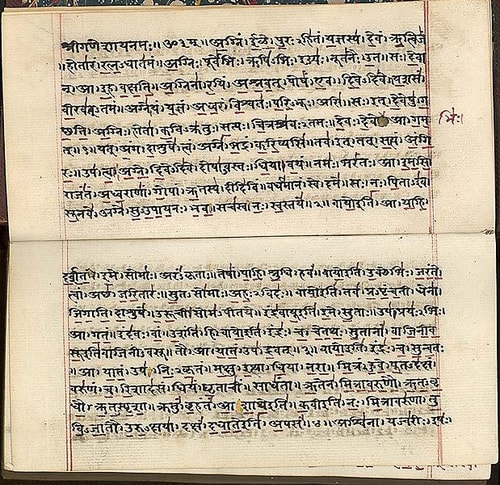
To fully grasp the revolutionary nature of Charvaka, it is essential to understand the dominant philosophical and religious framework it sought to dismantle: the Vedic tradition. From approximately 1500 BCE to 500 BCE, the Vedic Period saw the codification of the Vedas – the Rig Veda, Sama Veda, Yajur Veda, and Atharva Veda – which form the foundational texts of Hinduism (known to adherents as Sanatan Dharma, the "Eternal Order" or "Eternal Path").
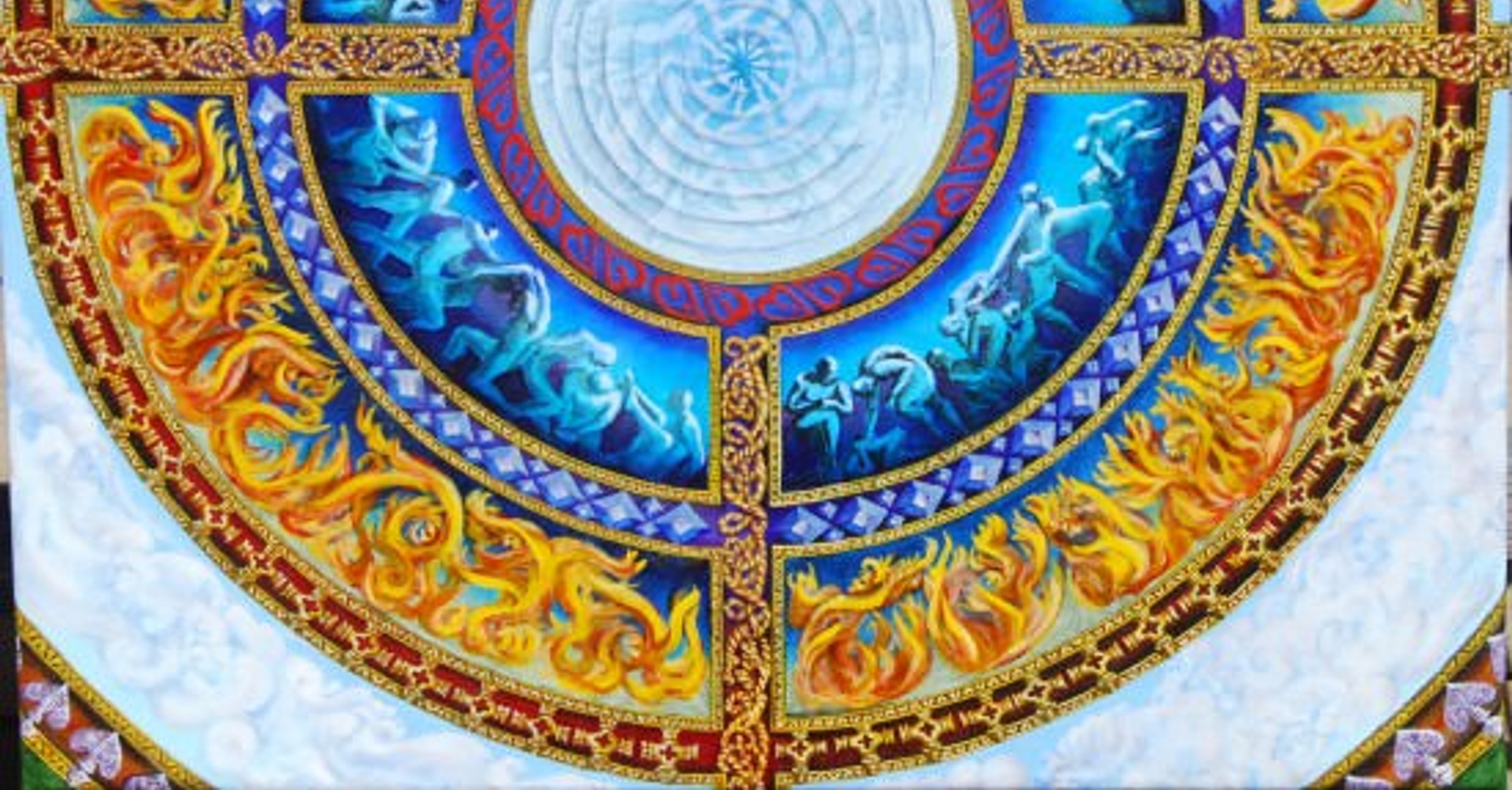
These texts, considered Shruti ("what is heard") by orthodox Hindus, were believed to be eternal truths revealed to ancient sages through cosmic vibrations. They articulated a complex cosmology and an intricate system of spiritual duties. Central to this vision was Brahman, the ultimate reality and universal consciousness, and atman, the individual soul believed to be a spark of Brahman residing within every living being. The purpose of life, according to Vedic thought, was to realize the unity of atman with Brahman, achieved through righteous action (karma), adherence to one’s duty (dharma), and eventually, liberation (moksha) from the endless cycle of rebirth (samsara) and death. This elaborate system, administered and interpreted by a powerful priestly class, the Brahmins, formed the socio-religious backbone of ancient India.
It was into this deeply spiritualized world that Charvaka emerged, alongside other dissenting schools like Jainism and Buddhism. These schools were categorized as nastika ("there does not exist"), signifying their rejection of the Vedas as ultimate spiritual authority, in contrast to the astika ("there exists") schools that affirmed Vedic truths. While Jainism and Buddhism also challenged certain Vedic tenets, they still embraced spiritual paths, karmic principles, and the possibility of liberation. Charvaka, however, went further, dismissing the entire spiritual edifice.
Brhaspati, often credited as the progenitor of Charvaka, is thought to have been motivated by a profound skepticism towards what he perceived as the superstitious and exploitative nature of orthodox religious practices. Observing the priestly class accumulating wealth and power through rituals, sacrifices, and pronouncements based on incomprehensible Sanskrit chants, Brhaspati likely saw a system designed to control the masses and enrich the few. His vision, therefore, was a direct response to this perceived charade, proposing a life lived fully in the present, free from the anxieties of divine judgment or future rebirths, because, as he argued, there was no credible evidence for either. While the precise details of Brhaspati’s initial teachings are lost, the available fragments suggest a radical call for individuals to embrace life’s pleasures without fear, acknowledging that this earthly existence was the only one they would ever experience.
Supporting Data: The Pillars of Charvakan Thought
Charvaka’s philosophical framework was built upon a radical empiricism, an epistemology centered entirely on direct sensory perception. This became the cornerstone for all other Charvakan rejections and affirmations.
Epistemology of Direct Perception (Pratyaksha): The Sole Arbiter of Truth
For Charvaka, Pratyaksha (direct perception) was the only valid pramana, or source of knowledge. If something could not be seen, heard, touched, tasted, or smelled, it simply did not exist. This stood in stark contrast to orthodox Indian philosophies, which recognized multiple pramanas, including Anumana (inference), Shabda (testimony or verbal authority, especially of sacred texts), Upamana (analogy), and others.
Critique of Inference and Testimony: The "Smoke and Fire" Analogy Revisited
Charvaka vehemently rejected inference as a reliable source of truth, arguing that it inherently carried the risk of error. The classic example used to illustrate this point is the observation of smoke. An individual seeing smoke emanating from a distant building might infer the presence of fire. However, Charvaka would argue, this inference is not infallible. The "smoke" could, in fact, be dust, steam, or soot stirred up by someone cleaning a fireplace, creating a visual illusion. Since there is no universal, unchanging connection between smoke and fire that can be perceived in all instances (only a perceived correlation in some), inference cannot be a guarantor of truth. Similarly, testimony, especially religious scripture, was dismissed as unreliable because it was based on the words of others, who might be mistaken, dishonest, or interpreting their own inferences. This direct assault on the authority of the Vedas, which were essentially divine testimony, was a powerful challenge to the Brahminical system.
Cosmology and Metaphysics: Rejecting Speculation on Creation and the Divine
Given its strict adherence to perception, Charvaka saw no value in cosmological or metaphysical speculation. Questions about the universe’s creation, the nature of God, or the existence of an afterlife were deemed futile because they could not be empirically observed or verified. The Charvakans posited that the universe, much like nature, regenerated and reproduced itself according to observable natural laws. Delving into unanswerable questions, they argued, was a waste of precious time that could otherwise be spent pursuing tangible pleasures in the present life.
Ethics of Sensual Enjoyment: Life’s Purpose and the Absence of Karmic Debt
With no divine laws, no afterlife, and no soul, Charvaka asserted that the sole purpose of life was to maximize individual pleasure and minimize pain. This form of hedonism was radical. There was no dharma to uphold beyond one’s personal well-being, no karma to accrue or balance, as there was no divine accountant. Suffering, in this view, was merely the privation of pleasure, and the solution was to seek enjoyment. Religious precepts, rituals, and moral codes were seen as artificial constructs designed by the powerful to control the weak, diverting them from their natural inclination towards pleasure and burdening them with guilt and unnecessary restrictions.
The Challenge of Lost Texts: Understanding Charvaka Through its Critics
A crucial aspect of studying Charvaka is the profound challenge posed by the absence of its original texts. The Brhaspati Sutra, believed to be the central text, has been lost or destroyed. Consequently, all that is known about Charvaka comes from secondary sources – predominantly Hindu, Jain, and Buddhist philosophical works – which were inherently hostile to its materialist worldview. These texts recorded Charvaka’s tenets primarily to refute them, meaning the surviving accounts are often caricatured, biased, or incomplete. This makes any reconstruction of Charvakan philosophy necessarily critical and speculative, as scholars must sift through layers of polemic to discern its true arguments.
Official Responses: Confrontation and Suppression
The emergence of Charvaka was met with fierce resistance from the established religious and social order. Its direct assault on the Vedic tradition, the authority of the Brahmins, and the very concept of a spiritual afterlife fundamentally undermined the prevailing power structures.
Priestly Resistance: Undermining Authority and the Socio-Economic Structure
The Brahminical priestly class, whose power and livelihood depended on the acceptance of Vedic truths and the performance of elaborate rituals, saw Charvaka as an existential threat. The philosophy’s insistence that sacrifices, offerings, and penances were meaningless, and that priests were merely enriching themselves at the expense of the populace, directly challenged their socio-economic dominance. If there was no afterlife, no moksha, and no divine retribution, the fear that motivated adherence to religious strictures would vanish, dissolving the basis of priestly control and the established social hierarchy.
The "Lokayata" Label: From "Philosophy of the People" to "Uninformed Materialism"
While "Lokayata" initially might have implied a philosophy accessible to the common people, it eventually acquired a pejorative connotation among orthodox schools. It was used to denote a "popular" opinion lacking intellectual rigor, a synonym for crude materialism that denied higher spiritual pursuits. This re-framing served to delegitimize Charvaka, portraying it as a simplistic and unrefined worldview unworthy of serious philosophical consideration. Scholar P. Ram Manohar notes that Charvaka "never became established as a predominant school of thought," suggesting that despite its initial appeal, it failed to gain widespread, lasting acceptance in a society that valued spiritual meaning.
The Allure of Hope: Why Charvaka Struggled Against Systems Offering Afterlife and Meaning
Ultimately, Charvaka’s greatest vulnerability lay in its uncompromising realism. Its denial of an afterlife, karmic justice, and ultimate meaning presented a stark, unembellished vision of human existence. While perhaps intellectually honest, this message offered little comfort or hope to people facing the inherent uncertainties and suffering of life. Competing Hindu, Jain, and Buddhist systems, even those challenging Vedic orthodoxy, consistently provided a more hopeful narrative: a path to liberation, a promise of karmic rewards, or a meaningful purpose beyond death. The psychological need for ultimate meaning and security in the face of mortality proved a powerful counterforce, eventually outdistancing Charvaka’s materialist message. By the 12th century, Charvaka as a distinct school of thought had largely faded from prominence, absorbed or overshadowed by more enduring spiritual traditions.
Implications: A Far-Reaching, Unacknowledged Legacy
Despite its eventual decline and the loss of its foundational texts, Charvaka’s influence on the intellectual landscape of ancient India, and its uncanny parallels with later global philosophies, are undeniable.
Influence on the Scientific Method: Fostering Empirical Observation
One of Charvaka’s most significant, albeit often unacknowledged, contributions was its emphasis on direct observation and empirical verification. By rejecting inference and testimony as unreliable, Charvaka implicitly championed a methodology that demanded phenomena be directly perceived and conclusions drawn from corroborating evidence. This rigorous empiricism fostered an intellectual climate conducive to the development of what would later be recognized as elements of the scientific method in ancient India. It encouraged a balanced perspective, nudging society to understand maladies like sickness or good fortune as naturally occurring events rather than solely divine punishments or rewards, thereby laying groundwork for advances in medicine, astronomy, and other empirical sciences.
Global Philosophical Parallels: Critias, Aristippus, Yang Zhu, Epicurus
Remarkably, Charvaka’s core ideas found echoes in distant cultures, suggesting independent philosophical evolution. In ancient Greece, the Athenian politician Critias (c. 460-403 BCE) articulated a similar critique of religion, viewing it as a human construct designed by the powerful to control society. The hedonistic school of Aristippus of Cyrene (c. 435-356 BCE) mirrored Charvaka’s emphasis on immediate pleasure, advocating for living fully in the present moment. Similarly, the Chinese philosopher Yang Zhu (440-360 BCE) championed a form of individualistic hedonism, rejecting societal norms and religious dogma in favor of personal enjoyment.
Perhaps the most famous parallel is with Epicurus (341-270 BCE). While Epicurus also prioritized pleasure, his "enlightened hedonism" differed significantly from Charvaka’s more direct approach. Epicurus sought a tranquil life, free from pain and mental disturbance, achieved through moderation, friendship, and intellectual pursuits, rather than unrestrained sensory indulgence. He believed that the absence of pain was the highest pleasure, advocating for a cautious, measured approach to life’s joys.
Anticipating Western Thought: Hume, Bentham, Mill, Sartre
The intellectual lineage from these ancient thinkers to later Western philosophers is striking. The Scottish empiricist David Hume (1711-1776) famously argued that without prior instruction, one would find no evidence for God’s existence in the world – a profoundly Charvakan sentiment. The utilitarian philosophies of Jeremy Bentham (1748-1832) and John Stuart Mill (1806-1873), which posited that "right behavior" produces the greatest good (or pleasure) for the greatest number, also bear a conceptual resemblance, even if Charvaka’s focus was primarily individual rather than societal.

In the 20th century, the existentialist movement, particularly the work of Jean-Paul Sartre (1905-1980), resonated with Charvakan themes. Sartre’s assertion that "existence precedes essence," meaning humans are born without inherent purpose and must create their own meaning and values in a universe devoid of inherent meaning, strongly echoes Charvaka’s rejection of divine predetermination and emphasis on individual autonomy in a singular life.
Shaping the Intellectual Landscape of India: A Balance Between Spiritual and Material
Even without becoming a dominant school, Charvaka played a crucial role in the intellectual development of India. Its persistent critique forced orthodox traditions to refine their arguments and engage with materialistic challenges, ultimately enriching the philosophical discourse. As Manohar points out, Charvaka "exerted a powerful influence and helped to achieve a balance between the spiritual and material worldviews." Its influence can be seen in later secular texts like the Arthashastra, which addresses governance and statecraft from a pragmatic, materialist perspective, acknowledging the realities of human nature and worldly affairs.
Conclusion
Charvaka, the ancient Indian materialist philosophy, represents a powerful, albeit often overlooked, chapter in the history of thought. Its radical rejection of the supernatural, its unwavering commitment to empirical observation, and its advocacy for a life lived in pursuit of earthly pleasure challenged the very fabric of ancient Indian society. While it ultimately succumbed to the enduring human need for hope, meaning, and an afterlife, its intellectual legacy is undeniable. Charvaka not only inspired elements of the scientific method in India but also anticipated core tenets of later Western empiricism, hedonism, and existentialism. Its voice, though heard primarily through the critiques of its adversaries, stands as a testament to the enduring human impulse to question, to seek truth through direct experience, and to define meaning in a world that may offer none beyond the tangible present. Charvaka’s message, that this life is all there is, continues to resonate as a powerful, if challenging, call to embrace the here and now.