The Consolidation of European XR: EssilorLuxottica Acquires Lynx Amid Financial Restructuring
Introduction: A New Chapter for French Mixed Reality
In a move that signals both a rescue mission and a strategic consolidation within the wearable technology sector, the global eyewear titan EssilorLuxottica has officially acquired Lynx, the Paris-based Extended Reality (XR) hardware startup. The acquisition, confirmed by Lynx founder and CEO Stan Larroque in a recent communiqué to backers and stakeholders, marks the end of an era for one of Europe’s most ambitious independent hardware ventures.
Lynx, which gained international acclaim for its innovative approach to mixed reality (MR) optics, had recently faced severe financial headwinds, culminating in a court-ordered liquidation earlier this year. The entry of EssilorLuxottica—a conglomerate that controls a vast portion of the world’s eyewear market and maintains a high-profile partnership with Meta—suggests a significant shift in the landscape of European spatial computing. While the deal secures the intellectual property and talent behind Lynx, it leaves the future of the startup’s much-anticipated hardware, specifically the Lynx-R2, shrouded in uncertainty.
Main Facts: The Scope of the Acquisition
The acquisition of Lynx by EssilorLuxottica is described as a "formal acquisition," a comprehensive transfer of all corporate elements to the Franco-Italian conglomerate. According to statements provided by Stan Larroque to Road to VR and in direct correspondence with Kickstarter backers, the deal encompasses every facet of the startup’s existence.
Asset Transfer and Personnel Transition
The scope of the deal includes:
- Intellectual Property (IP): All patents, optical designs (including the proprietary four-fold catadioptric prism lenses), and software stacks.
- Physical and Digital Assets: Manufacturing know-how, 3D design files, databases, the company domain, and the "Lynx" brand name.
- Human Capital: The majority of the Lynx engineering and development team is currently transitioning to EssilorLuxottica.
Leadership Departure
In a surprising turn for the startup’s community, Stan Larroque, the face and driving force of Lynx for the past eight years, will not be joining the conglomerate. Instead, Larroque is moving to Parrot, the venerable French drone manufacturer. He will take on a "key leadership role" alongside Parrot’s founder and CEO, Henri Seydoux. This move marks a definitive exit for Larroque from the company he founded in 2019, though he expressed confidence that the Lynx vision would live on within the infrastructure of a global leader.
Legal and Operational Status
The transition is currently in a "pending" state regarding final legal approvals. Larroque noted that it might take several months for operations to become smooth again under the new corporate umbrella. This suggests that while the deal is signed, the integration of a nimble startup into a massive multinational corporation like EssilorLuxottica—which employs over 190,000 people—will be a complex administrative undertaking.
Chronology: From Kickstarter Darling to Judicial Liquidation
The story of Lynx is a microcosm of the challenges facing hardware startups in a market dominated by trillion-dollar tech giants. To understand the acquisition, one must look at the turbulent history of the startup.
2019–2020: The Vision of Sovereignty
Lynx was founded in 2019 with a clear mission: to create a "sovereign" European mixed reality headset that prioritized user privacy and open standards, contrasting with the "walled gardens" of American and Chinese competitors. The company raised an initial $2 million seed round to develop its first-generation device, the Lynx-R1.
2021: The Kickstarter Success
In late 2021, Lynx launched a Kickstarter campaign that captured the imagination of the XR community. The campaign raised over $800,000, promising a standalone headset with high-quality color passthrough—a feature that, at the time, was still a rarity in the consumer market. The R1 was praised for its unique optics, which allowed for a very compact form factor.
2022: Series A and Growth
Lynx secured a $4 million Series A funding round in 2022. This round was led by Somnium Space, a social VR platform, alongside several industrial investors. At this stage, the company was positioning itself as a legitimate alternative to Meta’s Quest series, focusing on transparency and professional use cases.
2023–2025: The "Excruciating" Reality of Hardware
Despite the technical success of the R1, the company struggled with the brutal economics of hardware production. Larroque frequently spoke out about the "excruciating" fundraising environment in Europe, where venture capital for capital-intensive hardware projects is significantly scarcer than in Silicon Valley. Delays in shipping, supply chain disruptions, and the rising costs of components began to drain the company’s limited cash reserves.
March 2026: Judicial Liquidation
The situation reached a breaking point in early 2026. Lynx’s parent company, SL Process, entered judicial liquidation proceedings following a ruling by the Economic Activities Court of Nanterre. In the French legal system, this typically indicates that restructuring efforts have failed and the company’s assets must be sold to satisfy creditors. This set the stage for EssilorLuxottica to step in as the ultimate buyer.

Supporting Data: The Funding Gap and Market Pressure
The acquisition highlights a stark reality in the XR industry: the massive disparity in capital. Throughout its seven-year lifespan, Lynx raised approximately $6.8 million (including seed, Kickstarter, and Series A).
To put this into perspective:
- Meta (Reality Labs): Spends upwards of $10 billion per year on XR research and development.
- Apple: Spent an estimated $15 billion over seven years to develop the Vision Pro.
- Lynx: Operated on what Larroque described as a "shoestring budget," attempting to compete in the same technological weight class with less than 0.1% of the resources of its rivals.
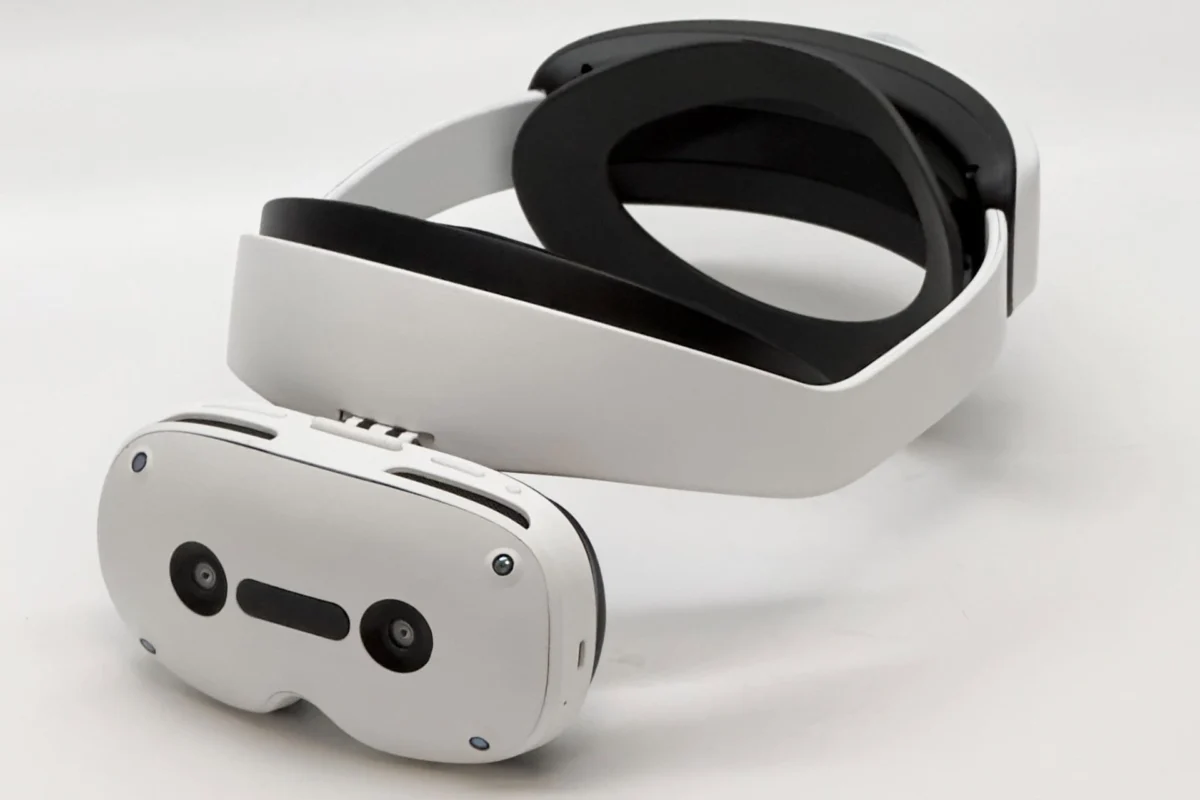
The Lynx-R1 featured a specialized "four-fold catadioptric" lens system, which was its primary differentiator. While technically impressive, the cost of manufacturing these custom optics at a low scale made the device difficult to price competitively against the subsidized Meta Quest 3.
Official Responses: Voices from the Transition
In his final address to the Lynx community, Stan Larroque struck a tone of pragmatic optimism.
"All the IP, assets and most of the team is now transitioning from a startup to this big company," Larroque wrote. "It is a formal acquisition, meaning they get everything… And most of the team is already employed now at EssilorLuxottica."
Regarding his own future, Larroque framed his move to Parrot as a natural progression within the French tech ecosystem. Working with Henri Seydoux—a pioneer in European consumer electronics—allows Larroque to remain at the forefront of hardware innovation, albeit in the drone sector rather than XR.
EssilorLuxottica has remained characteristically quiet regarding the specifics of the deal. The company, which owns brands like Ray-Ban, Oakley, and LensCrafters, has a history of absorbing technological startups to bolster its "Smart Eyewear" division. Their silence is consistent with previous acquisitions, as they typically integrate technology into their broader product roadmap rather than maintaining the acquired brand’s original trajectory.
Implications: What Happens to the Lynx-R2?
The most pressing question for the XR community is the fate of the Lynx-R2. Announced earlier in 2026, the R2 was intended to be a slimmer, more powerful successor to the R1, featuring upgraded sensors and improved ergonomics.
The Meta Partnership Conflict
EssilorLuxottica is currently Meta’s most vital hardware partner. The success of the Ray-Ban Meta smart glasses has proven that there is a massive market for stylish, wearable tech. Given this close relationship, industry analysts speculate that EssilorLuxottica may have little interest in releasing a standalone MR headset that competes directly with Meta’s Quest 3 or the rumored "Ventura" (Quest 4).
Possible Scenarios for Lynx Technology
- Integration into Smart Glasses: The most likely scenario is that Lynx’s optical expertise and passthrough algorithms will be used to shrink future versions of Ray-Ban Meta glasses, moving them from "smart glasses" to true "AR glasses."
- Industrial/Medical Focus: EssilorLuxottica has a strong presence in the safety and medical eyewear markets. Lynx’s technology could be repurposed for high-end surgical or industrial headsets that don’t compete in the consumer gaming space.
- The End of the R2: There is a high probability that the Lynx-R2 as a standalone consumer product has been shelved. The "judicial liquidation" context suggests that the primary goal of the acquisition was to secure IP and talent rather than to maintain a struggling product line.
The End of the "European Dream" for XR?
For many, Lynx represented the hope of a European-made, privacy-focused alternative to Big Tech. Its absorption into a global conglomerate—while saving the jobs of its engineers—effectively ends the dream of a "sovereign" French XR headset. It reinforces the trend of consolidation, where independent innovators are eventually swallowed by the scale and distribution power of established giants.
Conclusion
The acquisition of Lynx by EssilorLuxottica is a bittersweet conclusion to one of the most interesting stories in modern French tech. While the survival of the team and the IP is a testament to the quality of the work done by Stan Larroque and his engineers, the loss of an independent competitor in the XR space is a reminder of the brutal barriers to entry in hardware. As the team moves to EssilorLuxottica and Larroque moves to Parrot, the industry waits to see how the "Lynx DNA" will manifest in the next generation of smart eyewear.