Unveiling Ancient Egypt’s Dawn: The Enigmatic Predynastic Period
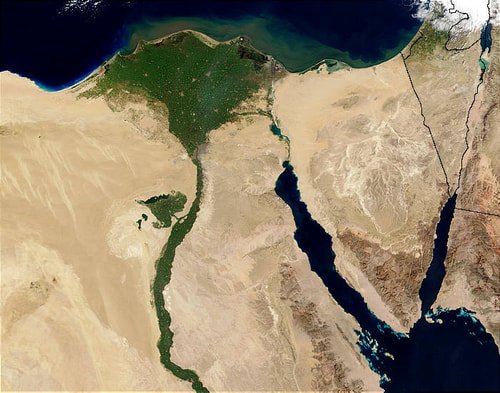
Cairo, Egypt – Before the iconic pyramids pierced the sky and pharaohs ruled a unified kingdom, ancient Egypt underwent a profound transformation, a period stretching millennia from the Stone Age to the cusp of dynastic rule. This era, known as the Predynastic Period (circa 6000 – 3150 BCE), remains largely unwritten, its story pieced together through the meticulous work of archaeologists unearthing artifacts from the fertile Nile River Valley. It is a testament to human ingenuity, charting the evolution from nomadic hunter-gatherers to complex agricultural societies, laying the very foundations for one of history’s most enduring civilizations.
The term "Predynastic Period" itself hints at the challenges inherent in studying this epoch. Coined in the early days of Egyptian archaeology, it predates many significant discoveries and continues to spark scholarly debate regarding its precise temporal boundaries. While widely accepted as encompassing the time before the First Dynasty, some academics propose alternative designations like the "Protodynastic Period" or "Zero Dynasty" for the transitional phase closer to the Early Dynastic Period (circa 3150-2613 BCE). These discussions underscore the dynamic nature of historical interpretation and the ongoing refinement of our understanding of ancient Egypt’s formative years.
The Shadowy Chronology: Manetho and Modern Debates
Charting the deep history of ancient Egypt relies on a dual approach: the tangible evidence from archaeological excavations and the invaluable, albeit sometimes controversial, ancient records. Central to the latter is the Aegyptiaca (The History of Egypt), written in the 3rd century BCE by Manetho, an Egyptian scribe. Commissioned by Ptolemy II Philadelphus, one of Alexander the Great’s successors who inherited Egypt, Manetho’s work was an ambitious attempt to compile a comprehensive history for the new Greek rulers. Scholar Douglas J. Brewer notes that Manetho’s history was "in essence, a chronology of events arranged from oldest to most recent, according to the reign of a particular king." (Brewer, 8).
Manetho, a native of Sebennytus in the Delta and educated in traditional scribal arts, embarked on an unprecedented task. While Egyptian priests were known for sharing fragments of historical information, none had previously attempted a complete, organized history, especially for foreign consumption. This undertaking, born from the administrative and cultural needs of the Ptolemaic dynasty, provided the structured framework of dynasties that historians still largely employ today.
However, the loss of Manetho’s original manuscript is a significant hurdle. His chronology survives primarily through the writings of later historians like Flavius Josephus (37-100 CE), who cited Manetho in their own works. This indirect transmission introduces potential inaccuracies and selective editing, leading to scholarly controversies regarding the absolute accuracy of Manetho’s sequence and regnal lengths. Despite these legitimate concerns, Manetho’s Aegyptiaca remains an indispensable reference for archaeologists and historians, serving as a foundational text against which archaeological findings are often compared and contextualized.

It is crucial to recognize that the historical sequences of the Predynastic Period did not unfold in neat, discrete chapters. Cultures overlapped, interacted, and, in some interpretations, represent continuous developments rather than entirely distinct entities. The dates assigned to these cultures are approximations, derived from radiocarbon dating and stratigraphic analysis of archaeological layers, constantly subject to revision as new evidence emerges. The narrative we construct is thus a dynamic tapestry, woven from fragmented but increasingly rich threads of discovery.
From Hunter-Gatherers to Farmers: Early Habitation
The story of human presence in the Nile region is immensely ancient, with some theories pushing the earliest evidence back as far as 700,000 years. The oldest tangible structures discovered, dating to approximately the 40th millennium BCE, were found in the Wadi Halfa region of ancient Nubia, now modern-day Sudan. These were not permanent settlements but rather "tent rings," as designated by Polish archaeologist Waldemar Chmielewski in the 1980s. These depressions in the earth, featuring flat sandstone floors, likely supported mobile homes constructed from animal skins or brush, propped up by wooden stakes – precursors to modern campsites, designed for easy dismantling and relocation by nomadic hunter-gatherer societies.
Throughout the Late Paleolithic and Mesolithic periods, encompassing cultures like the Aterian and Khormusan, stone tool manufacturing advanced significantly. The Halfan culture flourished around 30,000 BCE in the borderlands between Egypt and Nubia, giving way to the Qadan and Sebilian cultures around 10,000 BCE, and the contemporary Harifan culture. These societies, initially defined by their nomadic hunting and gathering lifestyle, gradually transitioned towards a more sedentary existence, a monumental shift that fundamentally reshaped human society.
The transition from Paleolithic hunting and gathering to Neolithic sedentary farming is one of the most compelling mysteries of prehistoric Egypt. Scholar Douglas J. Brewer highlights this profound change: "We know very little about how and why this change occurred. Perhaps nowhere is this cultural transition more accessible than in the Fayyum depression." (Brewer, 58). The Fayyum depression, also known as the Faiyum Oasis, a natural basin southeast of the Giza Plateau, became home to the Faiyum A culture (circa 9000-6000 BCE). These communities, situated around a large lake, cultivated crops, hunted, and fished. While evidence suggests some seasonal migration, the Faiyum Oasis generally supported continuous habitation, becoming a cradle of early agricultural practices.
Forging Civilization: Lower Egyptian Cultures
The Faiyum A people constructed simple reed huts, often featuring underground cellars for grain storage. This period witnessed the domestication of cattle, sheep, and goats, alongside the development of basketry and pottery-making. Crucially, early forms of centralized tribal governance began to emerge, with chieftains assuming leadership roles, perhaps hereditary within family or tribal units. Small nomadic groups gradually coalesced into larger, more permanent communities, marking a critical step towards complex societal structures. Early artistic expressions from this period include pieces of faience, indicating that this unique glazed ceramic material was already an established industry as early as 5500 BCE at Abydos.
The Faiyum A culture evolved into the Merimde culture (circa 5000-4000 BCE), named after the site on the western edge of the Nile Delta where their artifacts were first discovered. Margaret Bunson notes that "The reed huts of the Faiyum A period gave way to pole-framed huts, with wind-breaks, and some used semi-subterranean residences, building the walls high enough to stand above ground." (Bunson, 75). These habitations were small and often arranged in rows, possibly forming circular patterns within a settlement. Granaries, essential for storing agricultural surplus, were ingeniously fashioned from clay jars or baskets, buried up to their necks in the ground for preservation.
Further architectural and technological advancements characterized the El-Omari culture (circa 4000 BCE). They built more sophisticated oval huts with plastered mud walls, developed advanced blade tools, wove mats for floors and walls, and produced more refined ceramics. Contemporaneous with the El-Omari were the Ma’adi and Tasian cultures, both contributing to the ongoing evolution of Predynastic society. These cultures continued the tradition of unornamented ceramics, first seen in the El-Omari period, and made extensive use of grindstones, vital for processing grains.
The Ma’adi culture demonstrated significant architectural progress, constructing large community buildings with underground chambers, stairs, and hearths. This period also saw a shift in burial practices. While earlier burials were often within or near homes, around 4000 BCE, dedicated cemeteries became more prevalent. Bunson observes: "Three cemeteries were in use during this sequence, as at Wadi Digla, although the remains of some unborn children were found in the settlement." (Bunson, 75). Improvements in storage jars and weaponry further characterize this period of sustained innovation and societal growth in Lower Egypt.
The Rise of Upper Egypt and Unification
While Lower Egypt (the northern region, closer to the Mediterranean) saw these early cultural developments, civilization in Upper Egypt (the southern region) followed a slightly different trajectory, though often with parallel innovations. The Badarian culture (circa 4500-4000 BCE) is often considered an outgrowth of the Tasian, a link supported by similarities in ceramics and tool-making, though some scholars argue for independent development given the Badarian’s more advanced characteristics.
Badarian people, while still utilizing mobile tent structures, increasingly favored stationary huts. They were primarily farmers, cultivating wheat, barley, and various herbs, supplementing their largely vegetarian diet through hunting. Domesticated animals provided not only food and clothing but also materials for their shelters. A rich array of grave goods from this period, including weapons like throwing sticks, knives, and arrowheads, along with tools and personal items, provides invaluable insights into their daily lives and burgeoning belief systems.
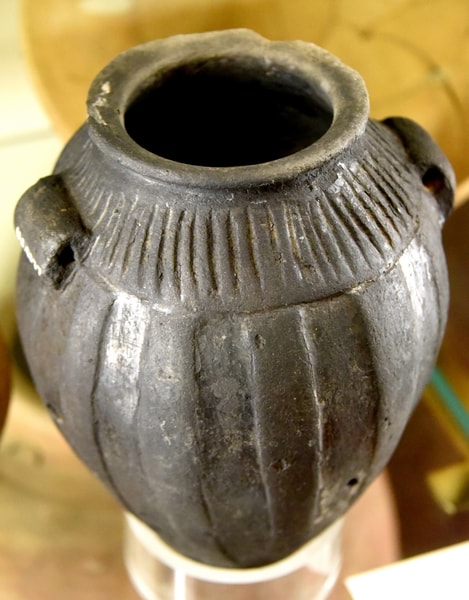
Crucially, Badarian burial practices show a significant conceptual shift. Bodies were interred in cemeteries, covered with animal hides, and laid on reed mats. The inclusion of food offerings and personal belongings with the deceased indicates a developing belief in an afterlife, where material goods were deemed necessary for the journey. Ceramic work during the Badarian culture reached new heights, producing thinner and more finely crafted pottery than in preceding periods, often featuring distinctive ripple marks.
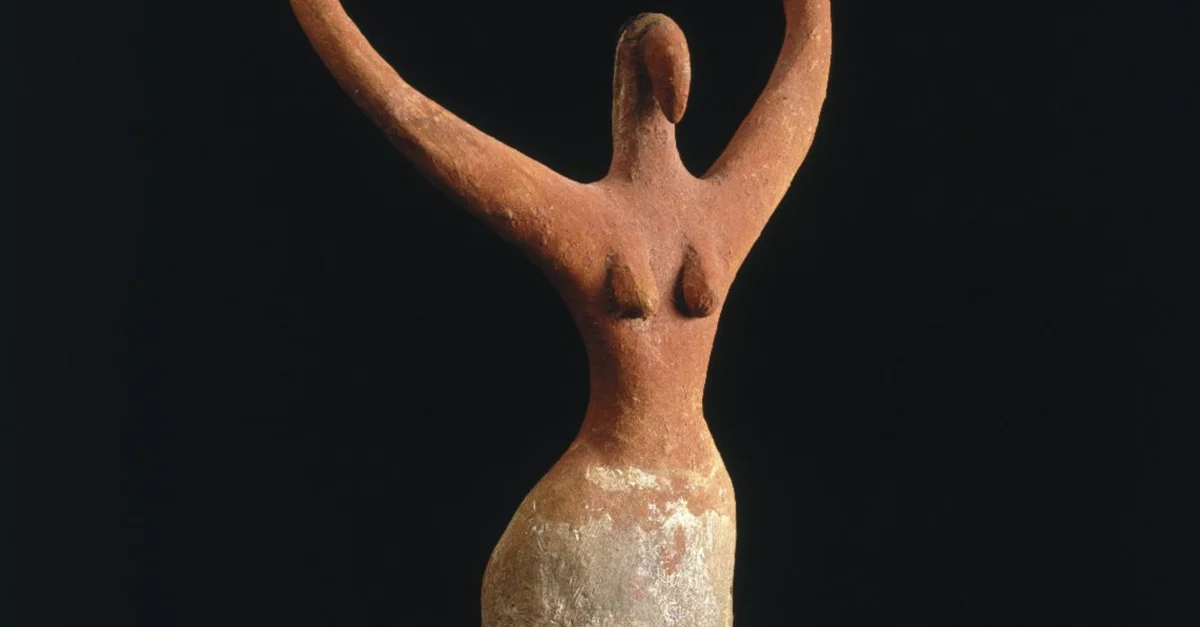
Following the Badarian, the Amratian (or Naqada I) period (circa 4000-3500 BCE) saw further refinements in dwelling construction, with more sophisticated structures possibly incorporating windows and definitely featuring hearths, wattle-and-daub walls, and external windbreaks. Ceramics continued to evolve, with the characteristic black-top ware of the Badarian period giving way to red ceramics adorned with depictions of people and animals, reflecting a burgeoning artistic sensibility. Mummification practices began to emerge around 3500 BCE, and the custom of interring grave goods with the deceased became more elaborate, signaling a deepening engagement with concepts of death and the beyond.
The Gerzean culture (circa 3500-3200 BCE, also known as Naqada II) marked a period of accelerated development, particularly in trade. Increased interaction with other regions introduced new cultural influences and artistic styles. Bunson observes, "Accelerated trade brought advances in the artistic skills of the people of this era, and Palestinian influences are evident in the pottery, which began to include tilted spouts and handles." (Bunson, 76). A distinctive light-colored pottery, made from clay and calcium carbonate, emerged during Naqada II. Initially decorated with red patterns, these vessels later featured elaborate scenes of animals, boats, trees, and herds, suggesting a specialized production for trading purposes. Copper became prominent in weaponry and jewelry, and the use of gold foil and silver, along with sophisticated flint blades, beads, and amulets made from lapis lazuli, indicates growing wealth and craftsmanship.
Houses during the Gerzean period were constructed from sun-baked brick, with more affluent homes featuring courtyards, a design element that would become a staple in later Egyptian architecture. Graves became more ornate, with wood used in the tombs of the wealthy and niches carved into the sides for votive offerings. The city of Abydos, north of Naqada, emerged as a vital burial site, its large tombs (some with twelve rooms) forming an extensive necropolis. Initially built with mud bricks, these structures would later evolve into the grand limestone tombs of the Third Dynasty, eventually serving as the burial ground for Egypt’s kings.
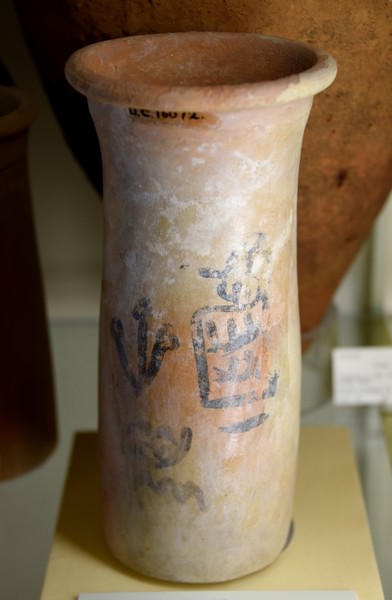
Crucially, the seeds of hieroglyphic script were sown sometime between circa 3400 and 3200 BCE. While primarily used for record-keeping, early examples of Egyptian writing found at Abydos on ceramics, clay seal impressions, and bone and ivory pieces indicate a system in development. Complete sentences, however, would not appear until the reign of King Peribsen in the Second Dynasty (circa 2890-2670 BCE). During this period, prominent city-states like Thinis, Naqada, and Nekhen were rapidly developing, while Xois and Hierakonpolis were already ancient settlements.
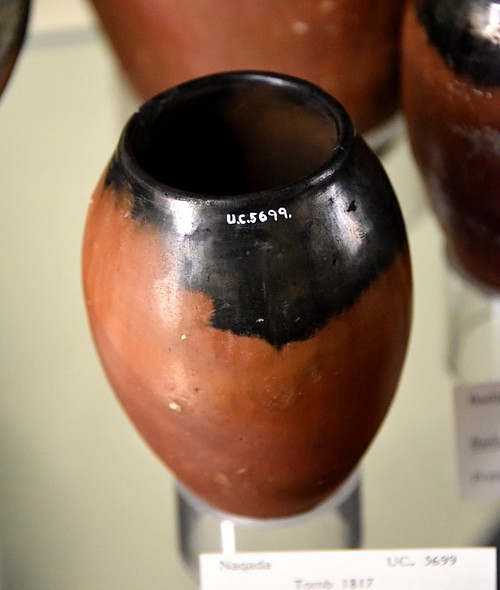
Naqada III: The Protodynastic Era and the Beginning of History
The Naqada III period (3200-3150 BCE), often referred to as the "Zero Dynasty" or "Protodynastic Period," represents the direct precursor to unified Egypt. This era reveals a significant influence from Mesopotamia, evident in construction techniques using baked brick, cylinder seals, tomb wall symbolism, and ceramic designs. Even some fundamental aspects of ancient Egyptian religion may trace their roots to Mesopotamian concepts.
Trade served as the conduit for these ideas, bringing new cultural values and goods alongside the raw materials of commerce. The resulting blend of Nubian, Mesopotamian, and Egyptian influences, while a subject of ongoing scholarly debate, is discernible in monumental tombs at Abydos and Hierakonpolis. Trade with Canaan led to the establishment of Egyptian colonies in what is now southern Israel, leaving a distinct Canaanite imprint on the ceramics of the period. As trade flourished, communities grew, transforming into larger urban centers.
This growth, however, also brought conflict. The major city-states of Upper Egypt – Thinis, Naqada, and Nekhen – likely engaged in hostilities over trade routes and vital water resources. Archaeological evidence suggests Thinis conquered Naqada, subsequently absorbing Nekhen. These conflicts are often associated with the enigmatic "Scorpion Kings," whose identities remain debated, but who were likely predecessors or contemporaries of kings like Ka and Narmer. Some scholars propose that the last three kings of the Protodynastic Period were Scorpion I, Scorpion II, and Ka (often considered a title rather than a personal name, "Sekhen"), preceding the pivotal figure of Narmer.
The Dawn of Dynasties: Narmer, Menes, and Legacy
The unification of Upper and Lower Egypt, an event often considered the true beginning of dynastic history, is traditionally attributed to a king named Menes in Manetho’s chronology. However, Menes’ existence is largely confined to Manetho’s list and the Turin King List. The archaeological record, in contrast, powerfully points to King Narmer. The discovery of the Narmer Palette, a year marker bearing his name, and his tomb, firmly establish Narmer as an actual historical ruler.
The Narmer Palette, a two-foot (64 cm) inscribed slab, depicts a powerful military leader conquering his enemies and subjugating the land, suggesting a violent unification. This stands in contrast to some accounts that portray Menes as peacefully uniting the two lands and establishing Memphis as his capital. While a definitive consensus remains elusive, most scholars now favor the view that Narmer is indeed the "Menes" mentioned in Manetho’s work, or at least the king responsible for the initial unification. Other theories suggest Narmer was the last king of the Predynastic Period, and Menes the first of the Early Dynastic, or even that Menes was Hor-Aha, listed as Menes’ successor.
Regardless of the precise identity or sequence, the outcome was transformative. Once the great king (whether Narmer or Menes) successfully united the two lands of Egypt, a centralized government was established, marking the definitive end of the Predynastic Period and the commencement of the Early Dynastic Period. This foundational act initiated a continuous cultural and political tradition that would endure for the next three millennia, a testament to the complex, vibrant, and innovative societies that thrived along the Nile during its enigmatic dawn. The Predynastic Period, though lacking written annals, speaks volumes through its artifacts, revealing the profound journey of a people forging the very essence of ancient Egypt.