The Architecture of Ambition: How Greta Gerwig Redefined Hollywood’s Boundaries

In the landscape of modern cinema, few names resonate with as much cultural and commercial authority as Greta Gerwig. Once the "it-girl" of the niche mumblecore movement, Gerwig has undergone a metamorphosis that defies the standard industry trajectory. From her early days as an indie actor to becoming the first solo female director to helm a billion-dollar blockbuster, her journey is a testament to a philosophy she articulated long before the world recognized her as a titan of the screen.
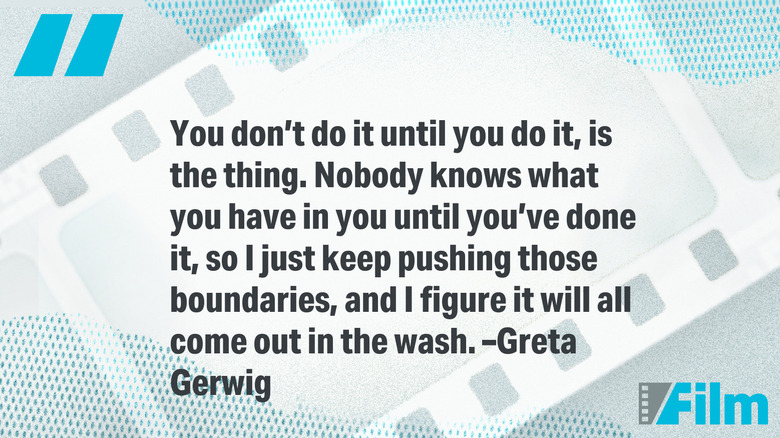
In a 2017 interview with HuffPost, conducted just as her solo directorial debut Lady Bird was beginning its ascent, Gerwig offered a piece of wisdom that has since become a cornerstone for aspiring creatives: "You don’t do it until you do it, is the thing. Nobody knows what you have in you until you’ve done it, so I just keep pushing those boundaries, and I figure it will all come out in the wash."
This sentiment—a blend of pragmatic realism and daring ambition—serves as the blueprint for a career that has consistently shattered glass ceilings and redefined what "commercial" cinema looks like in the 21st century.
Main Facts: The Rise of a Cinematic Powerhouse
Greta Gerwig’s career is defined by three distinct phases: her emergence as a performer in the DIY "mumblecore" scene, her evolution into a critically acclaimed screenwriter and collaborator, and her current status as a record-breaking auteur.
As of 2024, Gerwig stands as one of the most influential figures in Hollywood. Her filmography as a solo director—comprising Lady Bird (2017), Little Women (2019), and Barbie (2023)—has collectively earned billions at the global box office and garnered dozens of Academy Award nominations. Her transition from the fringes of independent cinema to the helm of a Mattel-backed mega-production is not merely a story of personal success, but a signal of a shifting paradigm in how studios value female-led narratives and directorial vision.

The "Gerwig Aesthetic" is characterized by a deep, intellectual investigation into womanhood, the complexities of mother-daughter dynamics, and the existential transition from adolescence to adulthood. By anchoring high-concept projects in grounded emotional truth, she has bridged the gap between arthouse prestige and mainstream accessibility.
Chronology: From Sacramento to the Billion-Dollar Club
The Indie Genesis (2006–2010)
Gerwig’s journey began far from the glitz of the Oscars. After being rejected from several MFA playwriting programs, she immersed herself in the New York film scene. She became a central figure in the mumblecore movement—a subgenre of independent film characterized by low budgets, naturalistic acting, and improvised dialogue. Working with directors like Joe Swanberg, Gerwig co-wrote and starred in films such as Hannah Takes the Stairs (2007) and Nights and Weekends (2008), which she also co-directed. This period was her "film school," where she learned the mechanics of storytelling through the constraints of limited resources.
The Baumbach Collaborations (2010–2015)
The trajectory of Gerwig’s career shifted significantly when she began collaborating with filmmaker Noah Baumbach. Their partnership yielded Greenberg (2010), followed by the critically adored Frances Ha (2012). In Frances Ha, Gerwig played a struggling dancer in New York; the film became a modern classic, capturing the "quarter-life crisis" with a blend of whimsy and melancholy. It was during this period that Gerwig’s voice as a writer began to crystallize, blending sharp, witty dialogue with a profound empathy for her characters’ flaws.
The Breakthrough: Lady Bird (2017)
While Gerwig had co-directed before, Lady Bird was her solo debut. A semi-autobiographical ode to her upbringing in Sacramento, California, the film was a revelation. Starring Saoirse Ronan, the movie bypassed the cliches of the coming-of-age genre to focus on the friction and fierce love between a daughter and her mother. The film was a massive critical hit, earning five Oscar nominations, including Best Director and Best Original Screenplay.
The Literary Icon: Little Women (2019)
Gerwig took a massive risk by adapting Louisa May Alcott’s Little Women, a story that had been told on screen many times before. However, her non-linear structure and focus on the economic realities of female artists turned the period piece into a radical, modern manifesto. The film was both a critical darling and a commercial success, proving that Gerwig could handle larger budgets and ensemble casts without losing her intimate touch.

The Global Phenomenon: Barbie (2023)
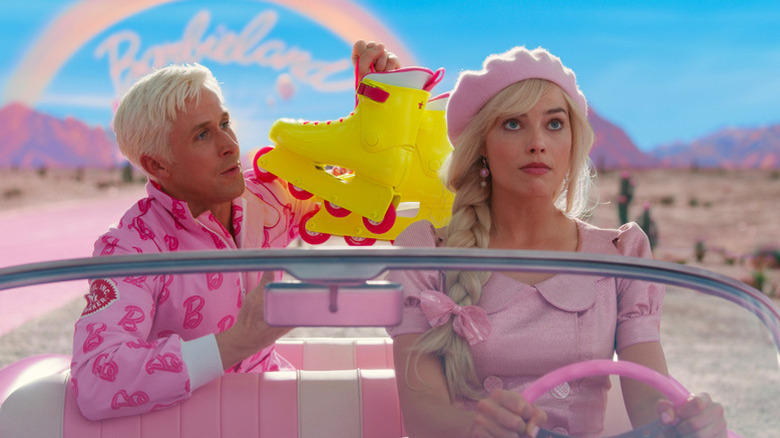
The pinnacle of her career to date came with Barbie. Collaborating with star and producer Margot Robbie, Gerwig took a plastic icon and turned it into a subversive, existential exploration of the patriarchy and the human condition. The film didn’t just break records; it became a cultural movement, grossing over $1.4 billion and cementing Gerwig’s place in history as the highest-grossing female director of all time.
Supporting Data: By the Numbers
The scale of Gerwig’s impact can be measured through her unprecedented box office and critical statistics:
- Barbie (2023): $1.446 billion worldwide. It was the highest-grossing film of 2023 and the 14th highest-grossing film of all time.
- Little Women (2019): $218.9 million on a $40 million budget. It received six Academy Award nominations.
- Lady Bird (2017): $79 million on a $10 million budget. It holds a 99% "Certified Fresh" rating on Rotten Tomatoes.
- Academy Recognition: Gerwig has been nominated for three Academy Awards for writing (Lady Bird, Little Women, Barbie) and one for directing (Lady Bird), making her one of the most decorated female filmmakers of her generation.
These figures illustrate a rare phenomenon: a director who maintains a "perfect" record of both critical acclaim and financial profitability.
Official Responses: Gerwig on the "Boundaries" of Art
Gerwig’s approach to filmmaking has always been rooted in a sense of "fearful courage." In various interviews following the success of Barbie, she has expanded on the philosophy she shared in 2017.
Speaking to The New York Times, Gerwig noted, "There’s a sense of wanting to do something that feels like it could be a total disaster, because that’s where the life is. If you’re not taking that risk, you’re just repeating what’s already been done."
Margot Robbie, who fought to have Gerwig write and direct Barbie, explained the director’s appeal in an interview with Variety: "Greta has this way of being incredibly high-brow and low-brow at the same time. She can reference 1950s musicals and French existentialism in the same breath as a joke about a flat-footed doll. She doesn’t see boundaries between ‘art’ and ‘entertainment.’"
Gerwig’s partner and frequent collaborator, Noah Baumbach, has also commented on her evolution: "Greta has a way of making the camera feel like it’s part of the conversation. She was always a director, even when she was acting. She was just waiting for the right moment to step behind the lens fully."
Implications: A New Era for the Auteur
The implications of Greta Gerwig’s success extend far beyond her personal filmography. She has effectively dismantled the myth that female-centric stories are "niche" or that female directors are best suited for small-scale indie dramas.
1. The "Auteur" Blockbuster
Gerwig has pioneered a new kind of blockbuster—one that is studio-funded and based on existing IP (Intellectual Property) but remains distinctively the product of an artist’s vision. Following in the footsteps of directors like Christopher Nolan or Denis Villeneuve, she has proven that audiences crave "smart" blockbusters that respect their intelligence.
2. Economic Validation for Female-Led Narratives
The staggering success of Barbie has forced Hollywood to reconsider its investment strategies. For decades, "female-driven" movies were often underfunded. Gerwig’s track record provides a data-backed argument that women’s stories are not just culturally relevant, but the most profitable sector of the market when executed with high production value and narrative depth.
3. Mentorship and the Next Generation
Gerwig’s rise has opened doors for other female directors. By proving she can handle the pressure of a billion-dollar production, she has lowered the "risk perception" for studios looking to hire women for major franchises. Her career serves as a roadmap for indie filmmakers, showing that it is possible to scale up without selling out.
4. The Future: Narnia and Beyond
As Gerwig moves forward with her next project—an ambitious adaptation of C.S. Lewis’s The Chronicles of Narnia for Netflix—the industry is watching closely. She continues to push the boundaries she spoke of in 2017, taking on massive, beloved legacies and infusing them with her specific brand of humanity.
Conclusion
Greta Gerwig’s 2017 quote—"You don’t do it until you do it"—was more than just a comment on her career; it was a manifesto. In a world that often asks women to prove their worth before granting them the opportunity, Gerwig chose to create her own opportunities, pushing through the boundaries of genre, budget, and expectation.
Today, the "wash" she spoke of has come out remarkably clean. She is no longer the girl from Sacramento wondering if she can make it; she is the architect of a new Hollywood, proving with every frame that the only limit to what one can achieve is the boundary they refuse to push. As she continues to evolve, Gerwig remains a singular voice, reminding us that the most "alive" work happens at the edge of the unknown.