Fair is Fair: The Resilient Legacy of ‘The Legend of Billie Jean’
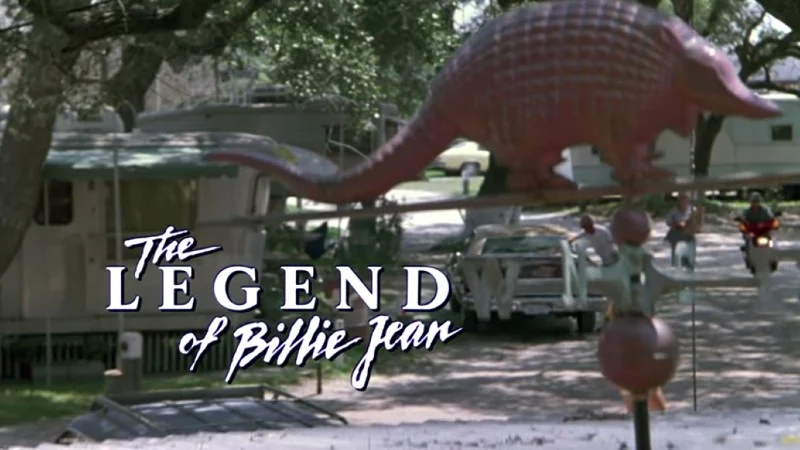
In the pantheon of 1980s cinema, certain titles serve as immediate shorthand for the decade’s neon-soaked, synth-driven aesthetic. While The Breakfast Club, The Goonies, and Back to the Future dominate the cultural conversation, a more subversive, gritty, and fiercely feminist film has spent nearly forty years clawing its way from box-office obscurity to cult-classic status. The Legend of Billie Jean, released in the sweltering summer of 1985, remains a fascinating anomaly—a teen-centric adventure that traded suburban whimsy for trailer-park realism and systemic injustice.
Directed by Matthew Robbins and starring a young Helen Slater, the film is a modern-day folk legend that asks a simple, haunting question: What happens when the system fails those it is meant to protect? As we re-examine this "retrograde" classic, we find a narrative that was not only ahead of its time regarding gender politics but also prophetic in its depiction of media manipulation and the birth of the viral celebrity.
Main Facts: The Anatomy of a Cult Classic
The Legend of Billie Jean arrived in theaters on July 19, 1985, distributed by TriStar Pictures. It was a production of its time, featuring a PG-13 rating—a relatively new classification at the time—and a soundtrack headlined by Pat Benatar’s anthemic "Invincible." The film stars Helen Slater as the titular Billie Jean Davy, a teenager from a Texas trailer park who becomes an accidental outlaw. She is joined by her brother Binx, played by a then-unknown Christian Slater (marking his cinematic debut), and a supporting cast that includes Keith Gordon, Peter Coyote, and Yeardley Smith.
The plot is deceptively simple: after a local bully trashes her brother’s motor scooter, Billie Jean attempts to collect $608 for repairs from the bully’s father, Mr. Pyatt (Richard Bradford). When Pyatt attempts to sexually assault her in exchange for the money, a struggle ensues, a gun goes off, and the Davy siblings flee. What follows is a cross-state chase that transforms Billie Jean from a fugitive into a symbol of youth rebellion.
Despite its high-octane premise and the "Fair is Fair" catchphrase that would eventually become its legacy, the film was a commercial failure. Produced on a modest budget, it grossed just over $3 million, failing to compete with the blockbuster juggernauts of 1985. However, its subsequent life on cable television and home video transformed it into a touchstone for a generation of viewers who saw themselves in Billie Jean’s righteous anger.
Chronology: From the "Bandit Queen" to the Summer of ’85
The Genesis and Script Controversy
The origins of The Legend of Billie Jean are rooted in a surprising source of inspiration. Screenwriters Mark Rosenthal and Lawrence Konner, who met at the University of Vermont, have stated that the story was loosely modeled after Phoolan Devi, the "Bandit Queen" of India. Devi was a real-life figure whose life of crime and eventual political career were sparked by her experiences with caste-based oppression and sexual violence.

The transition from Indian social realism to a Texas teen drama was a tumultuous one. Early drafts of the script allegedly involved Walter Bernstein, a formerly blacklisted writer known for his leftist political leanings. This "rabble-rousing" DNA remained in the final product, though Rosenthal later lamented that the studio "simplified and dumbed down" the script, removing much of the nuanced character drama in favor of a more traditional chase narrative.
The 1985 Competitive Landscape
To understand why Billie Jean failed at the box office, one must look at the calendar. The summer of 1985 was one of the most competitive in Hollywood history. Audiences were flocking to Back to the Future, which offered a more palatable, nostalgic brand of escapism. Meanwhile, the action crowd was preoccupied with Rambo: First Blood Part II, a film that championed a very different kind of American heroism.
In contrast, The Legend of Billie Jean felt uncomfortable. It dealt with trailer park poverty, sexual harassment, and the corruption of the adult world. While Francis Ford Coppola’s The Outsiders (1983) had successfully brought "wrong side of the tracks" teen angst to the screen, Billie Jean added a layer of feminist defiance that many 1980s critics were unprepared to engage with.
The Cable TV Afterlife
If the film died in theaters, it was resurrected on HBO and local afternoon movie slots in the early 1990s. This was where the film found its true audience: children and teenagers who resonated with the theme of "fairness." For many, the central mall chase and the image of Billie Jean cutting her hair into a Joan of Arc-style crop became iconic moments of cinematic rebellion, divorced from the negative reviews of the 1980s.
Supporting Data: Casting, Music, and Aesthetic
A Star in Transition
Helen Slater came into The Legend of Billie Jean following the disappointing performance of Supergirl (1984). She brought a unique blend of vulnerability and steel to the role. While her Texas accent has been criticized for its inconsistency, her physical transformation in the film remains one of its most potent elements. The scene where she shears her blonde locks—inspired by a poster of Jean Seberg’s Saint Joan—serves as the film’s emotional pivot point.
The film also serves as a historical document of Christian Slater’s early career. Even at fifteen, his "nervy, high-wire energy" was evident. Interestingly, despite sharing a surname and playing siblings, Helen and Christian are not related—a fact that has fueled trivia for decades.

The Sound of Defiance
One cannot discuss the film without Pat Benatar’s "Invincible." The song, which became a Top 10 hit, was tailor-made for the movie’s themes of resilience. The music video featured clips of the film, providing a marketing boost that the theatrical trailers lacked. The score, composed by Billy Joel’s long-time producer Phil Ramone and Craig Safan, utilized the synthesizer-heavy sound of the era to emphasize the film’s "now-ness."
Technical Realism
While some critics described the cinematography as "workmanlike," the film’s visual style has aged better than many of its glossier contemporaries. Shot on location in Corpus Christi, Texas, the film captures the "sunburned, summertime exhaustion" of the Gulf Coast. The contrast between the neon-lit malls and the dusty, oppressive atmosphere of the trailer park provides a visual shorthand for the class struggle at the heart of the story.
Official Responses: Then and Now
The Initial Critical Backlash
The contemporary reviews for The Legend of Billie Jean were remarkably harsh. Janet Maslin of The New York Times dismissed the film as "bankrupt beyond belief," suggesting that it lacked the intellectual weight to carry its social themes. David Edelstein of The Village Voice was even more biting, calling it a "cretinous bit of bubble-gum mythmaking."
These reviews largely ignored the film’s attempt to address the power dynamics between young women and predatory men. Critics of the era tended to view teen movies through a narrow lens of either slapstick comedy (à la Porky’s) or sentimental coming-of-age drama (à la John Hughes). Billie Jean fit neither mold.
Retrospective Appreciation
In the 21st century, the critical tide has turned. Modern film historians often cite The Legend of Billie Jean as a proto-feminist text. On the DVD commentary, Helen Slater and Yeardley Smith reflect on the film’s "communist street cred" and its surprisingly radical stance on female autonomy.
Mark Rosenthal, the screenwriter, has remained vocal about the film’s intent. In various interviews, he has defended the story as an attempt to create a populist hero out of a marginalized figure. He maintains that while the studio may have "dumbed down" the execution, the core message of a young woman reclaiming her image from those who would exploit it remains intact.

Implications: Media, Feminism, and the "Viral" Prototype
The most striking aspect of The Legend of Billie Jean when viewed today is its prescience regarding the media. Long before the advent of TikTok, YouTube, or social media manifestos, Billie Jean Davy understood the power of the image.
The Weaponization of Image
In the film, the antagonist Mr. Pyatt attempts to commodify Billie Jean’s infamy by selling merchandise featuring a sexualized photo of her. In response, Billie Jean records a videotaped manifesto, speaking directly to her peers and bypassing the filters of the adult-run news media. This act of "taking control of the narrative" is remarkably modern. She becomes a folk hero not through her actions alone, but through her ability to communicate her truth to an audience of "outcasts" who keep her safe through an underground network of lookalikes.
A Feminist Milestone
The film’s central conflict—a young woman being punished for saying "no" to a powerful man—resonates deeply in the post-#MeToo era. Unlike many 80s films that treated sexual harassment as a punchline or a plot device to be overcome by a male protector, Billie Jean centers the female experience. Billie Jean rescues herself, protects her brother, and eventually burns down the symbol of her oppressor’s power (Pyatt’s surf shop).
Conclusion: The Grade of "B"
While The Legend of Billie Jean suffers from some "cheap and tossed off" production elements and a romance subplot that feels forced, its strengths far outweigh its weaknesses. It is a film that refuses to be forgotten, characterized by a "rebel yell" that still echoes in the ears of those who grew up watching it on lazy summer afternoons.
As a piece of cinematic history, it earns a Retrograde Grade of B. It is imperfect, occasionally silly, and undeniably cheesy—but it is also brave, righteous, and "Invincible." For anyone seeking a story where the marginalized finally get their due, Billie Jean remains the ultimate legend. Fair, after all, is fair.