A Legacy Reimagined: BBC Creative Revives Iconic ‘What Has the BBC Ever Done for Me?’ Campaign Amidst Charter Renewal Pressures
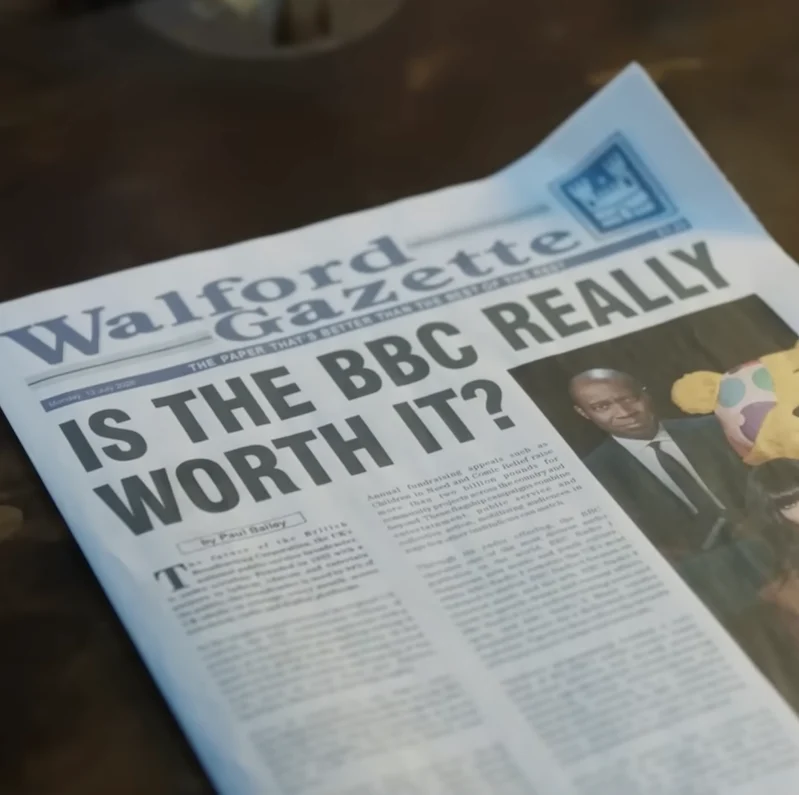
In an ambitious move to remind the British public of its cultural and social utility, the BBC has launched a high-production brand film that serves as both a nostalgic homage and a contemporary manifesto. Nearly four decades after the legendary John Cleese first uttered the question, “What has the BBC ever done for me?”, the broadcaster’s in-house agency, BBC Creative, has revived the concept for a new generation.
Fronted by comedian and presenter Romesh Ranganathan and directed by the acclaimed Dougal Wilson, the new campaign features a staggering ensemble of over 90 familiar faces, traversing the vast landscape of the BBC’s output—from gritty newsrooms and soap opera sets to animated children’s worlds and hallowed sporting grounds. However, beneath the star-studded surface and cinematic polish lies a deeper, more urgent subtext: an institution fighting to prove its indispensability in an era of fragmented media consumption and looming political negotiations.
The Core Narrative: A Modern Retelling of a Classic Inquiry
The centerpiece of the campaign is a brand film that operates as a whirlwind tour of the BBC’s multifaceted ecosystem. Romesh Ranganathan, known for his deadpan delivery and relatability, takes the mantle from Cleese, navigating a series of seamless transitions that highlight the breadth of the broadcaster’s reach.
The film is not merely a montage of clips; it is a meticulously choreographed journey through "familiar worlds." Viewers are transported to the Queen Victoria pub in EastEnders, the grass of Wimbledon’s Centre Court, the high-stakes environment of the BBC News studio, and even the vibrant, educational universe of Hey Duggee. The inclusion of diverse figures—ranging from investigative journalist Louis Theroux and news anchor Clive Myrie to entertainment powerhouse Claudia Winkleman and children’s favorite Mr Tumble—is designed to illustrate that the BBC provides "something for everyone."
To elevate the film’s emotional resonance, the production utilized the BBC’s own musical resources. The score, composed by Ben Foster, Ben Bailey Smith, and Andy Burrows, was performed by the BBC Concert Orchestra and the BBC Singers. This choice reinforces the message of the campaign: the BBC is not just a broadcaster, but a patron of the arts and a facilitator of British creative talent.
Chronology: From Monty Python Parody to 21st-Century Manifesto
To understand the weight of this campaign, one must look back to its origin in 1986. The original "What has the BBC ever done for me?" advertisement featured John Cleese in a sketch heavily inspired by the "What have the Romans ever done for us?" scene from Monty Python’s Life of Brian.
In the mid-80s, the BBC was facing significant pressure from the Thatcher government regarding its funding and perceived inefficiency. The 1986 ad was a masterclass in self-deprecating humor used as a defensive shield; it listed the BBC’s achievements—high-quality drama, educational programming, and commercial-free viewing—as a counter-argument to those calling for the abolition of the license fee.
Fast forward to the present day, and the cycle of history appears to be repeating, albeit in a much more complex digital landscape. The decision to revive this specific campaign format is a deliberate attempt to tap into the collective memory of the British public while updating the "answer" to the central question. While the 1986 version focused on the lack of commercials and the quality of Fawlty Towers, the 2020s version emphasizes diversity, digital accessibility, and the BBC’s role as a unifying thread in a polarized society.

Supporting Data: The Scale of Production and Reach
The scale of the "What has the BBC ever done for me?" revival is reflective of the high stakes involved. According to BBC Creative, the production involved:
- 90+ On-Screen Contributors: A mix of legendary presenters, actors, and animated characters, representing the "breadth and depth" of the BBC’s portfolio.
- Direction by Dougal Wilson: Known for his iconic work on John Lewis Christmas ads and the film Paddington in Peru, Wilson’s involvement signals the BBC’s commitment to world-class storytelling.
- VFX by Untold Studios: The seamless transitions between live-action sets and animated environments required state-of-the-art post-production.
- Musical Heritage: By employing the BBC Concert Orchestra and BBC Singers, the campaign highlights the 12.3% of the BBC’s budget that typically goes toward "content and services" that support the wider UK creative economy.
The campaign arrives at a time when the BBC’s "reach" is under microscopic scrutiny. While the BBC remains the most-used media brand in the UK, reaching approximately 90% of adults every week, the way people consume that content has shifted. The rise of BBC iPlayer and BBC Sounds is a success story, but the "linear" audience—those who watch scheduled TV—is aging, and the license fee model is under threat as younger audiences migrate to subscription-based platforms like Netflix and Disney+.
Official Responses: Defining Value in a Changing World
Justin Bairamian, the Director of BBC Creative, framed the campaign as a "timely reminder" of the broadcaster’s core mission. In an official statement, Bairamian noted:
“This campaign is a timely reminder of the value the BBC creates every day. Forty years after the question was first posed, we’re returning to it through a new generation of stars and programmes. The film is a creative tribute to the answer, which lies in the millions of moments that inform, educate and entertain audiences across the UK, and in the value it brings to national life.”
The phrasing—"inform, educate and entertain"—is a direct reference to the BBC’s Reithian principles, established by its first Director-General, Lord Reith. By anchoring the campaign in these foundational values, the BBC is attempting to bridge the gap between its historic legacy and its future survival.
Internal sources at the BBC suggest that the campaign is part of a broader "value for money" strategy. With the license fee currently frozen and the cost-of-living crisis making every household expense a point of contention, the BBC is keen to demonstrate that for roughly 43p a day, the British public receives a vast array of services that no commercial entity could—or would—provide in its entirety.
Implications: The Road to 2027 and the Survival of Public Service Broadcasting
The timing of this campaign is no coincidence. The BBC is currently entering a critical phase as it prepares for negotiations over the renewal of its Royal Charter, which is set to expire at the end of 2027. This document defines the BBC’s remit and, crucially, its funding model.
1. The Funding Crisis and the License Fee
The BBC faces a "perfect storm" of financial pressures. A steady decline in license fee payers—driven by "cord-cutting" and a growing number of people who exclusively watch streaming services—has created a hole in the broadcaster’s budget. Critics in the government and the private sector have frequently suggested moving to a subscription model or a household levy. This campaign is a preemptive strike against those arguments, asserting that the BBC’s value is "public" and "universal," rather than something that should be locked behind a private paywall.

2. Editorial Impartiality and the "Culture War"
The broadcaster has also been caught in the crossfire of the UK’s "culture wars." Accusations of bias—from both the left and the right—have threatened the BBC’s reputation as a neutral arbiter of truth. By featuring a wide array of talent from across the political and social spectrum (from the traditionalism of Wimbledon to the progressive comedy of Ranganathan), the campaign seeks to project an image of an inclusive institution that reflects the whole of the UK.
3. The "Gen Z" Problem
Perhaps the biggest challenge for the BBC is its relevance to younger audiences. While Hey Duggee captures the toddlers and BBC News captures the over-50s, the "middle" demographic of 16-34-year-olds is increasingly difficult to reach. Using Romesh Ranganathan—a figure with significant crossover appeal and a strong digital presence—is a strategic attempt to make the BBC feel "cool" and relevant to a demographic that may view the institution as a relic of their parents’ generation.
4. The Global Competitive Landscape
The BBC is no longer just competing with ITV and Channel 4. It is in a global arms race for talent and eyeballs against trillion-dollar tech giants. The campaign emphasizes the "Britishness" of the BBC, suggesting that while Netflix can provide global blockbusters, only the BBC can provide the local news, the national sporting moments, and the specific cultural touchstones (like EastEnders) that define British identity.
Conclusion: A Creative Tribute or a Final Plea?
The revival of "What has the BBC ever done for me?" is a masterfully executed piece of brand storytelling. It successfully leverages nostalgia while showcasing the impressive modern scale of the broadcaster’s output. However, the true test of the campaign will not be its "likes" on social media or its awards at creative festivals.
The real metric of success will be whether it can shift the needle of public opinion ahead of 2027. Can a three-minute film convince a skeptical public that a mandatory license fee is a price worth paying for cultural cohesion? As the camera pans out from the Queen Vic to the BBC Singers, the message is clear: the BBC believes it is the heartbeat of the nation. Whether the nation still agrees is the billion-pound question that will define the next decade of British media.
Credits:
- Agency: BBC Creative
- Director: Dougal Wilson
- Production Company: Blink
- VFX: Untold Studios
- Music: Ben Foster, Ben Bailey Smith, Andy Burrows
- Performers: BBC Concert Orchestra and BBC Singers