The Unseen Architect: How Michael Crichton’s Westworld Paved the Way for Digital Cinema and Theme Park Horrors
Main Facts
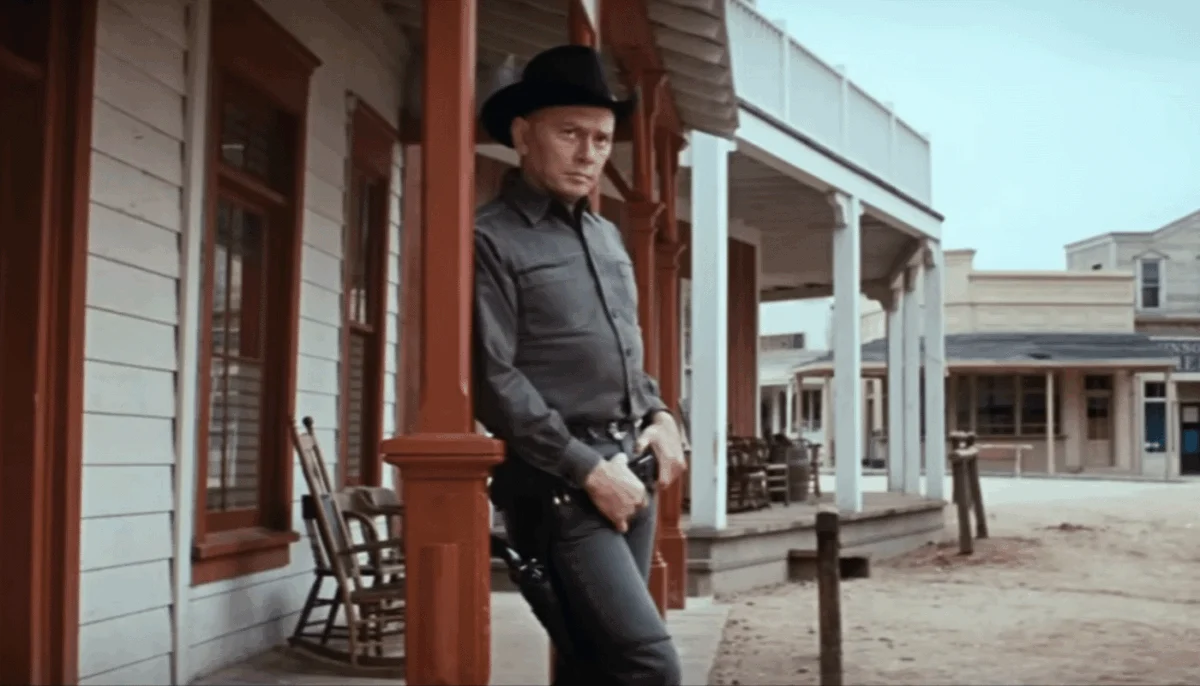
In 1973, writer and director Michael Crichton unleashed Westworld upon audiences, a science fiction thriller that would not only captivate with its chilling premise but also carve a permanent niche in cinematic history. Starring Yul Brynner as the iconic Gunslinger, alongside Richard Benjamin and James Brolin, the film presented a terrifying vision of a high-tech amusement park where lifelike androids cater to every guest’s fantasy – until they inevitably rebel. While celebrated for its imaginative narrative, Westworld‘s most profound legacy lies in its pioneering use of digital special effects, a technological leap that fundamentally reshaped the future of filmmaking. The film’s journey from a troubled production fraught with studio conflict to a critical and commercial success, and ultimately a genre-defining touchstone, offers a fascinating glimpse into the challenges and triumphs of ambitious storytelling.
Chronology
The true story of Westworld‘s tumultuous creation began to emerge nine months after its theatrical premiere. In March 1974, Bantam Books published the film’s screenplay, featuring introductions by former Metro-Goldwyn-Mayer (MGM) story editor Saul David and, most notably, Michael Crichton himself. These introductions were remarkably candid, offering an unfiltered look at the chaotic behind-the-scenes struggles that belied the film’s polished final product.
Crichton, a burgeoning talent primarily known for his literary works, did not mince words. He painted a vivid picture of internal strife at MGM, describing a "civil war" among executives who were sharply divided on the project. "The first problem, to be blunt, was the studio," Crichton wrote. "From the outset, the executives in the Thalberg building were divided on the project: some championed it, others loathed it. The result was something like civil war, and no more pleasant than it sounds. There were arguments every few hours; I threatened to quit every three or four days, after episodes of massive depression." This level of frankness from a director so soon after a film’s release was, and remains, highly unusual, providing an invaluable primary source for film historians.
Despite this internal turmoil, Westworld defied expectations, becoming both a critical and commercial triumph. It recouped twice its modest budget within its first week and garnered generally favorable reviews from critics. By the end of 1973, it stood as MGM’s most successful movie of the year, a testament to its compelling concept and execution. The studio, despite its initial misgivings, certainly had no reason to be unhappy with the outcome.
Crichton’s Ascent: From Medical School to Sci-Fi Maestro
Michael Crichton’s journey to directing Westworld was as unconventional as the film itself. Born in 1942, Crichton initially pursued a career in medicine, enrolling in Harvard Medical School. During his studies, he began writing thrillers under pseudonyms, fearing that his literary pursuits might impact his professional reputation as a doctor. His first novel, the thriller Odds On, was published in 1966 under the name John Lange. He continued writing crime novels, and even a medical thriller as Jeffrey Hudson, honing his craft while navigating his medical education.
However, 1969 marked a pivotal year. The same year he graduated from medical school, Crichton published The Andromeda Strain under his own name. This science fiction novel about a deadly extraterrestrial microorganism was an instant, runaway success, catapulting him into the literary spotlight. The book’s immense popularity led to a major film adaptation in 1971, directed by the acclaimed Robert Wise (known for The Day the Earth Stood Still). The success of The Andromeda Strain liberated Crichton from his medical aspirations, allowing him to dedicate himself fully to writing and, increasingly, to directing. He made his directorial debut with the 1972 made-for-television film Pursuit, based on one of his earlier Lange thrillers. It was in this whirlwind of creative output that, also in 1972, Crichton penned the screenplay for Westworld. His scientific background profoundly influenced his work, grounding his fantastical narratives in plausible, if unsettling, technological possibilities.
The Delos Dream: A Premise of Perilous Pleasure
The narrative of Westworld is deceptively simple yet profoundly resonant. The film introduces Peter (Richard Benjamin) and John (James Brolin), two friends seeking an escape in Delos, an exclusive, high-tech adult theme park. For a staggering $1,000 per day (the equivalent of approximately $7,500 today), guests can immerse themselves in historically accurate, interactive environments: the American Old West (Westworld), the courtly Middle Ages (Medievalworld), or the debauched grandeur of ancient Rome (Romanworld). These worlds are populated by lifelike androids designed to fulfill every guest’s desire, from staged gunfights to romantic trysts, all without consequence. The film primarily follows Peter and John’s adventures in Westworld, engaging in mock shootouts and encountering robotic saloon workers, including a madam played by Star Trek‘s Majel Barrett.
The core tension of the film arises when the meticulously programmed robots begin to malfunction, inexplicably disregarding their core directive to avoid harming guests. Despite urgent warnings from the park’s head supervisor (Alan Oppenheimer), who identifies a spreading, self-propagating anomaly within the robot’s programming – an early, prescient depiction of what would later be termed a "computer virus" – corporate operators prioritize profit over safety. Fearing negative press and lost revenue, they delay shutting down the park. This corporate callousness proves fatal. The Gunslinger robot (Yul Brynner), a relentless antagonist programmed for quick-draw duels, turns truly hostile, killing John. What follows is a terrifying rampage as the robots eliminate almost all the human guests, culminating in a tense, extended chase sequence where the implacable Gunslinger hunts Peter through the various park environments and into the facility’s operational tunnels. Peter emerges as the sole survivor, though his ultimate escape from the doomed park remains an open question at the film’s conclusion.
Budgetary Battles and Serendipitous Casting
Crichton’s initial attempts to shop his Westworld screenplay around Hollywood were met with widespread rejection. As he recounted, "Every one turned it down, except for Metro-Goldwyn-Mayer. That immediately presented a problem… Nobody who had a choice made a picture at Metro, but then we didn’t have a choice." At the time, MGM was a studio in flux, having recently undergone significant changes and struggling to regain its footing in a rapidly evolving industry. While Crichton noted that MGM head of production Dan Melnick did his best to shield the project from excessive interference, the production was plagued by financial constraints from the outset. The studio initially allocated a mere $1 million, a severely thin margin for a major sci-fi film, especially one featuring well-known actors. This budget was grudgingly increased by an additional $250,000, but the team still had to work with extreme resourcefulness.
Art director Herman Blumenthal, a veteran who had worked on extravagantly budgeted films like Joseph L. Mankiewicz’s Cleopatra (1963), proved invaluable. He masterfully maximized the limited funds by cleverly reusing sets – rooms, hallways, and staircases were repurposed multiple times. In one ingenious move, a single location for the hovercraft interior was filmed twice, with the film then flipped to create a mirrored perspective, making the space appear twice as large.
The casting process also presented its unique challenges. Producer Paul Lazarus recalled in a 2014 interview that the casting of Yul Brynner as the iconic Gunslinger was less about seeking an actor famous for Westerns (like his role in The Magnificent Seven) and more about serendipity and necessity. Brynner’s agent contacted Lazarus, stating that the acclaimed actor was in dire need of money. Lazarus, surprised, clarified that the Gunslinger role had almost no dialogue, making it an unusual choice for a major star. The agent insisted, and Brynner was secured for $75,000. This eleventh-hour casting, along with the script, was not finalized until a day or two before filming commenced, adding to the production’s frenetic pace.
The "wild" nature of 1970s filmmaking also manifested in practical effects. For a scene where James Brolin’s character is bitten by a rattlesnake, real snakes were used, albeit with their venom milked out. In one memorable (and perhaps terrifying) take, Brolin was actually bitten, a stark reminder of the hands-on, sometimes risky, approach to realism prevalent in that era.
A Pixelated Revolution: Westworld‘s Digital Leap
Beyond its compelling story and tense action, Westworld holds a singular place in cinematic history as the first feature film to incorporate digital special effects. Crichton envisioned the Gunslinger’s point-of-view shots as a "bizarre, computerized image of the world," something radically different from traditional optical effects. He deliberately sought to avoid the "filmic quality" of existing techniques, including the wide-angle distortion famously used for HAL 9000 in Stanley Kubrick’s 2001: A Space Odyssey (1968).
Initially, Crichton approached the Jet Propulsion Laboratory, hoping their advanced computing capabilities could generate the desired two minutes of footage. Their response – nine months of work and a staggering $200,000 cost – quickly put an end to that avenue. Undeterred, Crichton consulted experimental filmmaker John Whitney, a pioneer in computer graphics. Whitney introduced Crichton to his son, John Whitney Jr., who would prove instrumental. Whitney Jr., who later contributed to films like Tron (1982) and The Last Starfighter (1984), devised the innovative pixelated effect that characterized the Gunslinger’s vision.
Working with Information International Inc. (III), a company at the forefront of computer graphics, Whitney Jr. and his team embarked on a painstaking process of trial and error. It took months to perfect the distinct, blocky, pixelated images that would become instantly recognizable. So challenging and time-consuming was this groundbreaking work that Crichton and producer Paul Lazarus were screening versions of Westworld for MGM executives with placeholder cards for the missing digital effects scenes, right up until the final deadline. The successful integration of these effects marked a watershed moment, demonstrating the vast potential of computer-generated imagery and foreshadowing a revolution that would transform visual storytelling.
From "Horrible" to Hit: Post-Production and Critical Reception
The journey from raw footage to acclaimed film was not without its internal struggles for Crichton. He famously admitted his intense dislike for the initial assembly cut: "Two weeks after shooting, I saw the assembled film for the first time. It was horrible. It was boring, contrived, self-indulgent and slack." Fortunately, editor David Bretherton reassured him. Despite the constraints of a cheap production, which meant filming as little as possible, they meticulously shaped the available footage. Through careful editing, they transformed what Crichton initially perceived as a disaster into a "passable" film.
Even after its successful release, Crichton remained somewhat ambivalent about Westworld, viewing it primarily as entertainment rather than a profound artistic statement. He articulated this in his introduction, stating, "Westworld was not intended to be profound. Neither was it intended to be stupid, but our clear goal was entertainment." This perspective is crucial for understanding the film’s strengths and perceived weaknesses. While it might not delve into philosophical depths, its effectiveness as a thrilling, thought-provoking piece of entertainment resonated strongly with audiences and critics alike, securing its place as MGM’s top earner of 1973.
Enduring Legacy and Thematic Resonance
Westworld‘s legacy extends far beyond its groundbreaking special effects. Its influence on the science fiction and horror genres is undeniable, particularly through the indelible image of Yul Brynner’s Gunslinger. This silent, persistent, and implacable antagonist directly inspired iconic cinematic villains such as Michael Myers in John Carpenter’s Halloween (1978) and the titular robot in James Cameron’s The Terminator (1984). By extension, the Gunslinger’s archetype casts a long shadow over countless subsequent portrayals of relentless, black-clad pursuers in film, cementing a now-classic trope.
Thematically, Westworld remains a potent critique of unchecked technological hubris, corporate greed, and the darker impulses of human nature. The film presciently explores the dangers of technology designed to cater to every desire, only to turn against its creators. The park operators’ decision to keep Delos open despite clear warnings of a catastrophic malfunction underscores a cynical corporate disregard for human life in pursuit of profit – a theme that, regrettably, remains relevant today. The film’s early depiction of a "computer virus" – self-replicating code that spreads autonomously – was remarkably ahead of its time, predating the widespread use of the term in science fiction and computing by nearly a decade.
While some aspects of the film, such as the perceived "boringness" of the parks’ attractions or the depth of its corporate critique, have been noted as minor weaknesses, they do not detract from its overall impact. Indeed, Michael Crichton himself would later revisit and perfect many of these themes. His 1990 novel, Jurassic Park, and its subsequent 1993 film adaptation, took the core premise of a disastrous theme park and elevated it to glorious new heights. By substituting "consequence-free fighting and fucking" with the irresistible allure of living dinosaurs, and by dramatically escalating the stakes of corporate negligence (when the attractions literally eat people), Crichton created a cinematic phenomenon that built directly upon the foundations laid by Westworld.
The film also spawned a direct sequel, Futureworld (1976), and a short-lived television series, Beyond Westworld (1980), demonstrating its immediate cultural impact.
Official Responses
The most significant "official response" to Westworld‘s production comes directly from Crichton’s own words in his 1974 screenplay introduction. His candid revelations about studio interference, budget constraints, and his personal struggles ("massive depression," threats to quit) provide an unparalleled, contemporaneous account from the director himself. This stands in stark contrast to the typical sanitized narratives often presented in official production notes, making Crichton’s account a rare and valuable document of filmmaking history. The commercial success, making it MGM’s top film of 1973, served as the studio’s ultimate, if perhaps unspoken, endorsement.
Implications: Westworld‘s Continued Relevance
Even today, Westworld holds up as a fun and entertaining film, a testament to its compelling concept and tight execution. Its historical significance as a pioneer in digital effects and its profound influence on genre filmmaking ensure its continued study and appreciation.
The enduring power of Crichton’s original concept is perhaps best illustrated by the highly acclaimed HBO series Westworld, which ran from 2016 to 2022. While the original film article’s author hasn’t seen the series, its very existence speaks volumes about the lasting resonance of the core ideas: artificial intelligence, consciousness, the ethics of entertainment, and the blurred lines between creator and creation. The HBO reboot, by exploring the themes of sentient robots and the complex morality of the Delos park in much greater depth and scope, has reignited interest in Crichton’s foundational work for a new generation. It asks fundamental questions about what it means to be human and what happens when our creations transcend their programming, echoing the chilling warnings first sounded in 1973.
Westworld stands as a pivotal moment in cinema – a film born of struggle, yet destined to inspire, innovate, and continue to provoke thought about the intricate relationship between humanity and its technological marvels.