Miami, Florida – Long before the sun-drenched docks of Fort Lauderdale became synonymous with John D. MacDonald’s iconic Travis McGee, the concept of the seaborne private investigator was quietly taking shape in the fertile imagination of Lester Dent. A titan of the pulp fiction era, best known as the primary author of Doc Savage, Dent ventured into the hardboiled detective genre with two compelling, albeit short-lived, nautical sleuths: Oscar Sail and the tragically unprinted Cyrus Peace. Their stories, born from Dent’s own maritime experiences, represent pioneering efforts in a sub-genre that would later capture mainstream success, offering a unique blend of mystery, adventure, and the restless spirit of the open water.
This exploration delves into Dent’s foundational contributions to the nautical detective archetype, tracing the lineage from his personal passion for sailing to the creation of these distinctive characters. It examines the editorial currents that shaped — and ultimately curtailed — their literary voyages, highlighting the enduring influence of a pulp master on the broader landscape of crime fiction.
The Allure of the Aquatic Sleuth: A Genre Takes Shape
The private detective operating from a boat, anchored somewhere along the coast, constitutes a fascinating and enduring sub-genre within modern crime fiction. This setting provides an instant cocktail of advantages for a sleuth: mobility, a degree of isolation from terrestrial authorities, easy access to illicit maritime activities, and a distinct atmospheric backdrop. The boat itself often becomes an extension of the character—a sanctuary, an office, and a symbol of their independent, often transient, existence.
While John D. MacDonald’s Travis McGee, with his houseboat The Busted Flush moored off Fort Lauderdale, is widely recognized as the most successful and influential figure in this niche, he stands atop a foundation laid by earlier, lesser-known pioneers. Beyond McGee, the concept found expression in various forms: the trio of troubleshooters on the Miami Beach houseboat in the 1960-62 Warner Bros. television show, Surfside 6, featuring Dave Thorne, Sandy Winfield II, and attorney-turned-PI Ken Madison. More contemporary successful entries include Randy Wayne White’s Doc Ford, an ex-CIA troubleshooter whose boat, The Dandy, is nestled among Sanibel Island mangroves, and his fellow PI Hannah Smith, who resides on a houseboat near Pine Island. William Wells’ Chicago homicide detective Jack Starkey retired to his Fort Myers houseboat, Phoenix, only to be repeatedly drawn into local cases. David Crosby’s Will Harper, an investigative reporter turned PI, cruises the Gulf Coast waterways aboard his Grand Banks Trawler, WanderLust, embodying the ultimate freedom from a fixed abode.
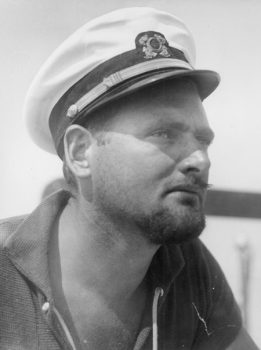
Yet, it was Lester Dent, a writer whose prodigious output defined an era, who truly originated the concept of the professional nautical detective in pulp fiction. His personal life provided the authentic backdrop for these creations, infusing his characters with a realism derived from direct experience.
Lester Dent: Pulp Master and Maritime Enthusiast
Lester Dent was a phenomenon of the pulp magazine era, a prolific wordsmith whose name is synonymous with adventure. As the primary author behind the legendary Doc Savage series, he churned out novels at an astonishing pace, defining the heroic archetype for generations. However, Dent was far from a one-trick pony. His literary curiosity led him to explore various genres, including the burgeoning hardboiled detective fiction that Black Mask magazine famously championed.
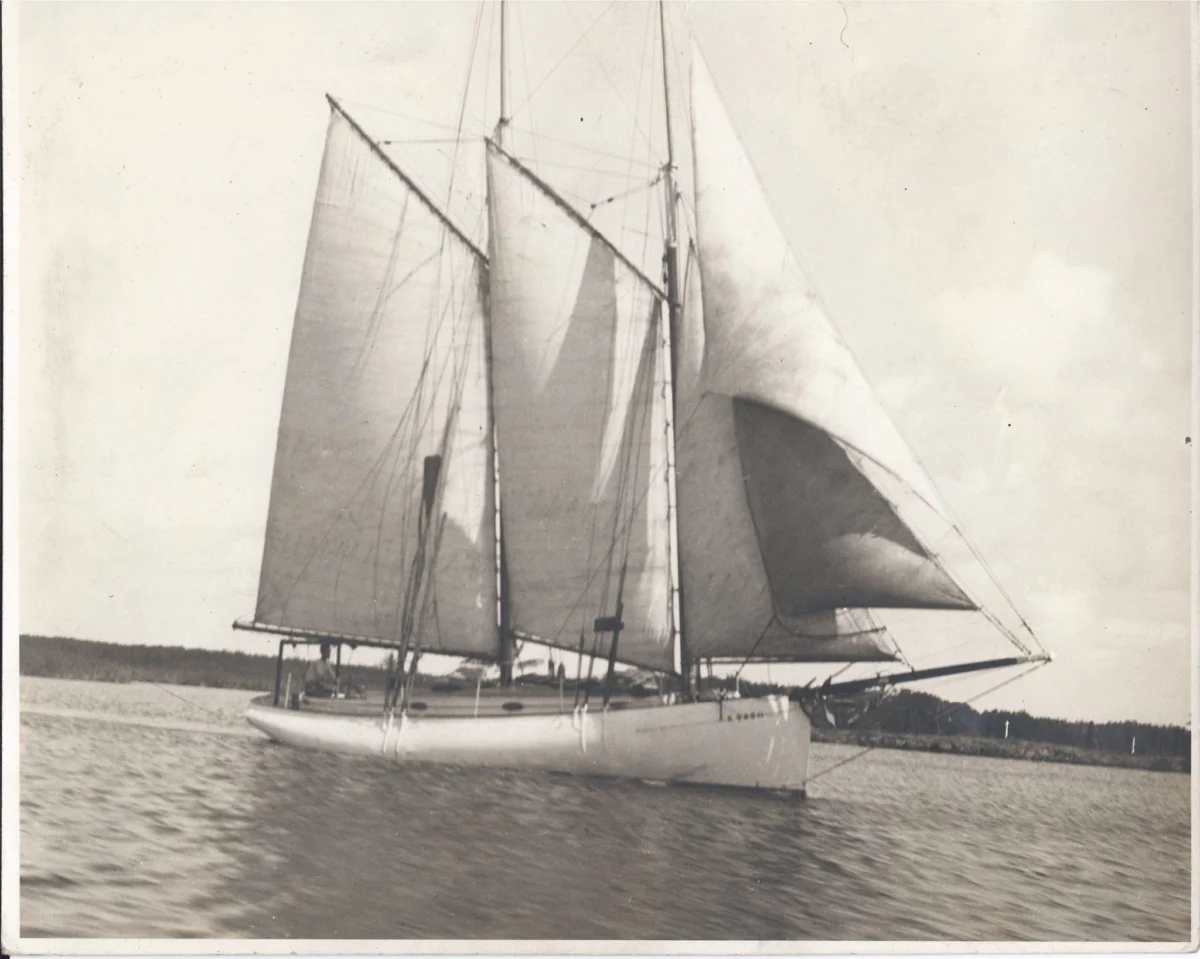
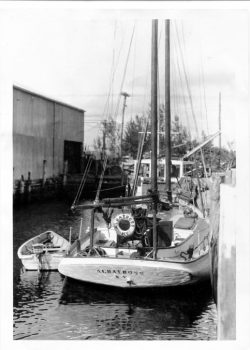
Crucially, Dent’s creative wellspring often drew from his own life experiences. In the mid-1930s, Dent and his wife, Norma, embraced a unique lifestyle, living aboard their white boat, the Albatross, anchored on the Miami docks. This firsthand immersion in the maritime world of Florida’s coast was not merely a personal preference; it was a profound influence that would soon manifest in his fiction. The sights, sounds, and rhythms of dockside life, the characters inhabiting the waterfront, and the inherent dangers and freedoms of the sea all seeped into his imagination, preparing the ground for his nautical private eyes.
This period was a crucible for Dent, allowing him to authentically render the setting that would become central to his Black Mask contributions. The decision to place a detective on a boat wasn’t just a stylistic choice; it was an organic outgrowth of his own daily reality, a form of ego projection and a natural way to integrate a familiar environment into his professional output.
Oscar Sail: The Black Mask Pioneer
Lester Dent’s initial foray into the nautical detective sub-genre arrived in 1936 with Oscar Sail, a private investigator whose adventures graced the pages of Black Mask magazine. This publication was the undisputed crucible of hardboiled fiction, a proving ground for literary legends like Dashiell Hammett and Raymond Chandler, known for its gritty realism and uncompromising editorial standards under the formidable Joseph T. Shaw.
The journey of Oscar Sail to print, however, was not without its own editorial drama. Originally, Dent conceived Oscar Sail as a "chubby fellow," a physical type perhaps inspired by Dashiell Hammett’s unprepossessing Continental Op. However, the discerning eye of Joseph T. Shaw, the legendary editor whose vision shaped Black Mask‘s iconic style, rejected this initial portrayal. Shaw, known for demanding taut prose and distinctive characters, evidently saw a different potential for Sail. Dent, ever the professional, rewrote the story, transforming Sail into a "strikingly different long and lean character." This revised version, with its laconic demeanor and preference for black polo shirts, coupled with his black Chesapeake bugeye schooner also named Sail, quickly found favor.
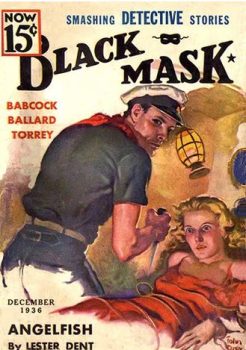
Two Oscar Sail stories were published in Black Mask: the titular "Sail" and its sequel, "Angelfish." The latter was a powerful yarn, culminating in a dramatic hurricane climax, showcasing Dent’s flair for high-stakes adventure against a vivid maritime backdrop. Dent and his hero were poised to become regulars in the prestigious magazine, a significant achievement for any pulp writer.
However, the winds of editorial change soon shifted. Joseph T. Shaw was "let go" from Black Mask, replaced by Fanny Ellsworth. In a powerful act of solidarity with Shaw and other contributors who believed the magazine would fundamentally change, Lester Dent declined to submit any more stories, despite Ellsworth’s direct requests for additional Sail adventures. This decision, though principled, effectively truncated the promising career of Oscar Sail.
Fellow pulpster Frank Gruber, in an account for The Armchair Detective, shed light on Dent’s disillusionment: "Along about 1936 Lester Dent began to tire of Doc Savage. He thought the stories were too juvenile and he thought that he should be trying to write more adult fiction. He wrote two stories for Black Mask, but he told me that he had been forced to rewrite both stories so many times that he did not himself like the final product. Also, the time and effort consumed by the long rewriting were not compensated by the modest payment of Black Mask. As far as I know those were the only stories that Dent sold to a ‘better’ pulp and Lester was greatly dissatisfied." This sentiment, combined with the editorial shift, sealed Oscar Sail’s fate as a character of unfulfilled potential within the pages of Black Mask.
Despite their limited original run, Dent’s Sail stories have been among the most anthologized of all Black Mask contributions, a testament to their quality and the originality of their concept. This posthumous recognition underscores the impact of Sail as a progenitor, inspiring other writers to explore the unique locale and setting that Dent so novelly introduced. The recent collection, The Complete Black Mask Stories of Lester Dent by Steeger Books, including the original version of "Sail" (retitled "Luck") and unfinished openings, provides a comprehensive look at this pivotal, albeit brief, phase of Dent’s career.
Cyrus Peace: The Unprinted Corn Cob Philosopher
After turning his back on Black Mask, Lester Dent, ever the innovator, sought a new home for his maritime-flavored detective fiction. He submitted a manuscript to Detective Fiction Weekly featuring a new sleuth operating out of Miami: Cyrus Peace. The story, a 15,000-word novelette titled "Windjam," was written in late 1936, soon after "Angelfish" had been accepted by Black Mask.
Cyrus Peace was cut from the same distinctive cloth as Oscar Sail, yet possessed his own eccentricities. Like Dent himself, Peace was a transplanted Missourian residing in Miami. And echoing Dent’s physical stature and Oscar Sail’s lean frame, Peace was strikingly tall, angular, and deeply tanned, a man weathered by sun and sea. Unlike Sail, however, Peace operated from a "tiny office" rather than a boat, at least as explicitly stated in the surviving manuscript. His practice, only thirty days old, was strictly limited to marine cases, firmly rooting him in the nautical world without necessarily making his home on the water.
Dent’s narrative paints a vivid, if brief, portrait of Peace, dubbing him "the Corn Cob Philosopher":
"…Peace fingered the three corn cobs, hefted them. They were red cobs, large, looking as if they had been varnished. Peace held one of the cobs out and studied it, then seemed to do nothing but shrug his shoulders, but the cob vanished. It was weird, to the eye, at least. One instant the cob was there; next it wasn’t. It was neat, sleight-of-hand, but Peace kneaded his fingers and examined them as if he did not believe he had done such a good job vanishing the cob. But back of the business with the cobs was thoughtfulness, as if he had merely been doing something which he did unconsciously, as some men scratched their heads when thinking."
"Then Peace grunted and arose, proving to be a very tall and wide man with a lot of bone in his makeup and a suit that did not fit too well. Thunder whooped and gobbled and Peace went to the window. Red lightning light washed his face, made his features seem more lean than they were. Black clouds, lightning and noise was all bunched over the Everglades back of Miami to indicate that it would pour before long."
Peace further donned a "very long, lemon-colored oilskin coat and a sou’wester," ready to face the elements, underscoring his deep connection to the sea. His office door proudly proclaimed: "CYRUS PEACE Admiralty Investigations."
The setting for "Windjam" was meticulously rendered, drawing directly from Dent’s own life. The story unfolded around Pier No. 4 of Miami’s City Yacht Basin, the very location where Dent’s Black Mask detective, Oscar Sail, had anchored his sloop, and where Dent’s own Albatross spent the winters of 1935-36. Norma Dent, Lester’s wife, recalled the familiarity: "Les was very familiar with that spot. Our boat was tied there for two winters. The boat next to ours was a cabin cruiser, owned by the Winchells, (Stewart Sterling) another well-known writer." Dent’s narrative also included vibrant 1930s local color, from the "imitation South Seas Island huts constructed of concrete but painted to look like wood on Bayfront Park" to the Miami police sporting "white pith helmets and matching Sam Browne belts during tourist season."
Peace’s eccentricity extended to his unique "armament." He did not carry a gun, instead relying on his mastery of sleight-of-hand with corn cobs, a hobby he shared with his creator, Lester Dent. Dent himself was an amateur magician, an interest cultivated through his friendship with Walter B. Gibson, the legendary writer behind The Shadow. This personal detail became a defining, almost surreal, characteristic of Cyrus Peace:
"Peace went on into the room, where the body of Benjo had lain. The body was gone, of course, but Peace discovered something else. His corn cobs and his gimmick, which enabled him to do some of his tricks."
"He walked over, began putting the corn cobs in his pockets, the gimmicks in his clothing. Magic with corn cobs was his hobby. He knew it struck others as being a goofy kind of hobby. He never let that bother him. He could do things with those corn cobs, rather incredible things. They were rather special cobs, too, but so cleverly fixed up that they stood examination. For instance, no one had noticed anything wrong with the cobs."
"He was arranging his last gimmick when red-headed Bets Bentrams came in, holding a flat automatic pistol close to her side."
"’You’ve killed your last man!’ she said, and raised her gun deliberately."
When faced with danger, Peace’s corn cobs became projectiles of disarming precision:
"Bets Bentrams had the shape to wear slacks. The slacks were blue, her blouse white and blue, and both garments were cut to keep men looking at her. But they would not keep looking at her as she was now. Not after they saw what was on her face. It was undiluted horror."
"Peace grinned at her, a big, artificial and unnatural grin with one sole purpose of being so grotesque and out of place that the girl would watch it and not his hands. She did."
"A corn cob got into Peace’s hand, coming out of his sleeve, where the gimmick had it. Gimmicks enabled magicians to do many tricks. This one let a cob fall when Peace took a deep breath."
"His hand flicked. He had thrown a cob a million times. He could toss one on a top of twenty foot pole so accurately that it would balance there on end. This cob hit the girl’s gun hand, and the gun bounced on the floor. Peace retrieved the corn cob and got the gun, then examined the gun."
Dent even described the mechanism of one such gimmick: "an elastic band that runs up Peace’s sleeve, abhorred by a safety pin. A clamp of light spring wire at the other end holds a corn cob. When Peace releases his grip on it, the cob is whisked up his sleeve and out of sight." It’s speculated that perhaps this highly unusual, almost fantastical, method of combat was "too much of a stretch for pulp editors" accustomed to more conventional hardboiled realism, contributing to the story’s rejection.
Peace’s Missouri roots were another layer of his character, deeply embedded in the narrative. His youth spent swimming in Bear Creek and Santa Fe Pond, his "leg action" like "kicking down corn stalks," and frequent references to advice from his "Uncle Bide" back in the "Show-Me State" (Lester Dent’s own hometown region of La Plata, Missouri) all tied him to a distinct, down-to-earth sensibility. These details added depth and a touch of folksy wisdom to his otherwise imposing and eccentric persona. The story "Windjam" itself revolved around Peace being framed for murder, with one of his trademark corn cobs found next to a body, plunging him into a uniquely personal investigation.
Regrettably, Detective Fiction Weekly rejected "Windjam." This decision was a significant loss for pulp fiction, as Cyrus Peace, even in his single, unprinted exploit, emerged as an intriguing and highly original character. Lester Dent never revisited Cyrus Peace. Just a few months later, he launched a highly successful series in Street & Smith’s Crime Busters, featuring Click Rush, a gadgeteer-turned-amateur-detective. The demand for new "Gadget Man" novelettes proved almost as insatiable as his monthly Doc Savage deadlines. In a move that sealed Cyrus Peace’s fate, Dent, likely pressed for plots, condensed and rewrote "Windjam" as a Click Rush entry, eradicating any possibility of peddling the Corn Cob Philosopher elsewhere. The surviving manuscript of "Windjam" is missing several pages, further complicating any potential modern publication.
The Enduring Legacy and Implications
While Lester Dent’s Oscar Sail saw only two stories published and Cyrus Peace none, their creation marks a pivotal, though often overlooked, moment in the evolution of detective fiction. Dent’s pioneering efforts in establishing the nautical private investigator predated the genre’s most famous proponent, Travis McGee, by decades. This chronology firmly positions Dent as the conceptual originator, translating his personal passion for the sea into a compelling new archetype for the hardboiled hero.
The implications of Dent’s brief forays into this sub-genre are multifaceted. Firstly, it highlights the immense creative wellspring of the pulp era, where writers like Dent constantly experimented with settings, character types, and narrative structures. Even in minor series or unprinted works, groundbreaking ideas were being explored. Secondly, it underscores the significant role of editorial vision (Joseph T. Shaw) and the often-unpredictable nature of the publishing industry in shaping an author’s career and the fate of their characters. Dent’s principled stand against the new Black Mask editor and the subsequent rejection of "Windjam" by Detective Fiction Weekly deprived readers of potentially rich series.
The enduring appeal of the boat-dwelling detective, as evidenced by its continued presence in popular culture, speaks to a fundamental human fascination with independence, mobility, and the mysteries that unfold on the fringes of society. Dent tapped into this appeal early, crafting characters who, despite their brief literary lives, possessed distinct personalities and unique methods.
Today, thanks to the dedicated efforts of pulp scholars and publishers like Steeger Books, these "lost" or marginalized works are being rediscovered and appreciated for their historical significance and intrinsic merit. The anthologization of Oscar Sail’s stories and the scholarly attention given to the fragments of Cyrus Peace underscore their importance as foundational texts in the hardboiled tradition. Lester Dent, the master of fantastic adventure, also proved himself a subtle innovator in the realm of crime fiction, charting courses for literary detectives long before others sailed into the mainstream. His nautical PIs, though their voyages were cut short, represent an indelible contribution to the diverse and thrilling landscape of pulp literature.
A recently unearthed manuscript, provisionally titled "Song of Discord," offers a chilling insight into the doctrines of a previously obscure, yet potentially widespread, cult known as the B
Main Facts In an expansive digital landscape where niche communities can often feel isolated and content fragmented, the weekly "Content We Liked" series by Tabletop Battles emerges as a cru
In a groundbreaking announcement that has sent ripples through the vast realms of fantasy entertainment and gaming, Emmy-winning showrunner Craig Mazin, acclaimed for his masterful work on HBO’s