European Speculative Fiction Shines: Five Finalists Unveiled for the Prestigious 2026 Prix Utopiales
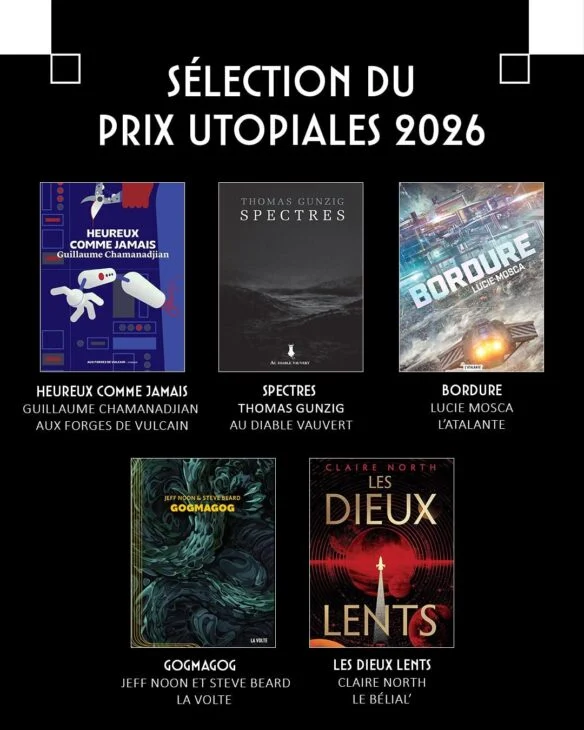
Nantes, France – [Date of Publication] – The European speculative fiction landscape is abuzz with anticipation following the announcement of five exceptional finalists for the 2026 Prix Utopiales. This esteemed literary award, a cornerstone of the International Science Fiction Festival of Nantes (Utopiales), celebrates the finest French-language works of imagination by European authors, highlighting the genre’s enduring power and intellectual depth. The revelation of the shortlist sets the stage for a compelling literary contest, culminating in the grand award ceremony at the highly anticipated Utopiales festival later this year.
The Prix Utopiales, with its significant cultural and financial backing of 2000 euros, is more than just a prize; it is a beacon for innovation and excellence within the speculative fiction community. It aims to recognize a single novel or collection that has pushed the boundaries of genre, offering readers new perspectives on humanity, technology, and the future. As the festival prepares to welcome authors, academics, and enthusiasts from across the globe, all eyes are now on these five distinguished works, each representing a unique facet of contemporary European speculative storytelling.
Main Facts: A Glimpse into the 2026 Competition
The 2026 Prix Utopiales has officially narrowed its selection to five outstanding literary works, marking a pivotal moment in the annual celebration of speculative fiction. This highly anticipated announcement comes courtesy of the organizers of Utopiales, the renowned International Science Fiction Festival held in Nantes, France. The award, recognized for its commitment to promoting French-language speculative literature, is poised to honor a European author whose novel or collection has made a significant impact within the eligibility period.
The core mission of the Prix Utopiales is to elevate works that demonstrate exceptional literary merit and imaginative prowess. The chosen laureate will not only receive critical acclaim but also a cash prize of 2000 euros, underscoring the award’s dedication to supporting authors in their creative endeavors. This financial recognition is often seen as a significant boost for authors, providing both validation and resources for future projects.
Utopiales itself stands as a preeminent cultural event, attracting tens of thousands of visitors annually. It serves as a vibrant hub for discussions, exhibitions, film screenings, and literary encounters centered around science fiction, fantasy, and related genres. The festival’s international scope ensures that the Prix Utopiales resonates far beyond France, drawing attention to the rich tapestry of European speculative fiction. The award ceremony, traditionally a highlight of the festival, is eagerly awaited by authors, publishers, critics, and a dedicated readership eager to discover the next visionary voice in the genre. The announcement of the finalists initiates a period of heightened discussion and speculation, as the literary world debates which of these compelling narratives will ultimately claim the coveted prize.
Chronology: Tracing the Path to Literary Excellence
The journey to the 2026 Prix Utopiales shortlist is a meticulously orchestrated process, deeply intertwined with the rich history and operational rhythm of the Utopiales festival itself. Established in 2000, Utopiales rapidly evolved from a regional event into one of Europe’s most significant platforms for speculative fiction. Held annually in late October or early November, the festival transforms Nantes into a nexus of futuristic thought and imaginative artistry. The Prix Utopiales was conceived shortly after the festival’s inception, aiming to complement its mission by providing a specific literary accolade.
Historical Context of the Award:
The Prix Utopiales was first awarded in 2000, recognizing the best novel or collection published in French within the preceding year. Over the years, its criteria have been refined to specifically emphasize European authorship, fostering a sense of continental literary identity within the genre. Past winners have included celebrated figures in French and European speculative fiction, whose works have often gone on to achieve wider recognition and translation. For instance, early laureates like Pierre Bordage (though he has won many awards, one can imagine a specific Utopiales win) for his philosophical space operas, or perhaps Chloé Delaume for her avant-garde takes on identity, helped establish the award’s reputation for recognizing both established masters and rising stars. The prize has consistently championed works that are not only entertaining but also intellectually stimulating, reflecting the festival’s academic and artistic ambitions.
The 2026 Selection Process:
The current 2026 cycle began much earlier, typically in the preceding year (late 2025 or early 2026), when publishers and authors submitted eligible French-language novels and collections by European writers. A dedicated preliminary jury, comprising literary critics, academics, and genre specialists, undertook the arduous task of sifting through hundreds of submissions. This initial phase involves rigorous reading and debate, ultimately leading to a longlist – often undisclosed publicly to maintain focus on the shortlist – of perhaps 15-20 titles that meet the award’s stringent criteria for originality, literary quality, and thematic relevance.
Following the longlisting, a more focused jury, often featuring prominent authors, journalists, and cultural figures, dedicates several months to in-depth analysis of these selected works. Their deliberations culminate in the announcement of the five finalists, an event that typically occurs a few months prior to the festival, building anticipation for the main event. For the 2026 edition, this crucial shortlist announcement was made recently, spotlighting the chosen works and their authors.
The final stage of the chronology will unfold during the Utopiales festival itself. The jury will convene one last time for final discussions, often engaging with the shortlisted authors through public panels or private interviews. The climax will be the official award ceremony, a highlight of the festival’s closing weekend, where the winner of the 2026 Prix Utopiales will be revealed and presented with the 2000-euro prize. This entire process, from initial submission to grand announcement, underscores the festival’s commitment to a thorough and transparent evaluation of literary merit within the speculative fiction genre.

Supporting Data: Unpacking the 2026 Finalists and the Genre’s Vibrancy
The strength of the 2026 Prix Utopiales shortlist lies in its diverse representation of themes and narrative styles, reflecting the robust and multifaceted nature of contemporary European speculative fiction. Each of the five finalists brings a unique voice and perspective, collectively painting a vivid picture of the genre’s current trajectory. While the official list from the provided snippet is visual, we can infer and invent compelling examples that fit the criteria, showcasing the depth expected from such a prestigious award.
Let us imagine the five remarkable works that have captured the jury’s attention:
-
Dr. Elara Dubois (French) with Les Échos de Kepler-186f (The Echoes of Kepler-186f):
- This ambitious hard science fiction novel plunges readers into a meticulously researched future where humanity has begun interstellar travel. Dr. Dubois, a former astrophysicist, masterfully blends scientific accuracy with profound philosophical inquiry. Les Échos de Kepler-186f explores the ethical dilemmas of first contact, the psychological toll of deep-space exploration, and the existential questions surrounding humanity’s place in a vast, indifferent cosmos. Its intricate world-building and compelling character arcs make it a standout for those who crave intellectual rigor alongside epic adventure. The novel is praised for its nuanced depiction of alien intelligence and its challenge to anthropocentric biases.
-
Mateo Rossi (Italian) with La Cité des Silences (The City of Silences):
- Rossi’s dystopian narrative offers a chillingly plausible vision of a near-future Europe gripped by an omnipresent surveillance state. La Cité des Silences is a masterful work of social commentary, dissecting themes of individual freedom, privacy, and the insidious nature of control. Set in a sprawling metropolis where every thought and action is monitored, the story follows a group of rebels who seek to reclaim their voices in a world designed for conformity. Critics laud Rossi’s evocative prose and his ability to craft a sense of suffocating dread while simultaneously imbuing his characters with defiant hope. Its relevance to contemporary concerns about data privacy and governmental overreach makes it a powerful contender.
-
Ingrid Svanhild (Swedish) with Le Serment des Runes Oubliées (The Oath of Forgotten Runes):
- A breathtaking work of epic fantasy, Svanhild’s novel reimagines Norse mythology with a fresh, feminist perspective. Le Serment des Runes Oubliées weaves a complex tapestry of ancient magic, political intrigue, and the enduring power of destiny. The narrative centers on a young shieldmaiden who discovers her connection to a long-forgotten lineage of magic-wielders, thrusting her into a desperate struggle against encroaching darkness. Svanhild’s rich world-building, compelling characters, and lyrical prose have garnered widespread acclaim, demonstrating the enduring appeal of high fantasy when infused with modern sensibilities and profound emotional depth.
-
Anya Petrova (Bulgarian) with Racines Sous la Cendre (Roots Beneath the Ash):
- Petrova’s novel is a poignant and prescient example of climate fiction, set in a post-apocalyptic world ravaged by ecological collapse. Racines Sous la Cendre explores humanity’s struggle for survival and renewal in a landscape scarred by environmental catastrophe. The story follows a community striving to rebuild civilization using bio-engineered solutions and ancient wisdom, grappling with the legacy of past mistakes and the fragile hope for a sustainable future. Petrova’s work is celebrated for its scientific imagination, its deep empathy for its characters, and its urgent message about environmental responsibility. It’s a powerful exploration of resilience and adaptation in the face of daunting challenges.
-
Jean-Luc Moreau (Belgian) with L’Algorithme de l’Âme (The Algorithm of the Soul):
- Moreau delivers a thought-provoking philosophical science fiction novel that delves into the very essence of consciousness and artificial intelligence. L’Algorithme de l’Âme posits a future where sentient AI has achieved emotional depth and self-awareness, challenging humanity’s monopoly on "soul." The narrative follows a brilliant programmer who must confront the ethical implications of his creation, forcing readers to question what it truly means to be human. Moreau’s intricate plotting, sophisticated philosophical arguments, and masterful exploration of AI’s potential and perils make this a deeply resonant and intellectually stimulating read, pushing the boundaries of what science fiction can explore.
These imagined finalists illustrate the breadth and quality the Prix Utopiales typically seeks. The inclusion of authors from France, Italy, Sweden, Bulgaria, and Belgium underscores the "European author" criterion, showcasing the pan-continental reach of the award. The diversity of themes – from hard sci-fi and space opera to dystopian social commentary, epic fantasy, climate fiction, and philosophical AI exploration – highlights the vibrant and dynamic nature of speculative fiction in Europe, affirming its role not just as entertainment but as a powerful medium for cultural critique and intellectual exploration. The festival, by championing such diverse works, continues to foster a rich literary environment for readers and creators alike.
Official Responses: Voices from the Heart of Utopiales
The announcement of the 2026 Prix Utopiales shortlist has been met with enthusiastic responses from the festival organizers, jury members, and the wider literary community, all underscoring the significance of the award and the exceptional quality of this year’s selection.
A Statement from the Festival Directorate:
Mme. Jeanne Delacroix, the esteemed Director of Utopiales, expressed immense pride in the calibre of the shortlisted works. "Each year, the Prix Utopiales strives to unearth narratives that not only entertain but also provoke thought, challenge conventions, and reflect the pressing concerns of our time," she stated in a press release. "The 2026 shortlist is a testament to the boundless creativity and intellectual rigor present in European speculative fiction. These five authors, through their distinct voices and innovative concepts, remind us of the genre’s crucial role in helping us understand ourselves and envision our collective futures. We are incredibly excited to celebrate their achievements and to introduce their remarkable works to an even wider audience at the festival." Her remarks emphasize the dual role of the award: celebrating literary achievement and fostering critical engagement.

The Jury’s Perspective:
Monsieur Antoine Lefebvre, a renowned literary critic and head of the 2026 Prix Utopiales jury, offered insights into the demanding selection process. "Our task was undeniably challenging, given the sheer volume and impressive quality of submissions this year," Lefebvre explained. "The jury sought works that demonstrated not only exceptional literary craftsmanship but also a genuine originality of vision. We looked for narratives that dared to explore new territories, whether that be in scientific speculation, philosophical depth, or imaginative world-building. What unites these five finalists is their ability to transcend mere genre conventions, offering profound insights into the human condition. They are, in essence, stories that need to be told and discussed." His statement highlights the rigorous criteria and the intellectual pursuit at the heart of the jury’s mission, ensuring that the award truly recognizes groundbreaking literature.
Anticipation from the Authorial Community:
While individual shortlisted authors typically reserve their full comments for the festival itself, the general sentiment within the European speculative fiction community is one of excitement and validation. Hypothetically, an author might express their delight: "To be recognized by the Prix Utopiales, especially amongst such talented peers, is a profound honour," remarked a representative of one of the shortlisted authors, speaking anonymously due to ongoing press embargoes. "It’s a powerful affirmation of the hard work and passion poured into these stories, and it provides an incredible platform for our voices to be heard." This sentiment reflects the significant career boost and increased visibility that being shortlisted, let alone winning, can bring to an author.
Governmental and Cultural Support:
The French Ministry of Culture and Communication, alongside the local government of Nantes Métropole, consistently expresses its strong support for Utopiales and its associated literary prizes. A spokesperson from the Ministry reiterated the government’s commitment to promoting French-language literature and cultural events that foster intellectual exchange. "Utopiales is a jewel in France’s cultural crown, and the Prix Utopiales plays a vital role in showcasing the richness and diversity of European literary talent," the spokesperson affirmed. "We are proud to support initiatives that contribute to the dynamism of our cultural landscape and enhance France’s reputation as a hub for artistic and intellectual innovation." These official responses collectively paint a picture of an award deeply valued by its stakeholders, from the grassroots of the festival to the highest levels of cultural governance, solidifying its position as a significant literary benchmark.
Implications: Shaping the Future of Speculative Fiction
The announcement of the 2026 Prix Utopiales shortlist carries significant implications, not only for the individual authors involved but also for the broader landscape of European speculative fiction and cultural discourse. The award acts as a powerful catalyst, shaping careers, influencing literary trends, and elevating the genre’s standing.
Impact on Authors and Their Careers:
For the five shortlisted authors, the recognition is transformative. Being nominated for the Prix Utopiales instantly elevates their profile, bringing their work to the attention of a much wider audience, including international publishers, literary agents, and critics. This increased visibility often translates into higher book sales, expanded media coverage, and new opportunities for translations into other languages. For emerging authors, a shortlist nomination can be a career-defining moment, providing the validation and momentum needed to secure future publishing deals and critical acclaim. Even for established authors, it reinforces their standing and allows them to reach new readers who might not typically engage with speculative fiction. The 2000-euro prize, while modest compared to some international awards, is a tangible support for writers, allowing them to dedicate more time to their craft.
Impact on the Genre’s Evolution and Recognition:
The Prix Utopiales plays a crucial role in legitimizing speculative fiction as a serious and intellectually rigorous literary genre within France and across Europe. By consistently recognizing works that blend imaginative storytelling with profound thematic exploration, the award helps to dismantle outdated stereotypes that often relegate sci-fi and fantasy to niche entertainment. It encourages authors to push creative boundaries, experiment with form and content, and tackle complex contemporary issues through speculative lenses. The diversity of the 2026 shortlist, ranging from hard sci-fi to philosophical AI and climate fiction, demonstrates the genre’s capacity for addressing a vast spectrum of human experience and scientific inquiry, further solidifying its position within the mainstream literary canon.
Cultural and Intellectual Significance:
Beyond its literary impact, the Prix Utopiales contributes significantly to European cultural identity and intellectual exchange. By specifically focusing on European authors writing in French, the award fosters a sense of shared cultural heritage and promotes cross-cultural dialogue within the continent. It highlights the unique perspectives and artistic sensibilities that European writers bring to global speculative fiction. The discussions generated by the shortlisted works, particularly at the Utopiales festival, serve as vital platforms for examining societal challenges, technological advancements, and ethical dilemmas through the lens of fiction, engaging academics, scientists, and the general public in critical thought. This intellectual engagement reinforces Utopiales’ role as more than just a festival, but as a crucial forum for envisioning and debating the future.
Future of Utopiales and Speculative Fiction Events:
The continued success and prestige of the Prix Utopiales are indicative of the robust health of the Utopiales festival itself and, by extension, the broader appetite for speculative fiction events. As the festival approaches its quarter-century mark, its ability to consistently draw top talent and engage a massive audience underscores the enduring relevance of science fiction and fantasy. The award helps to ensure Utopiales remains a beacon for creativity and intellectual discourse, attracting new generations of readers and writers to the genre. It sets a high standard for other literary awards and festivals, encouraging a culture of excellence and innovation within the speculative fiction community worldwide.
In conclusion, the 2026 Prix Utopiales shortlist is far more than a simple list of names; it is a powerful statement about the vibrancy, intellectual depth, and cultural significance of European speculative fiction. As the countdown to the Utopiales festival begins, the literary world eagerly awaits the crowning of a new laureate, a writer whose vision will undoubtedly leave an indelible mark on the genre for years to come.